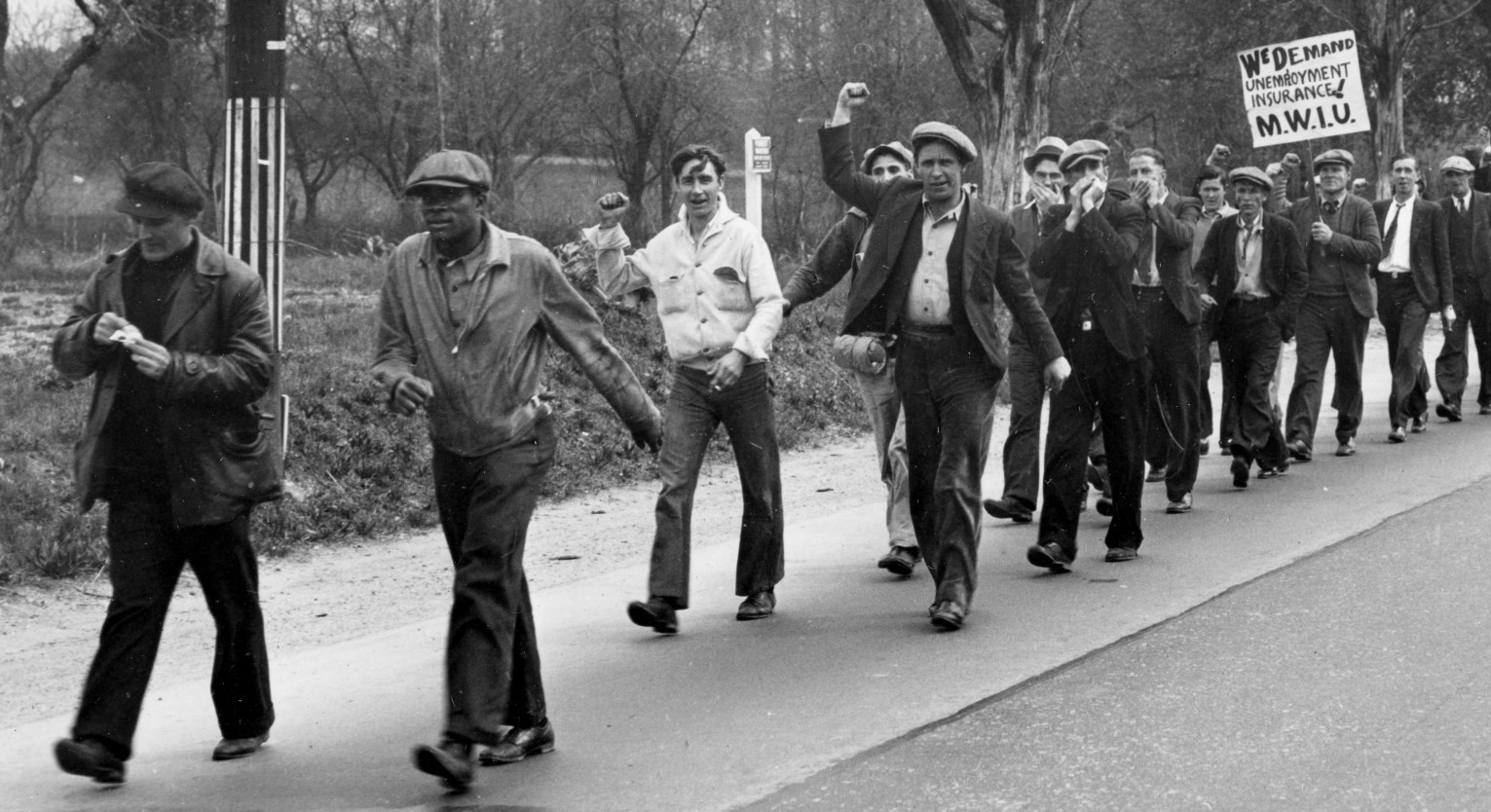
An internal review of renewed activity in Baltimore, particularly on the waterfront, from the Communist Party’s local organizing secretary.
‘The Work of the Baltimore Section’ by S. Horwatt from Party Organizer (C.P.U.S.A. Internal Bulletin). Vol. 7 No. 4. April, 1934.
THE Open Letter has placed the Baltimore Party section on its feet.
Baltimore was one of the few demoralized Party sections in spite of its strategic importance in the marine and steel industries. Baltimore is also the heart and brain of the jimcrow lynch state of Maryland, (Euel Lee, Armwood, etc.) and as such is a basic center for the Negro Liberation movement.
The Section Committee, however, was not only not in a position to give leadership to the waterfront, steel and Negro liberation movement, but the section committee which in reality did not exist was literally isolated from the units and Party members.
This situation continued until a group of Party actives came together and decided (1) to call a membership meeting (December 24) with the only purpose of discussing the Open Letter, and (2) on the basis of the discussion to call another membership meeting for December 29th to elect a functioning section committee.
The discussion of the Open Letter opened the minds of the comrades and made them conscious of the tasks and responsibilities of our local section. As a result of the first meeting the second membership meeting, armed with political clarity, did not concentrate on “what was not ‘Jone’ but on what is to be done, and on this basis, in the most serious manner, has elected its section committee.
Since then, in a period of only two months, the Party will come to its section convention with at least one hundred new Party members, with a record of improvement in the organizational and political life of the Party units, with some definite achievements in bringing in the Party on the waterfront and to a lesser extent in the steel industry.
Work on the Waterfront
What has the section done in order to politicize and strengthen the work on the waterfront?
1. It has established a functioning unit on the waterfront.
2. The section assigned the organizer and org. secretary to work with the unit and fraction.
3. The unit established a Party class and a trade union class.
4. The unit issues a bi-monthly bulletin.
5. The section and the unit raised in a political manner the question of the Negro liberation movement.
Since these things were done, we find at present on the waterfront the (a) best functioning Party unit, (b) more than thirty marine workers already recruited for the Party in four weeks, (c) it has established a political and conscious leadership on the waterfront, (d) a systematic educational campaign and struggle against jim-crow discriminatory practices on the waterfront as a result of which the M.W.I.U. has succeeded in organizing for the first time a Negro Longshoremen Local. It is interesting to note here that during the strike against the Munson line, the longshoremen local criticized the M.W.I.U. for not calling upon them immediately to help in its strike. This is a demonstration of how unity between Negro and white can be forged if we only give the necessary attention to it.
Now the Waterfront Unemployment Council took the initiative in calling a United Front conference to organize a federation of unemployed organizations. The M.W.I.U. is in connection with the Scottsboro campaign, also in the process of organizing an I.L.D. branch on the waterfront which will even more help the union in forging the unity of Negro and white workers on the waterfront. Only last week (Feb. 27) the unit decided to mobilize marine forces to help the S.M.W. I.U. in its present campaign. In short, by bringing in the Party on the waterfront the M.W.I.U. became what is should be, namely, the leader of working class struggles in Baltimore.
However, the Party must not become dizzy by its success on the waterfront. We must constantly be aware of the fact that our present achievements are due to the successful struggles on the waterfront. Therefore, in order to keep up the present position on the waterfront the Party must continue and even strengthen the forces in the struggle for one united Central Shipping Buro controlled by the marine workers; to have the workers prepared to fight for the upkeep of the projects; to strengthen the Party by recruiting the best elements and to raise the struggle to a higher political level; for united action against the labor fakers and against capitalism. Only by struggle will we be able to consolidate what we have gained and achieve what we are striving for.
Work in the Steel Industry
In the steel industry our union has organized a campaign (1) against the enforcement of company unions, and (2) for the mobilization of the steel workers in support of the Social Unemployment Insurance Bill. Though the S.M.W.I.U. has succeeded in drawing new members into the union, the Party recruiting here is very slow. This responsibility rests with the section committee for not giving the necessary help to our leading Party comrades in the union.
However, the section committee has recently assigned three comrades, including the organizer and agitprop director, and also two units which will help our fraction in its work. Now, in connection with the present campaign of the S.M.W.I.U. the section has mobilized the entire Party and has also sent out a call for a conference of mass organizations with the purpose of mobilizing all the possible help for this campaign. The section committee must be on the guard here not to lose the present possibility of building a real fighting S.M.W.I.U.
Other Work Neglected
When we come, however, to the work in the unemployed field, opposition work in the Amalgamated, I.L.G.W.U., railroad work, furniture union, contact with mass organizations, here, in this field of work, the section committee is entirely out of control in spite of the fact that we have a railroad unit, in spite of the fact that we have devoted Party comrades working in these organizations.
Only now has the section committee, through the Waterfront Unemployment Council decided to call a conference in order to bring in some control and guidance in our unemployed work. As for the rest of the work mentioned above, nothing has been done by the section. The same is true about building the L.S.N.R. in Baltimore.
Does Concentration Mean Neglect of Other Work?
The reason for neglecting the above mentioned unions and organizations is, in my opinion, the fact that there is unclarity in our ranks as to the question: Does the fact that we have concentration work justify our negligence in utilizing and guiding our active Party forces in other fields of work?
We have, for instance, a small Furniture Workers Industrial Union which if given better leadership could become a strong and militant union. We have comrades working in other reformist trade unions who if they were given correct leadership could have recruited members for our Party and strengthened our trade union opposition work. We have mass organizations through which by giving Party leadership we could succeed not only in strengthening our mass base but also avoid the danger of having our organization, an I.W.O branch, utilized by our Party enemies. In other words, our section committee must become clarified on the question of how to combine concentration work with all the fields of activities which the Party is facing. This question was raised in the presence of a District rep at a functionaries meeting. But the question was not answered clearly enough so that it would bring a turn in our work. In my opinion concentration work should not take the section away from its responsibility on other fields of work but on the contrary, the section should utilize all other strategic centers for the purpose of carrying through effective concentration work. Otherwise the section committee will practically weaken the forces which are involved in other activities.
Another question which interests our section is: Whether it would not be advisable and practical to make Baltimore a District. It is the opinion of many leading comrades that by putting Baltimore under the direct guidance of the C.C. it would strengthen the work here, it would avoid technical and organizational difficulties which hinder a Jot the work and development of our Party in Baltimore.
Should Baltimore become a District then the distribution of forces into various sections according to the specific tasks in the sections would also solve many of the political problems which we face now.
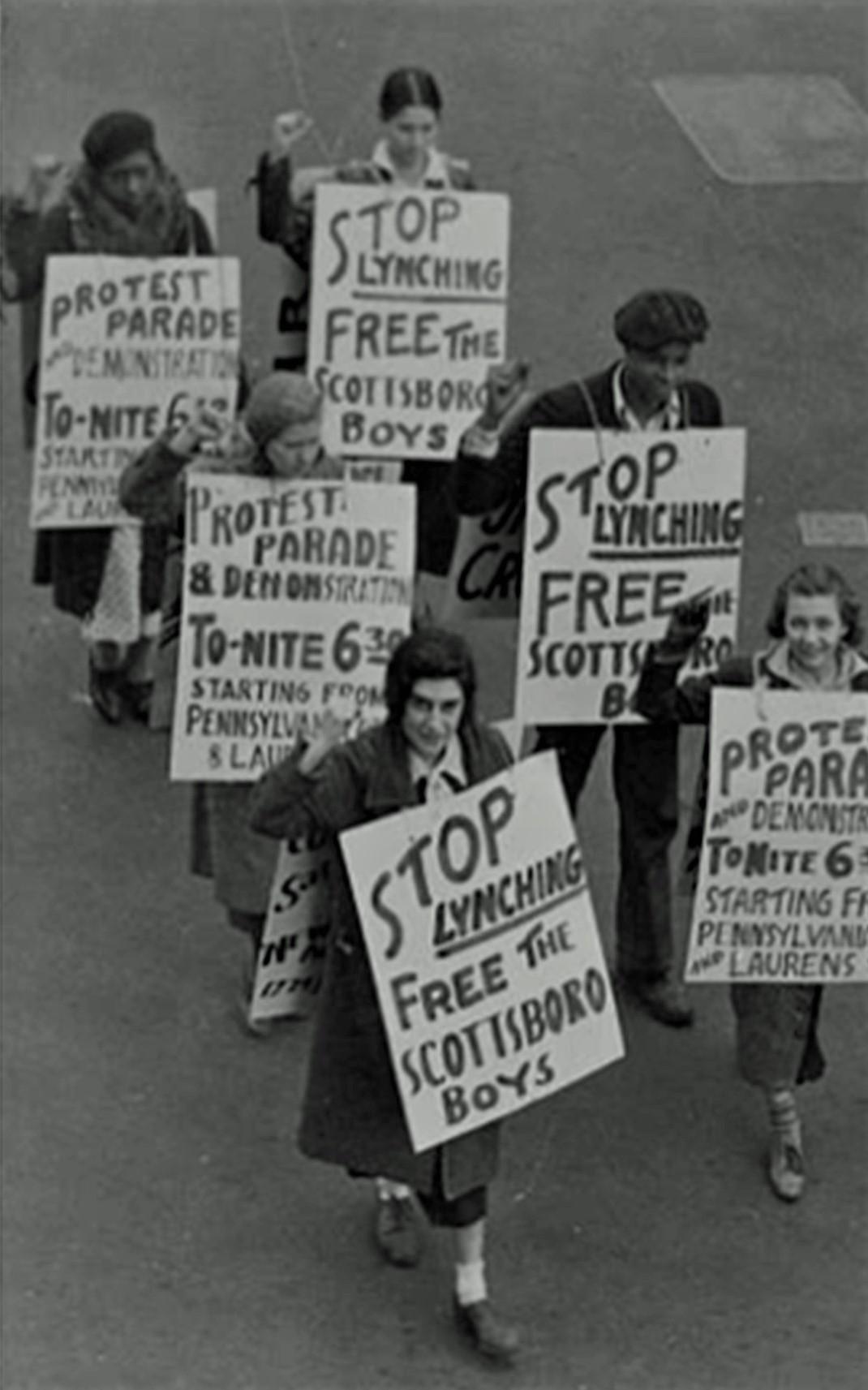
With regard to our struggle for a united front and especially the exposure of the bureaucratic and treacherous top leadership of the S.P. in Baltimore, here the section practically failed to do anything in spite of the fact that. the section made some concrete decisions after the S.P. City Committee, under the influence of the most yellow socialist leader in Baltimore, Dr. Neishtadt, had refused to unite with the Party on a program of action in solidarity with the Austrian workers.
The section committee, in line with the resolution of the C.I. and the Eighteenth Plenum Resolution of the Party, must come to the section convention with the sharpest self-criticism especially with regard to those tasks which were undertaken and were not carried out for the only reason that we have refused to carry them out.
The section convention must clarify before the Party the question of what is personal responsibility in the Party. Only by introducing section leadership, personal responsibility and a strict check-up. will our section overcome most of its difficulties in the struggle for winning over the workers of the basic industries, and the oppressed Negro masses.
The Party Organizer was the internal bulletin of the Communist Party published by its Central Committee beginning in 1927. First published irregularly, than bi-monthly, and then monthly, the Organizer was primarily meant for the Party’s unit, district, and shop organizers. The Organizer offers a much different view of the CP than the Daily Worker, including a much higher proportion of women writers than almost any other CP publication. Its pages are often full of the mundane problems of Party organizing, complaints about resources, debates over policy and personalities, as well as official numbers and information on Party campaigns, locals, organizations, and periodicals making the Party Organizer an important resource for the study and understanding of the Party in its most important years.
PDF of issue (large file): https://archive.org/download/party-organizer_1934-04_7_4/party-organizer_1934-04_7_4.pdf
 Revolution's Newsstand