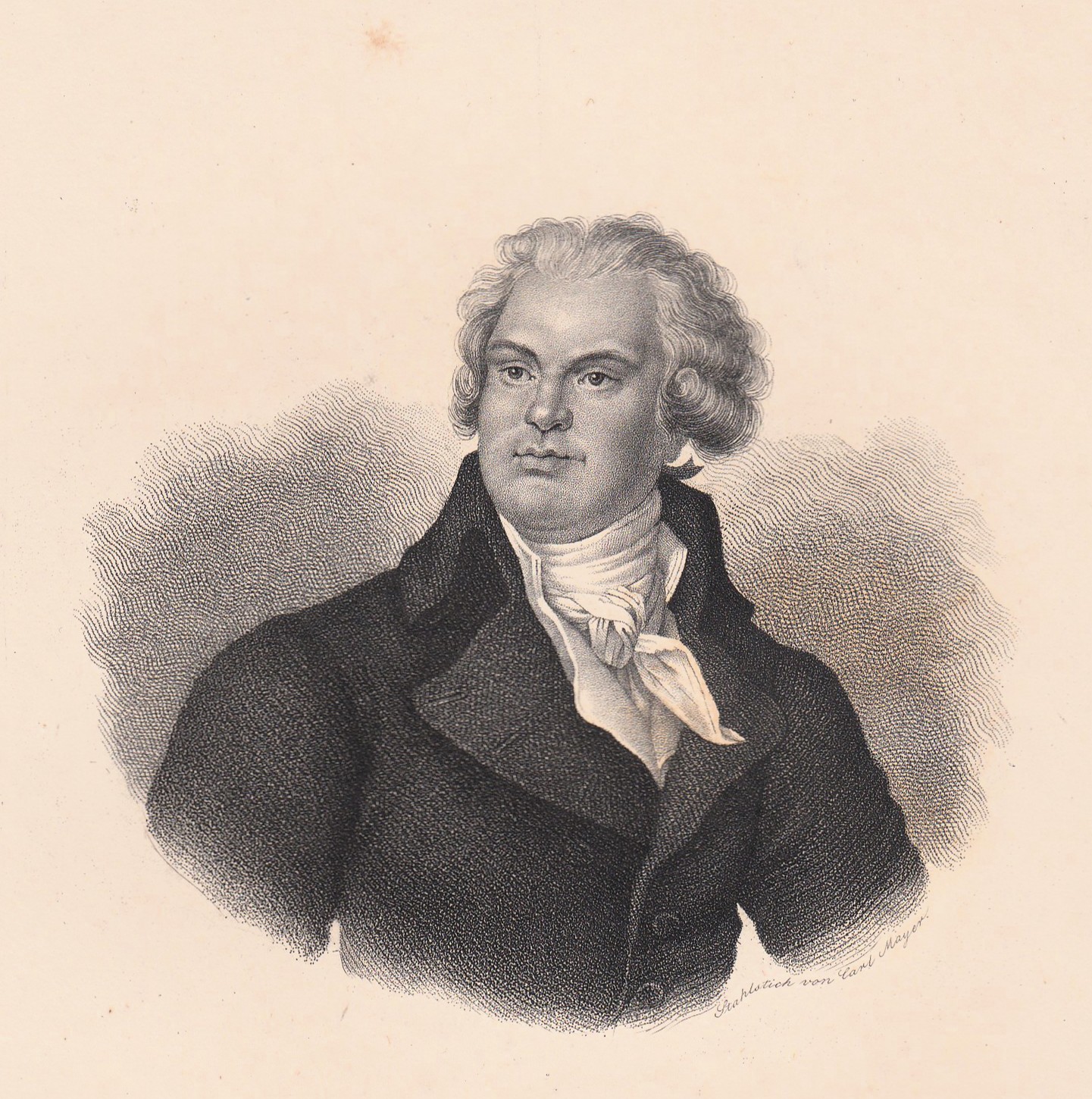
Danton was elected alternate public prosecutor of the Commune, giving this speech on taking office. Delivered in the General Council of the Commune, January 20, 1792.
‘A Confession of Faith’ (1792) by George Jacques Danton from Voices of Revolt, No. 5. International Publishers, New York 1927.
PARIS, like all the rest of France, is divided into three classes. One class, hostile to all liberty, to all equality, to any kind of Constitution, is worthy of all the ills with which it has itself burdened and wishes to continue to burden the nation. As for this class, I shall not speak to it, I shall only fight it to the bitter end, to the death. The second class is the chosen body of passionate friends and cooperators, of the foremost supports of our holy revolution; it is this class which has always wanted me to be here: I need not say anything to it either; this class has its opinion of me, and I shall never disappoint its hopes. The third class, as numerous as it is well meaning, also desires liberty, but is afraid of the storms of liberty; it does not hate the defenders of liberty and will aid them always in days of peril; but it often condemns their vigor, habitually considering it either misdirected or dangerous: this is a class of citizens whom I respect; even though they lend too ready an ear to the treacherous insinuations of those who conceal the viciousness of their designs under the mask of moderation; I say it is to these citizens that I must speak as magistrate of the people, and make myself well understood with a solemn profession of faith on my political principles.
It has fallen to my lot through the gift of nature to possess an athletic frame and the harsh lineaments of freedom. Having escaped the misfortune of being born as a member of one of the classes privileged under our former institutions, which for that very reason are almost always degenerate, I have preserved all my native vigor, making a place for myself in the nation by my own efforts alone, without ceasing for an instant, either in my private life or in the profession I have embraced, to prove that I was capable of a combination of intellectual detachment, warmth of spirit, and firmness of character.
If, from the very earliest days of our regeneration, I have gone through all the ardors of patriotism, if I have even appeared to go to excess, in order not to be guilty of weakness; if I have even been outlawed for having declared aloud the character of the men who wished to impugn the Revolution for having defended those who were called the fanatics of liberty,1 it was because I knew what might be expected from the traitors who were openly shielding the serpents of the aristocracy.
If I have always been irrevocably attached to the cause of the people, if I have not shared the notion of a crowd of citizens who were no doubt of honorable intentions, concerning men whose political life appeared to me to show a dangerous versatility; if I have put questions point blank, and in a manner that was just as public as it was honest, to some of these men who believe they were the pivots on which our revolution revolved; if I have wanted them to explain the things that had appeared, in the course of my relations with them, to have been fallacious in their plans, it is because I have always been convinced that the people had to know what it might fear from persons so capable as to be constantly in a position to pass over–according to the course of events–to that party which offered the highest rewards to their ambition; it is because I also believed that it was worthy of me to explain myself in the presence of those very men,2 to tell them exactly what I thought of them, even though I well knew that they would secure compensation for their silence by having me depicted in the blackest colors by their accomplices and by preparing new persecutions for me.
If, strong in my cause, which was that of the nation, I have preferred the dangers of a second legal proscription, not even based on the doubtful fact of my participation in a petition which is of such sad memory,3 but on I know not what miserable charge of permitting pistols to be taken away from the room of a military officer, in my presence, on a day that will be memorable forever,4 it is because I act constantly in accordance with the eternal laws of justice, it is because I am incapable of maintaining relations with doubtful persons, or of associating my name with those who are not ashamed to desert the cause of the people after having once defended it.
Such has been my life, and such it will always remain.
NOTES
1. Danton here alludes to his defense of Marat; see Jean Paul Marat, a volume appearing in this series.
2. Mirabeau, Lafayette, Barnave and the Lameths.
3. The affair of the Champs de Mars. Danton was at the Champs Mars on July 16, but not on July 17, the day of the shootings.
4. It is unknown to what Danton refers here.
International Publishers was formed in 1923 for the purpose of translating and disseminating international Marxist texts and headed by Alexander Trachtenberg. It quickly outgrew that mission to be the main book publisher, while Workers Library continued to be the pamphlet publisher of the Communist Party.
PDF of original book: https://www.marxists.org/history/usa/parties/cpusa/voices-of-revolt/05-George-Jacques-Danton-VOR-ocr.pdf
 Revolution's Newsstand