
Rufino Tumanda, a politically active working class Filipino immigrant to Brooklyn, a community centered on the Sands St. area, speaks to the conditions of Philippine workers at home and in the U.S., leading to the recent formation of the U.S.-based Filipino Anti-Imperialist League (F.A.L.), and his joining the Communist Party.
‘A Filipino Worker in the U.S. Tells Why He Joined the Communist Party’ from The Daily Worker. Vol. 11 No. 252. October 22, 1934.
Working Conditions on Plantations in Philippine Islands Owned by American Corporations Keep Native Workers in State of Abject Slavery
By a Filipino Worker of the Filipino Anti-Imperialist League, Brooklyn
I AM a Filipino worker. I was born in a small town of Tanjay in the province of Oriental Negroes, P.I. Oriental Negroes is an agricultural province, and the majority of its population consists of workers of big sugar plantations owned by Spanish landlords. In Bais, for instance, a small town with a population of fifteen thousand, about 99 per cent work in the sugar cane plantation owned by three big Spanish landlords.
These workers get 25 centavos a day (122 cents) with lodging and food, and work from 6 a.m. to 6 p.m. They are watched by a foreman, who sees to it that they work continuously. In the afternoon, I have seen these workers going home tired and sleepy after the hardest work imaginable.
The workers with their slavery wages become so indebted that they cannot get away from their landlord. The workers on this plantation are terrorized and robbed of their rights to organize and protest for higher wages. I know these facts, because I once lived with my uncle in Bais, who was a practical sugar chemist on that plantation. (Jesus Dias sugar plantation).
I WILL give another example, similar to the one I have just described. In the Barrio of Polo, in the town of Tanjay where I was born, there is a big “cocoanut plantation” owned by an American Corporation. During the very first year of its establishment, the company forced every small Filipino peasant whose land is situated close to this plantation, to sell, and if the Filipino peasants would not sell them, they took them by force.
Most of the peasants lost their cases during the trial because the plantation owner handed large sums of money to the judge and other officials in that town.
The peasants and workers in that small town have learned from their own experience of the alliance between the politicians and the owner of that plantation. The peasants have learned that the capitalist class and their agents are not interested at all in alleviating the condition of the laboring classes but instead they are only interested in exploiting for their own interest. Their small pieces of land were grabbed up because the plantation owner wanted them to become landless and forced to work for him.
This company was established in 1915. I was then a small boy. But I never forgot these facts.
THE workers were paid according to their age and the sort of work they were doing. A 15 to 18 year old boy, working at hoeing received from 15 to 25 centavos a day (122 cents), with lousy food. The laborers who till the fields received from 25 to 30 centavos a day (15 cents). They became so involved in debt that they were unable to run away to look for better wages.
In general the majority of the provinces in the P.I. are populated by small peasants, who owned small parcels of land where they could cultivate and produce crops for their existence. Money is very scarce throughout the island.
In Manila, Ceba, Iloilo and Zamboanga are more or less industrialized cities where the majority of the Filipino masses are workers in the factories and other concerns.
The P.I. since 1907 has been the source of labor for Hawaiian plantations. In the year 1929, 11,628 Filipino workers went to Hawaii under contract to work on the plantations. Up to 1915 the sugar growers hired Filipinos from the P.I. and paid their transportation. Since then the Hawaiian sugar planters have forced the Filipino workers to pay their own way. With capitalist advertisements and propaganda to the effect that Hawaii is an island of paradise and prosperity, the small peasants, specially in the island of Luzon, would sell their belongings so that they could depart for Hawaii.
THE majority of the Filipinos who come to America are ambitious to study in schools. But only 10 per cent out of a hundred are successful in their studies, several reasons for this; of the Filipino students who come here are self-supporting. Second, we Filipinos in America are discriminated against, so that we are unable to get decent work where we could earn and study at the same time. Third, some of the Filipino students are influenced and poisoned by their surrounding and go in for women and gambling.
There are many Filipino organizations in America. The main functions of these organizations are to improve the social relationship between American and Filipino people. These organizations have purely bourgeois programs. There is a Philippinean in Sands Street, Brooklyn, This organization denounced the Filipino Anti-Imperialist League as being led by the Communist Party, claiming that their policies are similar and that such policies are not proper for the P.I. The Filipino masses in America, however, have entirely lost faith in this organization because they learned that it is not interested in bettering the condition of Filipino workers in America, nor in fighting for the real freedom of the Filipino masses in P.I., but instead is interested in strengthening the power of the capitalist government in the P.I.
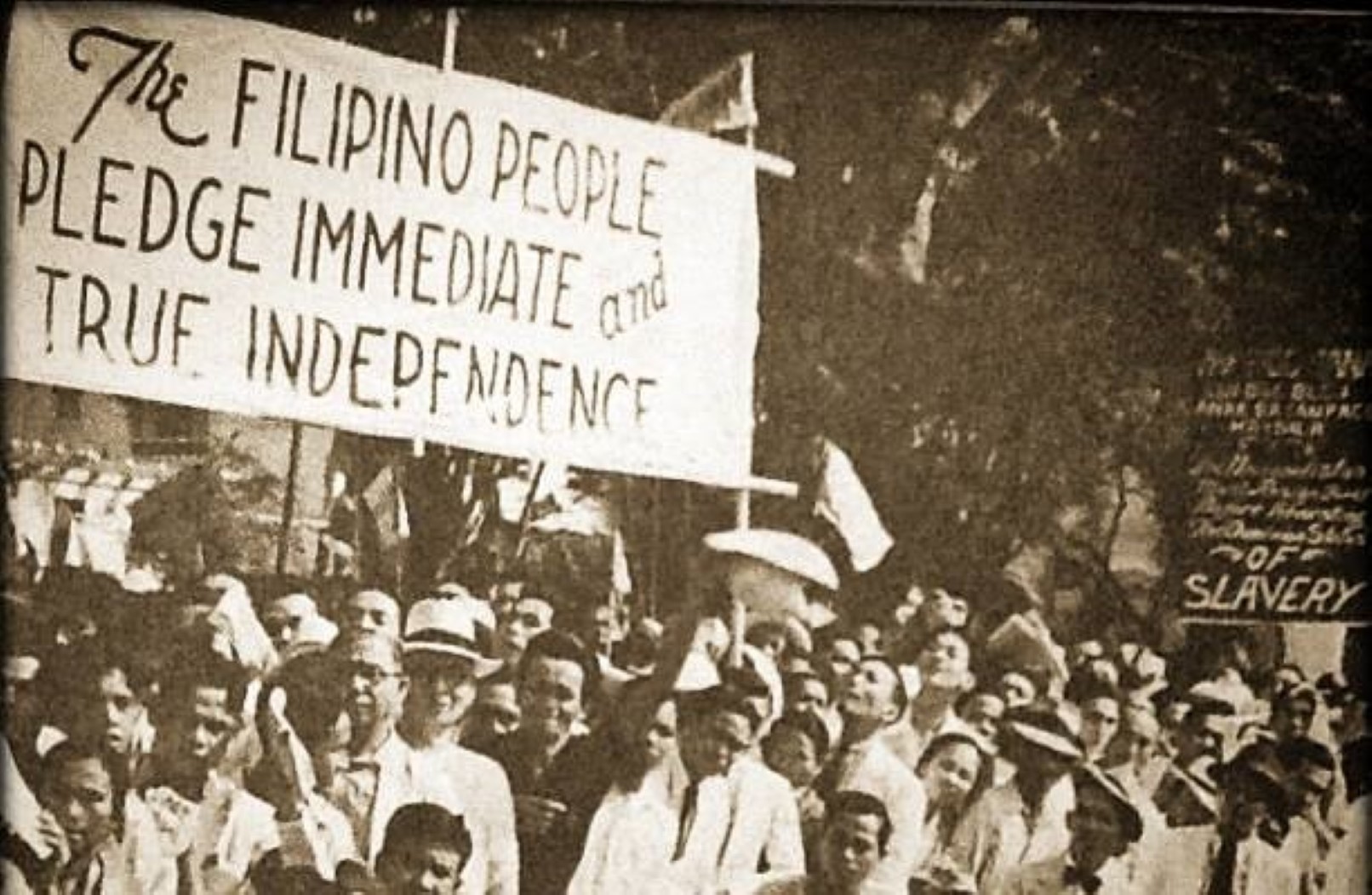
For more than a year I have been a member of the Filipino Anti-Imperialist League. The League since its establishment has been rallying Filipino workers in Brooklyn, N.Y., and Philadelphia to support the fight of the Filipino masses in the P.I. in their fight for land, rice and real independence, has been rallying Filipinos as well as white and Negro workers in America to protest for the freedom of comrade Evangelista, the national secretary of the C.P. in P.I., and other prisoners who lead the Filipino workers and peasants in their struggles for freedom.
The F.A.L. has taken up the fight in connection with the Menierva Cigar workers in Manila where during the cigar workers’ strikes the Murphy government turned loose their fascist gangs to murder the Filipino cigar strikers.
The majority of the Filipino workers in Brooklyn and New York understand that the fight which is being led by the F.A.L. is the fight for real freedom of the Filipino workers and peasants as well as the fight for the white and Negro workers in America. The League has exposed the betrayers of the Filipino masses, such as Quezon, Osmena, Rozas and Co.
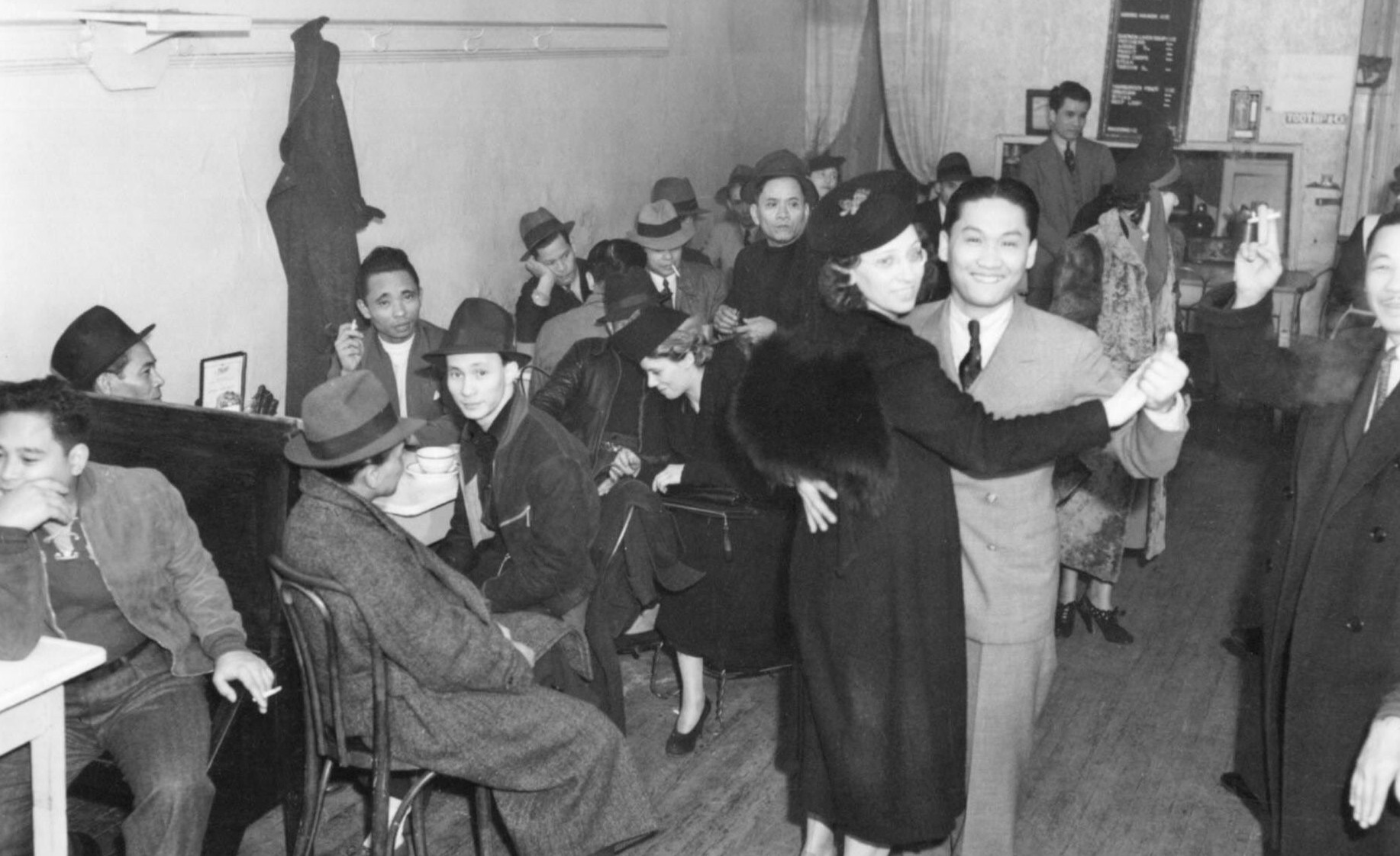
IN South Brooklyn, the majority of the Filipinos are seamen. They are housed by three Filipino landlords who own a boarding house. They are charged a dollar a day, board and room. The situation of these seamen is bad. some times they are forced to sleep three in one bed. They stay In this boarding house because they think it is their only way to secure a job through the owner of the boarding house himself who acts as shipping agent.
During my first week’s stay in Brooklyn, in September. 1932. I happen to listen at an open air meeting at Court and Carroll Streets. The subject appealed to me very much. I bought a pamphlet which was called “The Platform of the Communist Party.” That pamphlet which I bought gave me an idea that I had never thought of before—the idea of studying the workers’ movement with the great hopes of educating myself through this movement so that I might be able to help the Filipino masses in their struggle for real freedom.
I joined the Communist Party because it is the only Party carrying on revolutionary work for the real freedom of the colonial people. I urge all Filipino workers, especially colonial seamen, to join the revolutionary Party of the working class.
The Daily Worker began in 1924 and was published in New York City by the Communist Party US and its predecessor organizations. Among the most long-lasting and important left publications in US history, it had a circulation of 35,000 at its peak. The Daily Worker came from The Ohio Socialist, published by the Left Wing-dominated Socialist Party of Ohio in Cleveland from 1917 to November 1919, when it became became The Toiler, paper of the Communist Labor Party. In December 1921 the above-ground Workers Party of America merged the Toiler with the paper Workers Council to found The Worker, which became The Daily Worker beginning January 13, 1924.
PDF of full issue: https://www.marxists.org/history/usa/pubs/dailyworker/1934/v11-n252b-NAT-oct-22-1934-DW-LOC.pdf
 Revolution's Newsstand