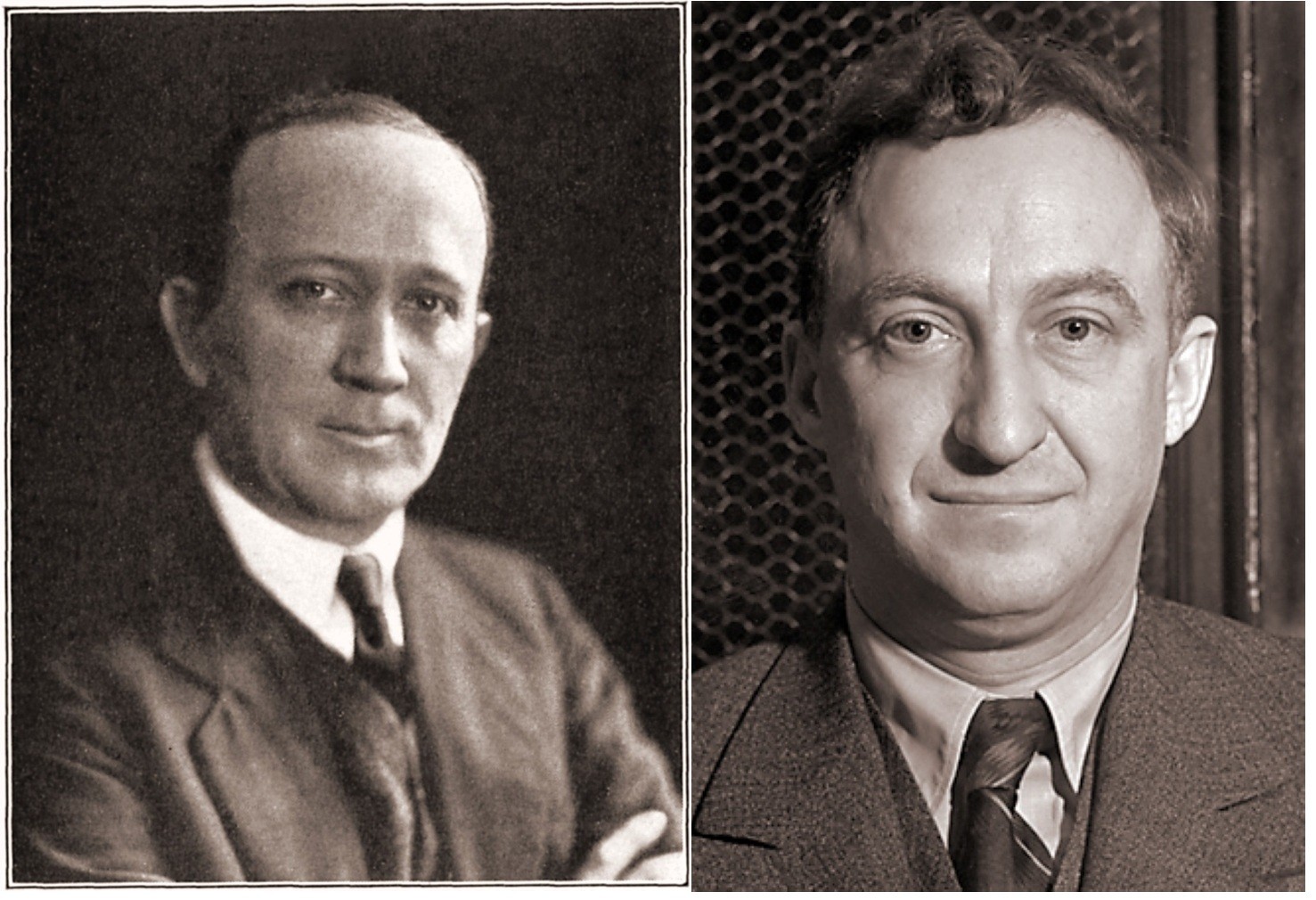
A major document from the 1920s U.S. factional struggle in the fight waged at the Comintern’s Sixth Congress in July, 1928. Submitted by the delegation of the then Minority, signed by James P. Cannon, William Z. Foster, William F. Dunne, Alex Bittelman, J.W. Johnstone, Manuel Gomez and George Siskin, this lengthy document accuses the Lovestone-Pepper Majority of opportunism towards right-wing forces and underestimation of left-wing forces in the U.S. class struggle. This would be the last big fight of the traditional Cannon-Foster faction as Cannon would soon support Trotsky’s Left Opposition, and the Comintern’s transition to the Third Period saw Lovestone expelled the following year but Foster’s leadership largely side-lined in favor of Earl Browder.
‘The Right Danger in the American Party’ by William Z. Foster, James P. Cannon, William F. Dunne, Alex Bittelman, J.W. Johnstone, Manuel Gomez and George Siskin from The Militant. Vol. 1 & 2 Nos. 1-3 & 1-2. November 15, 1928-January 15, 1929.
THE main danger in the American Party comes is to changing objective conditions of the class struggle in the United States and the opportunist political line of the Lovestone group which is the majority of the Central Committee.
The maturing inner contradictions of American capitalism and the leftward drift of the masses produce a turning point in the class struggle. From a long period of retreat before the onslaught of capital the American workers are passing over into a period of defense and resistance preliminary to a higher phase of offensive and aggressive struggle against capitalist exploitation.
In this period of increasing sharpness of class relations and class struggles in the United States, requiring a reorientation of the Party’s perspectives to changing conditions and a reformulation of Party policy toward more aggressiveness, initiative and militancy, we confront the danger of holding on to old perspectives, outworn policies and methods of work, which prevent the full unfolding of the Party’s leadership in the developing struggles.
The danger in such a period as we are entering in the United States comes from the right. This danger becomes real and actual because the Lovestone group, which constitutes the majority in the Central Committee, refuses to orientate itself to the changing conditions of struggle and pursues an opportunist line, as will be proven in the following points.
I. Overestimation of the Reserve Powers of American Imperialism.
Two basic factors determine the condition of American capitalism in the present period: 1) The maturing inner contradictions of American capitalism (disproportion between the rate of expansion of productive capacity and rate of growth of volume of production, disproportion between the growth of production and consumption, unemployment, the contradictions of rationalization, capital export, polarization of wealth and poverty, etc.) are beginning to produce qualitative changes in the whole economic system; 2) These inner contradictions are maturing in the surroundings of a declining world capitalism and the Socialist growth of the U.S.S.R. which sharpen, intensify and accelerate the development of the contradictions of American capitalism, hastening the coming of its downfall.
An analysis of the degree of ripeness of those contradictions, will show that American capitalism is about to reach the apex of growth and that further expansion leads American capitalism to further and more drastic attacks upon the standards of life of the American masses and to an attempt at an armed redivision of the world market and spheres of imperialist domination, both of which only further intensify these contradictions leading to the downfall of American imperialism.
In the light of the above, the present economic depression must inevitably become the forerunner of a deep-going crisis, even though American capitalism may succeed in postponing its coming with the help of the reserve powers which it still enjoys. This depression cannot be viewed merely as a “normal” cyclical depression having only slight and passing effects. On the contrary, because of the qualitative changes which are taking place in American capitalist economy every such cyclical depression intensifies to the highest degree the contradictions of capitalism, undermines deeper the entire structure, eventually leading to deep-going crises.
The Lovestone group has an entirely different conception of the position and present phase of American capitalism. This conception is marked by the following characteristics:
1. The main emphasis upon the tendencies making for the growth and power of American capitalism.
2. Totally inadequate emphasis upon the force and cumulative effect of the contradictions of American capitalism, which are already producing qualitative changes.
3. The Lovestone group sees no qualitative changes taking place in American capitalism.
4. Lack of proper evaluation of the inner contradictions of American capitalism as distinct from the undermining effects of the declining world capitalism and the growth of the U.S.S.R.
5. Viewing the coming of deep-going crises in America mainly as a result of the disintegrating influences of declining world capitalism, relegating to the background the effects of the inner contradictions of American capitalism.
6. Following the lead of bourgeois economists in evaluating the present depression only as a “recession.” On this the Lovestone group persisted as late as February, 1928.
7. Accepting the “theory of spottiness” of the capitalist press and capitalist economists to explain the nature of the present depression and refusal to see its special characteristic as a forerunner of a deep-going crisis.
8. Underestimation of the great significance in the imperialist epoch of the strikingly uneven development of industry (coal, oil, textiles, etc.) in connection with other inner contradictions of American capitalism.
9. Failure to understand the processes of rationalization, the menacing nature of the movement designated as capitalist-engineering-efficiency-socialism and the integration of the labor aristocracy and bureaucracy into the imperialist machine of American capitalism.
10. Failure to understand the full effects of the rationalization drive upon the workers particularly as represented by the large extent of wage cuts, especially piece rates.
11. Assuming that the course of American imperialism will proceed mainly along the lines of development of British capitalism and failure to understand the basically different present world situation.
The totality of these characteristics make for a dangerously opportunist conception of present-day American capitalism and for a grave overestimation of its reserve powers.
This tendency of the Lovestone group finds its expression in the original draft of the February thesis, the C.E.C. plenum resolution of May 1927, and in the writing and speeches of Comrades Lovestone, Pepper, Wolfe, Nearing, etc., etc.
II. Underestimation of the Leftward Drift of the Masses.
The murderous effects of the rationalization drive of American capitalism upon the masses (4,000,000 unemployed, speed-up, wage-cuts, etc.), the sharpening imperialist aggression of the American ruling class (Nicaragua, China, Philippines, etc.), the success of Socialist construction in the U.S.S.R., the systematic breakdown of the effects of capitalist and reformist propaganda, are all producing a widespread leftward drift of the masses in the United States.
There is a general growth of discontent, militancy and readiness to struggle among the semi-skilled and unskilled workers (the bulk of the American proletariat). A process of widespread and general radicalization is taking place in all industries among the most exploited sections of the workers.
This leftward or radicalization drift of the masses came to most active expression in the struggle of the mining, textile, and needle trades workers, and in the widespread foment and prospects for struggle in the automobile, shoe, oil, meat packing, rubber, and other industries.
The April letter of the E.C.C.I. to our Party characterizes this general leftward drift as “a rapidly growing participation of the workers in mass struggles.”
Similar signs of foment and leftward development are shown among the working farmers who continue to suffer under the effects of the agricultural crisis which though somewhat retarded, has not been liquidated.
This leftward drift means a definite break in the mood of the American masses. A break from passivity and retreat to increasing militancy and struggle.
The Lovestone group does not share this point of view. Its conception of the mood of the Ameri can masses is marked by the following characteristics:
1. Failure to see the break in the mood of the American masses and the coming of a turning point in the class struggle.
2. Denial of the existence of a widespread and general leftward or radicalization drift among the bulk of the American workers, covering it up with a demagogic and false charge against the minority that it believes in a deep-going “revolutionary” radicalization of the “entire” American working class.
3. Carrying over into the question of the mood of the masses the bourgeois “theory of spottiness,” insisting upon the “spotty” nature of radicalization in the sense that it is found only among the workers in the mining, textile and needle industries.
4. Failure to recognize a leftward drift among the working farmers. Failure to develop an effective agrarian program. Failure to treat the agricultural workers as part of the proletariat!
5. Instead of taking advantage of the obvious manifestations of the radicalization drift of the masses, the Lovestone group underestimates it, and continually and systematically (in speeches, articles, resolutions, etc.) issues warnings and concentrates its attack against those who are seeking to attract the Party’s attention and orientate its policy on the growing favorable condition for struggle resulting from this radicalization.
The sum of these characteristics constitute a serious underestimation of the leftward drift of the American masses.
III. Lack of Perspective of Struggle.
The growing aggressiveness of American capitalism, internally against the masses, externally against its imperialist rivals, chiefly England, and the leftward drift of the masses, constitute the main basis for a perspective of sharpening class struggle and an increasing degree of leadership of our Party in the struggles of the masses. This follows from a correct analysis of the diminishing reserve powers of American capitalism and the growing leftward drift of the masses.
The E.C.C.I. letter to our Party of April 13, 1928, states in the following way this perspective of struggle in America:
“Amid an atmosphere of growing deep depression developing towards a crisis and more acute and aggressive policy on the part of American imperialism at home and abroad (naval budget, persecution of the workers through injunctions, Nicaragua, Philippines, Mexico and so on); and under conditions of a rapidly growing participation of the workers in mass struggles, as shown by the heroic struggle of the miners in Pennsylvania and Ohio, by the Passaic textile workers strike, the fight in the needle trades, the historic Sacco-Vanzetti agitation; the Workers’ (Communist) Party, which has already played the leading role in these struggles, and was able also to take a prominent part in the miners, struggle in Colorado, has now as its major task to mobilize and organize the workers under its banner against the capitalist offensive and against the reformist supporters of capitalism, namely, the American Federation of Labor, and the Socialist Party of America.”
The perspective of the Lovestone group is in opposition to that outlined above. Its perspective is based upon an overestimation of the reserve power of American capitalism and an underestimation of the leftward drift of the masses. It is characterized by:
1. Overestimation of objective difficulties and underestimation of the growing favorable opportunities for the proletarian class struggle.
2. Overemphasis of the weakness and smallness of the Party and underemphasis of its great task for leadership in the developing class struggles and its ability to undertake the solution of these tasks.
2, Failure to realize the seriousness of the war danger and the coming of serious struggles as is seen in the failure to build an underground apparatus.
3. Playing down the symptomatic significance of such sporadic struggles among the unorganized as the oil strike in Bayonne, automobile strike in Oshawa, etc.
4. Seeing in the present political situation no signs or promise for political conflict and mass political movements.
5. Revising the perspective for struggle outlined in the February thesis which was forced upon the majority by the minority of the Central Committee. This revision was made in the policies of the Love stone group since February in articles by Lovestone. and Pepper, and in the May resolution of the C.E.C. Plenum. Failure to publish the February Thesis. These characteristics of the perspective of the Lovestone group lack the outlook for struggle and orientation towards it.
IV. Failure to Orientate Towards New Unions and the Organization of the Unorganized.
To organize the many millions of unorganized workers is the major task of our Party. The building of the Party as the leader of the workers in all phases of their struggle against American imperialism depends largely upon its carrying thru vigorously this basic task of organization. With great masses of workers developing moods and movements of struggle, under the pressure of the industrial depression, rationalization, and the capitalist offensive, the organization of the unorganized now becomes the more urgent and possible.
The old craft unions, which are chiefly based upon the skilled and privileged workers, are con trolled by ultra-reactionary leaders, and following a class collaboration policy, and which have been undermined and driven out of the basic industries by the employers’ offensive, will not organize the great unorganized masses. This can be accomplished only through new unions, militant in character and based upon industrial instead of craft lines. It is fundamentally necessary that our party aggressively take the lead in the formation of these new industrial unions. At the same time. the Party shall continue and extend through the trade union fractions, and the T.U.E.L. its revolutionary work in the old unions.
In the organization of the unorganized, the Party must base its orientation upon the unskilled and semi-skilled masses in the basic industries, the most exploited, and decisive sections of the working class. Trustified American capital, with all its economic strength and with all the powers of governmental repression at its disposal, will violently resist the organization of the workers in the basic industries. The new unionism will be established, but only by determined struggle. Hence the Party in its great task of organizing the unorganized must undertake its work with firm determination and with a thoroughgoing mobilization of all available forces.
The line of the Lovestone group in this vital work is a right wing line which liquidates the Party’s efforts to organize the unorganized. Its principal defects are: (a) resistance to reorientating the Party decisively in the direction of the building of new unions, and, (b) dilettante approach to the mass organization campaigns and failure to carry them through with the vigor and persistence necessary to this success. The whole American Party was slow in orientating towards organizing new unions, but the Lovestone group is primarily responsible for this, because it has resisted and is still resisting despite the pressure of the Comin tern, the Profintern, and the minority of the C.E.C Principal causes of wrong Lovestone policies in organizing the unorganized are:
1. Lack of faith in the possibility for effective struggle of the masses resulting from the overestimation of the reserve powers of American capitalism and underestimation of the industrial depression, the capitalist offensive and the developing mood of resistance among the workers.
2. Tendency to orientate upon the organized skilled workers rather than upon the unorganized semi-skilled and unskilled workers.
3. Underestimation of the diminishing influence of the skilled workers due to the mechanization of industry and the growing gulf between the skilled and unskilled.
4. Tendency to orientate upon alleged differences in the upper strata of the labor bureaucracy.
5. Underestimation of the crisis in the trade unions, and a tendency to minimize the necessity for new unions. Illusions regarding possibilities of organizing the masses into the A.F. of L. unions. (Articles and speeches by Comrades Pepper and Lovestone).
6. Constant practice of placing the interests of the Lovestone fraction ahead of those of the Party, and the sacrifice of mass campaigns for factional advantage.
7. Tendency to toy with mass organization campaigns instead of pushing them through aggressively. The majority leadership of the Y.W.L. which is an organic part of the Lovestone faction in the Party, follows the same opportunist line in its industrial work.
Typical examples of these wrong tendencies and policies are:
1. Rejected as dual unionism the proposal made by the C.E.C. minority, in May, 1927, for the calling of an open conference of the left-wing and progressives in the coal industry to wage direct struggle against the Lewis machine.
2. Condemned as dual unionism by a campaign. throughout the whole Party the proposal of the C.E. C. minority in its thesis of May 1927, that the Party should “unhesitatingly” establish new unions where ever the old unions are decrepit or non-existent.
3. In the February, 1928 thesis, the Lovestone group simply repeated the year old Comintern decision regarding new unions, although the Comintern was then in the process of developing another resolution, which on the basis of the industrial depression and the deepening crisis in the old unions, laid far greater emphasis on the formation of new unions.
4. Resistance to the introduction of the slogan “Organize New Unions in Unorganized Industries” into the Party national election platform.
5. Failure to push forward vigorously for new unions in the needle industry. In this industry the Lovestore leadership has a craft union ideology and is afflicted with right wing theories that the workers cannot fight the employers and that the unions must cooperate in building up associations of employers.
6. Resistance to open struggle against the Lewis machine and building new union in mining industry.
7. Failure to concentrate Party forces for determined organizing campaign; example, total lack of preliminary work in New England textile industry prior to New Bedford strike.
8. Systematic factional discrimination against comrades capable for trade union work. Placing and displacing of field and district organizers and industrial organizers solely with regard to factional interests, with resultant damage to mass organization. The correctness of this characterization of a perspective of struggle given by the Comintern in April has been more than justified by developing class struggles and increasing foment among the masses since. (New Bedford and Fall River strikes in textile, continuation of the desperate miners struggle, Bayonne strike in oil, maturing struggle situation in automobile, meat packing, shoe, etc., foment among the farmers, the intensifying poli tical situation, etc.)
V. Resistance to Orientation of Active Struggle Against Lewis Machine and for Building
New Union in Mining Industry.
The most important industrial struggle ever carried through by our Party and its biggest achievement in trade union work is the left wing struggle now being waged in the mining industry. The driving force in the formulation and execution of correct policies and mobilization of Party forces in this campaign was the C.E.C. minority. The policies of the Lovetsone group, dictated by an underestimation of the whole fight, definitely militated against the development of the aggressive action necessitated in this crucial struggle and prevented this work making greater success. With the coal industry in a deep crisis (due to the over-development of the industry, use of substitute for coal, etc.) and with the union, weakened by the heavy unemployment and the shifting of the industry to the South, being rapidly torn to pieces under the impact of the attacks of the employers and the treachery of Lewis, our Party orientation should have been definitely in the direction of an open struggle against the Lewis machine and for the formation of a new union. The policy of the Lovestone C.E.C. majority placed many obstacles in the way of developing and executing such a policy. Among these are:
1. Rejection of the open conference proposed by the C.E.C. minority. This action checked the Party orientation towards a new union and confused and demoralized the miners’ left wing and left the miners movement without a definite perspective and disconnected our Party from the discontented masses of miners who wanted to struggle against Lewis. Renewal of the motion several months later by the C.E.C. minority for an open conference and a direct struggle against Lewis, its acceptance by the Polcom, reestablished our leadership over the masses who were in grave danger of being demoralized by the I.W.W.
2. Failure of the CEC to vigorously combat the deep-seated pessimism and systematic resistance against the application of the policy of open struggle, after this policy, upon motion of the minority, had been formally adopted by the C.E.C. The task of breaking down the resistance of the Lovestone District Organizers fell chiefly upon the C.E.C. minority who were sharply criticized by the Lovestone majority, for these actions. The right wing tendencies of these organizers, signalized by reluctance to fight the Lewis bureaucracy and by a general underestimation of the fighting spirit of the miners, were most clearly exemplified by the letters of Comrade Bedacht, District Organizer of Illinois to the C.E.C.
3. From December 1926 till December 1927, including 9 months of the miners’ strike, the Lovestone majority failed to publish a left wing miners’ organ. This was due on the one hand to the underestimation of the struggle and on the other to yielding to the demand of the so-called progressives (Brophy, Hapgood, etc.) that no criticism of Lewis should be made during the strike.
4. For six months no efforts were put forth to establish a left wing miners’ relief organization and relief campaign, which offered exceptionally favor able means for the left wing to establish mass contacts. This relief organization could only have been built by an open fight against the Lewis machine and the A.F. of L. bureaucracy.
5. Factional jugglery in the anthracite districts. This was based upon the established principle of the Lovestone group of keeping minority comrades from key positions. By placing incompetent organizers in charge of the Party apparatus and by carrying on a sharp factional war, the whole campaign in the anthracite was gravely injured.
6. Failure to initiate in time and to prosecute vigorously the campaign to organize the unorganized in Western Pennsylvania prior to the calling of the April 6th Strike and for the formation of a new union.
VI. Insufficient Appreciation of Leading Role of Party and Failure to Build It.
The political Secretariat of the ECCI found it necessary to state in its letter of April 13th to our Party that it “deems it necessary to call attention to…the tasks of the Party in the sphere of leadership of the growing workers’ mass movement;” the Secretariat further stated that our Party “has now as its major task to mobilize and to organize the workers under its banner against the capitalist offensive… it is immediately necessary to intensify the ideological and organizational preparation of the Party, especially the local Party organization, to enable it quickly to mobilize its forces and means and thus to make it ready for a leading role in the developing class struggle.”
The insufficient appreciation of the leading role of the Party and the failure to build the Party to which this letter called attention is one of the main characteristics of the Lovestone group. This is shown by the following facts:
1. Overemphasis on labor party. Slowness and delay in deciding upon and announcing our own election campaign. (Lovestone article April “Communist.” Delay in acting on minority motion of February 29th for mobilization of Party for our own election campaign.) Allowing S.P. to enter field first.
2. The Palken, Bearak and Milwaukee cases (support of Socialist Party candidates).
3. The tendency to make our Party into a mere instrument for organizing a Labor Party. (Minnesota), describing our election campaign as an “organic part of the Labor Party campaign.” (Lovestone)
4. The tendency to look upon our own election campaign as of less importance than the labor party campaign.
5. The tendency to look upon our Party merely as the left wing in farmer-labor organizations (running party candidates in primary elections without statement that they are Communists). (Minnesota).
6. Resistance to Party leadership in trade union work (needle trades).
7. Absolute denial of Party leading role (Furriers’ Union, and Workers’ Delegation to the U.S.S.R.).
8. Failure to carry on genuine Communist education and training–opportunist confusing of mass workers education and the education of the Party membership and training of Communist cadres (Workers School).
9. Failure to build Party in campaigns.
10. Failure to create Party apparatus for Women’s work and permitting foreign language organizations, consisting of housewives, to take the leading role despite repeated demands of the International Women’s Secretariat.
11. Sectarian approach to Party building (Bedacht–separation of Party building work from mass work.)
12. Refusal to print Swabeck’s pamphlet on internal Party organization and Party building.
13. Non-recognition of Party role in Women’s work. “The working women will march to power through trade unions, through clubs, housewives’ organizations, through cooperative leagues, and through a labor party.” (First issue “New York Working Women,” 1928.)
14. The official organ of the Party, the Daily Worker, affords a devastating example of the underestimation of the role of the Communist press as “the collective organizer of the Party and the masses” as described by Lenin. As an organ of a Communist Party, the Daily Worker is seriously deficient. There has been a systematic liquidation of Communist political writing in the Daily Worker to the point where its Communist character has been weakened. Comrade Minor, the editor, made a motion in the Political Committee on April 19th, 1928, to permit the publication of the establishment of anti-war department in the paper April 1st. Instructed to publish articles against Shipstead, Comrade Minor was obliged to make a motion to turn the work over to the Agit Prop. On the ground “of the almost total deprivation of the Daily Worker of all political writers at the present time…” One of the chief political writers of the Daily Worker for the last five months has been Comrade Nearing, whose articles almost without exception, contain gross reformist and petty bourgeois errors. There has been a systematic liquidation of tried Communist journalists on the staff and their replacement by elements whose training has been acquired on the capitalist press. The line has been to try to make Communists out of journalists rather than to train Communists as journalists.
The Daily Worker today gives neither a picture of. the class struggle in the U.S.A. nor any Communist analysis of even the main features of imperialist developments, The Daily Worker has been treated frivolously by the Lovestone group both in the editorial and management departments (the appointment of three separate business managers in less than two years all of them incompetent and all appointed for factional reasons, and rejection of proposal to appoint Comrade Wagenknecht, the most competent comrade for the position.)
Building the prestige of the Daily Workers is a major task which now confronts the Party. Its editorial staff must be organized from among the best politically equipped comrades.
15. Failure to utilize the mass campaigns to strengthen the nuclei and build the Party, allowing a gradual and growing disintegration of the nuclei in many centers, New York, etc. to take place, are characteristics of the present leadership.
16. Extravagant financial programs which place unduly heavy burdens upon the membership and make it difficult for the lower paid workers to join and remain in the Party and fulfill the demands made upon them.
VII. Opportunist Application of the United Front Policy.
The C.I. line against the United Front from the top with reactionary trade union, liberal and Socialist Party leaders, and for united front with the workers against them applies with special emphasis in America. The new objective factors making for the discontent of the masses and strengthening their impulse and will to struggle create increasingly favorable conditions for the application of the united front tactics directly with the workers and leading them in the fight against the reactionary leaders and the capitalists. The firm adherence to this basic conception is a prerequisite for the full utilization of the possibilities to broaden and intensify the fight of the workers and build the Party.
The complete degeneration of the Socialist Par ty and its incorporation into the capitalist–A.F. of L-police machine puts before the Party as one of its essential tasks the smashing frontal attack against it and its entire leadership all along the line in order to destroy its influence over the workers.
The Lovestone majority has not understood the C.I. policy on the united front and has applied it in an opportunistic manner. This is demonstrated by a whole series of gross errors, many of which remain unacknowledged and uncorrected.
Examples which illustrate the opportunist line in this respect may be cited as follows:
1. False estimation of the Socialist Party and calculation on a “left wing” within it which wouldwork with us for a labor party. This is indicated by the motion of Lovestone to send a number of comrades into the Socialist Party “for the purpose of working for our labor party policy in the Socialist Party”, and the rejection of the motion by the minority declaring such tactics to be false and calling for a policy of frontal attack against the Socialist Party all along the line. (Polcom. Minutes, December 14, 1927).
The same policy was executed in the support in the elections of the Socialist Judge Panken, an agent of the black gang in the needle trades who was likewise supported by the Republican Party and the New York World and New York Times. The majority stubbornly defended this decision in spite of the most energetic protest of the minority; the support of the Socialist Bearak in Boston; and the proposal to support Berger, the National Chairman of the Socialist Party in Milwaukee; (criticized in the letter of the E.C.C.I.).
The policy in the Panken case was not an incidental error; it proceeded from a false conception of the Lovestone group. It was proposed as a national policy in a program submitted to the Polcom by Comrade Lovestone, which contained the provision that our Party should run candidates on its own ticket only in those cases where it can be done “without endangering the election of candidates running locally on the tickets of other working class parties.” (Point 22 of Lovestone’s proposals on the. Labor Party Campaign, Polcom Minutes, Oct. 7, 1927.)
2. The Open Letter to the Socialist Party, an error of the Polcom as a whole, which was pointed object it is your duty to help out in the letter of the E.C.C.I.
3. The united front made by the Party leaders of the Furrier’s Union, members of the Lovestone group in the Party, with the so-called middle group in the Union, under conditions which surrender the leadership to the latter and on the basis of a written agreement containing the unheard of provision that “there shall be no Party or clique control of the Union”.
4. Building united front in Anti-Imperialist work too much on top and with liberals and not from below among the workers. Concealing the role and face of the Party in Anti-Imperialist work. Removal of Comrade Gomez as Secretary of the Anti-Imperialist League in order to secure a “non-Communist or someone not known as a Communist”. (Polcom Minutes, December 21, 1927–reconsidered at a subsequent meeting un er pressure of minority). Failure to do serious anti-imperialist work as shown by refusal to send workers into the American forces in China and Nicaragua on the ground that it was necessary to proceed slowly and concentrate on work at home.
5. Failure to publicly criticize Brophy and other progressives in the Mine Workers’ Union united front despite numerous record motions to that effect passed under pressure of the minority.
6. Wrong form of united front with so-called “Tolerance Group” and Shelly group in the International Ladies’ Garment Workers’ Union; failure to criticize them, failure in the united front with them to build our own strength and forces in the I.L.G.W.U.
7. United front with Brennan in the Miners Union under conditions which rehabilitated the prestige of this faker and brought discredit on the Party and weakened its forces in the Anthracite.
8. Liberal, legislative, constitutional and vulgarly “American” line in the “Council for the Protection of the Foreign Born”.
9. Opposition to leading role of Negro proletariat in united front Negro race movement by Comrade Moore, Party leader of Negro work, corrected by Polcom on the initiative of the minority.
10. Persistence in organizing workers and farmers in one Party (Farmer Labor Party) contrary to C.I. decision.
11. Wrong orientation in Women’s work, basing it on housewives instead of devoting main attention to women in industry despite repeated letters from the International Women’s Secretariat on this point. Failure to draw women industrial workers into leading activities; the entire leading committee for women’s work in New York is composed of school teachers, with the exception of Comrade Wortis, a leading right winger in the needle trades.
VIII. Opportunist Mistakes in the Election Campaign.
In line with its general right wing tendencies the Lovestone group has made several serious opportunist errors, in the national election campaign of which the three following are the most outstanding:
1. In the national election program of our Party occurs the following demand: “Abolition of the Senate, of the Supreme Court, and of the veto power of the Persident.”
This opportunistic proposal creates illusions regarding the reform of the capitalist state. It cultivates the false notion much of which is exerted through the Senate, the Supreme Court and the President’s veto power, by liquidating these institutions within the frame-work of capitalist society
2. Illustrative of their right wing tendencies of the Lovestone group is the letter officially sent to the Party units to direct the securing of signatures to put our Party candidates on the election ballot. The following quotations indicate the corrupting methods used in this work:
“Remember that you are out to get signatures and not converts. This means no argument of any kind.”
“Don’t ask for signatures in the name of Communism“…
“If necessary you can explain that the signature is not an obligation to vote for this Party.”
“Never state your mission to anyone but the person whose signature you wish to get, because if you give them time to think you will get too many questions.”
“See how many more tricks you can work out for yourself and write your experiences to the National Office.” (Our emphasis).
3. The general use of professional signature gatherers, and the buying of signatures, and the failure to mobilize the Party comrades for these campaigns.
This grossly opportunistic letter was condemned by the Comintern.
IX. Opportunist Mistakes in Our Labor Party Work.
The Party needs a fresh and clear formulation of policy on the labor party question based upon the changed conditions and new perspectives. The following is proposed as a main outline for our perspective and policy on the labor party question.
1. The developing depression and coming crisis will create favorable conditions for mass breakaway movements from the capitalist parties which our Party must anticipate and utilize “to mobilize and to organize the workers under its banner against the capitalist offensive and against the reformist supporters of capitalism, namely, the American Federation of Labor and the Socialist Party of America” (C.I. April Letter).
2. It is not the task of our Party in the present period to carry on agitation campaigns and struggles for the organization of a labor party.
In view of the changed conditions (integration of Labor bureaucracy and aristocracy into capitalist machine, narrowing base of A.F. of L. and restriction to skilled workers, the organization of new unions as main task of our Party, leftward drift of masses, etc.) and the above opportunist errors, the labor party slogan in this period has only a general propaganda value.
3. Our Party must fight resolutely against the tendencies for a third capitalist party (Norris, La Follette, Berger, Thomas, etc.), and strive to establish itself as the political party of the American masses.
4. The Party must carry on active campaigns for the organization of united front action with the masses from below on concrete and immediate issues of struggle against the capitalist offensive, on the political as well as economic fields. More than ever must the united front policy from below be applied by our Party in the fight against the reformists and to win the masses for the class struggle.
In the present period, the Party’s chief means of furthering the political awakening of the American masses, is the vigorous participation and leadership in the everyday struggles, deepening the content of these struggles, carrying out energetically the program for the organization of new unions. In the process of these struggles the Party will establish united fronts with the masses on the political field.
6. The theory that the C.P. of the U.S.A. can make little or no gains in election campaigns until a labor party appears must be combatted vigorously.
The grave opportunist errors of the Lovestone group in the labor party work, places squarely before our Party the need of discontinuing the old labor party policy. The following are the main errors:
1. Abandoning the industrial base by failure to carry on political campaigns among the working masses in the industrial centers.
2. Orientating the struggle for independent working class political action largely on the farmers and farmer-labor movements of the North west.
3. Persistence in advocating the organization of workers and farmers in one Party (Farmer-Labor Party) contrary to C.I. decision.
4. Proposal to send Party members into the Socialist Party to fight for a Labor Party.
5. Reliance upon the trade union and socialist bureaucracy for the building of the labor party, criticized in the April letter of the C.I., a mistake shared in also by the minority of the Polcom.
6. Wrong conception of the role of the labor party in the class struggle (“emancipator of the working class”), noted and criticized in the Comintern letter of April.
7. Wrong conception of the relation between the Communist Party and a labor party. Reducing the Communist Party to a left wing in the labor party and farmer-labor movement (Minnesota, Alleghany county labor party.) Reducing the Party to an instrument for the organization of a labor party.
8. The Panken and Bearak maneuvers criticized by the C.I.
X. Failure to Build the T.U.E.L.
In numerous letters and resolutions the Comin tern and Profintern have repeatedly stressed the necessity of building the Trade Union Educational League. With our Party orientating itself towards the organization of new unions the T.U.E.L. acquires added importance. It must through its general organization and industrial committees, actively proceed with the organization of the new unions. It must continue and extend its activities in building the left wing in the old unions and coordinate these with its major task of organizing the new unions.
Notwithstanding the importance of the T.U.E.L. as a factor in the trade union work, little is being done by the Party to build it up. Party support of the T.U.E.L. is mostly mere lip service. It still remains largely a skeleton organization in most localities and industries. No efforts were made by the C.E.C. to follow up the recent national conference of the T.U.E.L. by an active campaign to establish local groups. The return of the Profintern and trade union delegations have not been utilized to build the T.U.E.L.
The T.U.E.L. nationally and its respective National Industrial Committees must be brought more prominently to the front in a leading role in industrial struggles. There is a strong tendency to push them aside and liquidate them by conducting all industrial activities directly through Party fractions. The official organ of the T.U.E.L. “Labor Unity”, now neglected by the Party, must be strengthened and developed into a weekly mass organ.
XI. Pacifist and Petty Bourgeois Liberal Tendencies in the Anti-War and Anti-Imperialist Work.
The Party manifested many pacifist and liberal deviations in its anti-war and anti-imperialist work. The following illustrates this point:
1. Calling upon the workers to protest against the death of American Marines in Nicaragua, and treating the death of these marines as of greater consequence to the American workers than the murder of hundreds of Nicaraguan rebels by American marines (Central Committee Nicaraguan Manifesto, July, 1927, never repudiated by the C.E.C. nor repudiated by the Lovestone group).
2. Tendency obscure the independent and aggressive role of American imperialism (Lovestone group theory of American imperialism being the “catspaw” of British imperialism and its newest theory of American imperialism “supporting Japan in China”).
3. Failure of the Polcom to prevent the issuance and stop immediately the use of pacifist slogans in the Nicaraguan campaign (“Enlist with Sandino”, “Stop the Flow of Nicaraguan Blood”) a mistake corrected lately by the Polcom.
4. Pacifist and liberal appeals to the marines (leaflets in California, Boston and elsewhere, corrected by the Polcom).
5. The tendency to build the united front in the All-America Anti-Imperialist work chiefly upon petty-bourgeois liberal elements and failure to draw labor elements into this movement, (Also corrected by the Polcom in formal decision).
6. Failure to carry on active anti-militarist work among the American forces in Nicaragua and China.
7. Pacifist ideology in work among women. “We can even stop that terrible scourge of humanity–war”. (First issue New York “Working Women”). The above deviations flow from the general right-wing orientation and, main line of the Lovestone group.
XII. Underestimation and False Conception of Work Among Negro Masses.
The problem of Communist work among the 12, 000,000 Negroes in the United States, the overwhelming majority of whom are workers and working farmers and their families, must be approached from the Leninist viewpoint that this most exploited and oppressed section of the population forms an immense reserve for the proletarian revolution. The main tasks are:
1. The development of a revolutionary Negro race movement led by the Negro proletariat.
2. Systematic work among Negro masses in industry.
3. Campaigns to mobilize the white workers for struggle in behalf of the negroes against all forms of imperialist oppression and discrimination, linking up race questions with economic questions.
4. Systematic work among the Negro masses in masses of the South, their organization for struggle against white oppression.
5. Struggle against white chauvinism in the ranks of our Party.
6. The training of a cadre of Negro Communist leaders.
7. The drawing of Negro workers into all organization campaigns.
8. The intensification of the struggle inside the existing unions.
9. The development of the influence of our Party as the leader of the struggles of the Negro masses.
These are the immediate tasks of our Party. The Lovestone majority has systematically and continuously neglected work among the Negro masses. This error is based on an underestimation of the revolutionary role of this most exploited and oppressed section of the population. This is expressed by Comrade Lovestone in his speech at the February plenum as published in the Daily Worker where he refers to the Negro farmers in the South as a “Broad social reserve of capitalist reaction.” It is further shown by the complete absence of any reference to work among the Negro peasantry in the South in the program introduced by Comrade Pepper in the Polburo, April 30, 1928. For two and a half years the Negro work of our Party has been bankrupt. 1) The Negro organ was liquidated; 2) the organization of the Pullman porters into a Negro union was carried out by social reformists without our Party making any serious effort to establish its influence; 3) no struggle against white chauvinism in the ranks of the Party has been carried on, (such incidents as Gary, Harlem, Detroit, are proof of this) and continuous re treating of the Party leadership before the chauvinism of the whites; 4) the last Negro program of the party written by Comrade Pepper, makes no reference to the necessity for such a campaign; 5) the Lovestone majority entirely underestimates the necessity for struggle for the mobilization of the white workers in behalf of the Negro masses; 6) systematic factional corruption to conceal bankruptcy of Negro work; 7) no systematic attempt to build real communist cadre of Negro comrades; 8) orientation towards Negro petty bourgeoisie rather than towards workers and farmers; 9) failure to connect Negro work with general trade union work of the Party; 10) failure to draw Negro comrades into general Party work.
XIII. Opportunist Errors in Cooperative Work.
The Cooperative work of the Party in New York, the largest district, has been and still is characterized by gross opportunism and virulent factionalism. The Cooperative work (United Workers’ Cooperative) has been based on building and finance cooperatives which in turn are based on speculation in real estate, etc. These enterprises are now in a financial crisis which threatens to discredit the Party. The extreme right wing which united with non-party elements against the party, refused to accept C.E.C. decisions, has been placed in control of the organization and encouraged even by the Polcom members of the Lovestone group in impermissible violation of party procedure.
The worker members of the cooperative, both party and non-Party are demoralized and discouraged.
In spite of the continual struggle of the minority against it, the Lovestone group refuses to abandon or even criticize this disastrous policy.
The cooperative section of the Comintern should conduct a thorough investigation of this enterprise and officially inform the Party of its findings and conclusions.
The work of the Party in the cooperatives is exceedingly weak. The party has no program for cooperative work.
The work of the Party in the consumers cooperatives in the North-West and Mass. is carried on without any direction from the centre.
XIV. Denial of Right Danger and Militant Attack Against the Left.
In the face of all these facts, the Lovestone majority not only fails to take the necessary steps to change its policy and to acknowledge and correct the errors, but it militantly and persistently denies the existence of right tendencies and right elements in the Party. It has consolidated itself into a closely bound faction with all the prominent former members of the Lore group and with the right wing in the Needle trades and has given up all struggle against their opportunist errors. Neither the political report nor the resolution of the May plenum contained a single word regarding the right danger in the party and not a single word has been published to explain to the party the right errors pointed out by the E.C.C.I. and similar errors cited here.
At the same time the majority concentrates its whole fire against the left, against the comrades who criticize the opportunist errors and try to bring the line of the party into accord with the policy of the C.I. It demagogically distorts and misrepresents the position of the minority, falsely attributing to it a fantastic overestimation of the radicalization of the American workers and an opposition to work in the old unions. In this manner it sets up a false issue and wages a war against it as a cloak for its opportunist policies and practices. Comrades responsible for opportunist errors are shielded from criticism and protected in the most responsible positions while those criticizing the policy of the party from the left are continuously attacked and discriminated against in the assignment of party duties. (For example the appointment of Comrade Poyntz, a former leader of the Lore group as head of the women’s work, failure to correct her opportunist errors in this sphere and many other appointments of a similar character). The denial of the right danger and the concentrated fire against the minority are a component part of the opportunist policy of the Lovestone group.
The many errors which have been criticized by the E.C.C.I. have been errors to the right without exception. The denial of the existence of right dangers by the Lovestone group is in effect a denial of the position of the letter of the E.C.C.I.
XV. The Rejection of Self-Criticism.
Leninist self criticism is one of the greatest necessities of our party to enable it to learn from its mistakes and to clarify its policy.
The whole party has been guilty of failure to criticize itself in the Leninist method, and its ideological development has been thereby greatly retarded. Diplomacy, the covering up of errors, the reconciling of conflicting viewpoints “unanimous” resolutions, passing resolutions for the record which are never carried out, the concealment of weaknesses and failures and the gross and bombastic exaggeration of achievements in party reports, the failure to explain errors in such a way as to educate the party–these practices foreign to a communist organization, amount to a deep-seated disease in the American Party which can be cured only by the inauguration of a ruth less and thorough-going course of genuine Bolshevik self-criticism.
The Lovestone majority rejects such a course and resists all attempts to introduce criticism which goes to the heart of the Party errors and shortcomings. It systematically practices diplomacy with the Party members, refuses to tell them the truth about its mistakes, and denounces all criticism of its policy as factionalism.
The “self-criticism” of the Lovestone majority is a caricature. It consists of a formal acknowledgement of the most obvious shortcomings of the Par ty without establishing their nature, cause and responsibility for them and taking steps to overcome them. The most serious errors of the leadership are concealed from the Party or only formally admitted even in cases where the C.E.C. has intervened to correct them. The great opportunistic errors in the Panken case, the attitude to the Socialist Party and the Labor Party, which were pointed out by the E.C.C.I. in a special letter, have never been explained to the party members whose ideas on these questions have been derived from the propaganda of the C.E.C. on the basis of the false position.
A decisive struggle against diplomacy and evasion and for the inauguration of a course of bolshevik self-criticism in all aspects of Party work is a prerequisite for a correction of the errors and the setting of the Party on the right track.
XVI. Right Wing Internal Factional Regime.
The Lovestone group has consolidated with the former following of Lore into the right wing of the Party against the present minority and conducts a factional regime in support of its opportunist policy. The secretaryship, the Org. Department, the Agitprop Dept., the W.I.R., the Council for Protection of Foreign Born, all foreign language bureaus, all party press, and all districts except two minor ones, are in the control of the Lovestone group, which as a matter of policy, sacrifices mass work for internal factional expediency. (Factional composition of Profintern delegation, trade union delegation, mining campaigns in anthracite, Pittsburgh, Illinois, Ohio; shoe campaign Massachusetts; automobile campaign Detroit, New York, I.L.D.; Secretary Jewish Section I.L.D.; Secretary New York needle trades; factional removal of Comrade Swabeck one of the most qualified organizers in the Party, as district organizer in Illinois, which resulted in greatly weakening the mining campaign and a loss of membership in the district; discrimination against Comrade Aronberg in favor of right wingers; arbitrary removal of Comrade Dunne from Profintern Executive; factional campaign against T.U.E.L., and I.L.D.; persecution and removal of Comrade Costrell; removal of Shachno Epstein as Freiheit editor; systematic exclusion of competent comrades of the minority from leading Party positions.)
The Social Composition of the Lovestone Group.
The social origin of the Lovestone group leadership is petty bourgeois. It has built around and attracted to itself a circle of more or less prosperous petty bourgeois elements. A number of these elements, some of them non-party, know the inner workings of the party, enjoy privileges that are denied even to political committee members of the opposition and exert an influence upon the Party of an unhealthy character. The upper stratum of the Lovestone group leadership is composed mainly of a special type of intellectual developed by New York City College, and graduating from it or similar institutions into leadership of our Party, without appreciable experience in the class struggle. The connections of the Lovestone group with dilettante elements, and their allowing these elements special privileges creates a feeling of resentment in the ranks of the proletarian members.
The decisive element of the Lovestone leadership is composed of comrades who were students, teachers, artists, philanthropic society and commercial investigators, insurance agents, etc., before their rise to leadership of our Party.
XVII. Summary and Proposals.
The Party has extended its influence among the workers during the past year, but has not taken advantage of the opportunities offered by the favor able objective situation. It has succeeded in leading a number of important struggles but has failed to consolidate its influence in organizational form.
The period ahead, which will be one of growing unrest and struggle of the workers offers exceptional prospects for the Party. With correct policies and leadership the Party will be able to take advantage of the opportunities to popularize itself more widely as the leader of the workers in the daily fight to fulfill its vanguard role in broadening the struggles of the workers, developing their political implications, and hastening the process of their development toward revolutionary struggle.
The main danger to the proper carrying out of this revolutionary task in this period comes from the right, and the line of the Lovestone leadership is a right line and contrary to the C.I. policy as shown in the foregoing pages. A continuation of the present opportunist line will endanger the Party’s prospects and hamper its development as the revolutionary leader of the masses.
The C.I. must thoroughly examine the situation and give a clear statement of policy on the main tasks of the Party. The opportunist line must be corrected and the basis laid down for the reorganization of the Party leadership in such a way as to insure the carrying out of the line of the Comintern.
To this end we propose the following measures:
1. The sending of an Open Letter to the Party for the purpose of educating the Party on the policies and tasks and mobilizing the membership for executing the policies.
2. The authorization of the holding of a Party convention within two months after the end of the National Election Campaign.
3. Provision for the holding of a full and free discussion on the Party problems and tasks prior to the Party convention.
4. A thorough consideration of the Party apparatus and a redistribution of the Party forces. Qualified comrades now factionally excluded or relegated to minor positions to be drawn directly into the Party apparatus. A reconsideration of the whole question of District Organizers and the Language Bureaus, is especially necessary in those important industrial districts where the main task of the Party pointed out by the C.I.–the organization of the unorganized into new unions–must be applied.
A reorganization of the staff of the “Daily Worker” and the language press to strengthen its Communist political quality and to provide for the drawing into the staff of politically qualified editorial workers from the present minority.
The Militant was a weekly newspaper begun by supporters of the International Left Opposition recently expelled from the Communist Party in 1928 and published in New York City. Led by James P Cannon, Max Schacthman, Martin Abern, and others, the new organization called itself the Communist League of America (Opposition) and saw itself as an outside faction of both the Communist Party and the Comintern. After 1933, the group dropped ‘Opposition’ and advocated a new party and International. When the CLA fused with AJ Muste’s American Workers Party in late 1934, the paper became the New Militant as the organ of the newly formed Workers Party of the United States.
PDF of full issue: https://www.marxists.org/history/etol/newspape/themilitant/1928/v1n01-nov-15-1928-gray-orig-RH.pdf
PDF of issue 2: https://www.marxists.org/history/etol/newspape/themilitant/1928/v1n02-dec-01-1928-gray-orig-RH.pdf
PDF of issue 3: https://www.marxists.org/history/etol/newspape/themilitant/1928/v1n03-dec-15-1928-gray-orig-RH.pdf
PDF of issue 4: https://www.marxists.org/history/etol/newspape/themilitant/1929/v2n01-mil-1929-gray.pdf
PDF of issue 5: https://www.marxists.org/history/etol/newspape/themilitant/1929/v2n02-mil-1929-gray.pdf
 Revolution's Newsstand