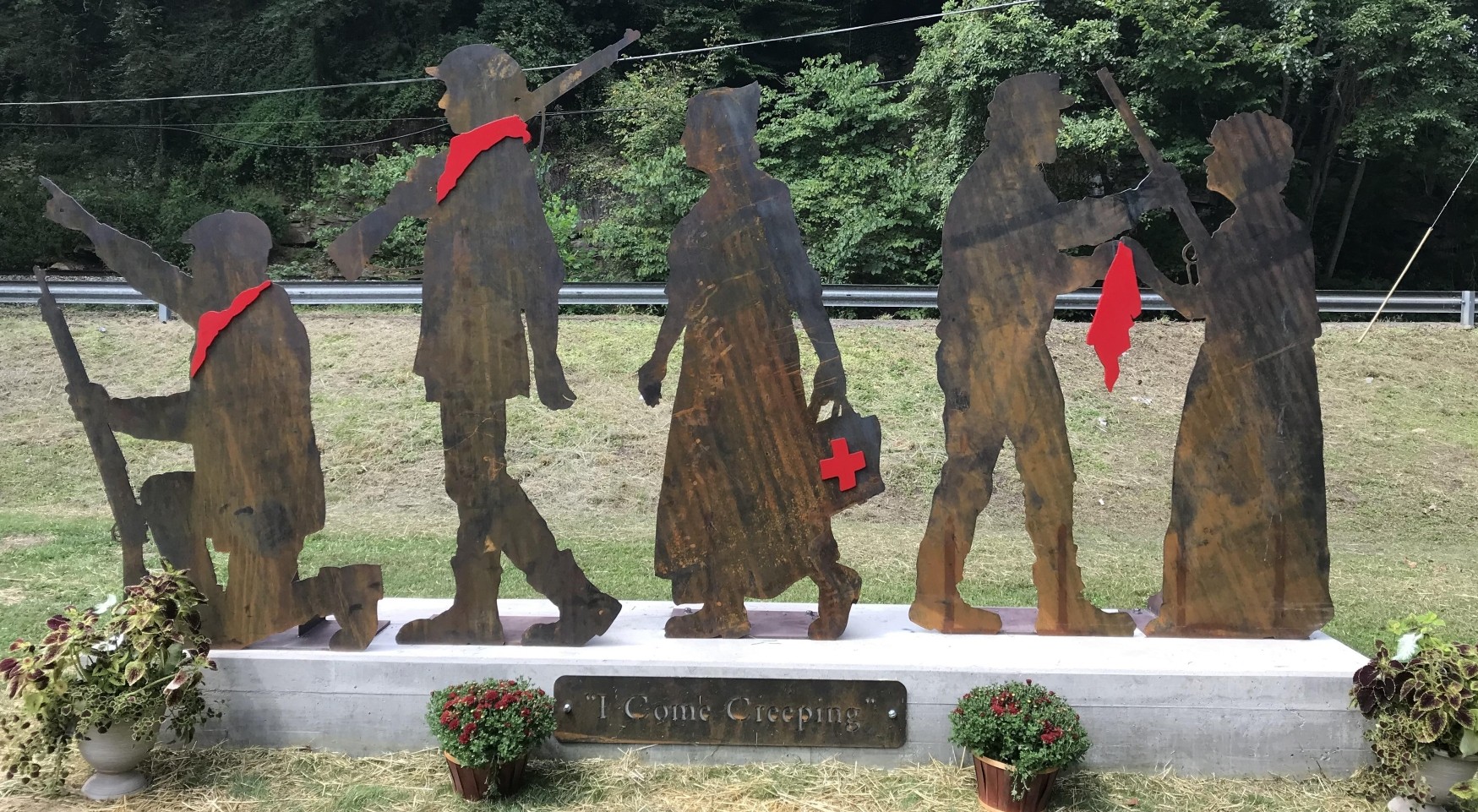
A fine short, background into the 1920-21 West Virginia Mine War. In the spring of 1920 a U.M.W.A. organizing drive from starting from their base in Mingo County into the non-union coal fields of McDowell County began The Battle of Matewan occurred on May 19 with the struggle escalating over the following year and culminating in the Battle of Blair Mountain in August, 1921.
‘Mine Workers Open Fight in West Virginia Fields’ from The Butte Daily Bulletin. Vol. 2 No. 281. July 17, 1920.
Williamson, W. Va., July 17. District No. 17, United Mine Workers of America has opened the fight to organize McDowell county. Eleven local unions have already been formed. This county contains approximately 12,000 miners.
McDowell county is second only to Logan county, in viciousness and terrorism. It is in the heart of the southern coal field of West Virginia. So-called guards and “deputy sheriffs” masquerading as legal officials, and drawing salaries as public officers with bigger salaries on the side from the coal companies, rule this county with an iron hand.
Entrance into McDowell county for any man claiming the rights of free speech and peaceable assemblage is as dangerous as entrance into Logan county. The only difference between the two counties is that the “guards” in Logan have machine guns while the gunmen in McDowell are contented with high-powered rifles. The fight to organize McDowell county has not yet taken on very serious proportions; when it does the “guards” may increase their armaments with machine guns.
The thousands of miners in McDowell county have repeatedly begged for organizers. When the strike of the 6,000 miners in Mingo county was called on July 1, the spirit of organization swept through McDowell.
At the convention held in Williamson June 23-34 at which the delegates of the Mingo miners decided to strike unless their demands were granted, several delegates from McDowell county appeared and begged that the efforts to organize be spread to McDowell county.
C.F. Keeney, president of district No. 17, which is conducting the fight to organize the terror-ridden counties, assured the delegates that West Virginia would be thoroughly organized before the snow fell in 1920. The delegates from the Williamson coal fields then assured the McDowell county delegates that they would back them “through hell and fire” and help them to make McDowell county a safe place to live in instead of a terror-ridden section where no man claiming the rights of free speech and peaceable assemblage is safe from bodily harm or death.
Efforts to organize the miners in McDowell county, had been proceeding secretly. News of the action of the Williamson delegates reached the coal operators and they determined to take drastic steps to crush it.
Simultaneous with the issuance of the strike order for Mingo county, 350 McDowell county miners were discharged wholesale, and 200 heavily armed guards placed on the McDowell side of the McDowell-Mingo county line.
On July 4th, a group of miners attempted to hold a meeting at Roderfield, McDowell county. “Guards” swooped down upon them and the miners defended themselves. The result was four wounded; two guards and two miners, one of the miners fatally.
Roderfield is in the heart of the isolated section of the mountains and the nearest telephone connection excluding coal companies’, is eight miles away. News of the fight was received by courier in Williamson, the report being that many men were being killed.
Keeney immediately telegraphed President Wilson that unless these outrages ceased at once the state would be in a civil war within 48 hours. Fortunately, the reported battle was not so serious as at first reported. Gov. John J. Cornwell of West Virginia, who had been appealed to for three years by the mine workers officials to enforce the laws of state and nation, and who consistently refused to do it, realized that the situation was serious, with the impending strike of the Mingo county miners.
Before leaving for San Francisco where he was scheduled to take part in the choosing of a representative to enforce the constitution of the United States he issued an extraordinary gubernatorial order forbidding the sale of all arms and munitions after June 30. This notice was posted in all the hardware stores, and had the effect only of causing the quickest sale of pistols and rifles which the southern counties had ever witnessed. The miners realized that they faced a bitter struggle, besides an array of gunmen, guards, deputies and Baldwin-Felts detectives and they determined to secure the means with which to protect their lives and homes.
All possible efforts are being made by the mine workers’ officials to avoid serious disturbances, but it is feared that tile McDowell county deputies will start trouble before long. And to those who know the temperaments of the West Virginia mountaineers the result of such tactic is evident.
The southern section of this state is, as an associate editor of the Nation wrote after an investigation, “a powder mine ready to explode any minute.”
The Butte Daily Bulletin began in 1917 in reaction to the labor wars in Montana, the Speculator Mine fire killing 168 miners; IWW organizing, and the murder of IWW organizer Frank Little in Butte. Future Communist leader and IWW organizer William F. Dunne and R. Bruce Smith, president of the Butte Typographical Union published the paper as an outgrowth of a strike bulletin with the masthead reading, “We Preach the Class Struggle in the Interests of the Workers as a Class.” It became daily in August 1918 and in September 1818 officers raided their offices and arrested Dunne and Smith on sedition charges. An extremely combative revolutionary paper, while unaligned, it supported the struggles of the Left Wing in the SP, reflecting the large radical Irish working class of Butte also supported Ireland’s and the Bolshevik revolution, as well as the continued campaigns of the IWW locally and national as well as the issues in Butte. It ran until May 31, 1921.
PDF of full issue: https://chroniclingamerica.loc.gov/lccn/sn83045085/1920-07-17/ed-1/seq-1/
 Revolution's Newsstand