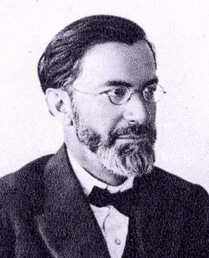
Khristo Kabakchiev summarizes the events since the 1923 coup in Bulgaria and the installation with French, British, and Italian support of one of Europe’s most violent and reactionary regimes in this valuable history. Kabakchiev was on the central leadership of Bulgarian Social Democracy since 1905, A member of Bulgarian parliament between 1914-23, he was also a founder of the Balkan Socialist Federation, and in 1919 of the Bulgarian Communist party which he represented at the Second and Fourth Comintern congresses. Arrested before the planned September, 1923 uprising, he was jailed for several years before his release in 1925. Eventually settling in Moscow, Kabakchiev lost his positions in the 1928 power-shift in the Comintern. Working at the Marx-Engels-Lenin Institute writing histories of the Bulgarian workers movement, though arrested during the Purges, he was later released. Dying in Moscow in 1940.
‘The Situation in Bulgaria’ by Khristo Kabaktchiev from International Press Correspondence. Vol. 7 Nos. 20 & 21. March 17 & 27, 1927.
I. The Fascist Regime in Bulgaria.
It will now soon be four years that the Bulgarian people have been subjected to the Fascist rule established by the upheaval of June 9th, 1923. This regime, the outcome of a military conspiracy, has been maintained by means of a bloodthirsty form of terrorism such as is not be found elsewhere in the modern history of the world and to which 20,000 of the best lives have been sacrificed.
The Fascist regime in Bulgaria differs from that in Italy, inasmuch as its victims are far more numerous, while at the same time it far surpasses both the Italian form of Fascism and all other reactionary regimes in the world in regard to cruelty. The Fascist rule in Bulgaria, moreover, differs from that in Italy also in regard to the forces which originated it and keep it up. As in Italy, the bourgeoisie in Bulgaria, seeing its power shattered after the war, is striving to restore its authority and stabilise its position by the aid of Fascism. But while in Italy Fascism has succeeded in recruiting part of the petty bourgeoisie and the peasantry and even part of the working class, disorganised and disappointed by the treachery of the Social Democratic Party, the Fascist rule in Bulgaria was established by the army and the military league, supported by some of the Macedonian nationalists. True, the Bulgarian bourgeoisie had founded its own Fascist organisations prior to June 9th, 1923, but they were very weak and therefore afforded little aid at the time of the upheaval.
After June 9th, 1923, the bourgeoisie profited by its accession to power for the purpose of developing its Fascist organisations, chief among which are the two associations of officers and petty-officers of the reserve and the “Kubrat” and “Rodna Sashtita” (“Home Defence”) organisations. Besides these, they founded numerous “sport”, “tourist” and other organisations, into which they herded large numbers of young people of the bourgeois and petty-bourgeois classes, to be educated in a Fascist spirit and pressed into the service of the Fascist policy. But right down to the present day, the Bulgarian bourgeoisie has not yet succeeded in gaining the petty-bourgeois masses for Fascist organisations, while among the workers it has naturally had still less success. The main internal supports of the Fascist rule in Bulgaria today are the active and reserve commissioned and non-commissioned officers, together with the army, the administrative and police forces of the State which were reorganised and greatly increased by the bourgeoisie after June 9th, 1923, and the Fascist organisations which have grown in strength since the upheaval.
The Fascist rule in Bulgaria does not however depend solely on internal factors, it was rendered possible by the aid of the imperialist Governments of Europe, chief among them the Italian and British Governments, a support which it still enjoys to the full. The participation of the Italian and the British Governments in the upheaval of June 1923, is today a fully established fact. In order to withdraw Bulgaria from the sphere of influence of France, which favoured and encouraged the policy of Stambulinski–aiming at an approach between Bulgaria and Yugoslavia–the British and Italian Governments found willing tools in King Boris, the Officers League and the political staffs of the old bourgeois parties. With the aid of these factors, the said Governments succeeded in forcibly overthrowing the Stambulinski regime and in drawing Bulgaria into the Anglo-Italian spheres of influence.
On the eve of May 9th, the members of the Entente military control commissions in Bulgaria made tours of inspection throughout the country with a view to disorganising the military forces of the peasant Government, so that the success of the military league might be ensured. On the day of the upheaval, a British cruiser entered the harbour of Bourgas, the Bulgarian port on the Black Sea, only to retire when the success of the coup had been fully established. At the same time the British and Italian Governments gave Yugoslavia to understand that they would on no account suffer Yugoslav intervention in support of the Stambulinski Government.
It was not only that Italy and Great Britain granted the Bulgarian Fascists the fullest support for their seizure of power; they supported and saved the Fascist rule at the most critical moments. In March 1924, a serious quarrel broke out between Bulgaria and Yugoslavia in regard to the activity of the Macedonian organisations. This conflict threatened to bring about the downfall of the Zankov Government. The Italian and the British Government imperatively called upon Yugoslavia to hold its peace. Similarly, the intervention of Italy and Great Britain represented the salvation of the Fascist regime in Bulgaria during the armed conflict between Bulgaria and Greece in October 1925, and again after the presentation of the collective note in August 1926. Finally, the British Government helped Bulgaria’s Fascist Government to strengthen its position by the grant of the so-called “Refugee Loan“, which was not intended so much for the requirements of the refugees as to save the Bulgarian Government from an otherwise inevitable bankruptcy and the Bulgarian currency from a renewed depreciation, and to extend the influence of British capital and the British Government.
While the Governments of Italy and Great Britain thus actively and openly support the rule of the murderers of the Bulgarian people, the other imperialist Governments are doing the same thing in a more passive and covert manner. After Italy and Great Britain it is France in the first place which is responsible for the foreign political support of the Bulgarian Fascist rule. Not only did the French Government recognise the putschist Zankov Government, but France’s agents in Bulgaria, in their protection of the French capital invested there, also supported the bourgeois parties in their fight against Stambulinski. The Bulgarian capitalists and their parties had succeeded in instilling the fear of the “Bolshevist” policy of Stambulinski into their French colleagues. By an intentional and sensational exaggeration of the “Bolshevist” danger, the Bulgarian bourgeoisie succeeded in gaining the support of the French Government for their bloodthirsty doings both before and after June 9th, 1923. France, which during and after 1923 turned its attention mainly to its own financial crisis and to the events in the Ruhr district, Syria, and elsewhere, subsequently allowed Bulgaria to fall wholly under the influence of Great Britain and Italy.
Nowhere have the misdeeds of the bourgeois reaction assumed such appalling proportions as in Bulgaria. No nation in modern history has been involved in such tragic circumstances as the Bulgarian people, which is being exterminated wholesale by its own raging bourgeoisie, and that altogether systematically and continuously for the last three years or more. The Bulgarian nation is small, not exceeding five millions. Nevertheless, its tyrants, its hangmen and oppressors, murdered no fewer than 20,000 workers, peasants, teachers, lawyers, doctors, journalists, and writers, that is to say, the most active and intelligent and class-conscious representatives of all the working classes and professions. There is only one example in modern history which can be compared with the massacre organised by the Bulgarian bourgeoisie against its own people, and that is the sanguinary suppression of the Paris Commune.
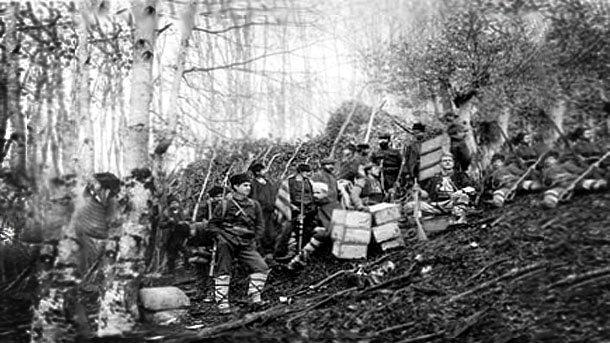
One June 9th, 1923, and in the following few days, the conspirators, who had seized power by means of a surprise coup in the night, suppressed the consequent peasant revolt in certain districts by murdering thousands of peasants. They also most bestially murdered Prime Minister Stambulinski himself.
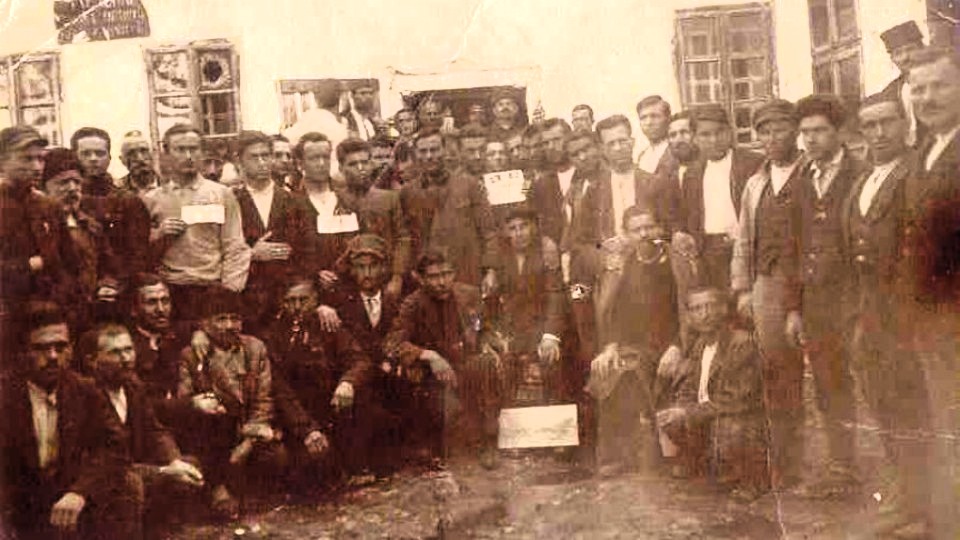
In September 1923, the reactionary Government organised the second massacre of the Bulgarian people, on a much larger and more cruel scale. On June 9th, the bourgeoisie had, by the aid of the hangmen it had hired in the shape of generals and professors, attacked and destroyed the Peasants’ Union, large and popular organisation among the Bulgarian peasantry. But the new Government did not feel secure, since the other great popular party, the Communist Party, representing the working class, still remained untouched. These two parties of the Bulgarian masses made the fatal mistake of not uniting their forces against the common enemy, but of allowing themselves to be beaten separately. And indeed, after June 9th, the usurpers directed their attacks against the Communist Party and provoked the great popular rising of September, which was suppressed in oceans of blood. In the actual civil war there were few victims; but regular orgies of blood were organised by the hangmen among the Bulgarian peasants and workers who had already laid down their arms or had never taken up arms at all. In this vile and bestial way some 15,000 persons were slaughtered.
The third massacre was instituted by the Government of June 9th among the Macedonian revolutionaries in September 1924. The very same Macedonian organisation, which had been exploited by the reactionary Government for its own ends on June 9th, 1923, was decimated by the murder of more than 200 of its leaders (including the well-known T. Alexandrov) because it had attempted to shake off the influence of the bourgeoisie and to pass over to the struggling peasants and workers with a view to waging a truly revolutionary fight for the liberation of the Macedonian people.
The fourth massacre carried out by this criminal Government was after the well-known attempt to wreck the Cathedral of Sofia in April 1925. The Government made. use of this attempt, the timely revelation of which it had itself prevented, to murder all those involved and then to arrange a most terrible and revolting massacre in April and May 1925. All preparations had been made for this step by the Zankov Government; lists had been prepared of all the Communists and members of the Peasants League throughout the country who were marked down for extermination; bands of hired assassins, composed of officers, soldiers of Wrangel’s army, and Macedonians, were trained by the police; General Volkov had issued secret orders for the merciless assassination of all those figuring on the lists. All that was wanted was the proper moment to execute this sadistic plan. At a signal given by the supreme authorities, 2000 defenceless prisoners, who had been dragged from their habitations by the police, were in the course of a few weeks handed over to the hangman.
These were the main stages of the first period, the Zankov period, of the black and bloody rule initiated on June 9th, 1923. It was characterised by a systematic murder of the people. We are only dealing with the wholesale murders; without enumerating countless individual murders and deeds of violence which were committed by the Fascist regime in Bulgaria. This regime may be said to have erected a pyramid of human bones which should show the workers and peasants of all the world the blood baths which the Fascist reaction is preparing for the working class wherever the latter do not put a stop to this offensive of reaction and permit it to seize power and consolidate it.
II. Liapcheff Continues Zankoff’s Work.
A large part of the bourgeois Press of Europe, in the first place the Government Press in Italy and Great Britain, but also the French “Temps” and others, have taken the Liapcheff Government under their protection and speak of the “freedom” and “peace” which are said to prevail in Bulgaria since Zankoff was replaced by Liapcheff. This is an attempt to mislead deliberately undertaken by the imperialist Governments of Europe and their Press, in order artificially to prolong the regime of the 9th of June, because they need this regime they need it for the economic conquest of Bulgaria and for carrying out their plans of conquest in the Balkans and in the Near East.
In his first declaration to Parliament, Liapcheff stated that he would continue Zankoff’s policy, and, as a matter of fact, he has remained true to his declaration. The replacement of Zankoff by Liapcheff relieved the tension of the heavy-laden and almost unbearable atmosphere in the country which had been produced by the atrocious wholesale slaughter. The ruling bourgeois Coalition however, ironically called “Democratic Harmony“, in which the military also took part, remained at the helm. The whole machinery of police and administration, led by the most faithful members of the Military League and supported by its organised bands of hired murderers, was untouched. Liapcheff did not change a single district prefect, he could not even change a simple gendarme without the consent of the “Military Convention”. The so-called “irresponsible factors”, which are actually the hired murderers supported by the Government, continue their activities in the country with impunity.
After Liapcheff had taken over the Government, he granted an “amnesty“, the real object of which was to increase the credit of the new Government inside and outside the country. The consequence was that the prisons were to some extent relieved of their inmates in order to make room for fresh thousands of political prisoners. Through this “amnesty”, the Government achieved another aim, which, from its point of view, was much more important. After the June and September massacres in 1923, the Zankoff Government, by means of a limited political amnesty, released all those who were morally or physically guilty of the wholesale murders. By this new amnesty, the Liapcheff Government exonerated the authors of the new wholesale massacres in April 1925 from any responsibility. By this amnesty of the executioners of the people, Liapcheff left their hands free and cleared the way for new murders.
The Liapcheff Government has been at the helm for a year, and we can now make up its accounts. Hardly had the amnesty been proclaimed, i.e. before it had been applied to the political prisoners, when proceedings began in Sofia in a new shameful trial against the “foreign representatives” of the Peasant League and the Communist Party. Without any evidence and merely on
the basis of the statements of agents and inspectors of the secret police, 28 of the best-known personalities in the Communist Party and the Peasant League were condemned to death, including all the Ministers of the Peasant League who were still alive and were living abroad; several dozens of other political emigrants were sentenced to long periods of imprisonment. The pretext for his unexampled trial was the activity of the well-known “Tchetas” (freebooters) in Bulgaria since June 9th. These “Tchetas” are described by the Government as being the work of political emigrants, whereas they are really the consequence of their own policy of terror, by which the Government drives hundreds of peasants and workers who have been illtreated in the prisons and whose lives have been threatened, to take refuge in the mountains.
This trial was followed by a number of other political trials the trial of the “emigrant channels“, of those who had joined “robber bands“, of the C.C. of the Young Communist League etc. The Bulgarian judges, who are entirely at the disposal of the blood-stained reaction, are constantly pronouncing new death sentences. The barbarous emergency law, called workers of any possibility of a political fight and punishes with death not only any Communist activity but also a father, a mother or a wife, who does not hand over to the authorities his or her own son or husband, who happens to be a Communist and accused of “illegal activity” this unexampled law is still in full force under the Liapcheff regime.
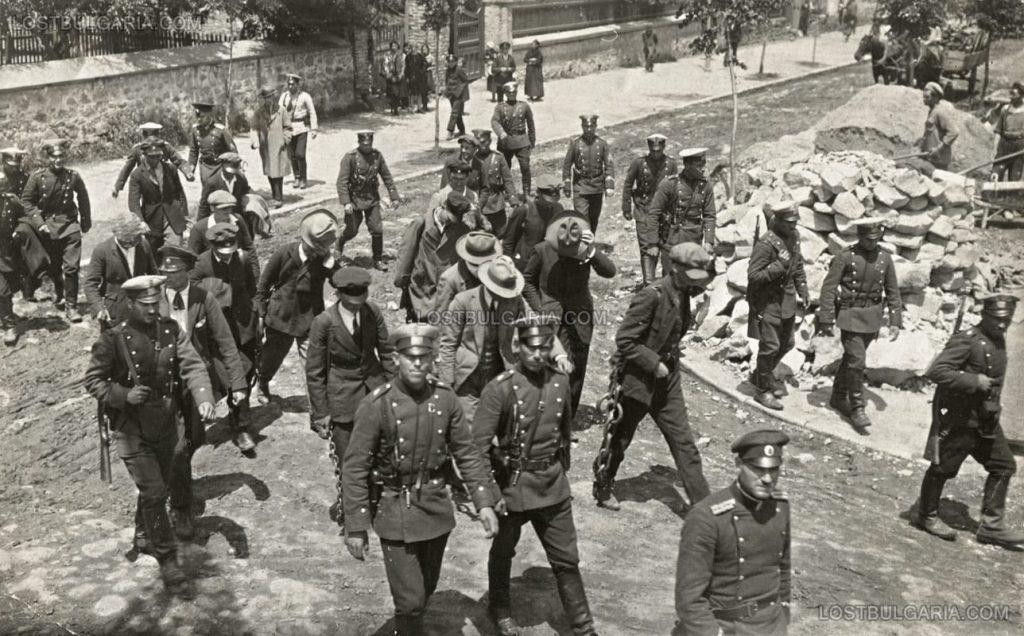
The political murders of Communists and members of the Peasant League continue. During the first months after the replacement of Zankoff by Liapcheff, there were individual murders, many upright sons of the people being the victims (Vassil Christoff, Kostodinoff, Toduroff, Dudoff and others murdered in Sofia; Pirdopsky, murdered in the Vratza prison; Moldovarsky, Totea, Samokovliev and many others murdered in others towns and villages). In the summer of 1926, however, the Liapcheff Government organised a new wholesale slaughter in the districts of Trojan and Lovetch (district Plevna).
In this district, an illegal “Tcheta” was discovered in June 1926, consisting of about 10 men, mainly teachers and students, who had succeeded in escaping and were scattered in the mountains after they had been brutally tortured in prison and threatened with murder. The Government described them as “robbers” and sent large detachments of soldiers and police in pursuit. The Government did not succeed in capturing these “robbers” but, in order to punish the population of the district, who were known for their loyalty to the Communists and the members of the Peasant League, and who sympathised with the persecuted Youth, it organised the extermination of about 200 of the most enlightened and intelligent peasants, including many village magistrates, teachers of both sexes etc. The arrested peasants from the villages of Borina and Goleva-Shelema and others, having been cruelly illtreated and tortured in the prisons, were murdered by the police divisions escorting them on their way to the provincial towns. The Government of Sofia sent Colonel Detsheff, the Chief of the first infantry regiment, to organise and carry out this wholesale slaughter which was accompanied by the burning down of many peasant farms and the violation of large numbers of women.
All these facts were published long ago in the Opposition Press of Bulgaria and were admitted in an official communique of the Bulgarian “League for the Defence of Human-Rights“.
These fresh hecatombs of hundreds of human victims are stirring evidence of the fact that the regime of the White Terror and of wholesale murders still continues in Bulgaria, and that the Liapcheff Government, following Zankoff’s example, lets the murderers go unpunished. The Government cannot punish itself, its own policy.
In order to “justify” this terrible crime, the Government had to invent a new “Bolshewist danger”. For the past four years, the Fascist regime in Bulgaria has always been supported in the name of the “Bolshewist danger”. In order to lull “public opinion” in Europe, and to divert the new wave of indignation caused by the wholesale massacres in the Trojan and Lovetch districts, Liapcheff, following in Zankoff’s steps, undertook new mass persecutions and had 400 workers, most of them juveniles, arrested, on the pretext that they belonged to a newly discovered “conspirative organisation”. Shortly afterwards the Government organs themselves were compelled to admit that it had been a case of an attempt on the part of the young Communists to celebrate International Youth Day at the beginning of September, by meetings and pamphlets. The prisons were again overcrowded, new “complete disappearances” and “suicides” of persons under arrest, new political trials are the order of the day. The new wave of terror is still flooding the country, and the number of victims is steadily increasing.
One more gruesome fact: In the historical town of Plevna, a new ghastly crime has been committed. In the night from the 4th to 5th of December 1926, the Fascists, who had already arrested, murdered or banished all the known Communists of the town, set fire to the house of Dr. Beshev, the only Communist still living in the town. All the members of this unfortunate family met their death in the flames. Dr. Beshev, his wife, his three children and the maid were burnt alive.
The whole country was seized with the deepest indignation; more than 10,000 workers, women and citizens took part in the funeral demonstration in Plevna. The Government felt compelled to nominate an investigation commission consisting of engineers and technicians, which stated that Dr Beshev’s flat (he lived in the third storey of a high house) had been set on fire with benzine, and that so cleverly that no one could be saved.
The flames of Plevna illuminated the dark night which has sunk over our unhappy country and exposed to the whole world the true nature of the blood-thirsty and shameful regime of June 9th.
Attacked by the whole Opposition because of the massacre in the districts of Lovetch and Trojan, and of the burning of Dr. Beshev’s family, the Liapcheff Government is seeking support from the imperialist Governments of Western Europe. These Governments, especially those of Great Britain and Italy, but that of France no less, are endeavouring to make Bulgaria a barrier and a point of support for the future counter-revolutionary war against the Soviet Union, which they are preparing. For this reason, they support the action in the Balkans and especially in Bulgaria, which they regard as being infected with Bolshevism.
In order to gain this support, the imperialist Governments are making the Balkan States entirely dependent on themselves, are conquering them economically and using them in the service of their plans of conquest. Thus for instance there are many signs to indicate that Italy has succeeded in binding Bulgaria to herself by means of secret treaties, which action is closely connected with the war Italy is preparing against Turkey. Mussolini, with Chamberlain’s support, is once more laying the fuse under the Balkan powder barrel, which in 1914, led to the European imperialist war. The Fascist regime in Bulgaria is not only a national danger for the Bulgarian people, it is also a danger for international peace and for the future of the European proletariat, because it is turning our country into a blind tool of distant imperialist States.
International Press Correspondence, widely known as”Inprecorr” was published by the Executive Committee of the Communist International (ECCI) regularly in German and English, occasionally in many other languages, beginning in 1921 and lasting in English until 1938. Inprecorr’s role was to supply translated articles to the English-speaking press of the International from the Comintern’s different sections, as well as news and statements from the ECCI. Many ‘Daily Worker’ and ‘Communist’ articles originated in Inprecorr, and it also published articles by American comrades for use in other countries. It was published at least weekly, and often thrice weekly.
PDF of full issue: https://www.marxists.org/history/international/comintern/inprecor/1927/v07n20-mar-17-1927-inprecor-op.pdf
PDF of issue 2: https://www.marxists.org/history/international/comintern/inprecor/1927/v07n21-mar-27-1927-inprecor-op.pdf
 Revolution's Newsstand