Trinidadian revolutionary Charles Alexander on the tasks of International Trade Union Committee of Negro Workers in the Caribbean.
‘For a Revolutionary Trade Union Movement in the West Indies’ by Charles Alexander from The Negro Worker. Vol. 3 No. 2. March, 1932.
One of the outstanding tasks facing the International Trade Union Committee of Negro Workers today is the development of the revolutionary trade union movement in the British West Indies. Under the iron heels of British Imperialism the Negro masses in this vast colonial domain are not only savagely exploited and plundered, but they practically live a life of the blackest hell. Mass misery always surrounded the workers on all hands, and now with the world capitalist crisis the conditions of their life are frightful. Thousands are unemployed, hungry and starving. Social insurance or unemployment relief does not exist.
The conditions prevalent in these islands present a very important problem. Just as in India, the caste system is fully established. Under this vicious system of imperialist oppression the population of the islands is divided into categories. The lowest of these which comprise the road workers and the plantation and estate toilers are treated by the British overlords and their Negro bourgeois agents as “untouchables”, and are always exposed to the most brutal exploitation and oppression. Imperialism considers them as the under-dogs, and this opinion is fully shared and supported by the Negro misleaders. Discrimination through this subtle form is rife. The caste system reigns supreme.
Autocratic Government
Politically, the Negro masses of these island have no rights. The government under which they are oppressed is the Crown Colony system. In some of the islands such as Trinidad, Barbadoes, Grenada and Jamaica, there are a few elected members, but these are merely lackeys of the imperialist rulers. Thus without any real representation, without any say whatsoever, the toiling masses are taxed, and all laws are passed for their enslavement and misery. In some of the islands while it is true there is a “labor party”, such bodies are affiliated to the damnable, treacherous Second International, and their whole policy is not one of leading the masses in struggle for better every day conditions of life, against imperialist oppression, but on the contrary, to placate their anger and to keep them docile slaves to the British rulers.
Labor Traitors.
This is especially true in Trinidad where under the leadership of Cipriani, etc., the labor party is nothing more than a mouthpiece of the British “labour” party of England. The old policy of the imperialist in appointing some of the native lackeys to important government positions is in wide use; and this is held up to the masses as an example of what they can attain if they remain peaceful, and loyal to their European masters. It must not be forgotten, however, that the entire governmental machinery is in the hands of the British imperialists through their white governors, colonial secretaries, judges, etc. Thus although the overwhelming majority of the population are Negro workers, their whole life is determined, regulated and supervised by the white imperialist agents whom the British government sends to the islands from time to time without consulting the popular will of the inhabitants. This is how the much boasted about British “democracy” operates in the colonies.
Agrarian slavery.
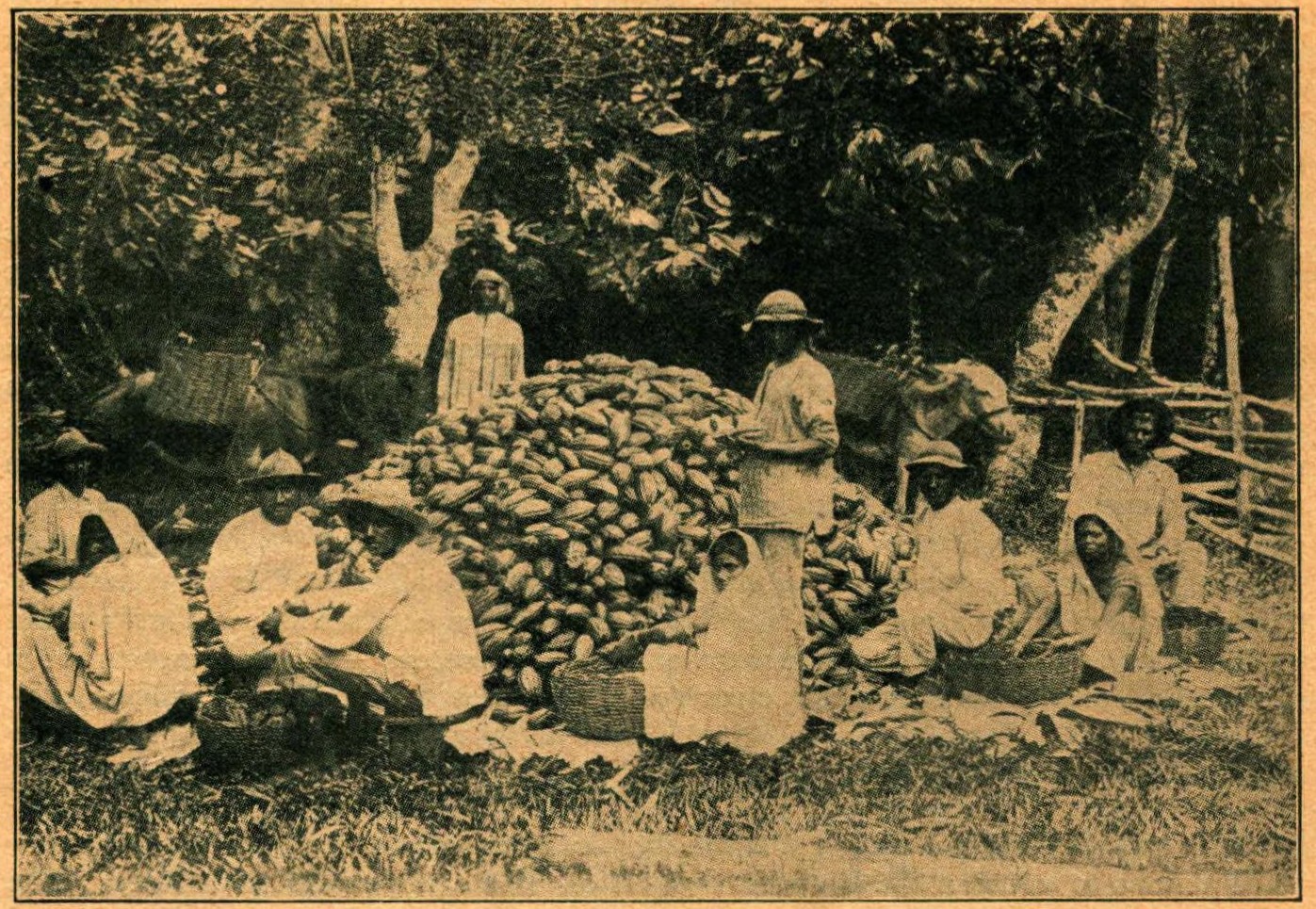
The British West Indies are not to any great extent industrially developed. Of all the islands the one which can boast the most industries is Trinidad, and even here the industries are limited to oil, pitch, sugar, railroad and shipping. The whole bulk of the population is agrarian workers and herein lies the basis of the Negro liberation movement in the British West Indies. The conditions under which these masses toil are horrible. The hours of work are on the main from sunrise to sundown under the most excessive heat of the sun. The West Indies are located in the tropics and the heat is intense. The wages received by these workers are, in the writer’s opinion, the lowest in any section of the world. They range from four cents to twelve cents a day. The workers own no lands, nor have they any plots in which they can cultivate a few vegetables—consequently they live from day to day on the verge of starvation. All the lands, estates amounting to hundreds and thousands of acres are owned by the European, Negro, or Indian imperialist plunderers, absentee landlords and English joint stock companies.
Child Labor.
The death rate of the infants of these agrarian workers is exceedingly high. Every year hundreds of Negro babies die—their young lives snuffed1 out and coined into pounds, shillings and pence for the coffers of the imperialist bandits.
The small percentage of industrial workers, while their conditions may be slightly better, are in the main terribly exploited, consequently the general conditions of the toiling masses can be fairly estimated as only a degree above slavery. Because of the low earning power of the parents, children from six years up are forced into the fields and plantations in order to make up the family income—which still remains miserable. This situation not only stunts the growth of these children, not only does it wreck their little bodies in a few years, but it also greatly contributes to the widespread illiteracy prevalent in these islands. This child slavery of Negro children in the West Indies is one of the most damning evidences of British colonial plunder. The writer recalled a scene a few years ago when he was a seaman on a Royal Mail Steam Packet ship trading between British Guiana and Canada. It was in the British West Indian island of Saint Lucia. The ship docked for coaling. There with baskets containing many pounds of coal on their heads were Negro children eight, nine and ten years of age, carrying the coal from the coaling station across a plank which connected the ship to land, and finally dumping the coal into the ship’s hold. On their faces could be seen pain and agony, their little bodies emaciated and shrunken from the hard toil which they were forced to undergo. This incident in Saint Lucia is an indication of the extent of child labour in the British West Indies.
Squalor and Degradation.
The abode in which these workers live are the most horrible imaginable. They cannot be called houses since they are only shacks covered with thatch and walled around with mud. There are numerous huts of this type in the villages, or native quarters, with no sanitary conditions whatever. There is no wonder that disease often breaks out in these quarters which oft-times affect the whole population, resulting in numerous deaths. But British imperialism is not concerned about these filthy conditions of the life of the masses. Its one and only interest is the exploitation of the masses—the coining of the masses’ blood into gold.

Recent years have seen the Negro masses recognizing the miserable conditions under which they live and toil, and showing signs of struggle against them. The Negro misleaders who put themselves at the head of this struggle instead of waging a fight for improved conditions of the masses, raised only a faint plea for a “West Indian Federation”. And a West Indian Federation to these misleaders is only a plea for themselves to get a greater share in the exploitation of the masses. While the slogan of a “West Indian Federation” and self-determination must become one of the central slogans in the struggles of the Negro masses in the West Indies, it is necessary to point out to them that they can only enjoy the rights of such a Federation if its governmental apparatus is in their own hands. Such a Federation with the Negro misleaders at its head will only mean to the masses a change in the colour of their oppressors—it will merely be a substitution of white imperialists oppression for black capitalist oppression.
What must be done?
The present main task of the masses is the organization of revolutionary trade unions to combat the frightful oppression of the imperialist plunderers. The fight for shorter hours, more wages, better working and living conditions, and against unemployment and its effects—hunger and starvation must become a living thing. But it can only become such if carried on in an organized manner. The imperialist bandits will never stop their plunder of the masses unless the workers by their organized might and power compel them to do so. This organized might and power can only be united and consolidated under the leadership of revolutionary trade unionism, not the sort of fake Workingmen’s Association which Cipriani and other grafters have under their thumbs. It must be a real militant movement controlled by the rank-and-file workers themselves.
In this respect the workers must wage a determined struggle to smash to pieces the infamous caste system of the imperialists. The imperialists divide them into “touchables and untouchables” in order to weaken their ranks, to make their resistance to slavery and oppression impotent. It is their duty to unite, to close their ranks, and join together in a united struggle for their freedom.
Already in some of the islands there is the beginning of the development of a trade union movement. Unfortunately, however, these unions have not a revolutionary programme of struggle and are more or less led by the reformist traitors of the Amsterdam International (Cipriani in Trinidad). This situation naturally places a great task upon the International Trade Union Committee of Negro Workers, not only to establish contacts with the workers of these islands, but to enter the field as an independent organizer of these masses.
Simultaneously with the development of the trade union movement, the workers and peasants have been carrying on agitation for a representative form of government, as well as struggles for reduction of the excessive high taxes. The imperialists fearing a popular uprising in those islands where the masses are most developed have acceded to their demands. Jamaica, Trinidad, Barbadoes and Grenada have been granted limited representation on the Legislative Councils, in the others however, the Crown Colony system in the vilest form still prevails.
That the masses are already in motion recent events show. Recently a strike of longshoremen took place in Trinidad in which a splendid fighting spirit was demonstrated by the workers. This was followed by a demonstration of workers and peasants in Grenada against high taxation for’ balancing the budget. The demonstration assumed such proportions and the anger of the masses become so aroused that the government fearing an uprising was forced to withdraw the tax.
Consequently the need of organizing the Negro workers as well as the Indian plantation coolies in the British West Indies into militant trade unions is on the first order of the day. More and more as the masses feel the intense misery in which they live they show their determination to struggle. This struggle must be organized in order to be victorious. It must not only meet with the assistance of, but it must be led by the International Trade Union Committee of Negro Workers.
First called The International Negro Workers’ Review and published in 1928, it was renamed The Negro Worker in 1931. Sponsored by the International Trade Union Committee of Negro Workers (ITUCNW), a part of the Red International of Labor Unions and of the Communist International, its first editor was American Communist James W. Ford and included writers from Africa, the Caribbean, North America, Europe, and South America. Later, Trinidadian George Padmore was editor until his expulsion from the Party in 1934. The Negro Worker ceased publication in 1938. The journal is an important record of Black and Pan-African thought and debate from the 1930s. American writers Claude McKay, Harry Haywood, Langston Hughes, and others contributed.
PDF of full issue: https://www.marxists.org/history/international/comintern/negro-worker/files/1932-v2n3-mar.pdf
 Revolution's Newsstand