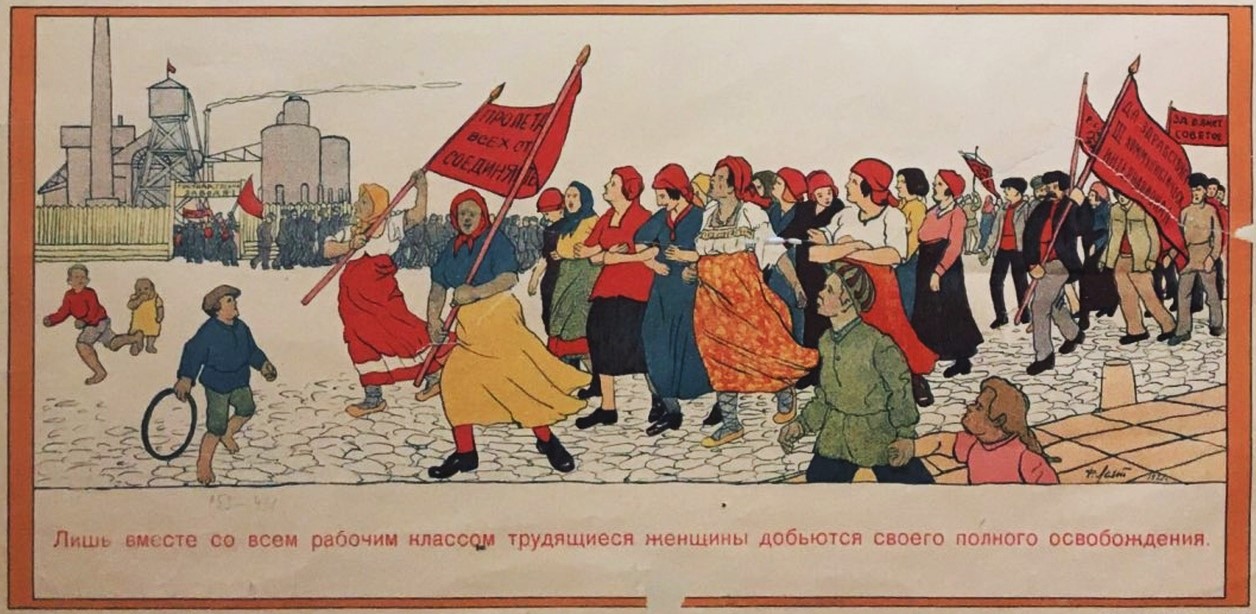
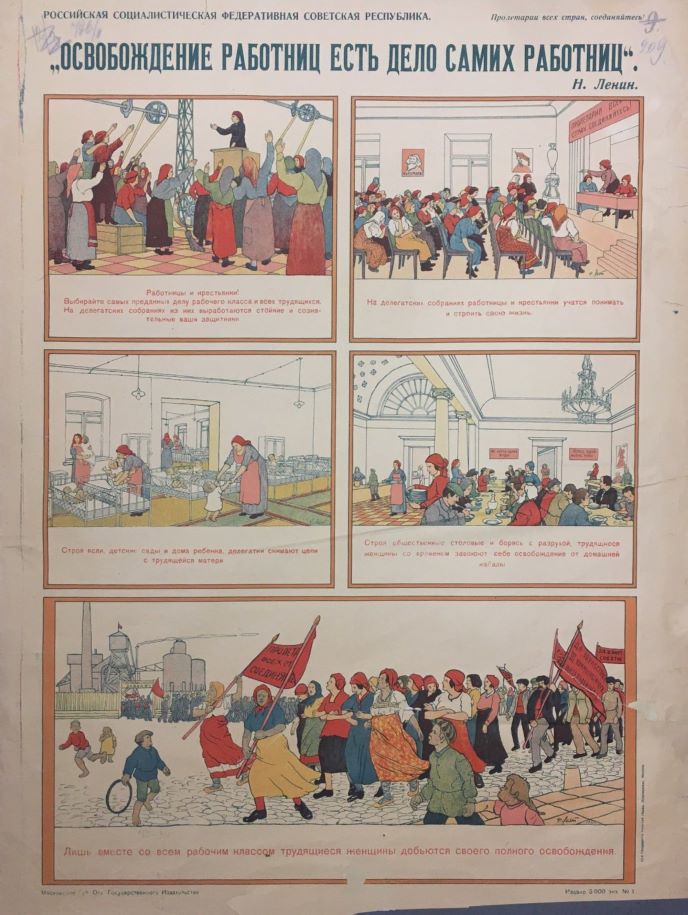
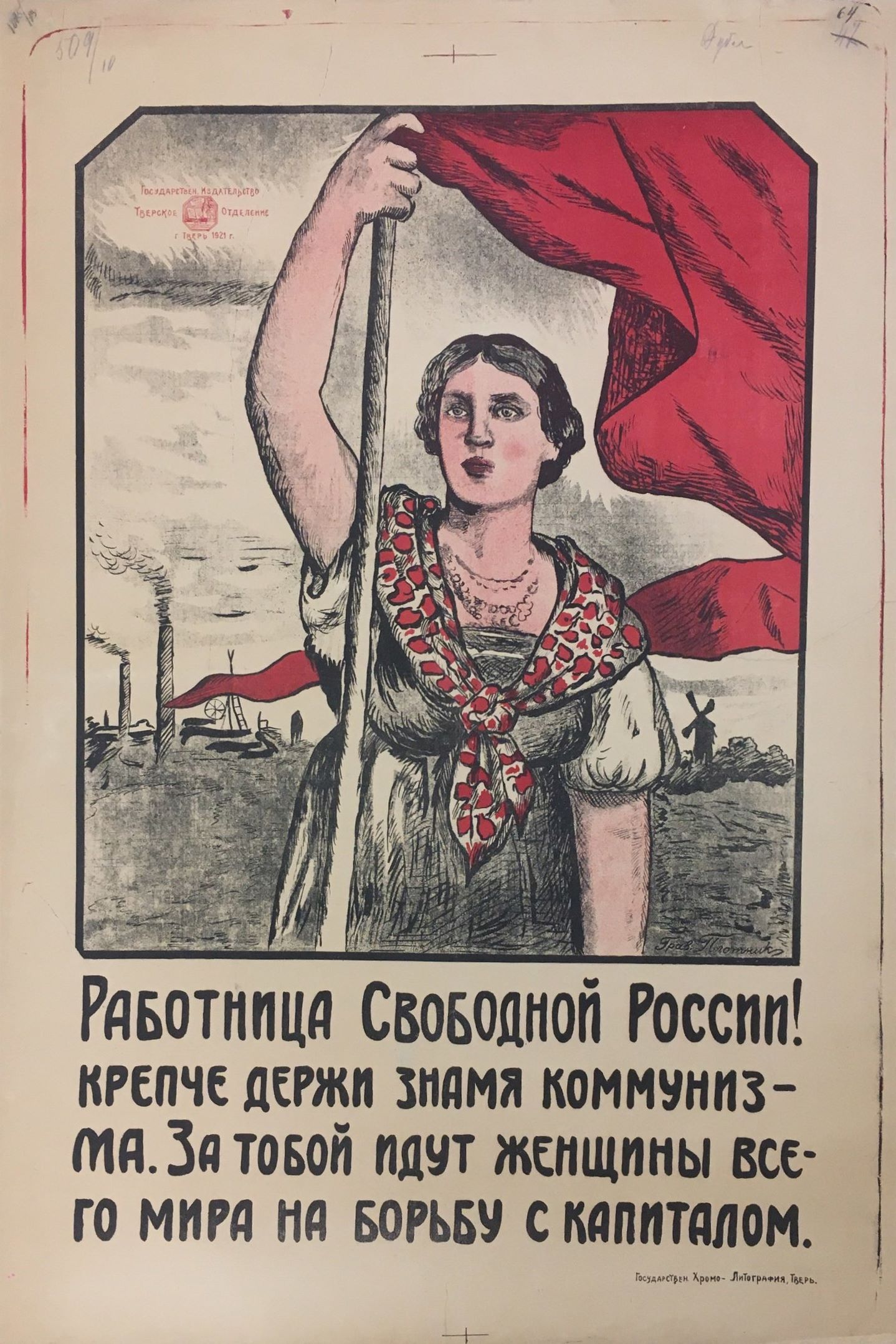
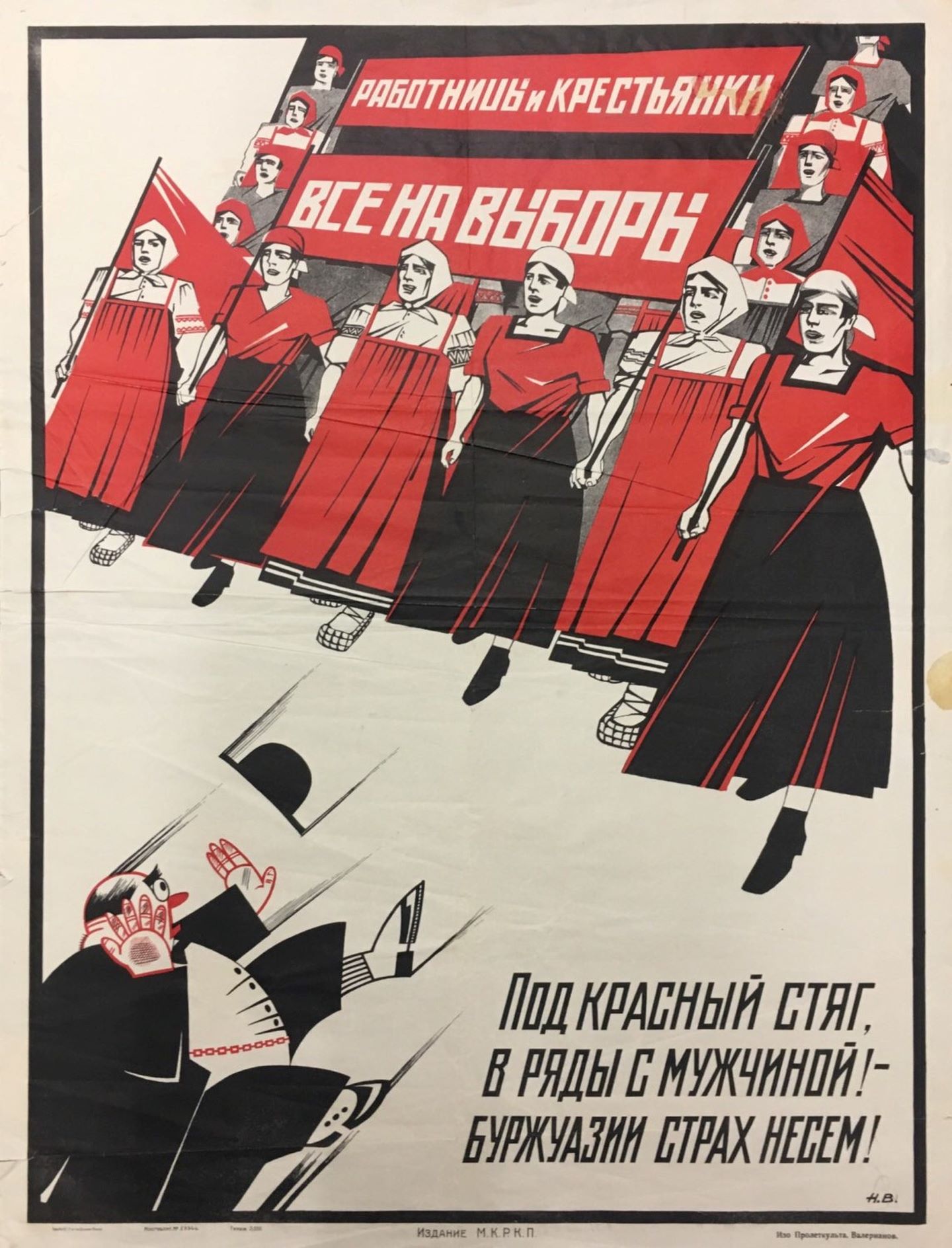
International Communist Women’s Day as it was understood one hundred years ago by Clara Zetkin in this proclamation on behalf of the Comintern’s Women’s Department.
‘The International Communist Women’s Day’ by Clara Zetkin from International Press Correspondence. Vol. 4 No. 11. February 14, 1924.
I.
Let us make timely and energetic preparations for the approaching International Communist Women’s Day, all of us, men and women, who are organized in the communist sections and stand for the aims of the Communist International. It is by no means “solely an affair for women”. Our Women’s Day is a matter for the whole Communist International, of all the affiliated Communist parties. Its aim is to bring to the broad masses of working women the glad tidings of Communism, which will save them from need and suffering, from exploitation and constraint. But only on one condition. They themselves must fight with all their energy either inside the Communist Party of their country or at least under the leadership of that Party for the suppression of the exploiting and oppressing dictatorship of the bourgeoisie by the dictatorship of the proletariat. For it is simply and solely by that means that the living human being whether man or woman can be liberated from that power which is the very foundation of all the many social miseries. To drive out by such a knowledge the weary, despairing hopelessness of millions of people and to create an iron energy, is a most sacred duty.
The general offensive of the world bourgeoisie against the workers of all capitalist countries is still continuing, it wrests the last bit of bread out of the worker’s mouth, lengthens and intensifies the toil and tread down the few poor privileges and rights won in hard battles. All the powers of capitalism are still on the alert to overthrow Soviet Russia, the only Workers’ and Peasants’ State of the world, the protector and firm shield of all toiling people. For the profit of a small minority the toilers have to bear the huge costs of the imperialistic robber war, the reestablishment and consolidation of capitalistic economy, which is cracking and crumbling in all parts and, in addition to that, the workers have to yield big profits to their exploiters. In the factories, commercial houses and banks as well as in the state, the great capitalists employ every means of power against those who have little or nothing. Bourgeois democracy is exposing itself even to the most credulous minds as the brutal class rule of the junkers, the owners of the mines and heavy industries, of the big merchants and great banking kings, developed to a naked, bloody, bourgeois class dictatorship and to merciless white terror.
In Spain and in Japan military dictatorship, in Italy continued rule of Fascism, in Bulgaria and Germany the military power is victorious; Military dictatorship, government and victory of Fascism, what does it mean except the severest oppression of the workers with hand and or brain, to squeeze out the last ounce of strength and to coin it into glittering gold? The fact of the intensified exploitation and slavery of millions by a few, proceeds from one country to the other. And everywhere it is the women who can offer less resistance against adverse, who have to bear the heaviest burdens of need and worry. The hunger of countless millions for bread, liberty and right, the revolt of their humanity against being soiled and trodden under foot by the iron heel of the capitalistic powers, gives rise in the bourgeois states to the slogan, which will awake, on the International Communist Women’s Day, the huge masses of women, will summon them and lead then into the revolutionary class-fight. The Unions of the Socialist Soviet Republics, however, will unite the working women in the demonstration of international solidarity with their sisters in the East and the West, they will call them to active help in building up a higher form of economics and society.
Sacrificing, mighty activity of solidarity with the starving German proletariat, that is the general international slogan of the Women’s Day, which the situation places in the foreground, as it was the hunger relief for Russia in the past years. The occupation of the Ruhr area by French imperialism has quickly increased the decay of German economics. Poincarés bayonets and Stinnes’ hunger-whip have created together a hell of misery for the Ruhr proletariat. The number of unemployed and workers on short time far exceeds the half of the population. The half, even three quarters of the inhabitants of big and, formerly, flourishing cities, as Cologne, Duisburg, Dusseldorf are nearly starving and live by public funds. The owners of the heavy industry of the Rhineland and Westphalia, the Junkers and the great capitalists of the whole Reich, took advantage with impunity of this situation for a huge robbery of the proletariat, the middle class and the small peasants of Germany. Their insatiable lust for gold smashed what there was left of German economics and plundered the public treasure which is to be filled by the poor and the poorest with their taxes. Swindles with paper-money, closing down of works and short time, goods disappearing from the market are characteristic of the present time.
With four millions of unemployed and three and a half millions of workers on short time in December, nearly a third of the employable people of Germany were wholly or almost unemployed. Dependent on these 71/2 millions, are further millions of women, children, aged parents, who lived on the earnings of these now unemployed. Besides this, there is to be added the millions of war-invalids, war-widows and war orphans, state insurance and small pensioners, ruined small and middle businessmen, and in addition the great number of badly paid employees, officials, teachers and intellectuals of all kinds who have lost their positions. In Munich, for example, 15% of the physicians were without practice. To these mountains of misery, broad masses are to be added who will become unemployed and homeless even tomorrow. But even the fortunate people who seem to have secure employment and earnings are, with their dependents, lacking the most necessary things. The wages of the workers, the salaries of the employees, of the officials etc. are only the half or a third of the pre-war time while the cost of living has doubled. A skilled worker before 1914 earned in an hour sufficient to buy one pound of meat of good quality, now he is obliged to toil eight hours to obtain this. The daily wages of many family bread-winners are just enough to buy the necessary bread. In the industrial centers in many larger cities you meet, at every step, beggars, starving, freezing, exhausted. Trembling old women and pale-faced children are looking for crumbs of bread in the rubbish heaps.
Not only the proletariat, accustomed to suffer, are to be found among these dying and perishing people. The greed of the big capitalists have expropriated the middle stratum of the population and pushed them into the depth of social misery.
The International Communist Women’s Day must hammer this into the consciousness of the masses when we call on them to participate with brotherly solidarity in fighting against the starvation in Germany. The reason that millions are devoured by the most terrible misery, is not to be sought in a natural catastrophe, as was the case in Soviet Russia in 1921-22, it lies in the social and political structure of society. It scourges only the proletarians and members of the middle strata of the population. The exploiters and usurers are feasting as never before. It is mainly rooted in the fact that the German workers, in their majority, have been deceived by the treacherous and cowardly Social Democratic leaders, who did not use the political power which had fallen into their hands in a revolutionary way, by setting up their dictatorship and in striking down the vampire of capitalism, which is sucking out blood and marrow. Fooled by the illusion of democracy, the workers gave five years’ credit to the bourgeois republic to secure bread, rights and liberty promised them by reforms. And the result?
The German bourgeoisie has consolidated its governing and exploiting power over the wage-slaves these last five years. The end is neither democracy nor reforms, but the military dictatorship of Seeckt. The eight hour day is annihilated. The miserable rights of the shop stewards are trodden down, the right to strike is delivered up to the employers. Wages are going down. The usury-prices for provisions, clothing, dwellings, heating etc. are not to be paid. The taxes increase in a unendurable way. The state of siege sets aside all liberty of meetings and press and in Bavaria, Saxony and Thuringia treads under foot, together with the constitution, the last democratic trappings. Ebert, the Social-Democrat, passes the sword to the generals of the Hohenzollern, with which they subject the working people to the slavery of Stinnes, with which they defeat the starving and mutinous. In order to rob the exploited and disinherited of their means of defense and leadership, the Communist Party was prohibited. Its press was forbidden, its fighters are filling the prisons.
Just as the last cause, so the effect of the unlimited misery in Germany is political. Famine is prematurely killing off millions of working people, it thins the ranks of the proletarian fighters and weakens their power. The proletarians require great numbers for their battles and likewise after their victory for the building up of their power. Starving people, who tremble eager for a mouthful of bread, wearied by misery, might storm rushly forwards in a moment of desperation, but they rarely possess the power to sustain the battle tenaciously and perseveringly. Alluring hopes and prospects often cause them to step aside, or drive them even to the armies of the counter-revolution. Unemployment and want have rallied a great number around the Fascist banner.
The German famine is a danger for the revolutionary struggle of the German proletariat. To meet this by international solidarity means to strengthen and to steel the will and the energy of the exploited in Germany for the revolution. The bread given by their sisters and brethren beyond the frontier possesses a twofold power. It not only appeases those who feel hungry, it kindles in the memory of the donors the spark of international feeling, it wins revolutionary fighters. Thus the cause of revolution in Western Europe, where its final proud cry “I am” will be of the greatest significance, demands the rising of the workers in France, Poland, Czecho-Slovakia and in the other capitalist countries to a great historical Doomsday for their class-enemies. The International Communist Women’s Day must not only touch the hearts for the needy. It must awaken the spirit of active help for the revolutionary fighters. It is an action involving conscious Communist knowledge and decision, to raise millions of women and add them to the forces of the proletarian world revolution and in this way push the revolution forward.
The great aim also includes that the International Communist Women’s Day has to be an increasing demonstration of solidarity for the proletarians, for the working people of all countries, where the military dictatorship, where Fascism, makes the exploiting and oppressing powers of the great owners more intense. Wherever the women on the 8th of March vow to lead the sharpest fight against misery and constraint of the working people, they will think of the severely tried proletarians and peasants of Yugoslavia, Greece, Spain, Japan, Italy and Bulgaria. There the class dictatorship of the rich and exploiting rages in the form of an unrestrained brutal white terror against the poor. They are not protected by even the least rights. Through the prohibition of the Communist Party, the revolutionary vanguard is forced into illegality, its fighters fill the prisons, they are tortured, assassinated and murdered. In Japan, the military dictatorship erected its government upon the ruins and heart-breaking misery which was created by the catastrophe of the earthquakes. Mussolini’s iron fist is still strangling the Italian proletarians, who are beginning to join the Communist Party again in spite of the severest hindrances and dangers. The clique of officers and usurers governing in Bulgaria revenge themselves, because the workers and peasants, under Communist leadership, have bravely revolted. But even there the forbidden and hunted Communist Party summons the dispersed proletarians and gains allies for them in the peasantry. Under the prevailing circumstances, it is natural that our Women’s Day must appeal fervently: Fight against the white terror! Help for its victims, for the victims of the bourgeois class-justice! Release the prisoners! Even women, not yet politically awakened and skilled, will lend a willing ear and heart to this appeal, by feeling with them, begin to comprehend.
The consciousness of international relations puts another political slogan into the foreground of the Communist Women’s Day. Whole-hearted solidarity with national fighters for liberation, where the population of the colonial and semi-colonial countries, and of those territories and countries threatened with becoming colonies, is rising against capitalistic imperialism. From Ireland to China, rising flames, or already immense conflagrations, of national rebellions can be seen nearly everywhere. Everywhere too a political and social awakening of women is felt. Masses of women in Ireland favour the national revolution, in the countries of the Near and Far East the women can boast of being the foremost fighters for nationalism; thousands of working women participate in strikes. The revolution is undermining the last governing and exploiting areas of capitalism, it destroys its last reserve-powers. We heartily welcome these facts, for we are firmly convinced that only by overcoming capitalism, that only by revolution can the door of social equality and human liberty be fully open to women.
Therefore there remains a slogan for our International Communist Women’s Day which is so obviously necessary that there is no need to emphasize it: great, powerful solidarity with Soviet Russia, the land of the proletarian revolution, where the dictatorship of the working class has created the same right for both sexes. Struggle against all capitalist powers, which seek to throw down the Proletarian and Peasant State.
II.
The general political slogans which We have indicated for our Women’s Day are the same for all countries, but it is a matter of course that in each country special prominence is given to that slogan which arises out of the situation resulting from the general offensive of the bourgeoisie against the working masses. The general political slogans of our International Women’s Day bear the character of a Communist revolutionary proclamation. They draw a sharp line between the reformist Women’s Day arrangements and ours. For if the latter also speak of the emancipation of women through Socialism and of the social revolution, these are only empty platonic words, behind which there is no will for action to fight the way on to Socialism. In actual fact Reformism rejects the revolution, it hopes to obtain from bourgeois democracy, what only Socialism can give. Its most eminent leaders detest and fear the revolution, which will be a fighting action on the part of the masses, and not an accumulation of votes and Parliamentary decisions. The reformist Women’s Day gatherings therefore will not summon women fighters for the revolutionary dictatorship of the proletariat. That constitutes an unbridgeable contradiction between it and our international Women’s Day.
Its essential content culminates in the political slogans of revolutionary proletarian class-struggle, and especially in the demonstration that for the masses of the working women also, the conquest of state power, the erection of the dictatorship by the proletariat is the demand of the hour, in order to carry through which they must work consciously and devotedly with all their powers. But the pure political slogans do not exhaust the import of the International Communist Women’s Day. They must be made understandable, inspiring and inflaming the feelings, the thoughts and will of the not yet politically enlightened and schooled millions of women of the working people. We must point out their inner inseparable connection with the conditions of life of these millions. Tho latter shall learn to understand that the hunger-cry of the unemployed or badly paid working woman, of the starving female official, and teacher, the longing for knowledge and right, the painful cry of the mother for care and education of her child, in short, the resounding chorus of their sorrows, pain, desire and demands must end in the vow: Struggle, revolutionary struggle on the side of our brethren for the next step to emancipation, the expropriation of the bourgeoisie out of the state power, the carrying out of the dictatorship of the proletariat.
Therefore our Women’s Day must claim in international solidarity all those demands which pertain to the full rights for women in theory and practice, through protection of working women, far-reaching amelioration of the lot of the housewife, comprehensive social provision for mother and child. In short, we must stand for the abolition of all legal and social hinderances, which stand in the way of the development of woman into a full human being, equal in right, duties and worth; we must demand reforms and measures, which lead to this high aim of humanity. The demands of the Women’s Day of one and another kind sprung forth from the special position of women in legislation and in society, from the special duties connected with motherhood; from the physical and psychical qualities peculiar to our sex, and last, but not least (in all organisations of society and in all states, which are based on private property) out of the social structure, of the class conditions.
Although harmonizing internationally in their main lines, our Women’s Day’s demands will differ in the different countries or groups of countries. These will be determined before all by the phase of development and character of economics; their effects on the political and social superstructure, and on the ideology of society and the legislation; the strength of the movement for women’s rights and its special aims; the relation of power between the exploiting and the exploited and the fighting energy, the will to struggle, the clearness of aim of the oppressed classes of the population, including the working women. The Communist sections will, together with the leading women comrades, have to examine what “special demands for women” within the frame of the general international situation are to be put in the foreground at the present time.
A fundamental difference exists between the appropriate Women’s Days demands, their character, their significance and the most important presuppositions for their realization in the capitalist states and in the Union of the Soviet Republics. Whatever we demand on the 8th of March in the capitalist and non-Soviet countries to make the lot of women easier, to raise their position, it will be a fighting slogan and an object of struggle for the proletarians and especially for the working women. All economic and social reforms, which we demand on behalf of working women in general, the proletarian and petty-bourgeois housewife, the woman-peasants, the mothers and children, are in their essence measures for protection against excessive exploitation of labour power by the possessing and governing classes. An excessive exploitation of human beings which increases to the crippling and humiliation of the best powers of the woman’s soul, to the obliteration of woman’s life, which spoils and even destroys together with the mother, the yet unborn child. All rights for women, for which we raise our voices on the 8th of March must become weapons employed by millions of women against the exploiting and governing classes and their state. Reforms and rights must be conquered in the class struggle of the working and suffering majority against the plundering, oppressing, and feasting minority. The social contrast between the sexes has its last and firmest roots in the antagonism between the possessing and non-possessing class, between the creators and the appropriators of social wealth.

For this reason, it is to be understood that at a time when the general offensive of the world bourgeoisie against the working people creates the most frightful need among women, the most pressing demands for rights, protection and care for the women are not carried out. The bourgeois class dictatorship means in this respect stagnation and retrogression. Not even in Great Britain, the motherland and pattern of bourgeois dictatorship, have, up to now, the limitations of the general franchise for women, which concern in the main part the proletarian women, been done away with. Neither in France, Italy, Spain nor in Belgium nor in Republican Switzerland has the political vote been granted to the female sex. The reformist Social-Democrats of Belgium are still disputing as to whether they should ask that right: Mussolini who once promised it to the Italian women, will at best grant them the municipal vote and that only as a privilege for fine ladies. Still more unscrupulously and more brutally is the bourgeoisie proceeding in the capitalist countries in its general offensive against the remuneration of women’s labour, against the protection of working women and of motherhood, against all social measures for lightening the lot of labouring women.
Most capitalist governments have not acknowledged the really modest and insufficient provisions for the legal protection of working women, which were demanded by the international labour conference at Washington. Where they were acknowledged, the prescriptions remained a scrap of paper. Everywhere the capitalistic owners over-ride the limitations which were set up by the law against the unscrupulous exploitation of working women. They break them down in practice by means of their economic power, which is enlarged by the economic situation of the present time, and through the decrees of the government and new laws. The prohibition of night-work, the control and shortening of working time, the free Saturday afternoon for working women, the protection-time for women during pregnancy and confinement, the feeding interval for nursing mothers; these and other reforms to check the greed of the capitalists are more or less things of the past. Homes for the pregnant women, maternity and infant homes, creches and infant-schools are closed more and more or their work reduced. Less than nothing is done, even to lessen the horrible housing-misery, which troubles women and mothers most severely in Central and Western Europe as well as in the United States of America.
Taken all in all, the Women’s Day’s slogans are the same as those of last year. That means, that our forces for action and struggle must be increased to the utmost.
In Soviet Russia, in the Soviet Republics, the most important “specific women’s demands” are fulfilled or at least officially acknowledged, and they are passionately eager to settle these questions as quickly and completely as possible. The dictatorship of the proletariat brought to the woman full equal rights in the family, society and the state. Social institutions and measures for protection and providing for mother and child are considered the noblest duty of the state. Sometimes it happens that short- sighted, prejudiced officials act against those acknowledged principles in practice. But their opposition can be broken down pretty easily. They are not supported by the power of capitalists greedy for profit or by the power of an exploiting class in the state and by considerations for private property.
The Soviet Workers’ and Peasants’ state is the cause, the means of power for the proletarians, the working people, regardless of sex. In economics as in all other spheres of social life, it represents their lasting interests as a class. It regards all measures and reforms which serve to render women equal, the right and the protection of the working women and provision for motherhood, as bricks for the building up of a higher and newer social order, where Communism shall become a reality. But the will and the desire of the Soviet State has its limits. It is the backwardness, the weakness, the poverty of the economics, which have to bear the costs of the reforms in favour of the female sex. This hard fact reminds the women, that their fate as history proves is closely bound up with the development of labour. It reminds women that their interests demand at present as in the future that they give their full strength for building up and for increasing the produce of the economy.
The number and importance of the peasantry, the necessity of fitting the individual petty-bourgeois undertaking into the great social order, to lead it on the right way to communal economic development, make it a task of the Women’s Day to promote the firmest solidarity between the female proletarians and women peasants. Both of them have to meet as working people, both of them have to do their best to connect the industrial proletariat and peasantry in a firm alliance of economic and cultural work.

In the countries of Near and Far East, the stress of all “special women’s demands” must be laid upon all those slogans which demand full, legal equality of women with men. Except in the Socialist Soviet Republics, equality of woman is not recognized in the legislation of any of these countries. Not even in India, or in the Dutch colonial territories, but even more oppressive than their lack of rights before the law, women have to bear the constraint of religious institutions and hoary social customs and traditions. The heritage of centuries, even of millenniums is resting upon the feelings, the thoughts, the will, the form and manifestations of life of man and woman. This influence is especially prevalent in the relations of the sexes to each other and is also the case in the Soviet countries of the East. There the significance of the 8th of March is so great that this day has been made a national holiday. This holiday, however, is a the same time a fighting day for equality of woman in practice and thereby also a fighting day against the power of prejudice conventions and customs. Similar demands are being passionately formulated which bind together the women of all countries of the East in this struggle. Loud and urgent, there rings out before all others the slogan: Away with the Kalim, with the trade in women. For Soviet legislation makes woman equal in marriage and in the family, but the weight of tradition in all countries of the East debases her to an “object”, which can be bought and sold by the head of the family. The destruction of all codes of law, of all institutions, of all prejudices and customs, which keep the women of the Eastern countries in servitude, is in the interest of the world-proletariat. Masses of the female population can only participate with full strength in the national and revolutionary movement, if woman has free control over her own person and her life activity.
All “special women’s demands” for the fulfilment of which the masses of women will be mobilized on the 8th of March, are rills, streamlets and rivers, which flow out into the stream of the revolutionary proletarian class-struggle, which will drive the bourgeoisie back from the offensive on to the defensive and culminate in the first place in the dictatorship of the proletariat. This great historical aim gives to the International Communist Women’s Day ardour and warmth and concentrates the fighting- power. The fervent revolutionary life, which is denoted by the 8th of March, will be over-shadowed by the recollection that the genius and guide of the world proletariat has departed from us, one of the most clear-seeing, most faithful and leading pioneers for the full social and human equality of women. Let us draw strength from the grateful remembrance of his immortal life work, to be worthy of him. That is to say to give every drop of our hearts’ blood, every atom of our will, of our energy for the victory of the world-revolution.
International Press Correspondence, widely known as”Inprecorr” was published by the Executive Committee of the Communist International (ECCI) regularly in German and English, occasionally in many other languages, beginning in 1921 and lasting in English until 1938. Inprecorr’s role was to supply translated articles to the English-speaking press of the International from the Comintern’s different sections, as well as news and statements from the ECCI. Many ‘Daily Worker’ and ‘Communist’ articles originated in Inprecorr, and it also published articles by American comrades for use in other countries. It was published at least weekly, and often thrice weekly. Inprecorr is an invaluable English-language source on the history of the Communist International and its sections.
PDF of full issue: https://www.marxists.org/history/international/comintern/inprecor/1924/v04n11-feb-14-1924-inprecor.pdf
 Revolution's Newsstand