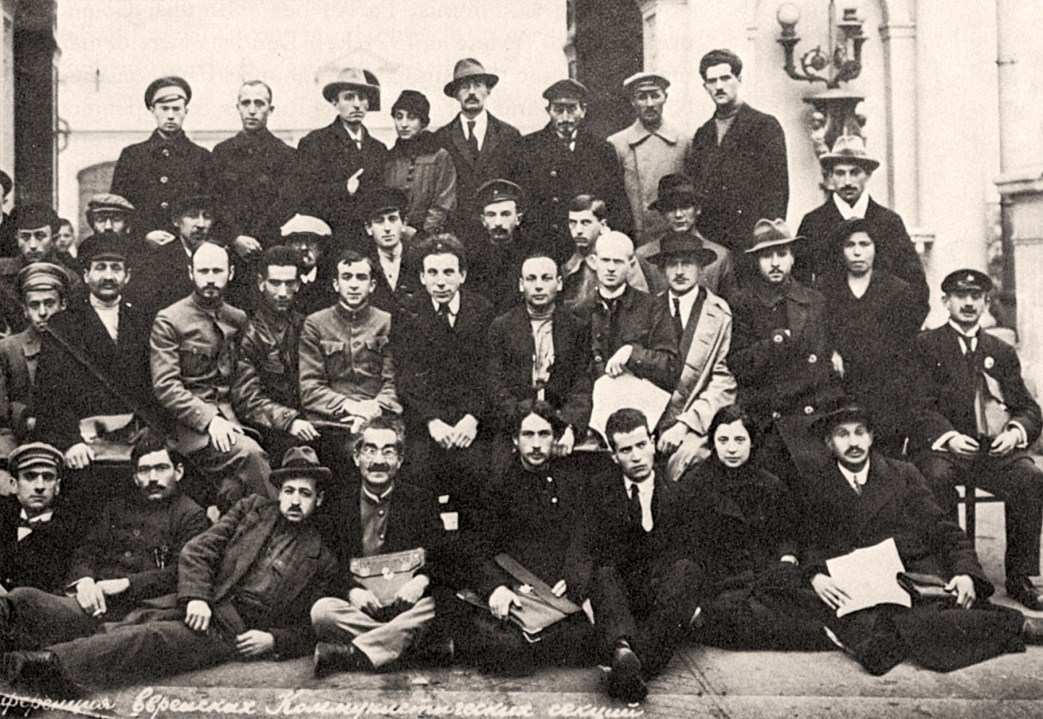
Interventions by Maria Frumkina and Abram Metzhin, former Bundists now leaders of the Communist Party’s Jewish Section, which existed from 1918-1930, during the discussion of Lenin’s National and Colonial report at the Second Comintern Congress. Dealing with national minorities, autonomy, Zionism, and anti-Jewish pogroms, also included is the speech in refutation by Michael Kohn-Eber representing the Left Poale Zion. The Jewish Workers Bund was among the largest constituents to found the Russian Social Democratic Labor Party in 1898. In 1912’s formal split of the R.S.D.L.P., the Bund allied with the Mensheviks. However, the Revolutions of 1917 would shift orientations. In 1919, during the Russian Civil War and the wave of pogroms, the majority of the largest Jewish Socialist organization in Europe, the non-Zionist Bund, declared for Soviet Power. In April, 1920 a majority voted to join the Communist International. Within the ‘far left’ of the Zionist movement pro-Communist tendencies had also emerged with Austrian Michael Kohn-Eber representing the Left Poale Zion in discussions with the Comintern. In August, 1921 the Comintern made explicit its demand that Poale Zion abandon Palestinian colonization before relations could develop. After the majority of Poale Zion rejected that demand the following year, the Comintern broke all relations.
‘Jews and the National and Colonial Question’ by Abram Metzhin, Marina Frumkina, and Michael Kohn-Eber from Proceedings of the Second Congress of the Communist International, 1920.
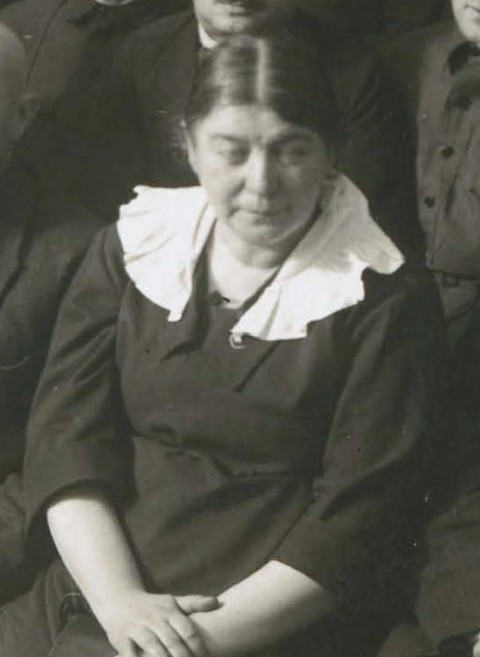
Frumkina: I think that the national minorities, that is to say minorities who occupy a specific territory, must also be taken into account. I am amazed to see repeated here the error which the Second International permitted itself to make. Territorial autonomy is talked about and national minorities are not taken into account. I think that the national minorities in different countries ought to be taken into account. I propose to make an addendum to point 9. Before that however I think that the experience of the Communist Party and of the soviet order in Russia ought to be remembered. The organisations of the Communist Party of Russia and the soviet institutions possess special departments for national minorities which are concerned with the national minorities and everything to do with for example the Jewish question, etc. I propose the following addendum on page 43 at the end of the Thesis, before point 10:
‘At the same time the Communist Parties in every country must carry out a decisive struggle, not only in their propaganda but also in their general policies, against the bourgeois concept of the exclusive right of this or that national majority to possess the territory they inhabit and against the concept held by national socialists who consider the national majority as absolute rulers and treat extra-territorial national minorities of workers who live on their territories as foreigners (Poland, the Ukraine).
‘Unless the categorical demand of the practical exercise of the rights of the national minorities living in various countries is assured (rights which can only be absolutely guaranteed by the dictatorship of the proletariat), the unconditional support of the revolutionary tendencies in oppressed countries with variegated populations could turn the previously oppressed petty-bourgeois masses into oppressors.
‘The experience of the soviet power and of the Communist Party of Russia, which gives the working masses of all nations the true opportunity to develop intellectually, thanks to the great ramification of the organs of state (sections for the education of national minorities, Commissariats for National Affairs, etc.), whereby a truly fraternal co-existence between all nations is achieved, must form the basis of the national programme valid for all Communist Parties.’
One is tempted to regard all extra-territorial minorities as foreigners. That is what it is like in Poland and the Ukraine. It is important for every country to take as its example the Communist Party of Russia, which gives all the toiling minorities of every nationality the opportunity to develop culturally by placing the necessary organisations at their disposal, such as for example organisations for the enlightenment of national minorities and Commissariats to defend the interests of national minorities.
This example must be taken into consideration by every Communist Party during the discussion of the national question.
I also propose to add in the same 11th Thesis, page 46, under the heading (g) section 6 after the words ‘in these countries’ the following words: ‘as also in those where a struggle by the national minorities to extend their rights is taking place’.
Section 6 after the words ‘the backward countries’ add: ‘and nations’.
After section 6 the following comment:
‘An example will show what lies the working masses of an oppressed nationality have had to fall victim to, lies which are great assets to the Entente and to the bourgeoisie of the nations in question. This is the case of the Zionists in Palestine who, under the pretext of founding an independent Jewish state, suppress the working population and the Arabs who live in Palestine under the British yoke, although the. Jews are still the minority there.
‘This unparalleled lie must be combated, and in a very energetic way, since the Zionists in every country work by approaching all the backward masses of Jewish workers and trying to create groups of workers with Zionist tendencies (Poale Zion), which have recently been striving to adopt a Communist turn of phrase.
I would like to quote here one of the most striking examples of the Zionist movement.
In Palestine we are not dealing with a population whose majority is Jewish. We are dealing with a mere minority which is trying to subjugate the majority of the workers in the country to the capital of the Entente.
We must combat these efforts in the most energetic way. The Zionists are seeking to win supporters in every country, and through their agitation and their propaganda serve the interests of the capitalist class. The Communist International must combat this movement in the most energetic way.
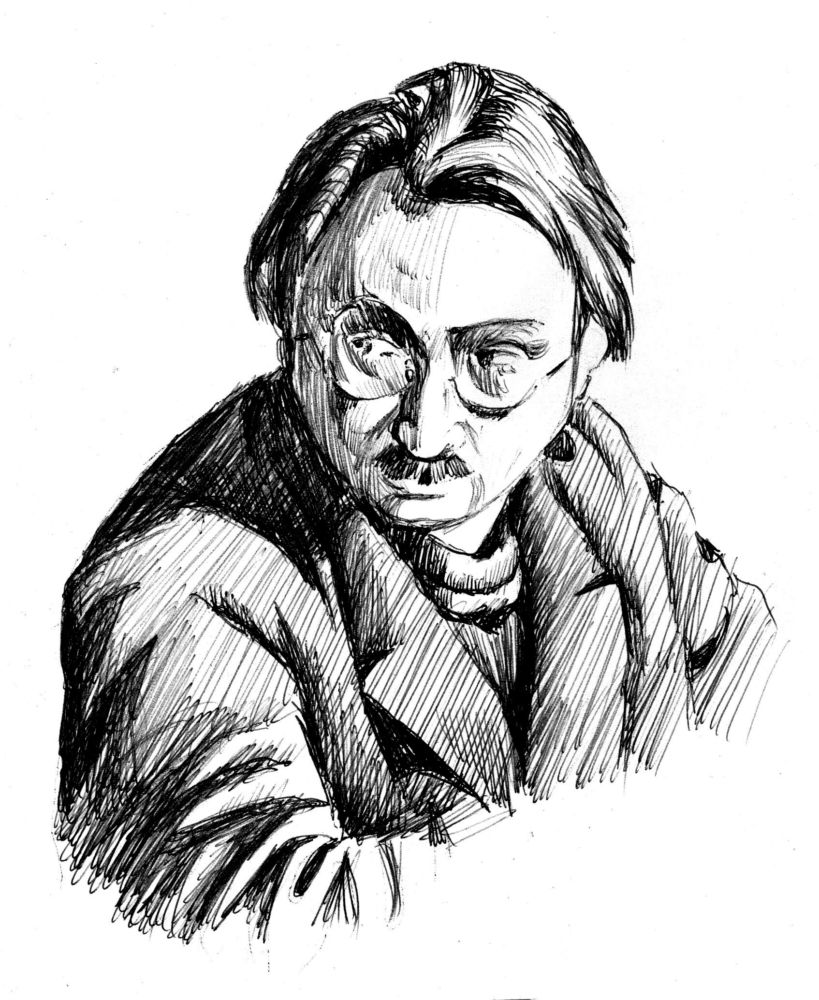
Mereshin: The Jewish sections of the Communist Party of Russia are in complete agreement with the judgement of Zionism and of the Jewish Communist Party Poale Zion expressed in Comrade Frumkina’s speech and I do not wish to repeat the same thing. I would like now to deal with another question, the question of the defence of the rights of national minorities living in territories with a mixed population. The parties of the Second International found a way of defending these rights through national personal autonomy (the theory of Otto Bauer and Renner). In the Ukraine, in White Russia and in Lithuania, the attempt has been made to put this theory into practice. There under the Central Rada and other petty-bourgeois governments a national personal autonomy was created.
This attempt must be taken into account and evaluated. We must establish that the attempt has proved that national personal autonomy does not work.
The transfer of power from the big bourgeoisie to the petty bourgeoisie, to the democratic republican government, has in no way lessened the national pressure. The social traitors who had come to power while in words granting national personal autonomy in fact performed more cruelties in the fight against the dictatorship of the proletariat than even Tsarism. A forcible naturalisation was irresistibly introduced despite the official proclamation of national personal autonomy. But what are we to say about naturalisation when the same petty-bourgeois parties who had on paper declared themselves ready to recognise national personal autonomy even went so far as to introduce physical annihilation of the national minority, particularly through the so-called ‘Ukrainian People’s Directory’ and the governments of Pilsudsky, Moraczevsky, etc., etc. (the cruellest pogroms, raids, etc.).
However we must make a further comment. It must be established that in and of itself, national personal autonomy worsens the position of the proletariat of the national minorities. This comes from the fact that the petty bourgeoisie of the national minorities is predominantly urban, and that this urban petty bourgeoisie is significantly less revolutionary than the petty bourgeoisie of the national majorities. For in the national majorities the petty bourgeoisie, particularly in Eastern Europe, consists predominantly of peasants who are revolutionised in the struggle with the landlords. In fact the proletariat of the national minorities have frequently had to appeal to ‘foreigners’ against the national personal autonomy ‘granted’ to them. In the face of its own bourgeoisie and petty bourgeoisie it was isolated and in a worse position than if it had never possessed national personal autonomy.
For the reasons that I have mentioned I propose to add the following Thesis after the third Thesis:
‘The experience of the mutual relations between the majority and minority nationalities in territories with a mixed population (in the Ukraine, in Poland and in White Russia) hag shown that the transfer of power from the hands of the big bourgeoisie into the hands of petty-bourgeois groups forming democratic republican states, does not reduce national tensions but on the contrary sharpens them in the extreme. The republican democracy, which is forced, in the struggle against the working class, to confuse the class struggle with national war, is quickly permeated with national exclusiveness and easily adapts itself to the experience of older teachers of national oppression. This experience is eagerly repeated in the area of the incitement of one mass of people against another and in the area of the organisation, with the help of the state apparatus, of mass national violence for the purpose of fighting against the dictatorship of the proletariat. There is the example of the growth of anti-semitism in the Ukrainian ‘democracy’ at the end of 1917 and the beginning of 1918 under the Central Rada, the vicious race riots organised at the end of 1918 and in the first half of 1919 that were organised by the organs of the “Ukrainian People’s Directory”, and the pogrom movement in the “Polish Democratic Republic”, not only under the mixed regime (Pilsudsky-Skuisky) but also under the rule of the party of the Second International (PPS – the Moraczevsky government). The same experience has shown that there are no “democratic’ forms (and that includes the national personal autonomy defended by the Austrian Social Democracy) that can secure the rights and the cultural interests of the national minorities in areas of mixed population in the republican-democratic order, and guarantee true equality and equal influence on the course of the business of state. National personal autonomy, based on universal suffrage, leads not only to the division of the proletariat into national groups, but also to the complete cessation of the revolutionary struggle and even to the worsening of the cultural position of the working class in the national minority. This arises because within every national minority the national petty bourgeoisie, which is larger and stronger than the proletariat and consists predominantly of town dwellers, is significantly more reactionary than the petty-bourgeois majority of the nation, which consists of peasants revolutionised by the fight against the landlords.’
I would like also to touch on the special problem of pogroms.
The Jewish section of the Communist Party of Russia propose the following resolution on this question:
‘1. In its bloody campaign against the dictatorship of the proletariat the world counter-revolution falls with especial cruelty on the poorest Jewish population of Russia, the Ukraine, Poland, Hungary, Palestine, etc.
‘2.. Through its oppression of the poorest Jewish inhabitants, beside which the atrocities not only of Tsarism but also of the medieval inquisition pale into insignificance, the world counter-revolution is striving to introduce splits and disagreements into the ranks of the workers of different nationalities in order to distract their attention from the immediate struggle against the bourgeois order.
‘The Second Congress of the Communist International establishes in front of the whole world:
‘1. That responsibility for all the pogroms against the Jews in recent times in the Ukraine, Poland, Rumania, Hungary, Palestine, etc. falls fairly and squarely on the shoulders of the Entente, which heads all counter-revolutionary enterprises against the Communist Revolution.
‘2. That the Entente, who supply every species of White Guard, who cover the territory they occupy with hundreds of thousands of innocent victims with every possible means of destruction, and justify them morally, do not move a finger to check the instigators of the pogroms and do not pay the slightest attention to the protests of the toiling masses against the pogroms.
‘Indeed the agents of the Entente whom we find in the counter-revolutionary armies of Russia, the Ukraine, Poland, Hungary and other countries, take a direct part in these pogroms. We saw this most clearly in the pogrom in Jerusalem in April of this year, which was organised by the agents of the English government.
‘3. That the parties of the yellow Second International in power, in the shape of the ‘Ukrainian Peoples’ Directory’ in the Ukraine and of the Pilsudski government in Poland, are moral and physical participants in the pogroms which have had the extermination of hundreds of thousands of women and children as a result. In their struggle against the dictatorship of the proletariat they have drowned the Ukraine and Poland in floods of innocent blood.
‘The Second Congress of the Communist International, which expresses the will of the revolutionary proletariat of the world, therefore raises the most decisive protest against the pogroms against the Jews, which are the work of the international counter-revolution. It calls on the workers of every country to fight against them actively in word and deed in order to unmask the hypocritical diplomats of the ‘League of Nations’, reveal their true shameful role and to set up everywhere the dictatorship of the proletariat which alone is able to put an end to all pogroms, to do away with all national prejudices, to tear down all the barriers that divide nations and to bring about the true fraternity of nations all over the globe.
‘In particular the Second Congress of the Communist International addresses itself to the workers of all the enslaved nations with the call to form up more closely around the banner of the Communist International, which brings to all of mankind the final liberation from the injustices of the capitalist order.’
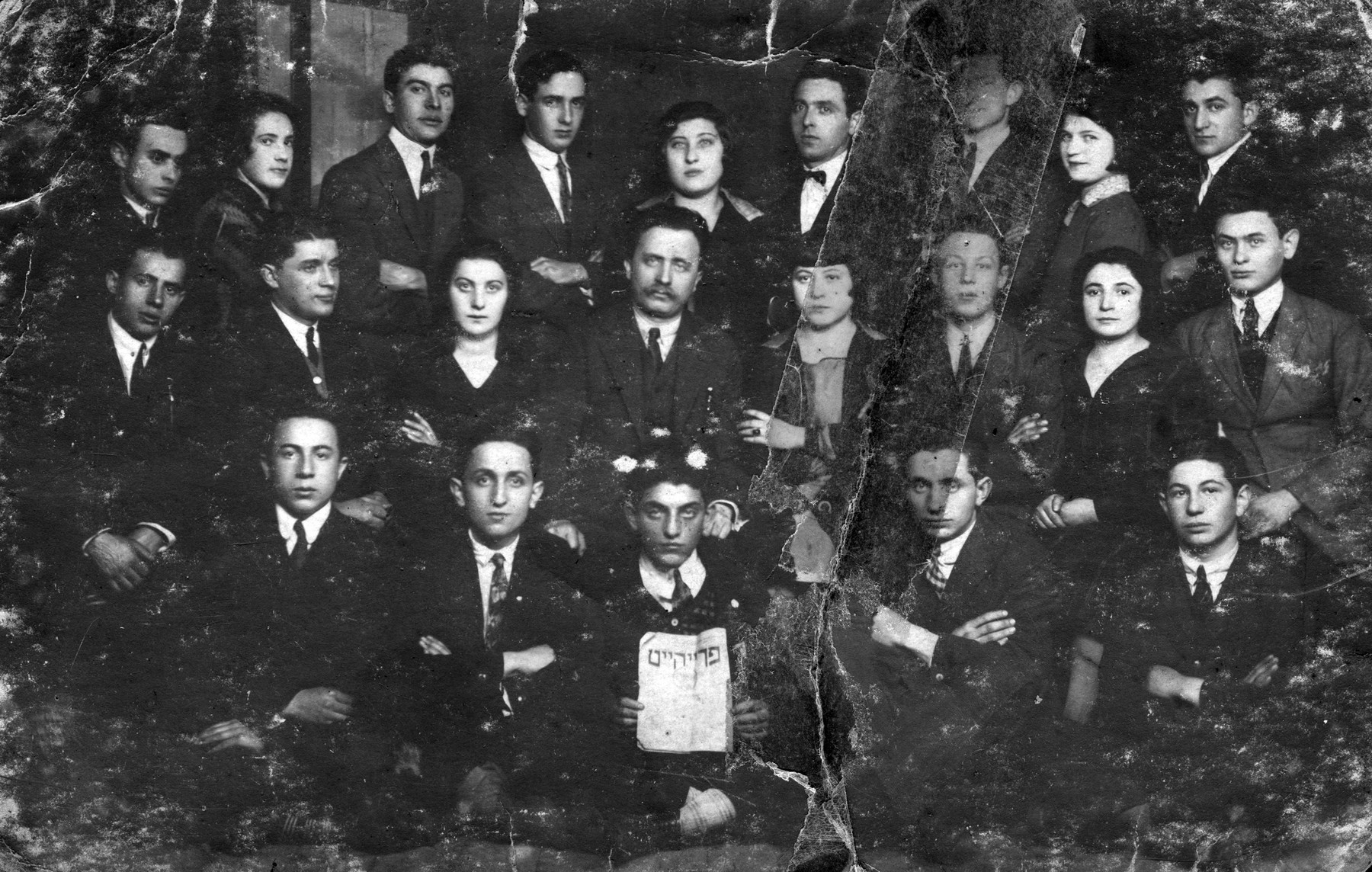
Cohn-Eber: As a result of some of the speakers who have intervened in it unexpectedly, the debate has taken a turn with which nobody can be in agreement who knows the exigencies of a communist policy towards the nationalities. I would like to make one remark before I deal with the motions of Comrades Frumkina and Mereshin, who have brought this turn into the discussion. The main emphasis in the Theses is on peoples living in territorial concentrations, that is to say on oppressed nationalities who are ruled by a foreign power. There is no talk in general of minorities living in mixed populations. Only the 9th Thesis talks about guaranteeing the rights of national minorities. In the Commission I had moved an addendum to this Thesis, to the second sentence of the paragraph following the words ‘united in struggle with the bourgeoisie’, to read as follows: ‘secondly to fight for social institutions which make possible the satisfaction of the cultural and socio-economic needs of the toiling masses of the minorities.’ It is necessary to create quite specific organisational preconditions which the Communist Parties in the individual countries should encourage and defend. The Commission agreed, however, that the 9th Thesis expresses quite clearly, although only in general, the defence of the rights of the national minorities and the creation of the social institutions that are to realise these rights, and that they should avoid adopting detailed demands in the Theses. For that reason I was prepared to withdraw my addendum. Faced with the danger however that for lack of opposition Mereshin’s motion may perhaps be passed, I am readopting the motion I read out and submitting it to the Congress. This Thesis corresponds exactly to the demands of the party I represent, the Poale Zion. The Jewish proletariat is completely satisfied to be granted social institutions that make an answer to their cultural and socio-political needs possible, insofar as this can be carried out within the framework of the Soviet Constitution and does not contradict the needs of the soviets in struggle.
Comrade Mereshin’s resolution on national personal autonomy is based on an incorrect view of the facts and above all on incorrect conclusions. When he says that the attempts to introduce national personal autonomy in the Ukraine had damaging results, in that as a result the majority in the institutions of national autonomy fell into the hands of the Jewish bourgeoisie, which is reactionary, he forgets that this happened at a time when there was a democratic government, that a general suffrage had just been introduced into these institutions and that these results could not have been a surprise for any communist. If on the other hand institutions are set up to satisfy the cultural and socio-economic needs of the national minorities with specific, sharply delineated autonomy under the control of the soviet power and under the leadership of the communist proletariat of the nation in question, then no higher degree of damaging results are to be expected than would be the case from any other social institution. I do not think anyway that either Comrade Frumkina’s motion or my own need to be put explicitly, since the soviet power, driven by the needs of the proletariat and on the basis of their own constitution, will have to grant the opportunity for self-government to the national minorities as well. I would also like briefly to point out that Comrade Mereshin, has fallen victim to a misunderstanding which is, it must be said, characteristic. He says that Renner and Otto Bauer theoretically demanded national personal autonomy. That is a mistake. These two leaders of the Austrian opportunists only developed the theory of the national autonomy of the majorities, and merely demanded legal guarantees for the minorities.
As far as Comrade Mereshin’s resolution on anti-semitism is concerned, I must merely point out the passage that was added to the 10th Thesis by the Commission and sufficiently emphasises the necessity of combating this reactionary phenomenon. Comrade Mereshin’s long resolution would only give the impression that we are trying to use the Congress to mount a campaign on the role of the Entente on this question too among the representatives of the Jewish proletariat. I think that the Congress has more important things to worry about.
What has to be said on the phenomenon of national hatred and xenophobia and the pogroms created by the reactionary powers is said clearly enough in the Thesis I have mentioned.
Partly for the same reason I would like to speak out in the most decisive way possible against Comrade Frumkina’s resolution. We are of course in agreement with the content of the first part. Bourgeois Zionism, which needs must enter the service of British imperialism if it does not wish to condemn itself to being utopian from the very start, this bourgeois movement must of course be fought as sharply as possible under all circumstances. And it is precisely the communist Poale Zion movement which is the most energetic in this fight. But what the Congress and the whole of the Communist International has to say about this has already been expressed *in Thesis 11, paragraph 6. Comrade Frumkina’s resolution is therefore completely superfluous and not at all inspired by the intention to fight bourgeois Zionism. Otherwise we could have the Congress passing long-winded resolutions on other bourgeois nationalist so-called liberation movements in the service of individual Entente powers. The real aim of this resolution can be seen in the second part. You have here an absolute model of the kind of evil squabbling that has for years poisoned the political life of Jewish workers. Comrade Frumkina’s party, the Communist Bund, is simply trying to use the opportunity to start a petty fight between parties at the Congress. Comrade Frumkina, the representative of a party which only yesterday supported all the counter-revolutionary governments in Russia, whose leaders Dan and Lieber were among the most important figures in the Menshevik counterrevolution, claims that we – Poale Zion – are hiding our activities under a communist veil. She says that about us, who were the first of the Jewish parties in Russia to take the side of the Bolsheviks in the fight against the counter-revolution and who took up the struggle for the world revolution in all the other countries too before all the other tendencies in the Jewish working class.
She justified her resolution with some general statements that show no knowledge of the territories in question. I shall give some information on this as we are dealing with countries that have not been discussed today although they come within the sphere of British imperialism and will in the future play a role that will be important in every respect. I am talking about the countries of Arabian Asia: Mesopotamia, Syria and Arabia. Frumkina would like to pass off the movement which seized the Arabian Orient during the world war as a national liberation movement. What we are in fact dealing with is the attempt by the nomad tribes of the Arabian desert, mainly the Hadji, under the influence of their religious leaders to impose on the settled population of these countries the oldest kind of slavery, that is to say the feudal organisation of the rule of the tribal leaders over the peasants. The Communist International supports this movement and its leader the King of the Hadji, the Emir of Fezan and similar ‘liberation fighters’ – a remarkable beginning!
What is the real situation in the Arabian Orient? The great mass of the population consists of Arab fellahin who have remained in the most primitive economic conditions through the heavy pressure of the Turkish government. But there was one favourable circumstance which seemed to prevent complete impoverishment, and that was the existence of a kind of common ownership of the land and of property which seemed to be based on certain primitive communist regulations in the law of Islam. The Bedouins who are leading the allegedly $national’ movement are striving to set in motion the worst exploitation of the working population by expropriating the fellahin’s land. They are completely supported in this by English imperialism. The English bourgeoisie after all started off by ‘liberating’ the peasant population from the land in the most radical manner, as we read in Volume I of Capital on primitive accumulation. Comrade Frumkina would like to see the Communist International encourage this ‘liberation’ carried out by the Bedouin chiefs under the protection of the English bourgeoisie.
How do we stand, then, the Communist Poale Zion, in relation to Palestine? First of all we do not want to set up a state, least of all with the support of British imperialism, but we are convinced that in the process of rendering the Jewish masses productive, of attracting them to useful and socially necessary work, a certain number of Jews will emigrate from the countries in which they at present live in their masses, such as, for example, the Ukraine, Lithuania and especially Poland. Some of these emigrants will also go to Palestine and there be attracted to agriculture. The only thing that follows from that as far as we are concerned is the demand for the opportunity to emigrate and to colonise this country as long as it is m the hands of the British or any other bourgeoisie. We only raise this demand in order to regulate the emigration and the colonising activity of the Jewish and every other proletariat with the support and the fraternal help of the Communist International and in the sharpest struggle with the Jewish and the world bourgeoisie, to the extent that such activity is at all possible for the working class under the capitalist order. If in the development of the social revolution Palestine becomes a soviet state that joins the federation of other soviet states, then the question of the Jewish colonisation of this country will become part of the question of the attraction of the Jewish masses to productive work, of their participation in the construction of the free society of working people. The solution of this question occurs in the framework of the rational use of the natural resources in the lightly populated colonial countries and the appropriate application of the hitherto unused or very badly used human labour power in industry.
But these views of ours have nothing to do with the thought of a bourgeois state. On the contrary our movement, which has arisen in every country out of the needs of the Jewish proletariat, is everywhere in the front rank of the struggle against imperialism. In Palestine, indeed all over Arabian Asia, it is the socialist party of Palestine (Poale Zion) affiliated to us which is the only proletarian communist group that fights British imperialism under the most difficult conditions and has the task of leading the working masses of the Arabian Orient in this struggle. [The chairman interrupts the speaker.] The proposed resolution also ignores the most important social facts and tries to lay the Congress open to ridicule. It is namely a fact that, just as the Jewish bourgeoisie was the first to introduce modern capitalist economic forms of exploitation into the country (forms which, moreover, if we were to be given a choice between the various forms of exploitation as the Communist Bund wishes, we would still prefer to the feudal forms that Comrade Frumkina recommends), so too the Jewish immigrant workers are the only modern, truly propertyless proletariat which is for that reason filled with class consciousness and inspired by the revolutionary will to fight. The Arab masses who work on the estates of Jewish landlords and Arab effendis usually possess their own land and can only be characterised as semi-proletarians. Their natural champion which has to draw them into the revolutionary struggle and fill them with proletarian consciousness is our party there which, true to the principles of the Communist International, has carried out very lively revolutionary propaganda among them.
The speaker is called upon to wind up his remarks.
Comrade Frumkina’s resolution contradicts not only all the given facts but also the spirit and the letter of the Theses, which demand support of the proletarian communist groups against the efforts of the bourgeois national revolutionaries wherever the former exist. It would do extraordinary damage to the communist movement of the Jewish proletariat all over the world and to the communist movement in the Arabian Orient in particular. I therefore ask the Congress not to permit itself to be used for the purposes of the worst sectarian squabbling and to reject this resolution in whose favour I have not a single polite word to say.
Frumkina: I protest against the accusation that has been raised against the Bund. It has always stood on the side of the soviet power, even when it was not in the ranks of the Communist Party.
Proceedings of the Second Congress of the Communist International. Publishing Office of the Communist International, America. 1921.
Contents: Editorial Note, Convention Call by G. Zinoviev and K. Radek, FIRST Session July 19, Zinoviev’s Opening Address, Theses on the International Situation and the Fundamental Tasks of the Communist International (Lenin), Greetings, SECOND Session July 23, Standing Orders and Agenda, Discussion on the role of the Communist Party in the proletarian revolution (Opened by Zinoviev), THIRD Session July 24, Procedural, Discussion on role of Communist Party continued (reply by Zinoviev), Theses on the Role of the Communist Party in the Proletarian Revolution, FOURTH Session July 25, Report on National and Colonial Question (Lenin), Supplementary Theses on the National and Colonial Question (Maring), Discussion America and the Negro question (John Reed), FIFTH Session July 28, Discussion on National and Colonial Question, Discussion, on the Jewish Question (Frumkina), Theses on the National and Colonial Question, SIXTH Session July 29, Conditions for entry into the Communist International (Zinoviev), Discussion on Conditions for Entry. 234 pages.
PDF of book: https://archive.org/download/2nd_congress_of_communist_international_proceedings/2nd_congress_of_communist_international_proceedings.pdf
 Revolution's Newsstand