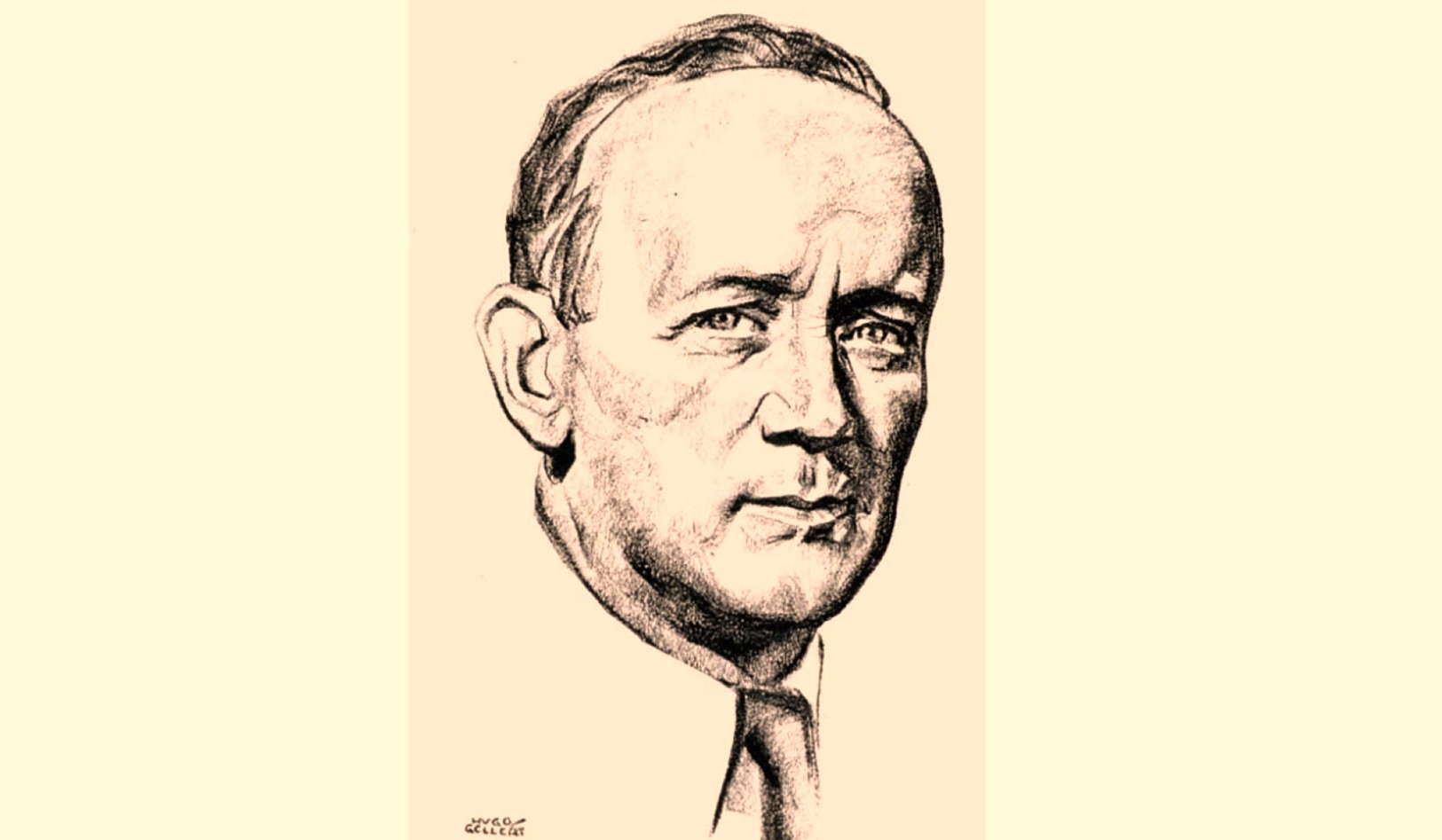
The second half of Foster’s 1912 syndicalist literary intervention into the I.W.W.
‘Revolutionary Tactics IV-VI’ by William Z. Foster from The Agitator. Vol. 2 Nos. 14-16. June 1-July 15, 1912.
IV.
(In this article is continued the review of some of the chief causes of the failure of the I.W.W. dual organization program.)
THE I.W.W. PLACES ITSELF IN THE POSITION OF A DISRUPTIVE ORGANIZATION.
Disruption is the high crime in every labor movement. Any individual or organization proven guilty of this offense is given short shift in the organized labor circles. This is natural, as unity is the first essential to a successful movement.
The I.W.W., with its weird dual organization program, exposes itself fully to the charge of being a disruptive organization; and our enemies, in whose hands we place this powerful weapon, use it continually with telling effect against us. Just a couple of cases of the numerous ones that might he cited to illustrate this point:
Fellow Worker Freeman, an I.W.W. member of the “Leather Workers on Horse Goods” (A.F. of L.), recently got out a pamphlet violently criticizing this antique union, its methods, Civic Federation officers, etc., and winding up by inviting its members to desert it and join the I.W.W.
The pamphlet caused quite a stir among the disgruntled leather workers, who had long suffered from the evils exposed by Freeman, and Bryan, the president of their union, was forced to write an answer to it. His response was as typical as effective. Stripped of non-essentials, it amounted in effect to:
This man Freeman is a disruptor, a spy, a traitor. He is deliberately trying to destroy our union (quotes Freeman’s own words in proof). He is trying to do exactly the same as the M. & M. There must be some connection between them. He should be expelled from the union.
The vast bulk of organized workers can’t understand the necessity of breaking up their present unions and joining others, simply in order to change their minds, which is what the I.W.W. proposition amounts to—and are quick to believe such arguments as Bryan’s. Labor fakers using them are placed in the position of defenders of their unions and the L W. W., in so favoring them, is aiding to perpetuate what it is attempting to destroy.
An Instructive Incident.
Fellow Worker Jaekel recently had an account in “Solidarity” of a typical and instructive incident that occurred last fall in Chicago. I will give the substance of it from memory: The cooks were organizing into the A.F. of L. Jaekel spoke at one of their meetings. He gave them a talk on industrial unionism, advising all hotel and restaurant workers to unite and act together. His talk was very well received. He was followed by Fellow Worker Moreau, who roasted the A.F. of L. as a hunch of scabs, etc., and advised the cooks assembled to get into the I.W.W. A commotion ensued and a motion was made to throw the disrupting I.W.W. out of the hall. It was carried and executed.
This incident should be full of lessons for us. It illustrates clearly the popularity of the two programs of the I.W.W. Our first and successful one, viz., propagation of industrial unionism, presented by Jaekel, was well received as usual. Our second and unsuccessful one, viz., dual organization, presented by Moreau, was absolutely rejected also as usual.
This hostility of organized workers for our dual organization program as typified by the I.W.W. is well known to our speakers, and in talking to such they usually evade mentioning it to them, confining themselves as much as possible to our other and more popular program.
How to Get Subs.
This line of tactics is well illustrated in the method of the champion sub-getter for “Solidarity.” According to B.H. Williams, he makes a specialty of getting subs from organized workers. He carefully conceals from prospective subscribers that “Solidarity” is an I.W.W. paper. One of his devices being to artfully cover with one hand the letters I.W.W. in Solidarity’s title when reading some selected article on the front page. He has learned from experience that many organized workers will readily subscribe for Solidarity on the strength of its advocacy of industrial union principles, who couldn’t be induced if they knew it to be an organ of the ostracized, disruptive I.W.W.
This evil reputation of the I.W.W. has been a severe handicap to it. It can be expected to last as long as the dual organization program which produced it does.
THE I. W. W. FLAGRANTLY VIOLATES THE PRINCIPLE OF THE MILITANT MINORITY.
In every group of human beings, be it Y.W.C.A., A.F. of L., I.W.W., M. & M. or what not, there are to be found a certain few individuals who exercise a great influence over the thoughts and actions of the rest of the mass. They are natural leaders and maintain their leadership through their superior energy, courage, intellect, oratorical power, organizing ability, etc., as the case may be.
French revolutionists have noted that the most potent of these inevitable leaders in the labor movement are the militant revolutionists, whose vigorous philosophy and tactics, which are those par excellence of the labor movement, coupled with their unflagging energy and courage, born of the revolution, make them invincible in the struggle for the control of the labor movement. These rebels, always far in minority, simply force the great mass of workers in conservative unions into action, and to become revolutionary, whether they will or no in spite of the contrary efforts of “leaders” of other types—Socialists, etc.
To better exploit their power these militants have banded themselves together in the various unions to war collectively on conservative control and influence—to “bore from within,” as we abominably express it. These are the famous “militant minorities” which have done so much to revolutionize the French movement. Their power is immense. Let us take the recent French railroad strike, as an illustration of it.
A Lesson from the French Railroad Strike.
Until a couple of years ago the French railroads, dominated by Socialists, were so conservative that it was a common saying that they never would strike again. But a few months after the militant minority had deposed the Socialist dictator, France was shaken by the recent great railroad strike of 50,000 workers. The Socialists deliberately broke the strike by holding the remaining 75,000 railroaders at work. The strikers were forced back to work unconditionally, though the railroads made them many “voluntary” concessions. Three thousand men from all through the railroad service in France—non-striking roads included—were later discharged on the pretense that they were responsible for the strike. But of this number it is very doubtful if one thousand were militant revolutionists, because in the general cleanup great numbers of men were discharged by bosses who had petty grievances against them and seized this favorable opportunity to get rid of them. Hundreds of others were discharged for saying the strike was a good thing or something similar. One thousand is, therefore, a liberal estimate of the number of militants amongst the discharged. And it is to the activities of this thousand militants (more or less) in the conservative unions that this great strike must be charged. Had they separated themselves from the old unions, made themselves into a revolutionary sect and labeled their organization the only bona fide labor union, and “bawled out” the conservative unions, as the I.W.W. militants are doing, there would have been no strike.
I.W.W. Disorganizes Militant Minorities.
The I.W.W. dual organization program has the effect of disorganizing the potentially powerful militant minorities in all American unions. The explanation is simple: We make rebels of many organized workers and fill them with the patriotic belief that the I.W.W. is the whole labor movement and that their old unions are capitalist institutions, interlopers, etc. They logically conclude that the sooner these unions; go out of existence the better, and ordinarily either quit them entirely or at least cease to try to improve them. The double result of this is to absolutely disorganize the militant minorities and to leave the old unions in the undisputed possession of the conservatives and fakers.
Many unions plainly show the evil effects of these unwise tactics. Take the W.F. of M., for instance. According to Vincent St. John, when this union was in the best fighting days, 10 per cent of its members were rebels, but this militant minority were so well organized that they controlled the union and made it willy nilly a real fighting organization. And now, if the W.F. of M. is conservative, it is chiefly because this once powerful militant minority is disorganized and has practically quit fighting to control the union. This disorganization is due to the I.W.W. doctrine that A.F. of L. unions are not labor unions. I have met quite a lot of these old W.F. of M. militants, who believe that the W.F. of M., because it quit the I.W.W., should be wiped out of existence. Let these militants once get this foolish idea out of their heads; let the Haywoods, St. Johns, Heslewoods and the numerous other old W.F. of M. militants, now but lookers on, get back into the fight again, organize themselves and the W.F. of M. can readily be made into a fighting organization once more.
The case of the “International Shingle Weavers’ Union” is a sample of I.W.W. tactics. This small radical union (about 3000 members) refuses to quit the A.F. of L. and join our church. Therefore, it must be patriotically broken up. And in Seattle I heard I.W.W. men proudly boast that this consummation was near, as “we have got all the rebels so they won’t pay dues into it any more.”
Truly a great and wise achievement, as the rebels are probably enough to run the “Shingle Weavers’ Union,” as they would were they only members of it and organized to do so. But to do this presupposes their getting rid of their I.W.W. patriotism.
The same disorganization of the militant minority exists in the Pacific district of the International Longshoremen’s Association. This union is full of rebels and there are hundreds more on the outside that won’t come in. They are all disorganized, crying out against the fakers controlling the I.L.A., when if they were on the inside and organized they could get rid of these same fakers in a jiffy. Kean, the district president, realizes this. That is why he raised his cry a few weeks ago against an I.W.W. “boring from within” invasion of the I.L.A.
Rossini, national organizer of the Italian Socialist Federation (I.W.W.), in “le Proletario” (November), quotes an ex-organizer of the U.M.W.A. to the effect that the Italian rebels in the U.M.W.A. could control a “great part” of the local unions if they only would. Being obsessed with the I.W.W. idea they don’t even try.
This disorganization of militant minorities is general in the American labor movement. Innumerable instances of it might be cited. It is one of the most evil results of our dual organization program, from which monstrosity it naturally proceeds. It is a potent cause for the weakness of our movement. Indeed, with us destroying the effectiveness of rebels as we are, the wonder is not that the American movement is making such slow progress, but that it is making any progress at all.
V.
ORGANIZATION IN THE INDUSTRIES.
The propaganda organizations in the industries would be the organized groups of militant direct actionists in the various unions in these industries.
A common and effective method of organizing a militant minority is through the medium of a rebel paper. A few militants get together and found a paper to circulate among the members of their union.
Such militant minority organizations will eventually have to be formed in the ranks of the I.W.W. unions if they ever grow to any considerable size —even as these organizations exist in French unions. This is manifest as a large percentage of their membership—perhaps, then, the vast majority, would inevitably be ignorant and even hostile, it would be impossible to keep the organization revolutionary without thorough co-operation between the rebels. To make rebels of all workers before accepting them would be impossible. Even if possible, it would he unnecessary. Every great strike, however revolutionary, shows that hut a comparatively few clear-headed rebels scattered through the mass are sufficient to make it act. Any attempt to put an educational test harrier to the entry into the I.W.W. would render it even more of a sect than it is now.
Through the columns of this paper they expound their revolutionary doctrines, carry on a merciless criticism and exposure of their conservative or fake union officers, advocate and participate actively in strike movements, standardize their policies of opposition to their opponents, etc., etc. Inevitably all the rebel and progressive elements in the union group themselves about this paper. Consequently the old and usually more or less decrepit conservative machine which hitherto had controlled all means of inter-communication in the union and he able to do about as it pleased, uncontested, finds itself confronted by a vigorous national organization of militants willing and prepared to fight it at all points for the control of the union. It finds itself faced by an organization advocating much fitter doctrines than it does, and one which exploits fully every piece of crooked work it commits.
In this type of organization no headquarters are maintained, nor dues paid, the paper serving as the means of organization. It is supported by donations and subscriptions. For an illustration of its effectiveness, we don’t need to look further than the despised A.F. of L., from which, by the way, we could learn much if we hut studied instead of blindly condemned it.
The Revolt in the I.T.U.
For years past the International Typographical Union has been dominated by one of the most powerful and best organized machines in the A.F. of L. This machine is an oath-bound secret organization known as the “Wahnetas.” Jim Lynch, president of the I.T.U., is at the head of it. Its purpose is to seize and conserve in the hands of its members the control of the I.T.U. and the share of the work to be had in the printing industry. It is a job trust within the I.T.U.
As long as there was no thoroughly organized Opposition to it the “Wahnetas” formed one of those all powerful, invincible A.F. of L. machines, we I.W.W, talk so much of.
But now it has fallen on evil days. It is in serious danger of fighting for its existence. This change has been wrought in a few months by a few militants who are opposed to the methods of the “Wahnetas,” and inspired by the I.W.W. doctrine that nothing can be done in the old unions. They gathered “the dope” on the “Wahnetas,” and founded a paper, “The Progressive,” in Denver, in which they exposed this machine, root and branch. The result was magical. Immediately all thru the ranks of the conservative I.T.U. the revolt spread and a strong organization sprang up around “The Progressive.” At present all indications point to the dissolution in the near future of the “Wahnetas” and the defeat of Lynch for president at the next referendum election by the candidates of “the progressives.” “The Progressive” is supported by subscriptions and donations.
Organizing the Militant Minorities.
In our organization of the militant minorities in the unions, we must pattern after this type of organization around a rebel paper, as it is the most effective extant. We can improve on it by having the members of these minority organizations—at least the live ones—organize and assess themselves to support their paper, get out literature, maintain the general national headquarters, perhaps keep a few speakers of their own in the field, etc. Such organizations and papers must be started in all unions, industries and industrial centers possible or advisable.
Probably the best way for us to proceed, after establishing the general national headquarters, would be to choose the most likely looking industry—probably the mining industry, as both the U.M.W.A. and W.F. of M. have big radical minorities—establish a paper therein and put it on a self-sustaining basis as soon as possible by organizing around it the rebels in the industry. This accomplished, the next most promising industry or industrial center could be selected and the process repeated until every important group of organized workers had an organized militant minority at work within its ranks.
Opportunist Policies.
The militant minorities would be organized on the theory of the evolutionary development of the labor movement from a conservative to a revolutionary status, consequently they would be opportunistic and vigorously exploit every occasion to speed this development. Say, for instance, a paper was established in the building trades to serve as the organ of the rebels in the various unions in this industry, to function much as “The Transport Worker,” edited by Tom Mann, does in the English transportation industry. Around this paper the organized minorities in the various unions would develop.
The collective program of these militant minorities would be to organize and educate the building trades workers to fight as a unit, and on a revolutionary basis. To this end they would war singly and collectively on the obstacles in the way of this consummation. In this campaign their paper, or papers, would be invaluable as a means of securing coherent action, carrying on propaganda, etc. They would expose crooked union officials and politicians, show the futility of “craft” unionism, contracts and political action, carry on a propaganda for the general strike, sabotage, anti-militarism, etc., work for the fusion of building trades unions, the extension of their scope so as to take in helpers and other unskilled workers, and so on in every possibly way, seeking to revolutionize the industry.
There is every reason to believe that such concerted action on the part of the coalesced building trades minorities would be successful. But if it were not, if some or all, of the present building trades unions proved incapable of evolution and had to be replaced by new organizations, these same militant minorities would be excellent agencies for bringing this about.
Dual Organization.
The formation of a dual labor union—even a craft union—is a serious undertaking for the workers involved and should not be undertaken unless no other alternative remains, this is to cause rival labor unions usually quit fighting their employers and spend their energies fighting each other. Very often one union will ally itself with the employers to the better crush its rivals. (I.W.W. history is replete with such tactics on the part of A.F. of L. unions.) The interests of the workers are thus compromised in general.
Nevertheless, occasionally, such dual organization offers the only, or at least most practical, means to depose an executive committee that has ceased to represent the interests of the organization, or to revolutionize some decrepit old union. In such a case the organized militant minority in the union in question is the best agency for the successful launching of the new organization—the old organization must be wiped out completely, for while a rag of it is left the excuse for jurisdictional warfare remains. The rebels, thoroughly organized and taking active part in their union affairs, carry on a big propaganda against, say for instance, their corrupt and domineering union officials. When they believe they have created sufficient sentiment against these officers, they await some flagrant misdeed on their part, and when the resentment of the rank and file is at fever heat against their officers they launch their dual union. They seize a live issue at the psychological moment and stampede the mass into their organization. A case in point from the French labor movement.
French Tactics.
The French railroaders’ union, including railroaders, except firemen and engineers, was controlled by Socialists and consequently strongly centralized with vast power resting in the national committee. During the recent railroad strike the abuses and incompetence of this committee were very harmful and manifest. At the union’s recent convention—several months ago—the organized rebels made an issue of this national committee, and, though in minority, forced a motion thru to reorganize and decentralize the union. (European Syndicalists invariably decentralize unions wherever possible). The old national committee, to whom this reorganization was entrusted, refused to obey the instructions of the convention. Thereupon the rebels launched a new railroaders’ union, claiming the national committee had outlawed itself.
How this new organization, so cleverly launched, has succeeded may be inferred from a recent statement of Gustav Herve’s in “La Guerre Sociale,” that about all the old national committee has left is the handsome banner it recently patriotically carried at a prominent government official’s funeral. (It was by a similar process to the above that the successful split among American electrical workers was engineered.)
An interesting case of successful dual organization tactics of a different type was mentioned in “The Chicago Daily Socialist” recently. The musicians’ union of New York, controlling the best jobs in town, was a job trust with a prohibitory Initiation fee. The musicians on the outside organized themselves into a rival union which the job trust was eventually forced to admit In toto into its ranks. This course of tactics, intelligently applied would doubtless go far towards breaking up the notorious job trust unions, which are such a drawback to the American labor movement. Compare this practical method with the I.W.W.’s present planless system of dragging militants out of the old unions or discouraging them from taking any active part in their affairs, thus disorganizing the militant minorities and rendering them incapable of taking advantage of the combination of live issue and psychological moment which is so essential to the success of a dual labor union.
This “coup d’etat” principle of founding a dual labor organization applies as well to the A.F. of L. itself as to any of its unions. Some of the founders of the I.W.W. were more or less aware of the principle and thought, that in founding the I.W.W., they were seizing the live issue at the psychological moment. They thought the A.F. of L. would rapidly go to pieces from the desertion of its unions to the I.W.W.
VI.
Autonomy of Militant Minorities.
The organized militant minorities in the various unions would each have to have full autonomy. They would have to be held together and to united action by common interests, not by empty constitutional provisions or an autocratic G.E.B. a la I.W.W. The necessity for this autonomy is evident.
Each of the many conservative unions, A.F. of L. and independent, would present a different problem. Some would require one kind of tactics, others different ones. The most competent body to decide on the tactics to be employed in a given union would be the militant minority actively participating in the affairs of that union. It therefore should decide in all cases. If, for instance, a union had to be replaced by a new one, its militant minority alone could be depended on to decide when and how to seize the necessary live issue at the psychological moment and launch this new union. The limiting of this autonomy by the centralization of the policies of the various militant minorities into a set program—as the I.W.W. with its centralized dual organization program—has stripped its militants in the various Industries of their autonomy in the important matter of dual organization tactics, and is forcing them to use these tactics willy nilly, regardless -of conditions in their industries, would result in arbitrary tactics and disaster. The various organized minorities would have to be free to solve their various problems.
Organizing the Unskilled.
Many rebels believe it to be a special function of the I.W.W. to organize the unskilled, now being neglected by the A.F. of L.; and that to change it into a propaganda league would be to deprive these unskilled workers of their organisation.
This is a groundless fear. If the I.W.W. were solely a propaganda organization, unskilled workers could organize as well or even easier than now. Militants among unskilled workers would—with the help, if need be, of the national propaganda organizations’ funds, literature, organizers, etc.—organize unions of their fellow workers. The •question of affiliation would be a vital one to such unions and they would have to be free to decide it as their interests dictated. In this respect also I.W.W. unions are stripped of their autonomy and their policy centralized. They must pay per capita tax into the I.W.W. even though to do so amounts to suicide.
Many a union—not a few of them I.W.W. unions—have been crushed for refusing to pay dues or per capita tax into the A.F. of L.; others, as for instance the Shingle Weavers, purchase immunity from A.F. of L. scabbery by paying in their per capita taxes. Therefore the unions of unskilled workers would have to be in a position to decide which of the two courses—independence or war with the A.F. of L. (which organization would certainly demand their per capita taxes), or affiliation with the A.F. of L. and peace with it would be most compatible with their interests; and to affiliate or remain independent accordingly. Such unions in organizing wouldn’t have to face the strong A.F. of L. opposition they do now.
Conclusion.
By quitting our ridiculous dual organization program and concentrating our efforts on our propaganda program along the lines sketched above, in addition to securing innumerable advantages, we would abolish the four causes I have cited as being Chiefly responsible for the failure of our movement to date: First, each of the many conservative unions would be treated according to its needs instead of all being condemned wholesale as at present. Our disastrous I.W.W. patriotism would disappear. Second, as we wouldn’t be a labor union we couldn’t be scabbed out of existence. We wouldn’t waste our scanty strength in disastrous jurisdictional fights as now. Third, our propaganda wouldn’t be cursed and negated by the stigma of disruption as at present. Fourth, the powerful militant minorities in the various unions now so generally disorganized would be thoroughly organized and exploited. It is true we would acquire new difficulties, but these would be as nothing compared to those we would abolish, and the advantages we would gain—many of which haven’t been even touched in these articles.
Our task would be a difficult one, but by no means impossible. Look at the revolution now being caused in the English labor movement (called “impossible” by Debs) by a handful of Syndicalists using “boring from within” tactics. The corrupt and conservative machines now controlling the American labor movement seems strong only because they have no opposition and because it has been part of our stock in trade to consider them invulnerable—the revolt in the I.T.U. is proof of this. Confront these machines with a thoroughly organized rebel machine and they would melt away and their conservative doctrines with them.
We rebels must learn tactics from the despised printers and build a machine as they are doing, but on a larger scale, one designed to take control of the whole American labor movement. Every day we delay makes our task the more difficult, for while we are patriotically quarantining ourselves from the labor movement, the Socialists are busy “boring from within” and taking charge of it. Their well organized machines will be immeasurably harder for us to vanquish than the present decrepit ones. And capture the conservative labor movement we must sooner or later if we are going to have a rebel movement in the United States. As it will never voluntarily come to us, nor is it showing any signs of breaking up. The sooner we throw aside our present idiotic tactics and adopt sane ones the better it will be for us and the labor movement in general.
The Syndicalist began as The Agitator by Earl Ford, JW Johnstone, and William Z Foster in 1911. Inspired by the revolutionary syndicalism of the French CGT, they felt they were political competitors to the IWW and in early 1912, Foster and others created the Syndicalist Militant Minority Leagues in Chicago with chapters soon forming in Kansas City, Omaha, Minneapolis, St. Louis, Denver, Seattle, Tacoma, Vancouver, San Francisco, and Los Angeles. They renamed The Agitator The Syndicalist as the paper of the Syndicalist League of North America with Jay Fox as editor. The group then focused on the AFL. The Syndicalist ceased publication in September 1913 with some going on to form the International Trade Union Educational League in January 1915. While only briefly an organization, the SLNA had a host of future important leaders of the Communist movement. Like Foster, Tom Mooney and Earl Browder who were also members.
PDF of full issue: https://www.marxists.org/history/usa/pubs/agitator/v2n14-w38-jun-01-1912-agitator.pdf
PDF of issue 2: https://www.marxists.org/history/usa/pubs/agitator/v2n15-w39-jun-15-1912-agitator.pdf
PDF of issue 3: https://www.marxists.org/history/usa/pubs/agitator/v2n16-w40-jul-01-1912-agitator.pdf
 Revolution's Newsstand