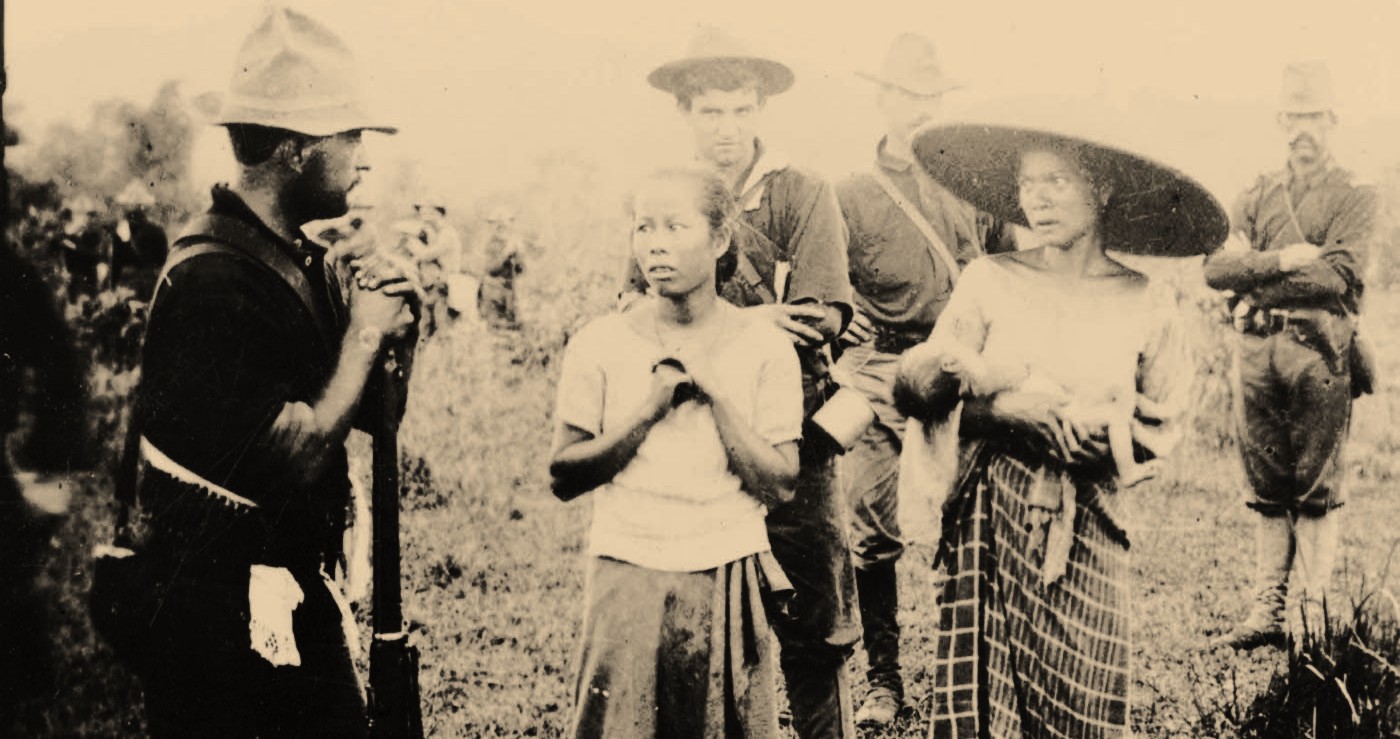
Resolution from the first Trade Union Unity League conference, successor to the T.U.E.L. addressing both U.S. imperialist control of the Philippines and for the defense and organization of Filipino workers in the U.S.
‘For Immediate and Unconditional Independence of the Philippines’ from Pan-Pacific Monthly (P.P.T.U.S.). No. 30-31. September-October, 1929.
Draft Resolution Approved at Cleveland Convention, Sept. 2, 1929.
The Trade Union Unity Convention recognizes the fact that American imperialism’s rule means not only increasing exploitation of American workers, but an ever increasing and intensifying oppression and impoverishment of the masses of colonial and semi-colonial lands dominated by American capital, among which countries the Philippines stand out as the open and frankly avowed colony of the United States. The time is past when American imperialism can longer conceal its rapacity behind hypocritical promises of ultimate independence and smug pretensions of benevolence.
The Philippine bourgeoisie, which through its political parties, the “Nacionalista” and the “Democrata” deluded the masses for decades with the false hope that by mere words imperialism could be induced to “withdraw” its present despotism, has recently not only ceased its merely verbal opposition to imperialism, but has gone over to the side of the oppressor and become its servant and agent in the exploitation and oppression of the Philippine masses.
The Philippine bourgeoisie, which is allied with and bound to the landlord class that–protected by the imperialist ruled courts and constabulary–robs and enslaves the peasantry without mercy or limit, must no longer be considered as spokesman for the independence movement of the masses, but as traitors to it and as enemies of the interests and aspirations of the toiling millions.
Imperialist Economic Development
American imperialism and its native lackeys spread the illusion that American capital–and with it certainly American domination–will “develop industry” in the Philippines, implying that this will benefit the masses. But nothing can be farther from the truth. While American machine-made goods increasingly drives out of the native market the hand-made products of peasant and city handicraft labor, imperialist capital develops only such industry as gives raw material supplies to the American industry, and hinders all industry that might compete. American capital investment goes into extractive and transport industry and into bonds for “improvements” which load the populace with debts. The new Governor-General, Dwight L. Davis, has his policy announced by the Manila Herald of July 9, as demanding a reduction in sugar production, which interferes with the American monopoly, and in cocoanut oil which interferes with American dairy and packing interests, and states a program–“As encouraging coffee, cacao, fibers and rubbers as a logical step to be taken by the Davis administration.”
To attain these products desired by imperialist economy, those products which compete with American industry are to be discouraged, and great areas given over to imperialist plantations of rubber, etc. In this process great masses of the peasantry are utterly ruined, impoverished and driven off the land by force. Together with the carters and other transport workers displaced by motor and rail transport and the mass of displaced handicraft workers, the ruined peasantry is thrown into the towns and–in the absence of any important development of factory industry–growing unemployment and misery affects the whole toiling mass and threatens the town proletariat with a loss even of its present miserably low standards.
A Fight Against Imperialism
Against this intensification of imperialistic rule, only the rising resistance of the masses of workers and peasants in close alliance, in which alliance the organizations of the city proletariat must play the guiding role, can be effective, either in the effort to maintain and improve economic standards or in the struggle for independence. The Filipino masses cannot successfully fight for better economic conditions without fighting American imperialism, nor can the struggle for independence be triumphant without a fight against the ruling economic class–American capitalists and their native agents.
The Philippine bourgeoisie openly betrays, for the sake of some miserable percentage of the robbery of the Philippine masses, the cause of independence. The Philippine Commissioner at Washington, Pedro Guevara (Manila Herald, July 9), bargains independence for low tariff duties on Philippine products “stressing the importance of the Philippine Islands in maintaining the balance of international power in the Orient”.
In this way, not only is the cause of independence betrayed, but the Philippine bourgeoisie offers itself to and becomes a part of the war game of American imperialism against its imperialist rivals and against the Soviet Union.
P.P.T.U.S. and Policy of Class Struggle
To save themselves from utter starvation and beggary, to fight effectively for absolute independence, and to struggle against the war danger which threatens to engulf them, the masses of Philippine workers and peasants must organize and struggle independently of and against the traitorous Philippine bourgeoisie, on lines laid down by the Pan-Pacific Trade Union Secretariat.
The trade unions must be united–but upon a basis of class struggle, must clean themselves from all tendencies of class collaboration, and put forward as leaders rank and file workers and no longer keep professional people, petty bourgeois personalities and non-workers who act as agents of the bourgeoisie inside their ranks as trade union leaders.
Those who keep one foot in the camp of the bourgeoisie while the other is in the ranks of labor must be replaced by real proletarians who may lack useless bourgeois polish but who are sincere fighters for their class.
The Trade Union Unity Congress recognizes the great steps forward taken by the Philippine unions since affiliation of the Congreso Obrero, to the Pan-Pacific Trade Union Secretariat in 1927. But we note as well that the turn to a class struggle policy under guidance of the P.P.T.U.S., has been resisted by some elements among the old leadership who, while they use many demagogic arguments to sustain their claims as leaders of labor, cannot escape the fact that they are linked up with the bourgeoisie and its political parties of betrayal. To these concealed agents of imperialist and native capital in the ranks of labor, is due the split in the Congreso Obrero.
Those who would split the Filipino workers away from the workers of other lands are the same who would split the trade union movement of the Philippine nation and weaken the struggle for independence, the same who endorse the Bureau of Labor and every other device for preventing effective struggle by the workers and diverting the trade unions into class collaboration. But we are certain. that those bourgeois elements who have dared to split the Philippine unions and sever connections with the Pan-Pacific Trade Union Secretariat, will be rejected and repudiated by the honest proletarians of the rank and file who must unite in the shops against the employing class and all misleaders in the unions.
For Joint Struggle
The Trade Union Unity Congress, the representative body of revolutionary trade unionism in the United States implacably opposed to American imperialism, recognizes as loyal allies in its struggle the exploited and oppressed workers and peasants of the Philip pines. We repudiate and denounce the imperialistic and reactionary policies of the bureaucrats heading the American Federation of Labor, who oppose the immigration of Filipino workers to the United States and who have betrayed when they have not ignored the cry for freedom of the Philippine people. We not only pledge our word to the cause of Philippine independence, but by our present establishment of a center of revolutionary trade unionism we insure an organized power to back up our pledge.
We, the delegates here assembled, pledge our best efforts to:
1. Assist the cause of absolute and immediate Philippine independence.
2. Initiate and maintain the closest fraternal connections with the Philippine workers and peasants, and to this end we reserve a seat on our National Executive Committee for a representative of the Philippine Proletarian Labor Congress and welcome the mutual exchange of literature and information.
3. Aid by all possible actions of solidarity the economic struggles of the Philippine workers and peasants and help them attain economic and political emancipation.
4. Fight against race prejudice and against all measures preventing the voluntary immigration of Filipino workers and peasants to the United States.
5. Organize in revolutionary trade unions in the United States all Filipino workers here as immigrants, on equal basis with all other members, and for equal pay for equal work with American workers.
6. Struggle against the danger of an imperialist war in the Pacific which would bring untold misery and slaughter to the Philippine masses, as it will to the working class the world over.
The Pan-Pacific Monthly was the official organ of the Pan-Pacific Trade Union Secretariat (PPTUS), a subdivision of the Red International of Labor Unions, or Profitern. Established first in China in May 1927, the PPTUS had to move its offices, and the production of the Monthly to San Francisco after the fall of the Shanghai Commune in 1927. Earl Browder was an early Secretary of tge PPTUS, having been in China during its establishment. Harrison George was the editor of the Monthly. Constituents of the PPTUC included the Australian Council of Trade Unions, the All-China Federation of Trade Unions, the Indonesian Labor Federation, the Japanese Trade Union Council, the National Minority Movement (UK Colonies), the Confédération Générale du Travail Unitaire (French Colonies), the Korean Workers and Peasants Federation, the Philippine Labor Congress, the National Confederation of Farm Laborers and Tenants of the Philippines, the All-Union Central Council of Trade Unions of the Soviet Union, and the Trade Union Educational League of the U.S. With only two international conferences, the second in 1929, the PPTUS never took off as a force capable of coordinating trade union activity in the Pacific Basis, as was its charge. However, despite its short run, the Monthly is an invaluable English-language resource on a crucial period in the Communist movement in the Pacific, the beginnings of the ‘Third Period.’
PDF of full issue: http://fau.digital.flvc.org/islandora/object/fau%3A32143/datastream/OBJ/download/The_Pan-Pacific_Monthly_No__30-31.pdf
 Revolution's Newsstand