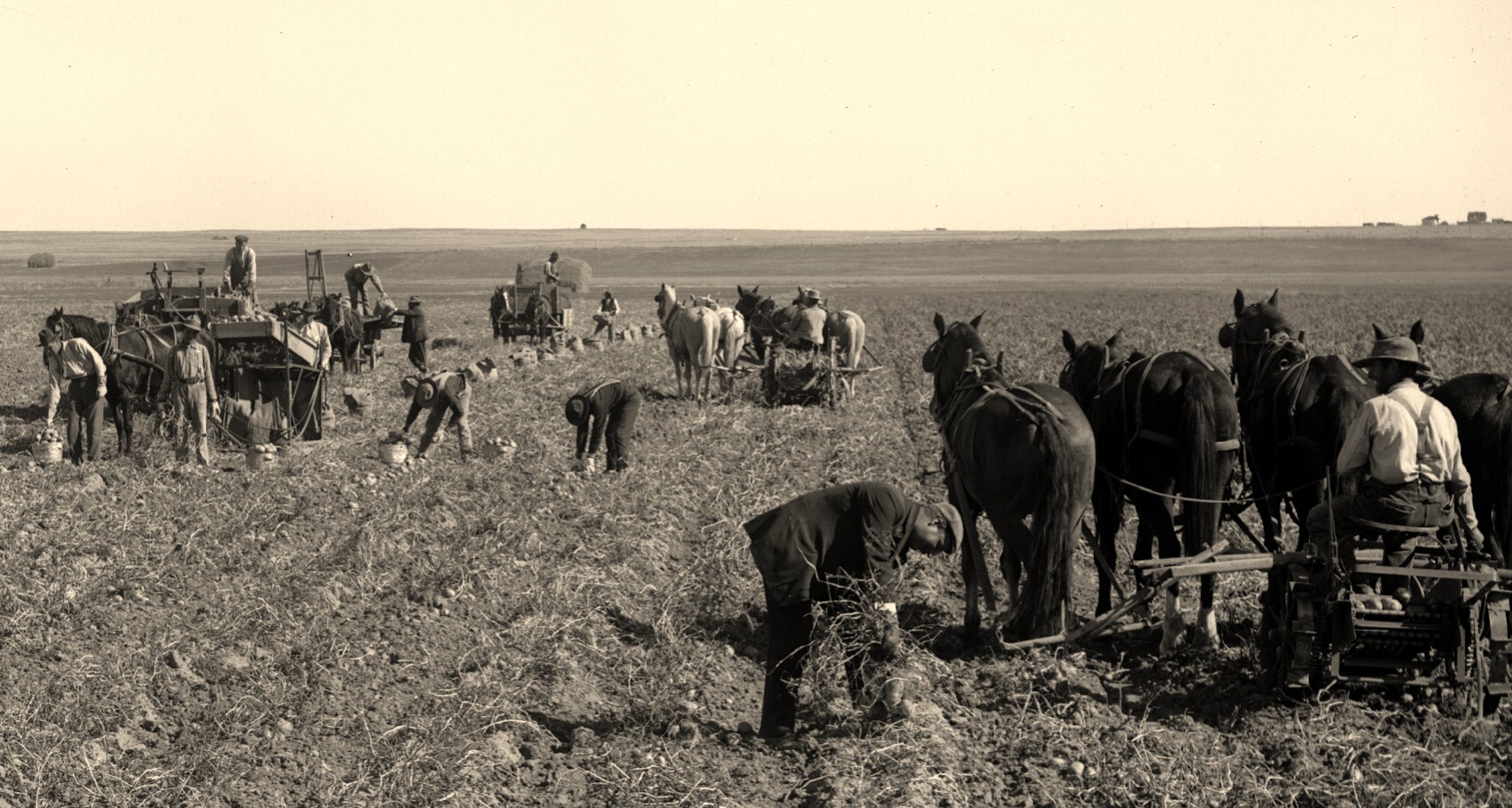
A report on 1921’s harvest drive by Agricultural Workers’ Industrial Union No. 110.
‘Splitting the Big Drive’ by Wm. Dimmit from Industrial Pioneer. Vol. 1 No. 11. December, 1921.
The annual convention of Agricultural Workers’ Industrial Union No. 110 is over. According to all precedents that means that the drive is completed and that all will be dormant till the next harvest of wheat calls for men and more men.
This year has not been a customary year, however. The drive in all its earliest stages assumed new forms, and greater strength and economic power was developed than ever before. This year the convention has not ended the drive. On with the organization drive, was the slogan there and everywhere.
New Tactics
It is going on and is carrying into new fields all the energy and spirit that were generated in that great two thousand mile sweep that astonished many of our own members as much as it did the boss. The I.W.W. has learned that successful organization requires not only the perfected theoretical program of Revolutionary Industrial Unionism, but also detailed plans for action based on the facts of the industry that is under consideration.
The big harvest drive was not altogether a spontaneous result of social conditions. The organization strength and solidarity displayed there were generated by skillful maneuvering on the part of the active members and delegates who worked in accord with the big central plan. The same tactics applied to other industries will bring the same results and to prove this theory the active membership is directing the biggest drive that the organization has ever known into fields never before covered.
Splitting up for Fresh Starts
In northwestern Dakota the many thousands of members of the I.W.W. were finishing up the last work of the Central American harvest. On into Manitoba the work was spreading and in the prairie centres of Canada the plans were being laid to co-ordinate the Canadian organization work. Hundreds of members and delegates crossed the line into the “King’s” territory and are even now tossing the last bundles while the early snows are coming down. To the east of the Dakota centre lies the short log country of Superior district. Hundreds of active workers and delegates have gone into the woods there, and transferring into the lumber workers’ union are carrying and pushing the work of organization individually.
To the West turned the greater part of the vast body of Red Card members. Into the beet harvest of Montana they poured and on through Butte, branching down into the beets of the Idaho Falls irrigated lands and so into Utah.
Westward Bound
Billings, Montana, became wobbly congested. Delegation after delegation arrived from Dakota and then after the local harvest of beets was finished, they split two ways. To the west towards Butte and Idaho Falls went one section to sweep on into the battle scarred territory of Spokane, where the Palouse harvest was in its last stages. Then on into the fruit harvest of Wenatchee and into the beets, hay and fruit of Yakima.
Let us follow this westward split from Billings, remembering that we are only dealing with a branch of the great drive. From Wenatchee and Yakima on over the Cascades onto the coast the harvest workers poured and into the Marine Transport Workers many active men have transferred. Into the woods also have spread the seasoned harvest stiffs and the spirit of the great drive goes with them.
Down the coast from Seattle sweeps the wave of red card agitators and under the noses of the surprised native sons they unite with their compatriots from Billings, who have played the Idaho Falls and Utah country. In California the rice harvest is on. New life and pep is being injected into the workers of this section who have struggled so long and with such hardships against the frame up gang and their rule of iron.
The California drive on the rice fields and then on the orange and citrus orchards is being laid out in detail. The plans are carefully worked out in regular 110 fashion and this winter will see the big summer drive repeated on a big scale in sunny California.
The Southern Split
The other split from Billings, Montana, went south into the oil fields of Wyoming and down into the beets of western Nebraska and eastern Colorado. The fruit of Colorado was not neglected and the Wobbly is on the job throughout all sections.
From the beets near Scott’s Bluff, Nebraska, hundreds came back to Omaha, which territory had been covered by the northern sweep of the summer harvesters. Here was held the convention by the elected No. 110 delegates and here was laid the plans for the big oil industry drive that is now just gaining momentum.
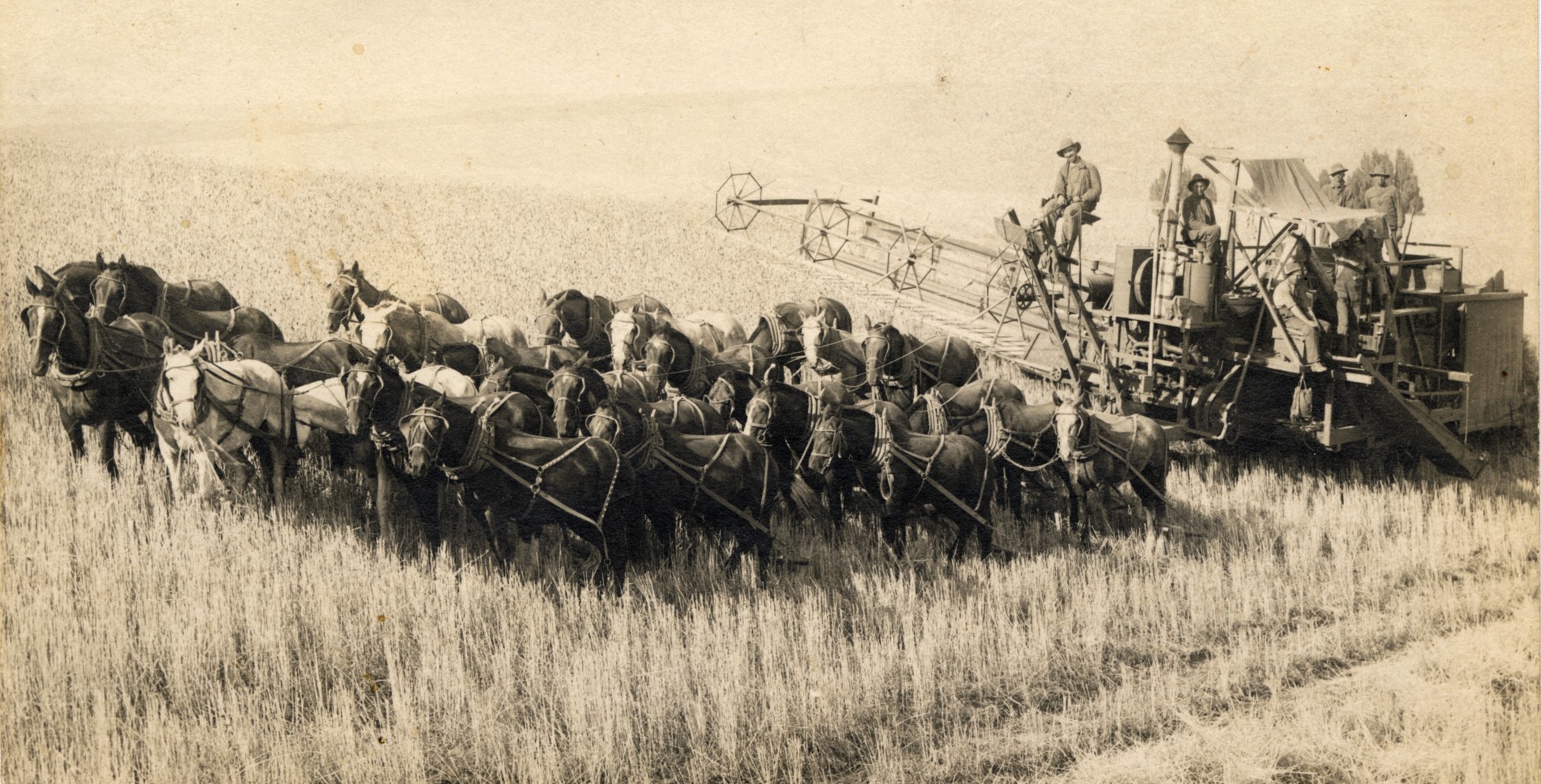
A special conference of oil workers who took in the No. 110 drive met and laid preliminary plans for the big organization campaign that is now sweeping the mid-continent oil field. This unofficial conference submitted their plans to the No. 110 convention, which went on record to back up their new oil drive in every way and which donated $2,000 to start the big clean up.
On November first an official oil workers’ conference was called to complete the plans for field work. Dozens of the active delegates, who are oil workers, participated in this conference and were assigned sections to cover in the oil industry.
The Oil Fields
The time for the oil drive is well chosen. The lack of activity shown by the Blue Card union has disgusted its membership with it. Not only has this union done nothing to improve conditions in the mid-continent field, but seems unable to lend active support to the members of the California fields who struck to maintain conditions already won by them.
The twelve-hour tower and the ten-hour shift will have to go declare the militant drillers and pipe liners and the I.W.W. shows the way to win. The new tactics of throwing groups of active workers and delegates into section after section and backing them up until the entire industry has been covered, will succeed in developing the organized economic power.
The Marine Industry
The two industries into which the harvest workers are now concentrating are Marine Transport and Oil. No. 110 is anxious to boost the M.T.W. but no plans have as yet been laid out to sweep this industry with a drive carried out in accord with the new methods.
That the M.T.W. presents a most important opportunity for organization by the I.W.W. none recognize as well as the marine workers themselves. Thousands are joining the organization and in the near future it is hoped that the final phase of organizing these workers according to plan will be entered into.
Many No. 110 members have transferred to the M.T.W., especially on the Pacific coast, and with the unity that now has been restored to the ranks of this union, the organization opportunities look better than ever before.
Oil and Marine Transport drives are the need of the hour and the harvest workers are doing their best to fill the need. Also in lumber and railroad organization they are being felt as an organizing force.
The eastern fruit drive did not materialize. The failure of the crops throughout the East made it impossible to go through with the plan for organizing the workers in this section. Next year will see the apple knockers in this big country worked over by the wobbly delegates.
No, the harvest drive is not over. From coast to coast rings the slogan today—ON WITH ORGANIZATION.
The Industrial Pioneer was published monthly by Industrial Workers of the World’s General Executive Board in Chicago from 1921 to 1926 taking over from One Big Union Monthly when its editor, John Sandgren, was replaced for his anti-Communism, alienating the non-Communist majority of IWW. The Industrial Pioneer declined after the 1924 split in the IWW, in part over centralization and adherence to the Red International of Labour Unions (RILU) and ceased in 1926.
PDF of full issue: https://www.marxists.org/history/usa/pubs/industrial-pioneer/Industrial%20Pioneer%20(December%201921).pdf
 Revolution's Newsstand