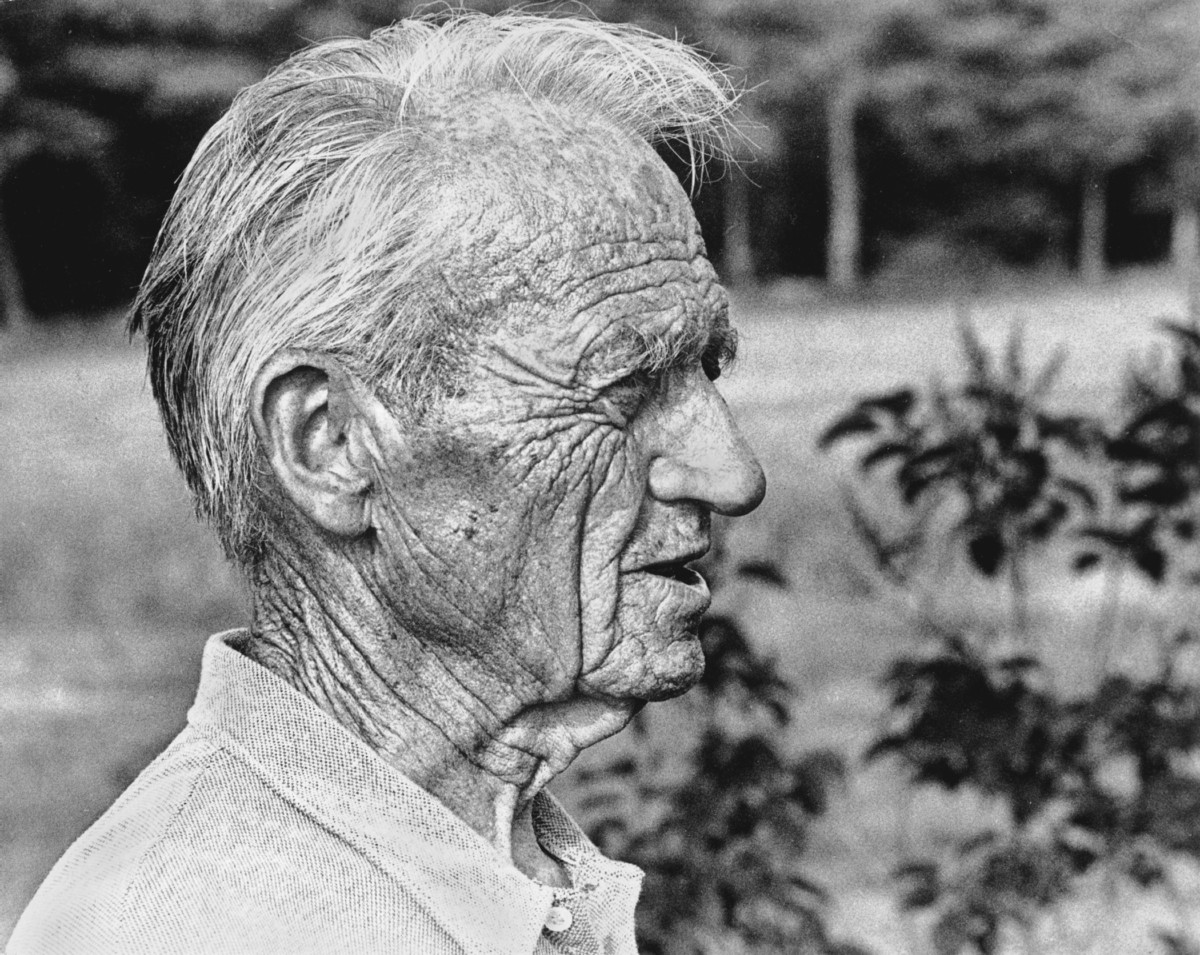
The final chapter of Scott Nearing’s mid-1920s investigation into the revolution in Soviet education. Link to all chapters below.
‘XIII. Socializing Culture’ by Scott Nearing from Education in Soviet Russia. International Publishers, New York. 1926.
XIII. SOCIALIZING CULTURE.
Throughout this statement of what I saw and heard in the schools of the Soviet Union, I have made no general comment on the social principles underlying the Soviet system. I have done this deliberately, because I wished it to be clear that it was schools that I was describing and not Bolshevism. It is impossible to complete any statement on Soviet education, however, or to understand what is going on in the educational institutions of the Soviet Union without some general concept of Soviet social philosophy. In the chapter on “Higher Education for Workers” I suggested certain characteristics of this philosophy, and in the Riappo interview (Chap. 15. Unifying Education) it is developed and applied to the educational program of the Ukraine. At this point, therefore, I should like to sum up some of its main tenets in four or five dogmatic sentences:
1. Written history is a record of class society. That is:
a. A small, organized, enlightened ruling class, enjoying economic surplus and leisure (culture); and
b. A large, unorganized, ignorant working class (slaves, serfs, wage-earners) producing the surplus and the leisure enjoyed by the ruling class.
c. The power of exploitation, in such societies, lies in the ownership, by the ruling class, of the means of livelihood–the body of the slave; the land of the serf or peasant; the machines of the wage-earner.
d. This economic power, based on ownership of the means of production, extends through all social institutions, so that the economic ruling class controls also the state, the church, the school, the press, etc.
2. Class society, like all other social forms, undergoes a process of change, or evolution. Social history is the story of this evolution.
3. Historically a time will be reached when the workers, organized and enlightened, will take possession of the land and machines upon which their livelihood depends. At that point in social history, exploitation will cease, because the economic basis for exploitation (the ownership of the means of livelihood by a separate group or class) will no longer exist. When the workers own and control the land, the machines and the other productive forces and implements, there will no longer be an economic division of society into owners and workers. The owners will be the workers, and the economic foundation for class differences will therefore have disappeared.
4. This shift in social control from an owning, ruling class to a working, ruling class is a social revolution. After the social revolution occurs, the workers, instead of producing surplus and leisure for a ruling class, will share industrial product and leisure among themselves.
5. Such a social revolution is now under way in the Soviet Union. The workers do own and control the land. They are the ruling class. This fact is proved since, in the Soviet Union, as nowhere else in the world, leisure (culture) is being socialized.
Readers may not believe a word of this statement. The point is that Soviet thinkers and workers by the tens of millions do believe in it and act on it. It is the core of their social philosophy, and also the animating principle of their internal organization of the state and of the educational system. Unless this is understood, the reader can have no clear perspective on the changes that are now taking place in the realm of Soviet education.
Soviet educators, pursuant of this theory, are trying to work out ways in which the masses in the Soviet Union can get their share of leisure (culture), in return for their share of production (work). Three very specific problems are involved: (1) Making it economically and socially possible for the new generation (namely, the children of the present generation of Soviet peasants and workers) to share educational opportunity in relation to ability, and not, as heretofore, in relation to social class. (2) Opening the current culture life of the world to the workers. (3) Making past culture free to all.
How well are the Soviet educational authorities succeeding in their endeavor to provide education in accordance with ability? It is as yet too early to answer that question with any assurance, but certainly the observations recorded in the preceding pages will indicate that, as compared with the pre-revolutionary Russia, they have taken immense strides in this direction.
British Trade Union delegates felt justified in going further than this, and in stating that the Soviet worker of 1924-1925 was not only far better off educationally than Russian workers before the Revolution, but that he was then well in advance of the British workers, in so far as his educational opportunities were concerned:
“From the above necessarily inadequate review of the Soviet educational system it will be realized that every opportunity and encouragement is given to the worker, no matter what may be his or her calling, to obtain the best instruction in any branch of art, industry, science or literature, for which he may feel he has an aptitude. The results which were seen by the delegation in all the districts visited were certainly astounding, especially when it is considered that the whole system has not yet been in operation for three years. Many of these workers had no intention of leaving the factory in which they had worked all their lives, or altering their lives in any way. The training they had received in the optional schools or other institutions had, however, given them an entirely new outlook on life and made their leisure hours a pleasure. Others were by these means enabled to quit an irksome and routine job for a profession to which their talents and bent fitted them. A peasant or a worker can by his own energies rise in his or any other profession with the aid given to him by the system. The pathetic feature in our own civilization of wasted and dormant talent, the slave of circumstance, owing to the absence of all possibility of outlet or instruction through lack of means, seems likely to become very rare among the workers of Russia.” (Russia Today, Report of the British Trade Union Delegation, 1924. New York, 1925, p. 150.)
This is not conclusive, of course. It was not intended to be. But it is very suggestive of what a workers’ society can do after three or four years of effort, to provide educational opportunity for the mass of its members.
On the other two points,–the opening of current culture life to the workers, and making past culture available– I am not competent to write, except in the most general terms. A word on each head must suffice.
There are four chief modes of current culture expression: literature (the press); music; drama; the pictorial and plastic arts. All of these forms were well developed in Russia before the Revolution. The country was famous for its scientists, its men of letters, its musicians, its singers, its dramatists, its dramatic artists and its painters. But most of their work was of necessity done for the ruling classes of Russia. Four-fifths of the Russian people could not even read, so that the printed page was sealed to them; music, drama, opera, pictures were for the highly placed. With the exception of religious music and art, practically none of these culture forms reached the masses.
To-day this situation is reversed. The Soviet campaign against illiteracy has been one of the most spectacular, and on the whole one of the most successful of the endeavors of Soviet authorities to bring current culture to the masses. The publication of books, pamphlets and magazines is being developed on a vast scale. The State Publishing House (Gosisdat) is the largest publishing plant in the world. The number of new books and pamphlets registered and printed in the Soviet Union in 1923 was 18,608; in 1924 it was 29,131, and in 1925, about 40,000. The average size and the average circulation of books has increased rapidly since 1921. Machinery for distribution is being built up, and book stalls and reading quarters can be found throughout the Soviet Union.
Soviet newspapers have developed rapidly. In make up, and in the type of material which they carry, the best of them will compare favorably with the very best of the European dailies. They outclass the American press completely. In the Soviet Union it is not at all uncommon to find a city of a quarter of a million with a newspaper that is well up to the level of the best American metropolitan dailies. Everywhere they are as free from sensationalism and scandal as is the London Times.
Magazine development has lagged behind that of the newspapers. During the past two years, in that field also, great strides have been made, particularly by the trade unions. The Soviet system of club, factory, and village reading rooms is already established on a scale which has no parallel anywhere else in the world. And it is expanding rapidly.
One of the most unique forms of culture expression is the rabcor and the wall newspaper. A rabcor is a worker who acts as correspondent for a daily, weekly or monthly paper. Newspaper and magazine managers aim to have such a correspondent in each factory, mine, shop, office and village in their constituency. The Pravda of Moscow, for example, which has a daily circulation of half a million, claims 10,000 such correspondents; receives from one hundred to two hundred communications per day from them; maintains an editorial department which edits and prepares these communications for publication, and pays very well for everything that it uses. The wall newspaper is a big sheet, usually about a yard wide and two or three yards long on which are written, typed, drawn, pasted or printed the sections of a complete newspaper,–news, editorial comment, humor, cartoons, fiction, poetry. Such newspapers are intended to serve a department in a factory, a club, a school, an office. They are therefore intensely local in character. The work is done by local talent; the newspaper is made up once a week, or once in two weeks, and tacked up in a prominent place where all may read it. Between the rabcors and the wall newspapers, it is literally true that hundreds of thousands of Soviet workers and peasants are writing for the papers, and are having their product appear in print. As a means of mass culture expression, this development is quite unparalleled.
These facts are easy to observe. They can be stated in figures, verified and checked. What can be said of music; of the drama; of opera; of the pictorial and plastic arts? Nothing very definite as yet, and certainly nothing very effective by an amateur, except that:
1. Amateur vocal and instrumental music and amateur drama are being encouraged and developed in the club, the factory, the village people’s house, the army, the Young Communist organizations and the Pioneer groups.
2. Schools of music, drama and art are maintained on a high level and are crowded with students. In these schools, as elsewhere in the Soviet Union, it is the children of peasants and workers—of the masses–who receive first consideration.
3. Professional music and drama are maintained on a level that I have never heard nor seen excelled anywhere in the world.
4. A revolution has occurred in the character of the people who hear the music and see the drama. The bulk of them are workers, who get tickets at greatly reduced rates through the unions. The audiences are quiet, extremely attentive, undemonstrative and rigidly self-disciplined. Performances begin exactly on time. The moment a number or an act is started, the doors close, and no one else gets in until the number or the act is concluded. Whispering, disturbance, untimely applause are all dealt with immediately and effectively by the members of the audience, who have come to see and to hear. There is scarcely a trace of the late-arrival, the inattention and the indifference that are so frequently met with in the leisure class audiences of western European capitals. Certainly the masses are attending the concerts and seeing the dramas. It is hard to get tickets for anything of repute. What the net social effect will be the future must decide.
In the case of past culture, the story is simpler and clearer. All the art treasures of the Soviet Union have been socialized. They are being classified by large corps of experts, and as fast as space can be found for them they are being put on exhibition in libraries, galleries and museums.
Sir Martin Conway, a British art expert who has just published a book on “Art Treasures in Soviet Russia,” deals with the subject in this way:
“The public museums of Russia, the Hermitage in Petersburg (Leningrad) and the museums in Moscow are of old-standing fame. I knew what to expect. But the wealth of the Czars, in palaces and in every kind of treasure within them, far surpassed all my expectations, and now, as I look back, there sparkle and shine in my memory incredible quantities of jewels, masses of plate, measured rather by tons than by numbers, countless quantities of porcelains, filling gallery after gallery, and leaving yet 75,000 pieces for which exhibition rooms cannot be found. I also recall great vases and tables and even walls of lapis lazuli and malachite, statues and busts, antique and modern, upwards of 20,000 pictures, vast collections of drawings and engravings, endless suites of furniture, walls covered with tapestries and carpeted floors by the acre, ikons by the thousands, sheeted with embossed covers of silver gilt and enamel, antiques of all periods, including some 10,000 objects of gold yielded up from the soil of South Russia, state carriages and armor, vestments and robes heavy with pearls, books in golden bindings, chalices and crystal cups, engraved gems, crowns and sceptres and historical costumes, libraries of illuminated manuscripts and early printed books, and every object that the genius of man has brought into existence and his decorative instincts have embellished.” (pp. 21-2.)
The author then tells how, for three months, he was permitted to examine these treasures, alone, by day or night, at his pleasure. He had passes that took him everywhere, and gave him every facility. He saw these things, handled them, appraised them.
While wandering through the palaces and the galleries, he could not help asking himself how “such a mass of treasure should have passed safely through an unparallelled revolution. Some loss there must have been, but it was trifling” (p. 23). Then he points out that the Winter Palace was taken by storm; that there was fighting in the Palace of Gatchina, and that the Kremlin was bombarded. Crowds entered the palace rooms. Soldiers and workers fought there. When the storm had passed, the caretakers were unable to determine that anything had been stolen.
“It was far otherwise in France in 1789. How few of the contents of the Royal and Ecclesiastical treasures in that country now survive. Where is the treasure of St. Denis, of Rheims, or of Chartres? Hardly any of the works of French goldsmiths of the eighteenth century escaped the melting pot. Ruin overtook the great abbeys and many of the noblest examples of medieval architecture were leveled to the ground. In Russia nothing of the kind has happened. The monastaries, indeed, have been suppressed and their property confiscated, but so far from being injured, their paintings, their vestments, their jewels and embroideries have been carefully gathered together and many of them saved from the progressive decay which they were suffering. They are better cared for by the Soviet Government than they were by the monks.” (pp. 23-24.)
Like the other treasures that have come into the hands of the Soviet authorities, all the material from the monasteries has been carefully sorted “and studied by the most competent experts” (p. 33). When this work of classification is completed, the material will all be placed on exhibition in a number of public museums of religious art. Two of these museums have already been established.
Readers must not conclude from these statements that Sir Martin is a Bolshevik. On the contrary, his hostility to the Bolshevik regime is obvious enough all through the book. The interesting point is that so long as he remains in his own field, namely, art, he is overcome with wonder at the immensity of the treasure which the Soviet authorities have preserved and are preparing for exhibition.
He explains lucidly (p. 25) the Soviet theory, that all art objects of social value are social property. But he fails to understand that this very fact has protected them through the whole period of war, civil strife and famine.
One interesting point he observed was that very generally the men and women who were formerly custodians of the art objects were retained in their places. The art has been preserved. The same guardians are still protecting it. But they are now protecting the property of the people and not that of the Czar.
I do not know Sir Martin Conway, but he writes as though he understood his field well. I had not his opportunities to see the art treasures of Soviet Russia, and so I have no way of checking up on his descriptions, but those that I did see bear his statements out in every detail. Soviet galleries and museums are overcrowded with material. That is inevitable at the moment. But, with this exception, I never saw public buildings of this type that were better arranged or that were cared for with more exacting attention. And that applies to the crowds who frequent the galleries as well as to the caretakers.
Work on the culture treasures of the Soviet Union must go on for many years. When it is completed the workers and peasants of the Union will have on exhibition the most remarkable collection of art objects in the world.
One central principle runs through the handling of culture material by the Soviet authorities: it must be socialized. That is, it must be open to those who can appreciate and utilize it. This principle holds true for the students who apply for admission to the schools of art and drama. It is true of the distribution of tickets to concerts and operas. It underlies the organization of material in libraries and museums. Current culture belongs to the people of the Soviet Union. Every object that carries the story of the past is carefully preserved and exhibited in its appropriate place in the scheme of social history.
All over the Western world leisure and culture have generally been open to the ruling class and closed to the workers. In the Soviet peasants’ and workers’ state, peasants and workers (and their children) are enjoying these advantages. This socialization of culture is the basis on which all Soviet education is organized. It is one of the most remarkable social experiments ever undertaken in the history of modern society. To use an oft-quoted phrase (of Lester F. Ward) it is an attempt at “the conscious improvement of society by society.” It is the socialization of knowledge and of human achievement.
Foreword, I A Dark Educational Past, II The Soviet Educational Structure, III Pre-School Educational Work, IV Social Education—The Labor School, V Professional Schools (High Schools), VI Higher Educational Institutions, a. Higher Technical Schools (Colleges), b. Universities, c. Institutes, VII Experiments With Subject-Matter—The Course of Study, VIII Experiments With Methods of Instruction, IX Organization Among the Pupils, X The Organization of Educational Workers, XI Higher Education For Workers, XII Unifying Education, XIII Socializing Culture.
International Publishers was formed in 1923 for the purpose of translating and disseminating international Marxist texts and headed by Alexander Trachtenberg. It quickly outgrew that mission to be the main book publisher, while Workers Library continued to be the pamphlet publisher of the Communist Party.
PDF of later edition of book: https://archive.org/download/in.ernet.dli.2015.123754/2015.123754.Education-In-Soviet-Russia.pdf
 Revolution's Newsstand