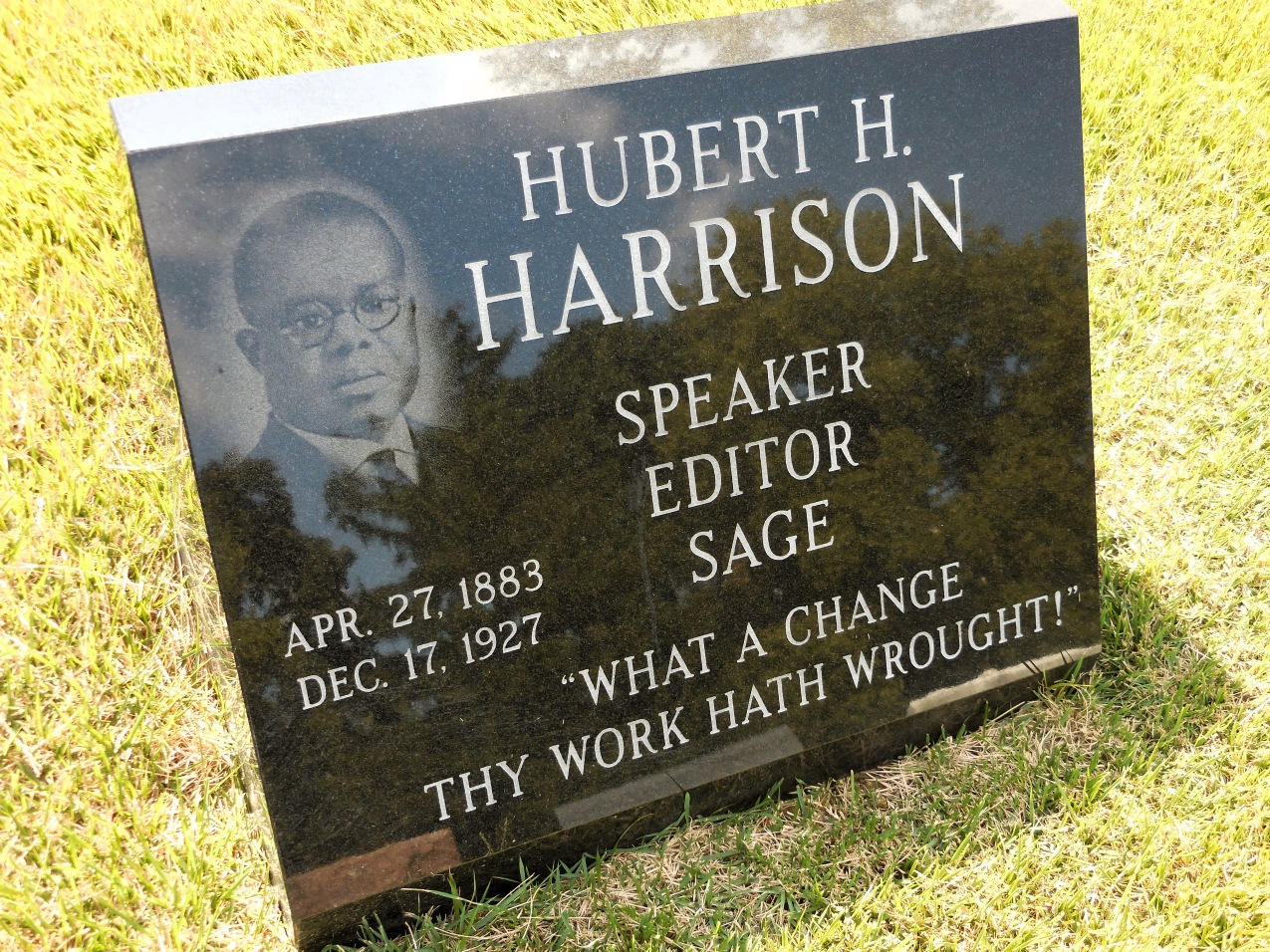
All of Harrison’s many literary talents are on display in this major two-part expose of the Post Office, where then like now it was the target of right-wing attacks. One of the reason for those attacks is that the Post Office has long been an agency in which Black workers were employed. In 1907, Harrison got a job in the New York Post Office, working there until being fired in 1910 for his critical letters about Booker T. Washington. The other side of the post office is the type political patronage and graft that got Harrison fired. A fascinating read in light of today’s assaults.
‘Postal Department is Made Goat of All Other Federal Business’ by Hubert H. Harrison from The New York Call. Vol. 4 Nos. 310 & 311. November 6 & 8, 1911.
Combination of Unreasonable Bookkeeping and Graft to Railroad Companies and Bonding Concerns Deceives Public Into Belief That Mail Is Carried at a Loss, When the Contrary Is True.
[This expose of the inner workings of the Postoffice Department is written by a Socialist who was employed in the postal service in various capacities for several years and, consequently, is sure of the facts presented. According to a report issued by Postmaster General Hitchcock last week, the Postoffice Department in the fiscal year ended June 30, 1911, was conducted, at a profit. In twenty-four months the conduct of the service has resulted in changing a deficit of $17,479,770 for the fiscal year 1909 to a surplus of $219,118 for the fiscal year 1911. In the last fiscal year the audited revenues of the department were $237,879,823 and the expenditures were $237,684,926, all of which goes to show that the department is naturally a good business proposition, despite the fearful manner in which it is handicapped for the benefit of private interests. Ed.]
On January 28, 1907, the Postal Commission of the Fifty-ninth Congress stated in its report that: “Upon the postal service more than upon anything else does the general economic as well as the social and political development of the country depend.”
Mr. James L Cowles, secretary of the Postal Progress League, said in his summary of March 4, this year: The Postoffice is the citadel of American liberty. It is the hope of American industry. Upon its scientific management depend at once the cost of living and the American voter’s opportunity of getting a living.”
Because most people are unaware of this tremendous fact, it is necessary to insist on it time and again. But what everyone does appreciate is the fact that the Postoffice is the one great example of the public ownership of a gigantic public business. The advantage of this government ownership over private ownership has been overwhelmingly demonstrated since the early days of the Postoffice Department, and if has provoked comparisons with such privately controlled public industries as railroads, coal mines and lighting systems.
As long as the Postoffice maintained this advantage its very existence was an argument in favor of government ownership and against the large public utilities corporations. This would never do, of course, and, consequently, efforts have been made to have It appear a failure and, at the same time, to prevent the extension of its sphere of operations.
By an original method of book-keeping, a deficit was evolved of fairly large proportions, so that whenever the Postoffice was advanced as an argument in favor of government ownership, the counter argument could be made that the Postoffice was run at a great financial loss, while, on the other hand, this alleged fact would prevent the extension of the postal system to commercial parcels and stave off the parcels post, which is in operation in other commercial countries.
There Is No Real Postal Deficit.
Now, as a matter of fact, the postal deficit is not quite as real as it seems. In fact, one may well ask whether the apparent yearly deficit means a failure or a flim flam. The department alleges financial failure since it so appears upon its books, and it also alleges that this deficit is caused chiefly by an extension of the second class privilege. It, therefore, proposes to tax the popular magazines into oblivion to check this financial overflow.
Now, I shall not go into the matter of the magazines. A commission of inquiry is sitting on their case and the result may go either way, since it really proves nothing. But I wish to draw attention to this one fact, viz: That the proportion of the yearly deficit to the total volume of business has decreased with the increase in the volume of second class business. This decrease has been regular and is significant.
In 1870 the amount of the deficit was 21.4 per cent of the receipts. In 1879 an act was passed putting second class matter upon a pound payment basis, and the increase in the volume of second class matter was immediately noted. In 1880 the deficit was 9.6 per cent of the receipts. In 1885 the law went into effect which fixed the second class rate at one cent a pound, and in 1890 the deficit was 8.8 per cent; in 1900, 5.2 per cent: in 1901, 3.5 per cent, and in 1902, 2.4 per cent. In terms of dollars and cents the growth may be given in three items, thus:
The figures for 1890 and 1900 do not include total receipts and deficits because they were taken from a different table which gave neither receipts nor deficits. They are, nevertheless, valuable.
A Big Profit Is Actually Made.
The last item should really be read as a profit of about two million dollars, because in that year’s accounts appears a new item of expense–over four million dollars for rural free delivery. This item amounted last year to thirty-five million dollars. From 1902 to 1910 there has been a surplus of over seventy-four million dollars, outside the actual loss on the rural free delivery system, which explains why I stop at 1902.
Yet one glimpse at the figures during that period reveals something significant. The Postoffice Clerk for May, 1910. cites the report of Merritt O. Chance, auditor for the department, to the effect that there was a surplus of $2,111,356.69 for the last quarter of 1909, as against a deficit of $1,481,972.02 for the corresponding period of 1908. Yet the department declares that it is necessary (God knows in whose interest) to choke the magazines.
But the real cause of the apparent deficit is to be found in the system of bookkeeping by which a fair fifth of the mails is carried free for the various departments; is paid for tor the railroads; is worked by thousands e of clerks and delivered by thousands of carriers, whose salaries mount up a to millions; and is yet unrecorded in making up the annual budget.
Suppose Smith, Brown, Jones & Robinson were a firm of automobile manufacturers. Suppose Smith should appropriate to himself a large automobile costing twenty thousand dollars, give one to each of his four sons, one to each of his three sons-in-law and ten or fifteen to other relatives. Suppose each member of the firm did the same thing–and kept these items off the books. What kind of business system would that be? Just such a business system as is that of the Postoffice. For this departmental mail amounts to thousands of tons annually.
The largest item of this immense total is contributed by the legislative branch of the government–the Senate and the House of Representatives. There were 476 members of both Houses in 1907. The constituencies by which they were elected ranged from 1,146 in the Third Mississippi district, where one in 202 express the will of the people, to 26,308 in the Second Kansas, where one in five is required to do the same thing. Consider, too, that most of them make speeches and all of them are published in the Congressional Record. Whenever each wise Solon (and they are all wise, God bless ’em) makes or prints a speech which is in his estimation a good vote getter, the Postoffice Department pays the piper.
Remember that this happens very much more than once a year and that voters in New York may send to a Senator from Ohio for copies of a speech on a subject in which they are interested. I have done it myself. Bear in mind that money is paid for, all this to the railroads and to the postal employes who work the stuff. Then see whether the expense–which is not checked at all–is likely to be large.
Then there are certain abuses of the franking privilege. Congressmen have been known to send their laundry, year after year, under its protection. Many have sent all kinds of transportable goods in the same way. In 1909 seventeen sacks of stuff were piled up in one station, all free and all sent by a Senator from New York.
The War Department, too, is always sending out instructions and receiving reports from all over the country and its dependencies. There is the Adjutant General’s office, the Surgeon General’s office, the Quartermaster General’s office, the Office of the Judge Advocate General–and other subdivisions, and all the mail issued from these amounts to a good round annual sum.
Then there is the Department of Commerce and Labor, the Department of the Interior, with its various branches, the Geological Survey, the Biological Survey, the various experiment stations scattered all over the country and the Department of Law, which is allowed to call itself the Department of Justice. Whenever a commission is created permanently, like the Interstate Commerce Commission, or for a special and temporary purpose, like the Hughes Inquiry Commission, its correspondence and reports add to the tremendous volume of this business and the enormous sums which should be at least credited to these departments.
But it is decreed, my brothers, that the Postoffice Department shall be the goat, and the poor blind people rise to that word “deficit” even as the hungry sucker rises to the wriggling worm. ‘Tis a ghrate game,” as Mr. Dooley says, “but shure ’tis time to call fer a new dale.”
Tribute to the Railroads.
But even if we should ignore this curious style of bookkeeping, there need be no deficit in the department’s yearly budget. If the officials of the department should decide that the railroads cease milking the government, the department could cover the deficit at once. But the present system actually goes out of its way to help the railroads skin the government and people are beginning to believe that this is done with the continuing consent of the department. For it pays the railroads a higher rate of transportation than other shippers do, although it ought to pay them less since the railroads are post-roads, and, therefore, parts of the public domain.
But let us look at the rates, and see.
The express companies will carry a fifty-pound package of magazines from New York to Atlanta, Ga., collect on delivery, for fifty cents. Within a five hundred mile circuit they rate it for twenty-five cents and on Sunday morning papers in train load lots the rate is forty cents a hundred pounds in the East. Please remember that these express companies to which you pay this mate have to pay the railroads. Remember, too, that they are not in business for their health’s sake; that if they charge you fifty or forty cents a hundred pounds you may be sure that the railroads charge them less.
Now listen. The Postoffice Department pays the railroads nearly four cents a pound (3.67) for the same service. And lest we forget, my brothers, let me tell you that it doesn’t cost the railroads any more in cash or labor to transport a hundredweight of letters than it does to transport the same weight of magazines. Finally, the government paid the railroads for transportation in 1910, $46,568,000–not less than eight times more than an express company (privately owned) would have had to pay.
Railroads Fines Are Cut Down.
But this is not all. It was the custom to insert in the Postal appropriations bills a provision empowering the Postmaster General to impose such fines as were necessary upon the railroads for unreasonable delays to mail trains. The reason for this provision is thus stated in the Postal Service Magazine: “When engines are in poor repair on a certain division the better engines are often given to freight and express trains and the poorer engines are used to handle the mail trains. This has been done on some lines until the mails were habitually late from two to six hours or longer…In 1907 the amount collected from the railroads on account of unreasonable delays amounted to $607,998. In 1908 the fines amounted to $675,168. Then Mr. Hitchcock and his business administration took charge and a most interesting thing happened. In 1909 the fines collected amounted to $33,931. Here the department lost $641,237, which was the amount practically handed to the railroads by the Postmaster General. The provision for fining the railroads does not appear in the present Postoffice appropriation bill, and we are told that it was left out at the request of the department.” Of course, the department is not run for the benefit of the railroads. Of course not.
This brings us by easy stages to the question whether there is graft in the department. Graft, graft,–I repel the base insinuation. There is no graft. Still, we might consider certain subsidiary questions. For instance, why does the Postal Department rent mail tubes in New York, Philadelphia and elsewhere, when it could so easily buy and manage them itself? Why does it rent mail wagons? And, finally, why does it rent postoffice stations? I don’t know. But I have heard unthinking people say that this renting system creates a steady stream of revenue which flows into the pockets of patriotic people who have friends in politics.
I do know that Congressman Mann of Illinois says that “the Postoffice Department today is conducted upon far too expensive a scale.” Perhaps he knows. “Reduction of Expenses” has been the slogan of Mr. Hitchcock’s administration, although this has not been heard so often since investigating committee found plush chairs in the department’s headquarters, costing over fifty dollars apiece and sundry similar examples of reduction” which, like charity, ought to begin at home.
Bonding Graft Is Rich.
Another feature of the postal service which seems as queer to the outsider as to the man inside is the bonding business. Two large companies divide between them the monopoly of this annual tribute which is drawn from the pockets of the employee of these two is the United States Guarantee Company. This is the way it is worked: a clerk escapes from this levy at the first, his superintendent eventually calls him into the office and asks him whether he is bonded. Of course he isn’t, and the superintendent knows it very well.
Then he is told that he must get bonded, because he may at some time be in charge of the station. The rate, he is told, is 50 cents a year, and he is given the names of the two bonding companies. If he delay unduly the superintendent will jog his memory roughly. There were over 33,000 clerks in the service last year, exclusive of the railway mail clerks. Then there were carriers besides. So you can see that this nets these two companies a tidy little sum each year. I say “little,” because, of course, it isn’t very much. But then it is absolutely free, because the companies have only the trouble of receiving the money and giving a receipt for it, No one can point to a single obligation assumed by them in return for this annual stipend.
Suppose an employe steals and is caught. He goes to jail, of course, But who makes good the loss? Why, the government if it should be a money order or a registered letter. Otherwise, no one. “But,” you say, “doesn’t the bonding company make it up to the government?” Wake up: wake up. No, nein, nit! Never on your life! So you see that the people are not protected by this scheme: neither is the government. Who gets the gain, then? Let me see. Did you ever play three-card monte? Or match pennies with a bigger boy on the basis of heads I win, tails you lose? Well, that’s the answer, of course the employe pays, And, by the way, these same companies have extended their system to Mexico and some of the South American countries, where they also enjoy a monopoly.
Men Held Up on Uniforms.
And when a company once gets strangle hold on the department It never lets go. Take the case of the Clinton Woolen Company cited by “An Employe” in The Call of September 10. The New York representative of that firm is a big Republican politician. All the cloth of which carriers’ uniforms are made must be bought from that company, although better grades of cloth can be bought elsewhere for the same, price. And when the president of the New York Letter Carriers’ Association tried to break away from this company he was removed from the service, as “An Employe” states/
These facts constitute only a part of the case of the people against the Postoffice. As it stands, that case is strong enough to call for a wholesale housecleaning in the department. About two years ago “An Itinerant Tinker,” writing in the New York Sun, as at present conducted, was both “punk” and “bunk,” and the case of the Tennessee Coal and Iron Company, the case of Gifford Pinchot, the Controller Bay affair and the case of Dr. Wiley furnish abundant evidence that this crisp and caustic condemnation was indeed well merited. What will the people say about it? Who can tell? ‘Tis an old saying that “the law is a hass,” and, by the same token, the people might well be described with one letter. If those who exploit them were not well assured of this they would not be quite so contemptuous of what the public thinks Now, if the bugle blast of Socialism should wake the people up–but that, as Mr. Kipling would say, is another story.
II. POSTOFFICE CLERKS NOT PROTECTED BY CIVIL SERVICE FROM PERSECUTION
Employes Whose Politics or Independence Don’t Suit the Powers That Be Are Quickly Got Out of the Way–Men Robbed of Rest and Receive No Pay for Overtime.
Some time ago a postoffice clerk in this city, who was being hounded out of the service by a bundle of charges trumped up by his superintendent, was telling his troubles to a friend. He explained that he was about to be “fired” on these same charges, which would not stand an impartial examination,
“But,” said his friend, incredulously, “you are covered by the Civil Service rules, are you not?” “Yes,” replied the clerk, “I am–on paper.”
Many well meaning people on the outside believe that the Civil Service rules protect the civil servant from oppression and secure a square deal for him. This bright millennium has not yet dawned, however, and the dead hand of favoritism still nullifies to a great extent the benevolent intentions of Civil Service reform.
“Pull” and “influence” are still notoriously prevalent in the department. They help to secure what are known as “soft snaps” for political friends, and they are still necessary for promotions to the grades of chief clerk and assistant superintendent.
These little matters are usually arranged in the dim seclusion of a political club, where aspiring little politicians within the service meet and mix and mingle with their larger kin. Sometimes these promotions awarded for out and out political services, as, for instance, in November, 1907, when a certain clerk at the General Postoffice in New York City delivered a rousing Republican speech; on the lower East Side. The very next week he was freed from the necessity of doing hard work and studying distribution schemes, by being promoted to a “soft snap” upstairs. But the friendship of the politicians is costly in the long run, for they will not interest themselves in a clerk’s behalf until he becomes a member of their political club. This, of course, costs quite a few dollars a year in dues. Besides, the club may give several outings, picnics, or chowder, parties, the tickets for which run from $3 to $10. And these tickets are not optional, either: they are sent to the member’s address and he must pay for them or else…
When he keeps in good standing in his club, he is known at the station where he works as a “protected” man and, no matter what he may do in the infraction of rules, a wise superintendent will leave him alone. These things are matters of general knowledge within the service, and it is this knowledge which does more than anything else to demoralize the working force and decrease its efficiency.
Employe Without “Pull” Is Hounded.
Meanwhile the simple employe who does his work and depends on no external influences to recommend him to the favor of his superior officers is hounded without let or hindrance if he once becomes unpopular for any reason. There are certain standing reasons for unpopularity. To take New York City, for instance, if it be known that a clerk is a Jew, a negro, or a Socialist, his life can be made very hard, as any one of these three classes can testify.
Consequently, those who can disguise the unpopular fact, do so. I know many Jewish clerks who pass as Gentiles, many light negroes who pass for white, and many Socialists who hide their Socialism far out of sight. One would think that a clerk had sold his soul to the government, as well as his services. In fact, such is the inherent servility of the average American, despite the old boast of freedom, that most clerks go on this principle altogether.
I once heard a young clerk at the Grand Central Station ask in a whisper how he could get the Appeal to Reason. I told him to subscribe for it, but he demurred on the ground that he was afraid that his superior officers might note the fact that it was being sent to his address, and so make trouble for him. One instance like this tells more of the psychology of the postoffice mind than ten pages could. And it raises the broader question whether Americans (workingmen) are manly. One wonders when one sees to what we habitually submit. People on the outside believe that the employes of the post office are paid extra for overtime. If you ask them why they think so, they will tell you that extra pay for extra work is the rule of every business firm: besides, simple honesty demands that men should be paid for the work they do. Well, it is true that overtime without extra pay is just plain “steal,” but all the same, the postal authorities don’t recognize the rule. Grand Central station clerks have put in over 200 hours overtime between November, 1910, and May, 1911. If any of these men had defrauded the government out of 25 cents they would have been sent to jail, because stealing is a crime–when done by an employe. But here the government has robbed these men of twenty-five days of labor, and its conscience is clear. In the United States Court of Claims there is pending what is known as the overtime suit, Hulet M. Wells vs. the United States. In this suit the claimant declares that from February 1, 1904, to July 1, 1907, he did several hundred hours of overtime, and from July 1, 1907, to December 6, 1909, 351 hours, the pay due him for the latter amounting to $114.30, which he is seeking to recover. If he should win his suit it would be a boon to thousands of clerks. But will he win It? “Ay, there’s the rub.”
Weekly Rest Day a Joke.
In 1910, Congress, after much agitation, passed a law making it incumbent on the postmasters to give back a day during the week for Sunday work. How did this work? In the beginning the law was complied with, but at the present time the superintendents at several stations–especially in the 3d Division at the Grand Central station–deny the right of the men to get their day back, as a day, and dole it out to them an hour or two at a time, so that it often takes more than four weeks to get the day’s total of eight hours back. And even for this the men have to beg as if it were a favor to them rather than a prescribed duty of the superintendent.
Two years ago there went into effect, quietly and without fuss, a new scheme by which the department should save a goodly sum each year. It is known as the three day trick. It must be understood that clerks in the Postoffice lose the day’s pay when they are sick; to this rule there is no exception. But formerly a man’s Sundays “off” were safe. That is, if he were sick on Saturday, Sunday and Monday the Sunday pay was his if it was his regular Sunday off. But under the new scheme he is rubbed of even that, and loses three days’ pay. This is a part of Mr. Hitchcock’s “efficiency scheme, which is a grand thing for Mr. Hitchcock–but not for the service.
All the ingenious methods of creating a deficit, of releasing hundreds of thousands of dollars in fines to the railroads, of paying them eight times as much as the express, companies do–all these the glorious “efficiency” scheme of Postmaster General Hitchcock passed over entirely and lays the burden of the clerks and carriers. Synchronously with the installing of his new system there has been a general reduction of forces and a consequent increase in the hours of labor. But who cares? Theodore Roosevelt, that noble champion of the oppressed, that glorious exponent of the “square deal”–didn’t he promulgate an executive order denying to these clerks and carriers even the elementary right of petition?
Public Cannot Hear Clerks’ Side.
So that, whatever happens, the public shall not hear their side. In the meanwhile when a carrier goes on vacation his delivery route is covered not by a substitute as formerly, but by the carriers on the two adjoining routes. That means more work for them, decreased efficiency in the service on three routes–and complaints. But what cares Hitchcock? Is he not, saving the munificent sum of one carrier’s pay?
Another trick in high favor with Hitchcock is the timing trick. This is worked in the following manner: The fiscal year begins with July 1. The law of 1907 makes increases in salary automatic up to $1,100 a year, but such increases can go into effect only at the beginning of a fiscal quarter. So, if employes are needed for the 1st of July the custom is to appoint them on the 15th or later. Do you see the point? The employe cannot get his increase on July 1 of the next year, but must wait until October 16. This trick has many variations.
Then there has gone into effect a system of “speeding up,” by which the men–the unprotected ones–are made to work at breakneck speed to the honor and glory of the service. But this causes no reduction in the amount of overtime. Meanwhile, certain small-souled spies are busy making their whispered reports to the superintendents. Does anyone speak a brave, manly word, discuss Ibsen, or show a soul in’ any sense above his station? Back it goes to the superintendent, and that man is marked for slaughter. On the first opportunity charges are cooked up against him and, as he is not confronted with his accusers, the chances are all against him.
Union Clerks Are Oppressed.
But the most notorious attempt of the postal authorities to strangle the Independence of the postal employes is revealed in their attitude toward the employes’ organizations.
There are two large national organizations of postoffice clerks. The United National Association of Postoffice Clerks is known as No. 1; the National Federation of Postoffice Clerks as No. 10. The first is an effete organization, which goes in strongly for the identity of interest of postal clerks and the postal authorities, and is run to suit the wishes of the latter. The federation is a self-respecting class-conscious organization. It exists to further the interests of the postal clerks.
This the authorities do not like, therefore they play No. 1 as favorite, and try to keep down No. 10. The president of No. 10, Oscar F. Nelson, was fired out of the service solely because of the active part he took in its organization. No. 10 is an untrammeled organization: No. 10 is affiliated with the American Federation of Labor. Therefore, since No. 10 cannot be dominated or controlled by the department officials, it must be suppressed as much as possible.
I have seen a local representative of No. 10 treated like a dog in his station, made a mark for all kinds of personal indignities, and I heard a foreman tell him openly that if he wanted a change in the treatment he was getting he would have to join No. 1. But No. 10 isn’t dead yet and, in spite of such discriminations, it seems to be growing, because the intelligent clerks are beginning to see that it is really working to further the interests of the clerks, while No. 1 can show nothing more solid than the appointment of a local president to a soft seat in the Postmaster’s office.
Made to Pay for Ice Water.
But there are even more discouraging things in the life of a postoffice clerk these days. After being skinned out of his time he is skinned out of his money, too. In certain stations in this city–it is so in the Grand Central Station–he is assessed a certain sum annually for iced water.
Think of it! In every business house and workshop the proprietor, as matter of common humanity, supplies cold water in the hot days of summer, and supplies it free. It was left to the postal officials to raise revenue from the workers by taxing them for iced water.
Where does this money go? No one knows for certain. Of course, it isn’t paid into the hands of the superintendent. The person who receives it from you is a clerk, usually the timekeeper. But don’t think for a moment that it is his graft. He wouldn’t be crazy enough to attempt such a thing on his own account.
In addition to this the clerk has to “shell out” for tickets several times a year. These tickets are for outings, vaudeville entertainments, smokers and benefits of the various postal organizations. But the person who sells these tickets is always an assistant superintendent. He comes around with a bundle of tickets, and asks each clerk with fine assurance, “How many are you taking?” The clerks take them, of course, under compulsion, whether they can go or not, and the same clerk who took two 50-cent tickets on Thursday, will be offering them for sale on Friday at a quarter for the two. If he should refuse to be coerced It would be all the worse for him. I know a colored clerk at the Grand Central Station who refused to stand for this graft in July. They got him out of the service in September. And, mind you, there is an executive order against superintendents or their assistants selling tickets. or anything else, to the men under them. But what is an executive order between friends?
Efficiency Is Being Broken.
Any one can see that these things loosen the bonds of discipline and break down the working efficiency of the force of employes. The facts are damning, and speak for themselves. After a sober consideration of them, one may well ask as between the postoffice and the people, which is the master and which the servant?
Under the present regime the postal authorities seem to assume that the postoffice is the master and not the servant of the people. And when you consider certain recent occurrences, such as the barefaced attempt to kill off the popular magazines that are turning the searchlight upon the dark corners of the present social, political and economic system, the way in which the Appeal to Reason is being hounded, the refusal at first to admit the report of the Chicago Vice Commission to the mails–when you consider these things, you must agree that the postoffice is not yet the servant of the people that it was intended to be.
Under the present capitalistic system it could not well be otherwise. Government exists to protect the exploiting class in its spoliation of the workers and must naturally oppose the distribution of benefits. If any given institution can be so developed that it adds to the sum total of benefits, this addition, it will be found, inures mainly, if not entirely, to that class which owns the government. The great inventions of Stevenson, Hudson, Arkwright and Whitney ought, in the nature of things, to have resulted in the amelioration of the general human lot.
But instead, they have created millionaires and trusts. In other words, the benefits accruing from them have been monopolized, “cornered” by one class, instead of being socialized to the public advantage. What is true of these is true of government itself, and, therefore, of its various departments, is true particularly of the post office.
To redistribute the products and advantages of human invention and human labor so that all may equally enjoy the results of the activities of all, is a task remaining for a new type of government–for Socialism. Such a redistribution with such an end in view is not so new a vision as most of us think. So far back as the seventeenth century Milton saw it and expressed it in these words:
“If every just man that now pines with want
Had but a moderate and beseeming share
Of that which lewdly-pampered luxury
Now heaps upon some few with vast excess,
Nature’s full blessings would be well dispensed
In superfluous even proportion.”
Under such a type of government, necessarily owned by all the people, the postoffice would be at the service of all and its tremendous advantage would be distributed to all. The railroads would not fatten on it–for obvious reasons– and it would not “skin” its employes. The present incentives to graft, corruption, waste and despotism would longer exist and its efficiency could be greatly increased.
But in the meanwhile, even the present organization of society, much can be done to make the system better. That is a matter to which the people themselves must attend, however. They must be their OWN Hercules and sweep this Augean stable clear of the accumulated dirt of generations of grafters.
The New York Call was the first English-language Socialist daily paper in New York City and the second in the US after the Chicago Daily Socialist. The paper was the center of the Socialist Party and under the influence of Morris Hillquit, Charles Ervin, Julius Gerber, and William Butscher. The paper was opposed to World War One, and, unsurprising given the era’s fluidity, ambivalent on the Russian Revolution even after the expulsion of the SP’s Left Wing. The paper is an invaluable resource for information on the city’s workers movement and history and one of the most important papers in the history of US socialism. The paper ran from 1908 until 1923.
PDF of full issue: https://www.marxists.org/history/usa/pubs/the-new-york-call/1911/111107-newyorkcall-v04n311.pdf
PDF of issue 2: https://www.marxists.org/history/usa/pubs/the-new-york-call/1911/111108-newyorkcall-v04n312.pdf
 Revolution's Newsstand