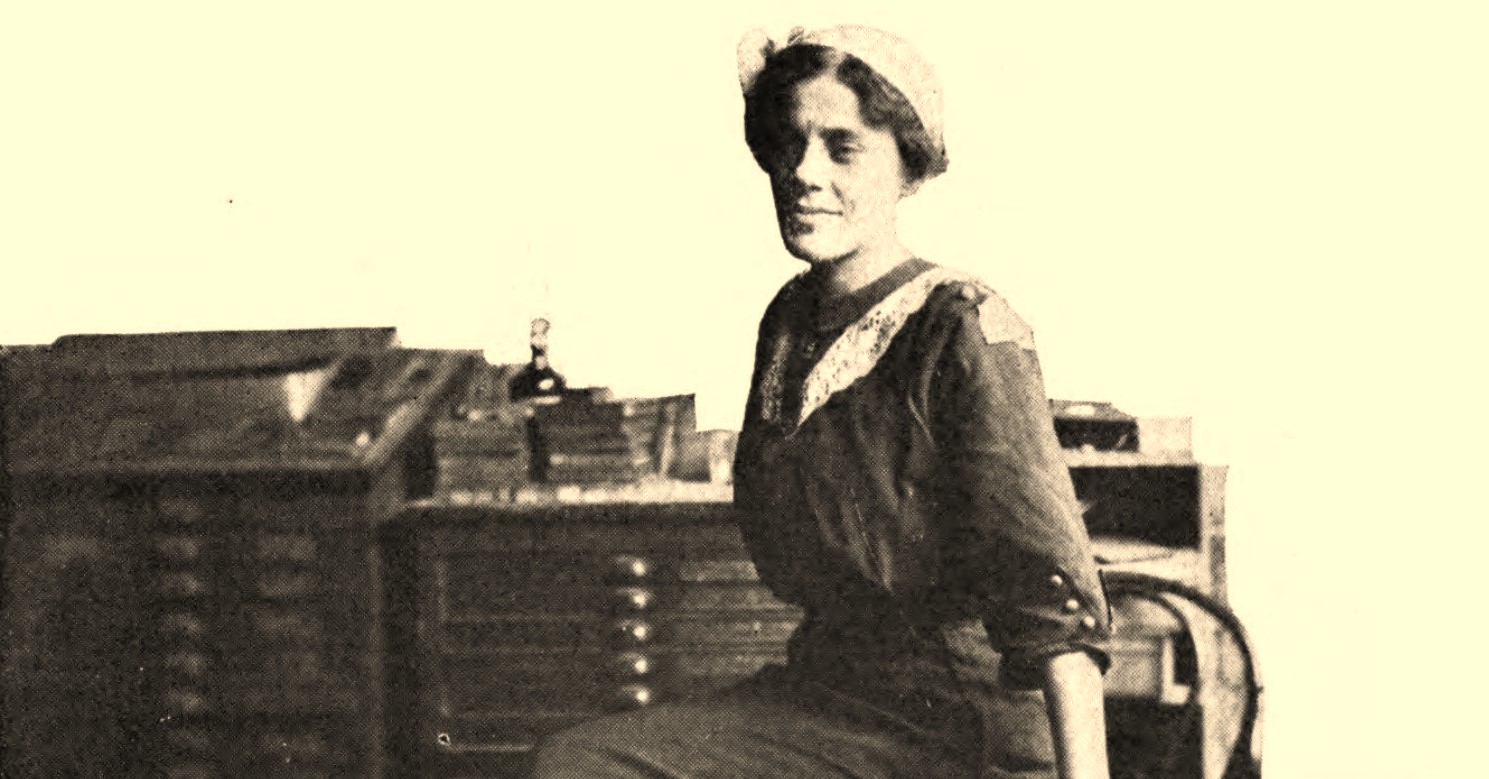
Mary E. Marcy gives the revolutionary’s response to the capitalist marketing line of “Be Your Own Boss.’
‘Be Your Own Boss’ by Jack Morton (Mary E. Marcy) from the International Socialist Review. Vol. 11 No. 8. February, 1911.
WE have all seen this phrase at the head of luring advertisements; BE YOUR OWN BOSS, but if we have answered them, we have found a flimsy scheme for getting other folks to work for us.
Nobody but the Socialists have ever suggested that every working man and woman ought to be their own boss. Nobody but the Socialists have ever known how it would be possible for each man to be his own boss—to do away with masters of men entirely.
In spite of the old stories we are taught at school about this “Land of Liberty,” in common every day language we speak the truth. We know we “work for other folks,” and we know we are the slaves of our bosses. And this does not mean freedom at all.
We wage-workers have to have a job in order to earn wages to live and we are the slaves of the men or women who OWN the jobs. We do not sell ourselves to them for a lifetime, but we do sell ourselves—or our strength to work—by the week or by the day, for so much a day. And since we have sold ourselves for the week or day, we are the slaves of the boss during that time. We are compelled to work as he wills.
Of course, we can rebel and refuse to obey, but in that case we find ourselves out of work. And the man out of work is on the road to hunger and starvation. That is all there is to it. We are not free so long as our only choice is starvation on one side or wage-slavery under a boss on the other.
Of course you want to Be Your Own Boss just as much as I do. Every time the foreman of the mill where I work docks me two hours pay when I am ten minutes late, I feel that there is nothing so much I want in all the world as just to Be My Own Boss. When I read in the papers about the president of the big mill company buying $50,000 Italian art treasures, I yearn to LOSE my BOSS, and when I draw my lonely $18.00 a week I feel that heaven must be BOSSLESS land where pleasant dreams come true.
But I want to lose my boss, and ALL bosses, in this world, and when I found the Socialists were working for an abolition of Bossdom, I threw my lot in with theirs and began to help push the good thing along.
Now if you work for the Armours, of packing house fame, you know they are YOUR BOSSES, because they OWN THE PACKING PLANT. If somebody else owned the packing house HE would be your boss.
The man FOR WHOM you WORK is able to make you pile up wealth for HIM BECAUSE HE OWNS the mill, the factory or the mine where you are employed. The reason you obey HIS commands is because he OWNS the plant and because if you refuse you will lose your job and your chance to LIVE.
If you and I and all the other men and women employed in the mill OWNED THE PLANT we would be our OWN BOSSES. Socialism proposes that the workers of the world shall seize the factories, mills and mines, the railroads and all the tools or machinery of production to be owned collectively by ALL the workers and to, be operated by and for the benefit of the workers themselves.
If the collective workers in the steel industry produce a billion dollars worth of steel, socialism means that they shall own the mill and also own the product and receive the full value of it instead of getting just wages enough to keep our hearts pumping the blood through our veins.
OWNERSHIP of the mines, mills, factories, railroads and all the machinery of production BY THE WORKERS and operated by and for them is the back bone of Socialism.
If you are a BOSS, you won’t like it. If you are a wage-worker with a clear, healthy mind, it won’t take much thinking to see on which side you belong.
The International Socialist Review (ISR) was published monthly in Chicago from 1900 until 1918 by Charles H. Kerr and critically loyal to the Socialist Party of America. It is one of the essential publications in U.S. left history. During the editorship of A.M. Simons it was largely theoretical and moderate. In 1908, Charles H. Kerr took over as editor with strong influence from Mary E Marcy. The magazine became the foremost proponent of the SP’s left wing growing to tens of thousands of subscribers. It remained revolutionary in outlook and anti-militarist during World War One. It liberally used photographs and images, with news, theory, arts and organizing in its pages. It articles, reports and essays are an invaluable record of the U.S. class struggle and the development of Marxism in the decades before the Soviet experience. It was closed down in government repression in 1918.
PDF of full issue: https://www.marxists.org/history/usa/pubs/isr/v11n08-feb-1911-ISR-gog-Corn-OCR.pdf
 Revolution's Newsstand