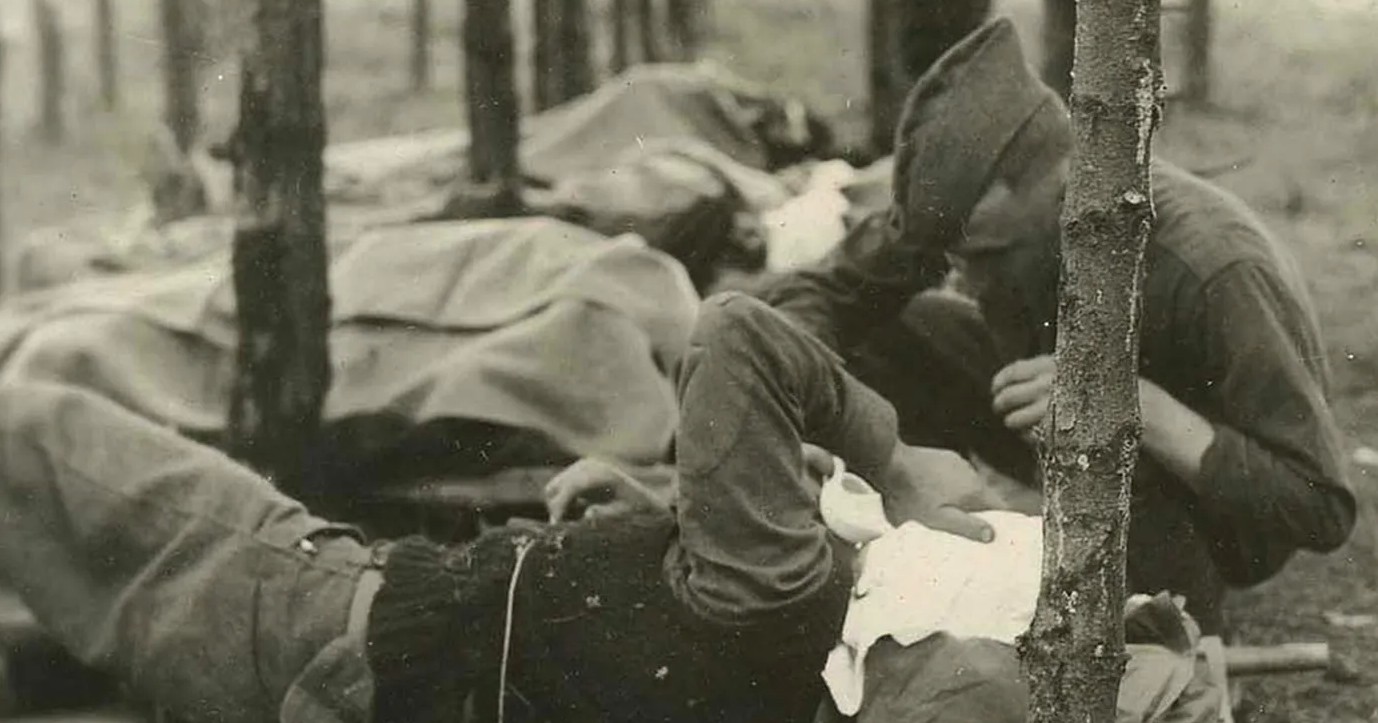
To have to keep up with the constantly changing technologies of war is a lamentable duty of the class struggle. They are used against us. A fascinating, if sobering, in-depth look at the emergence of chemical weapons during the First World War, what it meant for conflict, how soldiers reacted, and how the workers’ movement should respond.
‘Chemical Warfare’ by Robert MacDonald from The Communist. Vols. 6 & 7. Nos. 7 & 1. November, 1927 & January, 1928.
EVER since poison gas was first used in warfare, the newspapers and magazines have printed articles about it pro and con. The pacifists and liberals have painted ghastly pictures of its inhumanity, while the militarists and the professional chemists have praised it and pointed out that treaties against its use are just scraps of paper. At frequent intervals the stunt-press comes out with the report that some foreign power has discovered a new gas so powerful that two drops will wipe out an army! Amid all this propaganda, counter-propaganda and silly rumor, it is important that Communists should have a more exact knowledge of the properties and strategic value of this most revolutionary development of modern warfare.
In the first place, the talk about “only 2% casualties” from gas must be put straight, for only by having this clearly in our minds can we fully understand the strategic importance of gas. Official records show that out of every 100 Americans gassed, less than 2 died, and very few of the remainder were permanently injured. (Altho the number made more subject to diseases of the respiratory tract, such as catarrh, bronchitis and tuberculosis, cannot be calculated.) On the other hand, out of every 100 American casualties from all other forms of warfare, about 25 died, and from 2 to 5 were maimed, blinded or disfigured for life. Let no one think that this proves that gas is “humane,” for it can cause agonizing torment for months, but its permanent results are less severe than the more christian, respectable and “humane” high explosives. Old-fashioned army officers thought the only way to win a war was to kill the enemy. Experience has shown that it is more effective, for instance, to burn one’s opponent with mustard gas. This not only removes him from active service for from one to six months, but requires elaborate hospital care behind the lines, thus further embarrassing the enemy. A corpse can be forgotten.
THE FIRST GAS ATTACK
Since the days of the first gas attack in April, 1915, chemical warfare has changed and developed tremendously, but it is worth while describing that first attack because it so well illustrates the importance of gas, and also two of the basic principles of gas strategy. The Germans selected the northeast part of the Ypres salient, and secretly installed the heavy cylinders containing chlorine, one of the commonest of peace-time industrial gases. When the wind was right, the gas was discharged. The Allied troops, unwarned and completely unprotected, choked to death or fled in wild disorder. Here, then, are emphasized the importance of surprise and of protection, for later, when the Allies set up a gas discipline and learned how to make simple gas masks, chlorine fell off greatly in importance. Had the Germans taken full advantage of that attack, which left a gaping, undefended hole in the lines, as the Allies now admit, they could have broken through to the Channel ports and the war might have ended very differently from the way it did.
GAS VERSUS GUNS
Old-fashioned war might be said to be a war of blows. An adversary was subdued by being hit with a club, a tomahawk, a sword, a cannon ball, a rifle bullet, or shrapnel. Chemical warfare sought man’s Achilles heel,—his tenderest and least protected parts. First his lungs were attacked, then his eyes, then his nose and throat, and finally his skin. This use of definite types of chemical compounds for definite use has led to the great basic physiological classification of all poison gases, thus: 1. Lethal gases (gases that kill). 2. Lachrymators (tear gases). 3. Sternutators (sneezing and vomiting gases). 4. Vesicants (gases that attack the skin). Often it is very difficult to draw the line, for the properties of all gases overlap somewhat; thus a gas may be both sternutatory and vesicant, or lachrymatory and lethal.
Of all the thousands of organic chemical compounds, only about 28 were actually used in the war, plus about 16 mixtures of these gases. Actually, the number of “gases” which are really effective and which can be produced and used on a large scale, is much smaller than that. We may now describe some of the most important members of each class.
1. LETHAL GASES
Lethal gases are designed to do just what their name implies—to kill. They are drawn into the lungs and act both by direct poisoning and by causing intense pulmonary congestion and asphyxiation.
Chlorine
Chlorine, the first gas to be used, comes under this classification. It is a greenish yellow gas which can be compressed into liquid form, and thus be transported. It is easily produced by the electrolysis of common salt (sodium chloride), and is used on a large scale in the industrial world. Since it is two and a half times as heavy as air, it rolls along the ground in a death-dealing cloud. It has a very irritating effect on the membranes of the nose and throat, and its lethal concentration is 2.5 milligrams per liter of air. (There are 28,300 milligrams in an ounce; a liter is about a quart.) This figure is the concentration required to kill a dog if he breathes it for 30 minutes. When more deadly gases were developed, chlorine was used less, but it still is very important in the manufacture of other gases. Nowadays, chlorine would only be of value against a completely unprotected population.
Phosgene
Phosgene (carbonyl chloride, COC12) was the second gas used in the war. It is produced from chlorine and carbon monoxide (CO) which is the deadly ingredient in illuminating gas. After the Allied troops had learned to protect themselves against chlorine, the Germans mixed phosgene with chlorine. Phosgene is much more poisonous than chlorine, for only 0.3 milligram per liter of air is a deadly concentration. It is important to notice that even before the war phosgene was an important industrial chemical used in the manufacture of dyes. Its most important property is its delayed effect. In low concentrations, soldiers may breathe phosgene for some time apparently unharmed. Ten or twelve hours later, or sooner if they do any work, their lungs fill with liquid and they die or become serious casualties. During the war, phosgene was not only used in projectors, but was used in large quantities in shell.
Superpalite
Superpalite (or diphosgene or trichloro-methyl chloroformate, CCI3COOCI) as it was variously called, is a liquid boiling at 128° centigrade. This compound is about as poisonous as phosgene, but it has the advantage over phosgene of being much more persistent. This gives it certain strategical advantages which will be described later. During the war, American chemists were not successful in manufacturing superpalite on a large scale, but the Germans used large quantities of it, alone and mixed with chloro-picrin.
2. LACHRYMATORS (Tear Gases)
The next type of chemical to be used in the war caused temporary blindness due to intense pain in the eyes and copious tears. The lachrymators developed later in the war were about sixty times as effective as those first used. In the concentrations necessary to produce blinding tears, lachrymators are not poisonous. Indeed, should you walk into a room containing only enough to go on the head of a pin, you would feel as though someone were tearing your eyes out with his finger nails. Yet if you run out immediately, in fifteen or twenty minutes you are quite all right again.
Workers are particularly interested these days in tear gas, because the police and the big manufacturers have taken up this new weapon. It has never been difficult to protect oneself against tear gas. During the first part of the war, gas-tight goggles were used. Later the ordinary gas mask was used. The great value of lachrymators is against unprotected troops (or workers), or in causing troops to work in uncomfortable gas masks for long periods of time. They are very “economical” because a few shells are sufficient to harass large numbers of people.
Brombenzyl Cyanide (C6H5CHBrCN)
This tear “gas” is a solid which melts to a liquid at room temperature. It was developed by the French toward the end of the war, and although large scale manufacture was achieved, very little was actually used at the front before the armistice. It is such an excellent lachrymator that only 0.0003 milligram per liter are necessary to cause sufficient pain to make it impossible to open the eyes. Another compound which would have been important as a tear gas during the war is CHLOR-ACETO-PHENONE. This is a solid also, and has to be shot from a pistol, grenade or gun in order to be scattered about. This compound has been adopted in various cities by the American police.
3. STERNUTATORS (Sneezing and Vomiting Gas)
This class of compounds was used to produce sneezing and vomiting, so that the gas mask had to be taken off, and then some much more poisonous gas finished off the victim. They cause intense pain and irritation of the nose, throat and respiratory channels. They are mostly arsenic compounds, and are not only sternutatory, but also toxic, producing the after effects of arsenic poisoning.
Diphenyl-chloro-arsine
Pure diphenylchloroarsine [(C6H5)2AsC1] is a colorless solid melting at 44° C. It was used in large quantities on the western front, and is the most important of the arsenicals. The Germans succeeded in preparing it in standard apparatus and from ordinary industrial raw materials. It was used in warfare either dissolved in some other toxic liquid in shell, or in shell with a charge of high explosive to scatter it far and wide. At first it was very formidable, because it existed in the air as tiny particles and went through the gas masks, which could only remove gases. Special smoke filters had to be designed to remove it. “It causes sneezing and severe burning sensations in the nose, throat and lungs in concentrations as slight as one part in ten million. In higher concentrations, say 1 in 200,000 to 500,000, it causes severe vomiting. While neither of these effects is very dangerous or very lasting, still higher concentrations are serious, as in equal concentrations diphenyl-chloroarsine is more poisonous than phosgene.”
Chloropicrin
Chloropicrin, nitrochloroform CCI3NO2, is produced from simple industrial products: picric acid, which is both an explosive and a dye, bleaching powder, and steam.
The Germans began to use this “gas” against the Italians in the spring of 1917 and its peculiar properties of being a lachrymator and also causing vomiting, resulted in a large number of casualties due to men removing their masks in the presence of more deadly gases. It also caused serious trouble because while the early gas masks safely filtered out chlorine and phosgene, chloropicrin passed through!
Chloropicrin is an oil which boils at 112° C. Its persistency is intermediate between the gas, phosgene, and the high-boiling liquid, mustard gas. It is used only in shell or in hand grenades. The Germans used a shell containing superpalite and chloropicrin in the ratio of 3 to 1. It is also mixed with about 20% metallic tetrachlorides, which form a dense smoke cloud. Chloropicrin is volatile enough to keep the air above it thoroughly poisonous, and yet it is persistent enough to be dangerous after five or six hours. An idea of its effectiveness is obtained when we realize that at concentrations between 2 and 25 parts per million, there is an irresistible impulse to close the eyes within three to thirty seconds.
4. VESICANTS
We spoke above about how man’s sensitive zones were sought out and attacked one after another: first his lungs, then his eyes, then his nose and throat and finally his skin. Chemicals for use against the skin are called vesicants. His skin was the last to be attacked, but the ability to attack it has presented more advantages and problems than all the other chemicals combined. His lungs and eyes, nose and throat could be protected by a good gas mask. How could his skin be protected? There are only two important gases in this class: mustard gas and Lewisite. The latter, discovered by an American professor, was a dead secret at the end of the war, but the English “spilled the beans” in the Journal of the Chemical Society, and so the story has come out.
Mustard Gas
Mustard gas, the most important vesicant, is also known as Yperite because it was first used by the Germans at Ypres in July, 1917. It is “the King of Gases.” Chemically it is dichloro-ethyl sulphide (CH2C1CH2)2S, a liquid of high boiling point (216° C) and very low vapor pressure, which explains its great persistency. Mustard gas is effective in low concentrations, has very little odor, and the victim has no immediate sign of discomfort or danger. It remains on the ground and in low places for days, and causes huge casualties. Indeed, it produced nearly eight times more Allied casualties (not deaths) than all the other kinds of gas put together. Its deadly effects could be prevented by wearing a gas mask, and during the war only a very small proportion of the tremendous total of mustard gas casualties were fatal.
Production. The Germans used a much more difficult series of reactions to produce mustard gas than the method finally adopted by the Americans. The latter required only the simplest raw materials, namely alcohol, sulphur and chlorine. The French were the only Allied forces who actually succeeded in producing it in time to use it on the western front. However, the Germans used rivers of it—it is calculated, for instance, that in ten days in the autumn of 1917, a million shells were fired, containing 2,500 tons of mustard gas. Had the war lasted just a little longer, America would have been able to deliver vast quantities in France.
Physiological action. The chief property of mustard gas is its ability to cause severe blistering and burning of the skin, even through clothing, in either the vapor or the liquid form. As little as one part in 14,000,000 is capable of causing conjunctivitis (severe inflammation) of the eye, while one part in 3,000,000 and possibly one part in 5,000,000 will cause a skin burn in a sensitive person on long exposure. Horses and dogs which are used in warfare are also harmed by the gas. The damage to man is explained thus: the mustard gas penetrates the cells of the skin, and is then hydrolyzed by the water in the cell to hydrochloric (muriatic) acid, which causes intense irritation and the formation of deep and painful blisters. These wounds heal very slowly. Wherever there is moisture from perspiration, as under the arm-pits and in the crotch, mustard gas attacks most easily. Yet despite its terrible severity, mustard gas has considerable delay action. It has no immediate action even on the eyes or throat, but seven hours afterward the victim will be absolutely blind.
Besides its vesicant properties, mustard gas is one of the most poisonous of all war gases. Thus a concentration of only 0.05 milligrams per liter will kill a dog, while 0.8 milligrams of chloropicrin or 3.0 milligrams of chlorine would be necessary. In the last war, most of the mustard gas casualties were burns caused by the vapor. But in the next its terrible toxic effects will be more fully utilized by placing a large charge of high explosive in the shell, which will spread it about as a very fine spray. Thus the victim can draw into his lungs in one or two breaths enough to kill himself. This type of shell was very effectively used by the Germans in the last months of the war.
Lewisite
Although this compound was never actually used in the war, its properties are such that it is worth describing. It was produced by the action of acetylene or arsenic trichloride in the presence of aluminum chloride. This reaction produces three compounds, one of which, chloro-vinyl-dichloro-arsine CHCI:CH.AsCI2, is almost as powerful a vesicant as mustard gas. It also irritates the respiratory tract and causes violent sneezing. Unlike mustard gas it is absorbed through the skin, and as a result of its arsenic content is very poisonous. Three drops placed on the stomach of a mouse are said to cause death in from one to three hours. General Fries, suggesting its use in airplane bombs, called it “The Dew of Death.”
1. DEFENSE AGAINST GAS
THE first part of this article in The Communist for November described the various kinds of gas, what they are made of and what they do to unprotected human beings. In this article, questions of defense and of strategy will be considered.
Side by side with the development of new types of gas, there was steady progress in protecting troops. In matters of chemical warfare, the Germans were always one or two jumps ahead of the Allies, so the Germans did most of the attacking, and the Allies most of the defending.1
Chlorine called forth the first and simplest gas masks. They were just pads of cotton, or cotton waste wrapped in muslin, and soaked in a mixture of hypo and washing soda. The pad was tied over the mouth and nose. It served fairly well against the low concentrations of chlorine then used.
Later, when the much more poisonous phosgene began to be used too, the pad was changed into a flannel bag or helmet, with mica or glass eye-pieces, and other chemicals had to be added.
These helmets also soon became inadequate, and by 1916 work had begun on the “Box Respirator,” which is the same type as that used today. These masks removed all poisonous vapors very satisfactorily, and were later developed to remove smokes too. They consisted of a rubberized fabric face-piece with an inflated rubber edge like the inner tube of an auto tire. This fitted very tightly against the skin, and was held on by head straps. The entire face was covered—from the forehead to below the chin, and on the cheeks almost as far back as the ears. Eye-pieces are very important, because bad ones not only expose the soldier to danger, but greatly reduce his efficiency. Triplex glass—a glass sandwich with a very thin layer of celluloid in the middle—was found to be most satisfactory. The mask contained a rubber one-way valve that permitted air to be breathed out, but none to come in except through a large, flexible, corrugated rubber hose which connected the mask with the cannister, the heart of the outfit. The cannister was attached to the chest with straps. It was just a small box in which is filled with the chemicals necessary to destroy or absorb the various poison gases. These chemicals were chiefly soda-lime, and alkaline permanganate which decompose most war gases, and specially prepared activated charcoal which absorbs them. Special provision was made later for filtering out smokes.
Such masks when properly adjusted were thorough protection for the eyes, nose and throat, and lungs, and so were satisfactory against all types of gas except the vesicants—the skin-burners.
HOW IT FEELS TO WEAR A GAS MASK
But even the best gas mask is uncomfortable. It is all very well to wear one for a couple of hours while sitting quietly in a laboratory, but it is quite another matter when carrying out the necessary duties of a soldier at the front, such as digging trenches, moving sand-bags or shell, or digging artillery out of the mud. There is some resistance to breathing—as though someone were holding a handkerchief over your nose and mouth—and the air is so thoroughly dried by the chemicals that the nose and throat get sore after a while. When the soldier does hard work the mask gets very hot and stuffy. After being exposed to gas for long periods at a stretch, soldiers occasionally tore off their masks and said they would rather face the gas than the endless discomfort of the mask! In fact it is now a part of regular tactics to send over a smoke cloud with just enough tear gas in it to force the wearing of the mask, and thus harass the enemy and wear down his resistance.
In regard to the protection of the civilian population, a recent dispatch to the New York Times states that the house committees in Leningrad have been ordered to see that everyone is provided with a gas mask, and that special gas-proof cellars be constructed large enough to accommodate all the people living in the house. This is a good example of the foresight of the first Workers’ and Farmers’ Government. They know that Imperial Britain is trying to line up a capitalist united front against the U.S.S.R., and that the attack may come at any time now. Consequently every effort is made to train and protect not only the soldiers of the Red Army, but also the industrial workers in the great cities. For the Russian workers’ leaders know that the next war will be a war of chemicals, airplanes and tanks.
We saw above that good gas masks protect against gases that attack the lungs, against tear gases, and against those that cause violent sneezing and vomiting. But they do not protect one’s skin against the vesicants, like mustard gas. Mustard gas in the vapor form is practically odorless and invisible. It penetrates all ordinary clothing. Even in the liquid form it acts so slowly that the writer knows of an ambulance driver who drove several kilometers while sitting in a puddle of it, thinking that it was merely rain that had got in while he was collecting the wounded! Despite its delay action, its after-effects are sure and terrible. Indeed it is so effective in producing casualties that the gas research laboratories of all countries worked steadily during the war, and have been working ever since, trying to develop adequate defense against it. There have been salves to smear on the skin, there have been gasproof suits of all types and kinds–some made of oil-cloth, some impregnated with boiled linseed oil, etc. But the body must breathe, and what is more, soldiers cannot wear stiff, heavy suits and still be efficient. So even today there is no satisfactory defense against mustard—it remains the King of Gases.
2. STRATEGY AND TACTICS
Before it is possible to consider this phase of the problem of chemical warfare, we must get a general idea of the nature of war. War is basically the imposing of your will on the enemy by force. To do this an old rule of the militarists says that it is necessary “to have at the decisive point at the decisive moment a more effective force than that of the enemy.” Another one insists that if you want to win, you must seize the initiative, and thus by depriving the enemy of his free choice of time and place, make his fight on your terms. Passive resistance gets nowhere. Marx understood these principles very well when he said that in a strike, or in an uprising, it is necessary to win a first success, and then day by day, sometimes even from hour to hour in critical times, it is necessary to win some victory, however small.
What are the “decisive points” in modern mechanized warfare? When several million men are uprooted from their daily life, and flung on the battlefield, the burden of feeding, clothing and sheltering them, to say nothing of supplying them with weapons and ammunition, is enormous. Thus the enemy’s jugular vein is the railroad and motor roads, or the railroad and ships that lead back to his base of supplies. For instance during the last war, England’s line of communications consisted of the Southern Railway, the ships across the Channel, and the Northern Railway of France (Chemin de Fer du Nord). The Germans after the first gas attack almost succeeded in taking the Channel ports and cutting the British lines. In trench fighting the immediate objective may be a hill, a village at a cross-roads, a bridge, etc., but the chief decisive points are railroads, important cross-roads, ports; and behind the lines, railroad centers (Paris, Cologne, Moscow, New York, Chicago), ammunition dumps, and all large industrial towns where basic industry is carried on and munitions are made.
Thus we see that the object of war is not just to go on killing until one side gets tired of it, but rather to seek out these “nerve centers” of the enemy, and by attacking them to paralyze him. The killing is incidental.
HOW IMPORTANT IS GAS?
In the last war gas proved itself particularly effective in trench warfare. How many people know, for instance, that the Germans relied mainly on gas for the great March assault in 1918 that might have changed the course of “civilization”? A definite idea of how important the Germans considered gas may be gained from two examples. First—when the Allied inspectors crossed the lines after the armistice, they found that approximately 50% of the shells in the German ammunition dumps were gas shells! Second—a captured order of the 7th German Army dated May 8, 1918, giving instructions for an attack on the Aisne on May 27. It ran thus: for counter-battery and long range bombardments, use the following shell:
Blue Cross [Arsenicals (sneezing and vomiting gas)] 70%. Green Cross [Lethal gases (Kill by damaging the lungs)] 10%. High Explosive 20%.
For a creeping barrage for the bombardment of infantry positions:
Blue Cross 30%. Green Cross 10%. High Explosive 60%.
The high percentage of chemical shells is immediately obvious. When one stops to consider some of the tactical advantages of gas, it is easy to see that its importance cannot be exaggerated.
1. It goes around all obstacles and sneaks through tiny cracks. (Sandbags or trenches will protect against rifle bullets, but not against gas!)
2. It is effective in very small quantities.
3. Due to the delay action of certain types of gas, (e.g. phosgene, mustard gas), troops occasionally fight unawares in low concentrations, and become casualties later.
4. It is persistent. (High explosive shell burst and disappear.) The fact that some gases are much more persistent than others makes them strategically important.
5. Exposure to unseen death at all times of day or night wears down the morale of troops. All drinking water and food near the lines is in danger of contamination.
As a result of these various properties, gas has developed certain special uses. Non-persistent lethal gases, like phosgene, are sent over just before an attack is made. The gas harms the enemy, but evaporates before the attacking troops get there.
Gases are mixed in a variety of ways. Sneezing gas is sent over together with a lethal gas: the former may catch the soldier before he can get his mask on and make him sneeze and vomit—meanwhile the lethal gas kills him. Tear gases are used in all sorts of combinations to force wearing of the mask, and break down efficiency and morale.
But it is mustard gas that makes possible the new strategy. The flanks of an army can be protected by spraying the territory with mustard. A retreating army can make the surrendered region untenable by its use. Strong points that could only be stormed with tremendous loss of life can be taken with mustard, even if they cannot be occupied immediately.
A NEW TYPE OF OBSTACLE
Obstacles have always been important in war, whether barricades, forts, rivers or other natural or man-made barriers. The Hindenburg Line and the Canal du Nord were tremendous obstacles when backed by German artillery, rifles and machine guns, but without the latter, they would have been mere inconveniences for the passage of any army. Chemical warfare, and mustard gas in particular, offers a new method of blocking out an area so as to prevent its use for military defense or for communications. Thus a normal flat piece of country-side can be made as impassable without serious casualties, as a natural obstacle well manned by rifles and machine guns. It only needs to be drenched with mustard gas.
AIRPLANES AND GAS
An English expert writes, “The war gave us no direct evidence of the successful use of gas and war chemicals from aircraft. This, however, is no criterion as to its eventual importance…The main reason for the lack of development on these lines was probably the fact that the most suitable type of gas (mustard) only developed during the later stages of the war, when it was required exceedingly urgently at the front.” The enormous development of airplanes since the war, and the tremendous growth of the chemical industries of all the powers, means that there will be airplanes and mustard aplenty when the next war comes. Airplanes and gas-proof tanks will be the most important mechanical devices, and will greatly extend the use of gas. No civilian workers will be safe, because the enemy airplanes will fly over the railroad centers and great cities and paralyze them with mustard.
SMOKE
One other important development of chemical warfare, which may be briefly mentioned, is the use of smoke. Dense white smoke is easily produced by various methods. It may be used to mask known enemy observation posts or machine gun nests. It serves to hide the concentration of guns and tanks, and conceals the front and flanks of advancing troops. It may be used as a feint to draw the enemy’s attention to a false front, or to cover the construction of bridges or trenches in the face of the enemy. Smoke would play a very important part in a civil war. One of the best smoke producers is phosphorous, which also causes severe burns. It takes fire spontaneously and burns either wet or dry. There is no better weapon against a machine gun nest than phosphorous shell.
The above article, and the one in the November Communist have skimmed the surface of the very important subject of Chemical Warfare. Let no one get the idea that the subject is one that concerns only the militarists. A new war is coming, and as revolutionary workers—the most bitter and resolute enemies of the capitalists and imperialists—we need to have a thorough knowledge of what they consider to be their most powerful weapon.
1. The fact that the Germans held the chemical initiative during the war does not mean that they were more “fiendishly wicked” than the Allies, but merely that they possessed a much more highly developed chemical industry. This explains the tender care that the capitalists of all nations have lavished ever since upon their respective chemical industries. Indeed, all of them have tried so hard to be independent—whether England or Italy, Poland or the United States, France or Japan—that the world’s equipment for chemical manufacture is about 50% overexpanded. In consequence the scramble for markets has become so keen that a great Chemical Trust, embracing France, England and Germany has recently been formed.
There are a number of journals with this name in the history of the movement. This The Communist was the main theoretical journal of the Communist Party from 1927 until 1944. Its origins lie with the folding of The Liberator, Soviet Russia Pictorial, and Labor Herald together into Workers Monthly as the new unified Communist Party’s official cultural and discussion magazine in November, 1924. Workers Monthly became The Communist in March ,1927 and was also published monthly. The Communist contains the most thorough archive of the Communist Party’s positions and thinking during its run. The New Masses became the main cultural vehicle for the CP and the Communist, though it began with with more vibrancy and discussion, became increasingly an organ of Comintern and CP program. Over its run the tagline went from “A Theoretical Magazine for the Discussion of Revolutionary Problems” to “A Magazine of the Theory and Practice of Marxism-Leninism” to “A Marxist Magazine Devoted to Advancement of Democratic Thought and Action.” The aesthetic of the journal also changed dramatically over its years. Editors included Earl Browder, Alex Bittelman, Max Bedacht, and Bertram D. Wolfe.
PDF of full issue: https://www.marxists.org/history/usa/pubs/communist/v06n07-nov-1927-communist.pdf
PDF of issue 2: https://www.marxists.org/history/usa/pubs/communist/Contents-1928.pdf
 Revolution's Newsstand