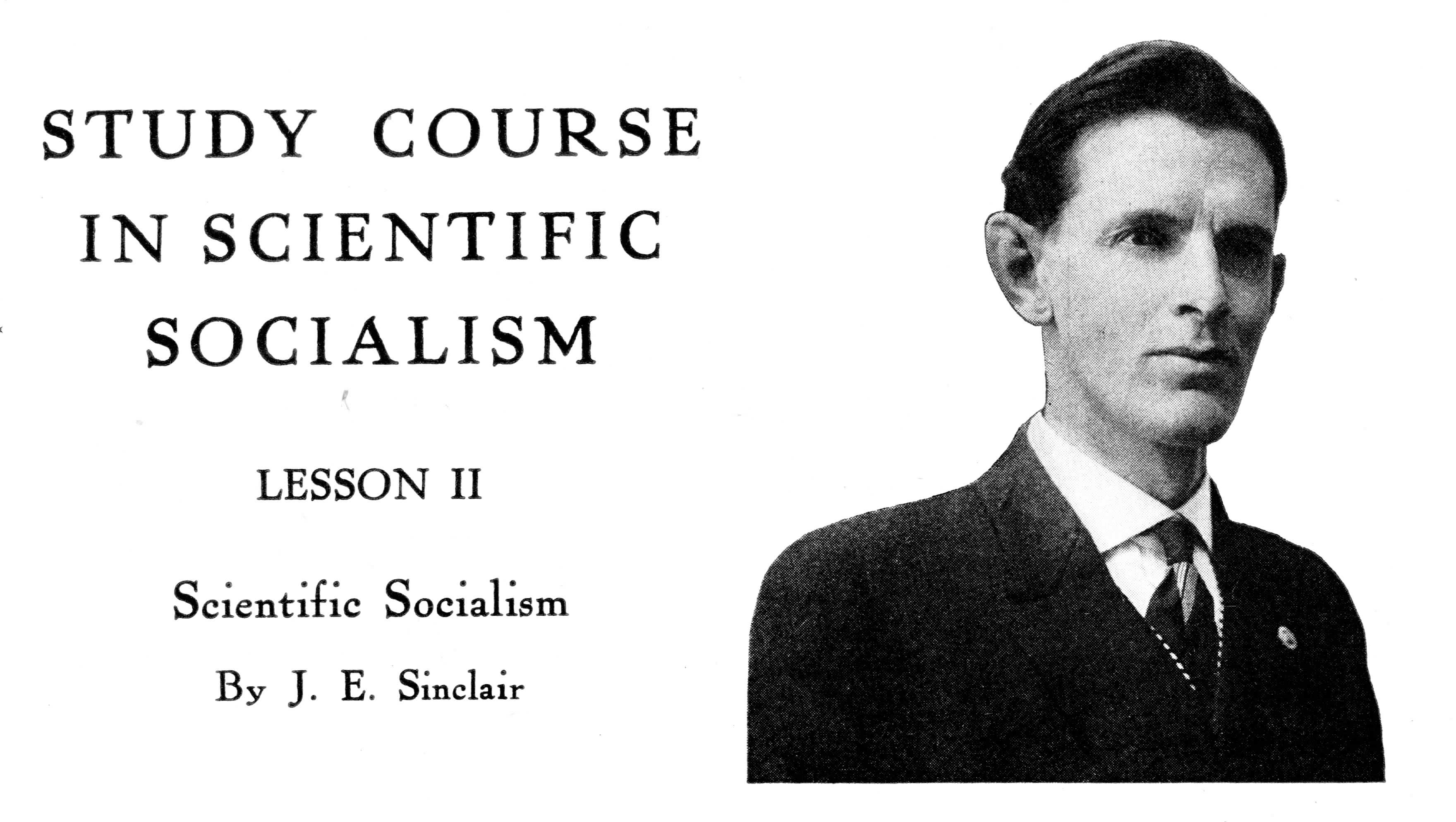
Left wing Socialist, director of the Washington Socialist Parents’ and Teachers’ Bureau, and heroic Olympia teacher J.E. Sinclair is ‘relieved’ of teaching duties and placed on trial for his activism.
‘Twentieth Century Inquisition: A Socialist Teacher’s Trial’ from The Commonwealth (Everett). No. 148. October 30, 1913.
Four hundred years ago men and women, youths and maidens were brought before their tormentors and questioned concerning their attitude toward God. It was a serious business to doubt his existence or to be caught worshipping any God but the God of the ruling class. What was more, one had to use the very formulas authorized by the ruling class.
Comes now the twentieth century and with it a new inquisition. For the God of their fathers the rulers have substituted a piece of cloth. This piece of cloth, which was once a symbol of freedom, has come to be the symbol of their power over the workers. Anything will do for a symbol. Gessler, the tyrant of the Alps, according to the old Swiss story, used his hat. Hoisting it upon a pole he commanded every recalcitrant Swiss to bow before this symbol and by this salutation of an inanimate thing to recognize the rule of the tyrant. “What is your attitude toward my hat?” said the inquisitor. “Will you salute it or will you not?” Here in 1913 they have changed the wording of the question into this: “What is your attitude toward the flag? Will you salute it or will you not? We have drawn up a formula which we ask you to use in this salutation. Did you question the correctness of this formula?”
Crime of a Teacher.
Thus ran the inquisition in Olympia on the 15th of October, 1913. The culprit was J.E. Sinclair. He is a school teacher. He is also a Socialist. Furthermore he writes for Socialist papers. They brought whole bundles of these Socialist papers into the inquisitorial chambers with them and proved this writing beyond dispute. They proved that he had questioned the formula of the salutation of the flag which they have made the symbol of their power. Also they proved that this school teacher had stained the ragged cloth of his trade by taking the side of the workers in a strike. They even proved that he questioned the right of the masters to use guns and pick handles on underfed and overworked slaves who could endure their misery no longer. They proved that he had actually been seen on a platform encouraging these dissatisfied workers by word of mouth. He had also been in parades of strikers. They also proved that he had been a party to the renting of a theatre in which a man was going to speak for these strikers.
Exposed Ruling Class Tyranny.
As though this was not enough to dam him forever, this recalcitrant rascal attacked the actual power of the ruling class as manifest in the person of an august judge. A copy of a Socialist paper was produced in court containing an article written by Sinclair, anyhow he admitted he wrote it. This article told of a parade he had been in in the city of Seattle. There were five or six hundred other persons along with him in this parade, but that makes it all the worse for Sinclair. These paraders were making one grand joke of Judge John E. Humphries, otherwise known as Humptymen and Dumpty. They escorted women to jail in the dead of night to convince the world that the said judge was not only a tyrant but also a fool. This article ended with an appeal to the people to go to Seattle and fill the jail to make “contempt of court contemptible.”
This vicious attack on the judiciary of this free country was made because Judge Humpty-Dumpty had been punishing certain persons for exercising their vocal organs by addressing working men and women where the judge in his bench-made laws had ordered them not to. For the foreigners who may be reading this article and who may be used to laws made by legislatures, parliaments, storthings, reichstags and other cumbersome bodies, let it be here asserted that these bench-made laws are called injunctions. They are a one-horse affair and quite strictly American.
When you violate one of the injunctions you are guilty of contempt of court. Now the courts are the very holy of holies of the ruling class and this Socialist teacher actually asked twenty or thirty thousand persons to show contempt for these courts and particularly for one of these courts, known officially as Department No. 5 of the Superior Court of King County, State of Washington.
Attorney Faussett in Characteristic Role.
At this stage let us introduce the characters in the play. Every court has its own clown and the new inquisition could not get itself properly started without one. Prosecuting Attorney Faussett filled this role in the play with a naturalness that was alarming. He fumbled around with law documents and dropped them on the floor. He fussed with his mustache. He carried in armfuls of useless law books and then carried them out again like a little boy packing around firewood. Just before the main performance this Faussett fellow made a speech that was a weak and watery dilution of the speeches they used to make at inquisitions four hundred years ago before anyone dared to think of free speech, free press, or fresh air. He told of the things he was going to prove. He would prove that this man Sinclair did not have the right attitude toward the flag. He would prove that he wrote for Socialist papers. He would prove that he showed disrespect for authority, etc.
Mary Tudor, who had 218 heretics burned for not having the right attitude toward her God three hundred and fifty years ago, was not able to be present. But in her stead was Mrs. Lizzie Jones, who had made the charges against Sinclair. The artificial sweetness, the metallic voice, the sinuous Jesuitical way of getting around a point, and the general atmosphere of a convent which this lady brings with her peculiarly fits her for salute, and the attack on Judge Humphries chambers.
Rebel Teacher Stands Pat on Class Struggle.
Judge Cooley of Everett, gray, somber and sedate, went the ancient inquisitors one better in his examination of the culprit. He was not long in wringing from the rascal the admissions that clearly showed that his attitude toward the ruling class and all the machinery of coercion used by that ruling class was one of unconcealed antagonism.
Working men and women of the twentieth century, what does all this mean? Let us stop this play and reason together about its meaning. Here we have been talking about freedom a great deal for more than a century. We have it burned into our very hearts with fire crackers that we are free.
And here we have a man on trial for exercising his right to speak and write what he thinks best for his fellow men. He has written an article criticising a proposed flag salute law which even the legislature refused to pass. He has taken part in a strike. He has stood with the working class against the capitalist class. He has written articles about a capitalist judge. But he has broken no law. They have a stack of affidavits alleging various offenses, but he has proof of their utter worthlessness. At the close of the trial the prosecution in summing up practically threw out everything but the admitted offenses–the part taken in the strike, the criticism of the flag salute, and the attack on Judge Humphries.
The rebel attorney, Glenn E. Hoover, who represented Sinclair, said that what Sinclair believed he believed and a million men in the United States believed the same. What he had done they would all do. Sinclair’s efficiency as a teacher was beyond question. All they could accuse him of was for doing what he had a constitutional right to do. There was no jury pleading, no working on the sentiment, all was defiance. The whole spirit of the defense was: Do your worst. We want to know what rights the Socialist teachers have. We ask nothing. We will take everything.
Fair to All Classes (?)
Hoover Astonishes Court by Candor.
At the conclusion of the hearing Mrs. Josephine Preston, the superintendent of public instruction, took the matter under advisement; but in so announcing she made a short address to the defendant that sounded more like an apology for the adverse decision that she had in mind than anything else. She told of how fair she was trying to be, how she had not read the papers, nor talked to anyone about the case. She was very much concerned as to whether the Socialists were taking the matter as persecution or not. She assured them that she was considering nothing but the good of the schools and that her long experience in public life enabled her to be fair to all classes.
We shall see what the outcome of this inquisition may be. But its very existence is a straw that shows the dangerous lengths that the master class will dare to go in their attempt to cut off free speech and the vaunted freedom of the press. It also makes us feel the importance of seizing the schools for the business of freeing the race.
Buchanan’s Trial.
Preceding the Sinclair trial was the trial of Fred L. Buchanan who was tried on fictitious charges to punish him for taking the side of Sinclair in his fight. The case against him was so foolish that it is surprising that even an inquisitorial court would listen to it. Yet for more than a day the mill ground on. Then this case, too, was taken under advisement. Nothing has been heard from either case yet. In the meantime both men are denied the right to teach school. Mrs. Preston hinted that it might take her a month to make up her mind as to the guilt of these two rebel teachers. And the light of the sixteenth century still shines through the faggot fumes into the old jail that serves for a capitol at Olympia.
The Washington Socialist was a weekly newspaper of the Socialist Party of Snohomish County published in Everett, Washington and edited by Maynard Shipley. Closely aligned with the Industrial Workers of the World, who were strong in the Pacific Northwest’s lumber industry, the paper ran for only 18 months when it was renamed The Northwest Worker with Henry Watts as editor in June, 1915, and again Co-Operative News with Perter Husby as editor in October, 1917. Like virtually all of the left press, the Co-Operative News was suppressed in June 1918 under the Federal Espionage Act.
PDF of full issue: https://chroniclingamerica.loc.gov/lccn/sn84025731/1913-10-30/ed-1/seq-1/
 Revolution's Newsstand