Over one million locked-out British miners were joined by nearly two million more workers in an epic confrontation, the 1926 General Strike. A look at the women of the coalfields by the Communist Party’s Katherine Cant.
‘Women’s Life in the English Coalfields’ by Katherine B.H. Cant from International Press Correspondence. Vol. 6 No. 51. July 8, 1926.
In the great struggle which is at present being carried on by the coal miners of Great Britain, one new fact has been strikingly evident. That is the growing presence of a militant spirit amongst the women, especially amongst the miners’ wives. In nearly all previous strikes and lockouts, the women concerned have rightly been regarded as more or less of a drag on the men in this strike however, the miners’ wives have shown themselves as eager for the fight as the men. In these areas women have been driven by low wages, high food prices and wretched housing conditions to a realisation that revolutionary action is the only thing that can change their lot, and their suffering has been such that they are no longer afraid of revolution, but eager for it. A new militant spirit is growing up amongst them, shown by the increase in the numbers of women members of the Communist Party in the mining areas and by the new interest and active participation of the women in the activities of the trades unions, the Labour Party and the Strike Committees of Action.
During the General Strike and for about a week after, I was down in the South Wales Coalfield. A little later I paid a visit to the Scottish coalfield in Lanarkshire, and in both these areas I had an opportunity of witnessing how the miners wives’ and children are facing the struggle. After the treachery of the cowardly leaders of the Trade Union Congress the miners have been fighting alone. Their courage is unbroken, though a very bitter spirit against those who deserted them is prevalent, but they are determined to carry their fight to victory even though it should last many months.
The conditions of the British miners before the strike started were the most wretched I have ever seen anywhere. Wages in cases I know were so low that a man after working a full week had to apply to the Guardians for money to buy food at the end of it. Unemployment which up to 1921 had been rare was beginning to be prevalent. The conditions of work and the dangers to the life of the miner were becoming worse. His housing is the worst in Great Britain. Things were so bad that in Scotland I have more than once heard a miner’s wife say “We are no worse off on strike than we were before. We may as well starve above as below ground.”
Since 1921 the wages of any actual coal hewer have never been more than £3.10 per week. The average wage of the miner is £2.10; 45–is a good wage and I have repeatedly been shown pay dockets totaling 33–, 40–, 37–, and so on. Sometimes for an adult man with a family for a full week’s work £1. It is seldom owing to the nature of his work that a collier works a full week of 5 shifts. Sometimes he stands waiting for trucks to fill with coal. Sometimes for timber for the roof or to do repairs. If his place is a bad one–and they have to work raked in water, lying down, in cramped positions, or have to crawl miles through narrow passages–he may not be able to stand it more than 3 days per week. In that case he is only paid for 3 shifts. He is never paid for small coal–only for the large coal. He is not paid for the time taken up in getting from his place to the shaft when he knocks off at the end of his shift and that may take him an hour or more. The purchasing power of these wages is very low. Before the strike in an average miner’s home food was all that could be bought with the wages after the rent had been paid, and very poor and insufficient food at that. Usually they had meat about once per week. The other days they subsisted on potatoes, bread, and margarine. Butter is absolutely unknown in almost any worker’s home in Britain. In Scotland they use a good deal of oatmeal porridge, but in England, tea, bread and margarine with perhaps a little cheese is their most typical meal. The family’s clothes are provided by the “tally man”, who calls once a week and is paid at the rate of 6d or 1/- or at most 1/6 per week. His goods are poor and shoddy, but the miner must take what he can get.
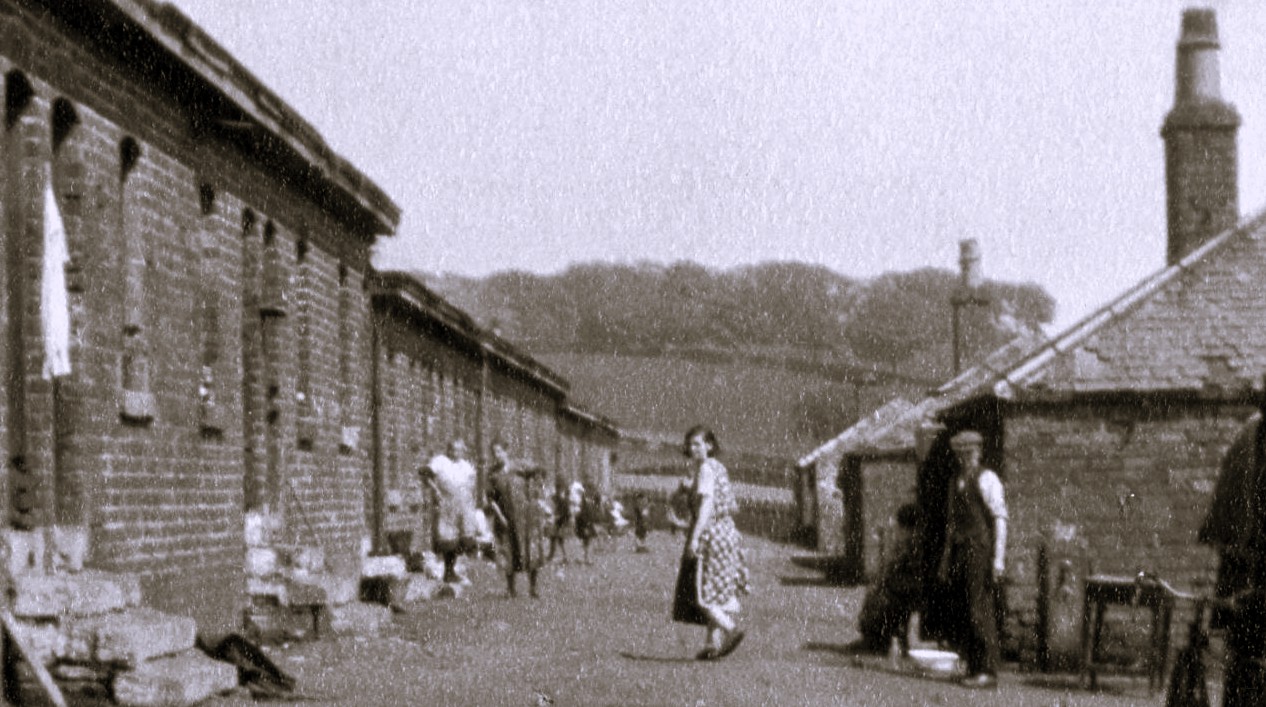
The housing in the coal areas is the worst in Great Britain, especially in Scotland. In Wales, which is not such an old coalfield, it is sightly better. But I have never seen anything nearer absolute savagery than the life in the miners “rows” in a Lanarkshire village. The “house” consists of one room, never very large. In the wall of this room, locally known as a “single end” there are one or two set in beds in which the whole family sleep. A curtain or a door on this dark recess gives the on privacy one can have. The windows are small and look out on the opposite row or on a rubbish heap as the case may be.
There is no water in the house. Every drop has to be carried from one tap in the centre of the row of 20 or 25 houses, where the only lavatory for the row is also situated. There may be anything from 200 to 300 people living in the “row”, in many cases more, because miners have huge families, but the one water closet and tap has to provide for all. On the huge fire that is always burning, there is always the great pot of water heating for the men to bathe when they come home. Such food as they can get has to be prepared at all sorts of odd times because their shifts begin and end at different time each week, and the children come home from school at different times from the fathers too, so the women’s work is never done. The men have to bathe as best they can on the kitchen floor in a huge round wooden tub. The tub and the pot are the dowry of every miner’s wife. In similar houses in Wales each has its own tap and water closet, but I have never yet seen one of the latter that worked properly or was anything but a danger to the health of the inhabitants. The air is always full of the smell of pit clothes wet or pit clothes drying. Over the miner’s wives everyday hangs the fear of what may happen at any time. Not only in great disasters like the Sengenyald Explosion when 300 men were killed in South Wales or the Cambrian pit where nearly as many were drowned, but everyday in the mines of Britain men are killed and maimed. The roof collapses, the cage rope breaks, a journey of trams runs away and some family is left to the tender mercies of the owners compensation or a parish relief.
In most mining areas the coal company is also the owner of the miner’s houses and rents are deducted from wages before the men are paid. The rents are very high in proportion to the wage. In Scotland they range from 8- to 15/- per week and in Wales they are a little higher. This system has one good point–when miners are on strike they pay no rent. But that does not compensate for the loss of wages.
During the coal strike Councils of Action have been set up all over South Wales, in the hands of which all the conduct of this struggle is placed. On every council of action, I saw there were women comrades and many Communist women comrades. Under the command of these councils of action are all the active women of each district who are detailed for work as they are needed. In the Rhondda Valley where I was, the Council of Action was the Local Soviet and had charge of the District at least during the General Strike. They said which safety men were to work in the mine. If the owners agent wanted a man they had to ask for him from the Council. They settled all Union disputes and business. They arranged pickets. But the work which they specially delegated to our women comrades was that of feeding and not only feeding, but amusing and encouraging and keeping the miners all on strike and their wives and children, as well and cheerful and courageous as could be. During the strike in all mining areas, the children from 5 years up are given one meal a day at school. The quality of the food and the quantity varies. Bread and butter is always available, and in most cases soup of some kind. The more militant districts have better food, because the women on the Council of Action’ insist on it. In the Rhondda they were given sometimes meat and potatoes. Sometimes, fruit, bananas and apples and bread and butter, and sometimes eggs. These meals were prepared sometimes in the schools, but in most cases in the vestries of the churches. The teachers were in charge of the children during the meal hours. The money for this feeding comes from the local Guardians. Under the “Necessitous Children’s Act” teachers are empowered to feed from the public funds children whom they consider need it.
Children under five are allowed milk foods as the authorities consider it necessary from the Child Welfare centres which are also run by the Guardians. In some places the women on the Council of Action have forced the Guardians to allow these little ones to go with their elder brothers and sisters to the school feeding centres, but in other they have only the welfare milk. It is not too much to say every miner’s child on strike is suffering from under-nourishment. The only fund which has been opened for the feeding of these children and women is the Labour Women’s Fund, which was started by the Labour Party. The W.I.R. is also doing good work among the Kent miners, but the funds only mean a drop in the ocean. There are nearly a million men on strike. Enormous sums would be required to feed the children adequately, and it is not only the children who require feeding.
The Parish Authorities in Britain may not grant relief to any able bodied man on strike. At present in Wales the wives of the miners receive 11/- per week from the Guardians. They have only been granted this after signing a promise to refund the money after the strike is over. In Scotland Lanarkshire, the amount is 12/- slightly more.
The grant of 11 or 12/- per week is all the money that comes into any miners house during this strike. The money which trade unions of Britain, the Miners Federation itself and the Trade Union Movements in Russia and other countries have contributed is being used to give at least one good meal a day to the men on strike. In some places non-unionists are asked for a pledge that after the strike they will pay up their dues and become union members. The women of the Party in these areas also carry on a continued propaganda amongst the other women drawing as many as possible into the work of these kitchens. In these areas, the feeding of the ration practically goes on at the Communal Kitchens and a system of food supplies has been set up that in a revolutionary crisis would prove invaluable. The supplies for the feeding come from the Cooperative Societies as a whole and in the Guilds of these bodies also our women are at work.
The Party carries on women’s meetings everywhere and committees of the miners’ wives which report to the women’s meetings have been set up in some areas to inquire into various questions connected with the industry. In some places there is talk of maintaining an organisation of wives in connection with the union even after the strike is over. This would render the women more conversant with the politics of the coal industry, would make them understand not merely that there is a strike, but the why and wherefore of any strike. I think it would help the men to fight more courageously if they were sure of the support of the women.
The chief reason of course for the spirit amongst miners’ wives is that their conditions will be so dreadful if they lose the strike that they simply cannot face the possibility. If they lose they stand to accept a reduction of from 20 to 33% of their previous wages. In many cases it is simply unthinkable. The possibility of a defeat has turned many into the Communist Party. Their former indifference has completely disappeared. They recognise the class struggle and know clearly which side they are on.
International Press Correspondence, widely known as”Inprecorr” was published by the Executive Committee of the Communist International (ECCI) regularly in German and English, occasionally in many other languages, beginning in 1921 and lasting in English until 1938. Inprecorr’s role was to supply translated articles to the English-speaking press of the International from the Comintern’s different sections, as well as news and statements from the ECCI. Many ‘Daily Worker’ and ‘Communist’ articles originated in Inprecorr, and it also published articles by American comrades for use in other countries. It was published at least weekly, and often thrice weekly. Inprecorr is an invaluable English-language source on the history of the Communist International and its sections.
PDF of full issue: https://www.marxists.org/history/international/comintern/inprecor/1926/v06n51-jul-08-1926-inprecor.pdf
 Revolution's Newsstand