
The resistance to Bulgarian reaction during the 1920s was heroic and tragic. Its story deserves to be known and understood; its many sacrifices a portent of European fascism to come. Bulgaria was and is, a warning. The Bulgarian Socialist, and later Communist women’s movement, among the most substantial in Europe, is also deserving of study. Below are biographies of prisoners Giuka Beltsheva, Adele Nikolova, Ditka Todorova, Zola Dragojcheva, Kunka Apostolova, and the conditions in which they were held.
‘The Female Political Prisoners in the Central Prison of Sofia’ from International Press Correspondence. Vol. 8 No. 89. December 13, 1928.
(Letter to “Inprecorr”.)
On the occasion of the last mass arrests many women were, as usual, affected. These are chiefly the wives of political prisoners and emigrants, as also the widows of the murdered, women who associated in the general amnesty committee have repeatedly carried on campaigns for the execution of an immediate complete amnesty and for the abolition of the “State protection laws”.
Below a few of the most outrageous cases are enumerated, cases, which once more bring before the eyes the inhuman conditions in the prisons of Bulgaria. The women kept in the central prison of Sophia are:
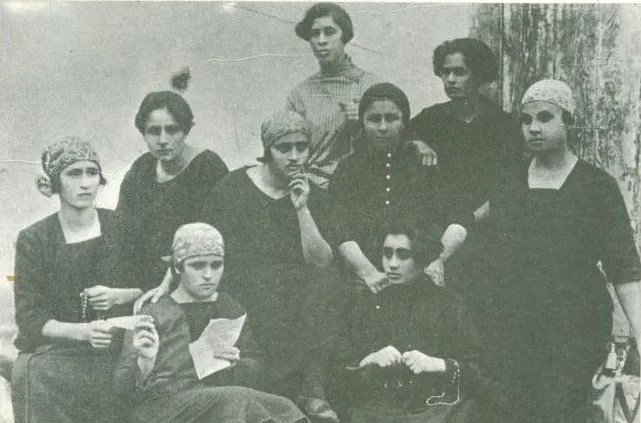
Giuka Beltsheva, from Chepelare, 45 years old, was sentenced to 15 years’ imprisonment for keeping her brother-in-law, who “vanished completely”, in hiding. She was a widow with 5 children, of whom 4 are still minors. Her house was set on fire.
Adele Nikolova, born in Grenoble, France, 44 years old, was sentenced to be hanged for hiding Grancharov, member of the peasant’s federation, and Friedmann, a Communist, and others. She is a widow and the mother of a son who was released under the amnesty in February 1926 and went to France. First of all she was sentenced for life, but the sentence was later reduced to 15 years, of which she has already served 3 1/2 years. Her flat and all her valuables were confiscated by the policy and sold.
Ditka Todorova of Ochrid, 40 years old, was sentenced to 15 years imprisonment for keeping in hiding her husband’s nephew, Borimechka. She has already served 31/2 years. She is a widow and the mother of two young children, whom the authorities have left to their fate. Her house was attacked and fired upon, whereby Borimechka, who had till then lain low, succeeded in getting away to a neighbouring wood, where he fought for hours against the whole garrison of Sophia, and finally met with a heroic death. Ditka Todorova’s husband and the seventeen years old son of Borimechka were murdered in the building of the political police, after being terribly maltreated.
Zola Dragojcheva (Sonja), 30 years old, a teacher from Bela Slatina, was sentenced to death by hanging, as an organiser, which sentence was commuted to life-long imprisonment, on account of pregnancy, and was later reduced to 15 years. Her little son Tuchavdar, who was born in prison, is now two and a half years old.
Kunka Apostolova, a girl student, 24 years old, was sentenced, as an organiser, to 121/2 years’ imprisonment, of which she has now served 312 years, her sentence has been reduced, it is true, but she still has 5 years to serve.
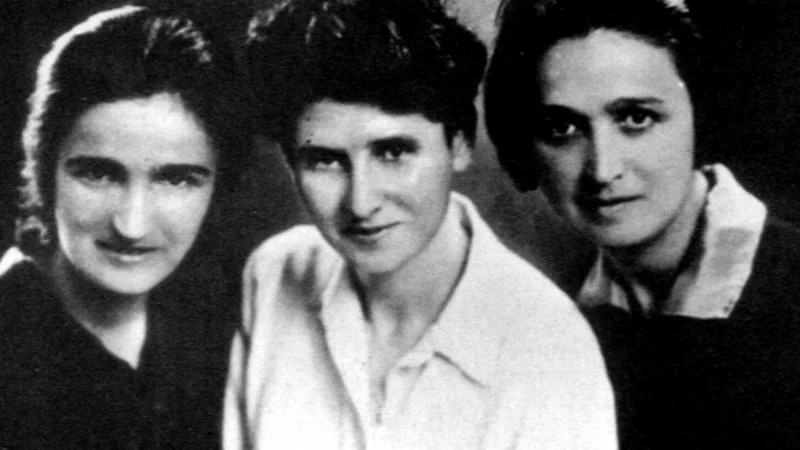
Of the five political prisoners still kept in the central prison of Sofia, three are accessories after the act and the other two have been condemned to severe punishments for their political activity. These courageous and honest women have been repeatedly put into dark cells or otherwise punished, and constantly terrorised on account of trifling offences, aye, often on account of bad humour on the part of the warders, who never lose an opportunity of showing their “strong hand”.
A female prisoner who was recently discharged from the central prison describes the state of affairs there in the following manner:
What is the condition of the cell? A cave in the basement, dark, damp, and cold, with heavy iron door and grating. The women are confined here for special punishment. In this cave some of the female political prisoners have remained as long as 15 days on the bare cement floor, on bread and water. On many occasions these women and others have been given one to three days’ dark cells for defending their rights or protesting against inhuman treatment.
Comrades Adele, Zola and Ditka, with their heavy sentences, are allowed to receive visits from relatives for a period of ten minutes once a month, behind double iron gratings. These visits are a torture rather than a joy. The prisoners stand like wild beasts behind the bars and are not allowed to shake hands with their friends. As there is always a warder present, it is naturally impossible to speak a frank word. The two other prisoners, who are sentenced to shorter terms, are allowed to receive visitors every Wednesday, but under the same miserable conditions.
Now, in winter, the cell doors are unlocked at six in the morning and the women take their breakfast at the common table assigned to them, and afterwards they clean up their cells. In the afternoon, the cells are again locked until three o’clock, and at six o’clock they are locked again. The whole night the prisoners remain locked up in their cells. The two walks permitted each day take place in the small courtyard, which is six yards by five. The prisoners are allowed to write only one letter a month, and even this letter has many deletions by the censor.

In the cells adjoining those of the political prisoners there are criminals, among whom there are always some suffering form venereal disease. The danger of contagion compels the political prisoners to keep still more aloof from the other prisoners. The wash-room and the closet are hotbeds of disease. The fixtures in the wash-room are handled by prisoners suffering from leprosy, syphilis, gonorrhea and other diseases of all kinds. The food is abominable. It is nearly always beans, and occasionally beans and meat or onions or rice, but the diet in general is an unsavoury mess, which must often be thrown away. The prisoners prefer dry bread to the disgusting slops.
The delivery of money, sent by the international proletariat, to imprisoned comrades is strictly forbidden by the prison administration. The selection of books, too, is severely restricted by the administration.
The life of the prisoners is a hell, but they suffer their heavy punishments with heroic patience. The international proletariat must help these unfortunate ones through manifestations of solidarity.
International Press Correspondence, widely known as”Inprecorr” was published by the Executive Committee of the Communist International (ECCI) regularly in German and English, occasionally in many other languages, beginning in 1921 and lasting in English until 1938. Inprecorr’s role was to supply translated articles to the English-speaking press of the International from the Comintern’s different sections, as well as news and statements from the ECCI. Many ‘Daily Worker’ and ‘Communist’ articles originated in Inprecorr, and it also published articles by American comrades for use in other countries. It was published at least weekly, and often thrice weekly. Inprecorr is an invaluable English-language source on the history of the Communist International and its sections.
PDF of full issue: https://www.marxists.org/history/international/comintern/inprecor/1928/v08n89-dec-13-1928-inprecor-op.pdf
 Revolution's Newsstand