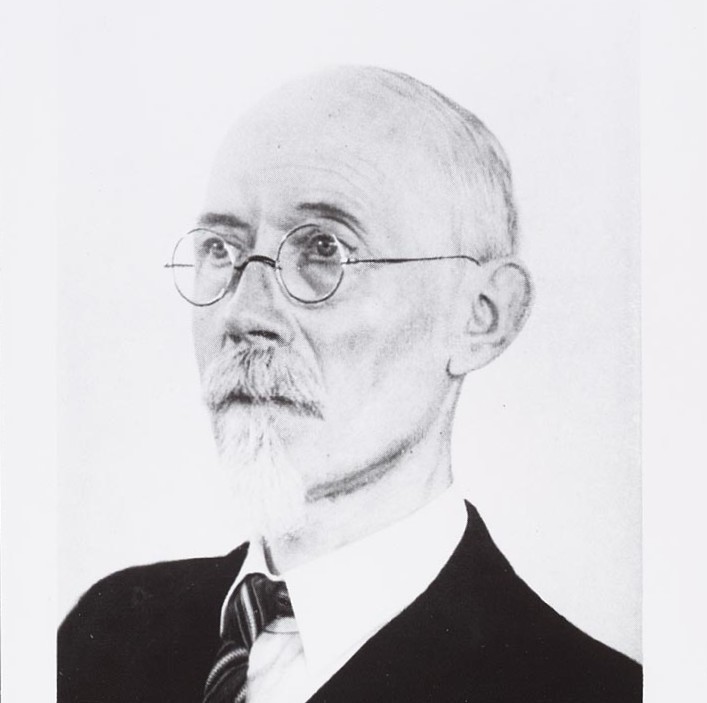
Pannekoek on the post-war impasse; a ‘universal crisis’ that touched every element of social, political, and economic life.
‘The Universal Crisis’ by Anton Pannekoek from The Communist (old C.P.A.). Vol. 2 No. 3. April 5, 1920.
THE capitalist system is in its death throes; its end has commenced.
The worldwide war destroyed the productive powers of Europe, drained the life blood of the people, and burdened the states with, gigantic war debts. Many people, when the was finished, believed that the victorious countries, at least, could expect a period of expansion and recovery during which capitalism would be rebuilt. But to-day it is clear that it will be impossible to rebuild it. In the conquered countries, stripped bare by the victors, economic stagnation and social ruin becomes increasingly intensified. From them the paralysis develops westward–to France, to England, to the neutrals, to America. Intercommunication has become disorganized; the lack of raw materials makes the reconstruction of industry impossible; and, because of the lack of man-power and of manures, the harvests are not sufficient to meet the needs of the people. Still more grave is the chaos in the currency. Under capitalism in normal times money is the oil of the social machine, the instrument of every economic transaction. Today the uncertainty of the exchanges paralyses the nerves of capitalist production the credit system. The ever-mounting price of commodities is only one of the symptoms of the economic dislocation. The middle classes are reduced to the position of proletarians by the high prices, while the masses themselves are forced down into still deeper misery. If the purchasing power of money decreases, the workers are compelled by means of strikes to defend their standard of living, and, because of that, the conflicts between capital and labor grow ever more acute and more widespread.
What does that mean? The American banker Warburg says: “Europe is bankrupt.” In other words, Capitalism is collapsing.
It is only possible to understand the deeper causes of this by the teaching of Marx concerning the essential character of Capitalism. All the solutions advanced: State control of prices; increase of production by means of more intense and longer labor on the part of the workers; the restoration of free exchange; each and every device put forward in order to save the present order of things, appears as so much pitiful nonsense in the light of Marxist theory concerning the mechanism of capitalist production and circulation. That production is not for use, but for profit. Every business enterprise is, today, paralysed at its commencement by the difficulty of selling its products, even when it succeeds in breaking down the barriers caused by burnings, by strikes, and by the difficulties of communication. Because Germany cannot buy, England cannot sell, and so the crisis spreads throughout the whole “civilized” world. In America huge quantities of goods are to be found, but Europe cannot buy because of the increased value, in European money, of the dollar, and also because of the high cost of transport. We hear again and again of huge credits proposed to be made by American banks to Europe. But it is certain that no bank on combination of banks will offer its, millions, even if that is the only way to save Capitalism. For Capitalism is a blind force which drives along its own masters like so many blind slaves, thirsting for gold. In no direction can we see any reason to expect the reconstruction of the capitalist system. Whole populations have become pauperized and need help; the world becomes plunged more and more into chaos and misery.
In face of this collapse of human society the mass of men stand deaf and blind. The bourgeoisie tries to make itself, and others, believe that the revolutionists are preparing a forcible destruction of capitalist society in order to replace it by a socialist one. It does not realize that Capitalism is destroying itself, that Socialism is the only possibility, and the only foundation of reconstruction, which the human race must accept unless it wishes to perish together with Capitalism. The bourgeoisie persecutes the revolutionists and hinders their propaganda in the senseless hope thereby to save Capitalism, while, indeed, by those means it only prolongs human misery, and delays the coming of the new world order. That deafness and blindness concerning the coming dissolution of Capitalism is the historic fatality of the bourgeoisie.
But the mass of workers are also blind and deaf to this dissolution. They regard the march of events without understanding, and without knowledge. To hope that the collapse of Capitalism will find a proletariat revolutionary prepared and conscious of its mission is now shown to be utopian. The collapse proceeds too rapidly, events spring too suddenly before the eyes of men for them to be able to adapt their minds to the new realities. That, however, does not mean that they will do nothing, and quietly submit to perish together with the world capitalism; it means that the transformation in Western Europe and in America will not proceed along the same simple and easy way as in Russia. Infinitely greater difficulties must be conquered in those countries where a deeply-rooted bourgeois civilization has impressed itself almost ineradicably upon the mind of the workers. The road to Socialism will be by tortuous ways, across many barriers, under the debris of oft ideals, through new deceiving, vain experiments, and great events. A year of gigantic universal struggle lies before us.
(Dr. Pannekeok is one of the best-known theoretical Communists in Holland. He is also a scientist of repute in Europe, and an honorary member of Petrograd University. The above article was translated from the Internacia Socia Revero, an International Socialist Esperanto monthly, edited in Holland by Comrade W. Nutters, of the Dutch Communist Party.)
Emulating the Bolsheviks who changed the name of their party in 1918 to the Communist Party, there were up to a dozen papers in the US named ‘The Communist’ in the splintered landscape of the US Left as it responded to World War One and the Russian Revolution. This ‘The Communist’ began in September 1919 combining Louis Fraina’s New York-based ‘Revolutionary Age’ with the Detroit-Chicago based ‘The Communist’ edited by future Proletarian Party leader Dennis Batt. The new ‘The Communist’ became the official organ of the first Communist Party of America with Louis Fraina placed as editor. The publication was forced underground in the post-War reaction and its editorial offices moved from Chicago to New York City. In May, 1920 CE Ruthenberg became editor before splitting briefly to edit his own ‘The Communist’. This ‘The Communist’ ended in the spring of 1921 at the time of the formation of a new unified CPA and a new ‘The Communist’, again with Ruthenberg as editor.
PDF of full issue: https://www.marxists.org/history/usa/pubs/thecommunist/thecommunist3/v2n03-apr-05-1920.pdf
 Revolution's Newsstand