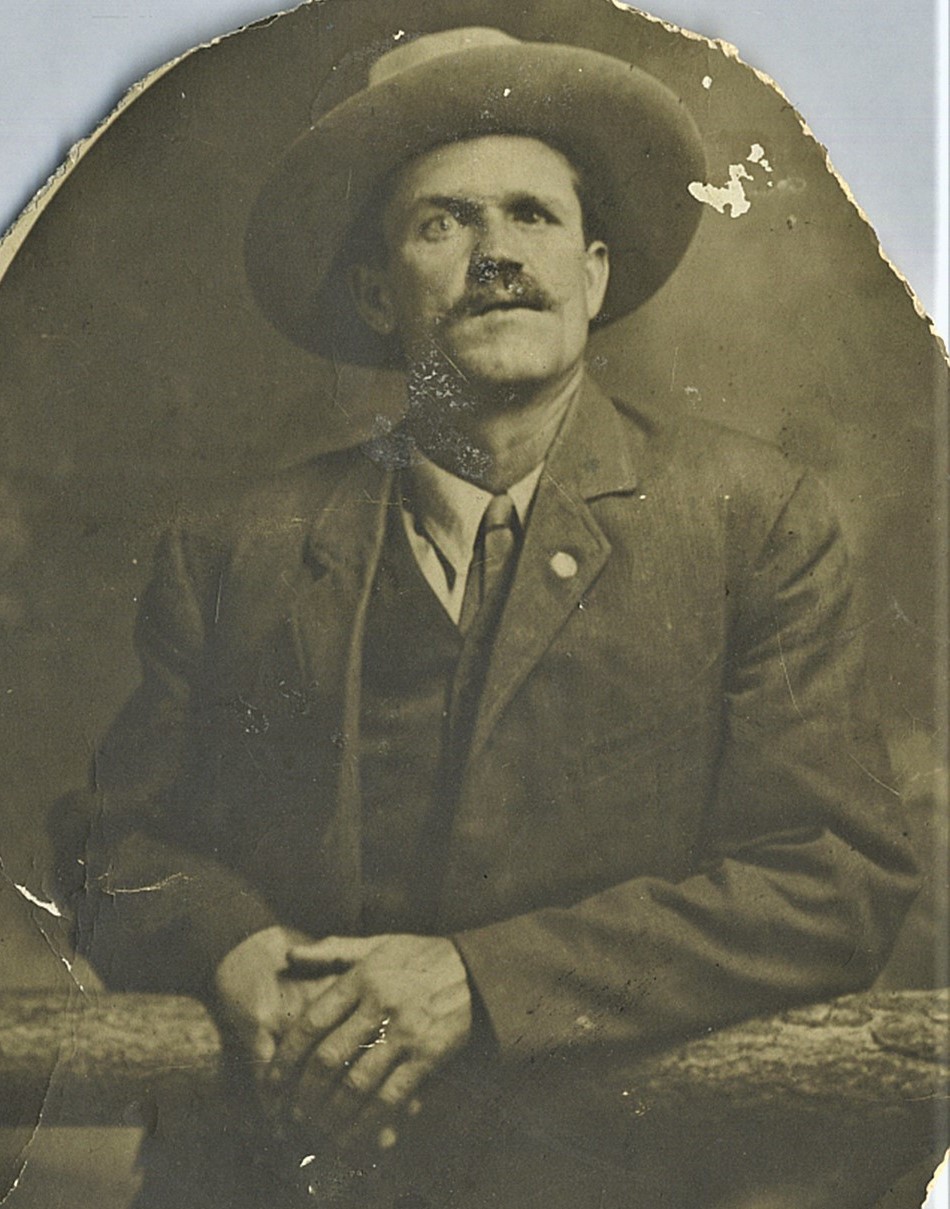
In Minneapolis during the summer of 1913, Frank Little takes one of his many beatings and arrests. The local I.W.W. had success in organizing street car workers and the local capitalists were out for blood. They took action during a strike by women restaurant workers, arresting pickets and then further charging ‘contempt of court’, which the I.W.W. had in abundance. The story below.
‘Sluggers in Old Minneapolis’ from Industrial Worker. Vol. 5 No. 18. July 24, 1913.
Minneapolis, Minn., July 17, 1913. Once more we have to record an addition to the long list of crimes, judicial and by direct action, of the capitalist class against our fellow workers. The outrages have only strengthened us in our determination to fight harder than ever to put the parasites and their hirelings–judges, police, stool-pigeons and thugs where they belong.
In order that the workers may understand what has occurred here we are going to let you know of the events which led up to the outrages. About two weeks ago the Twin City Street Railway Co. were forced to grant concessions to the street car men. The increase in wages alone amounted to over $250,000.00 year. A number of street car men had organized into the Street Carmen’s Industrial Union No. 263 of the I.W.W. The directors of the company backed up by the M. & M. Association used every effort to stifle the growing sense of class solidarity among their slaves. They fired every active union man. The union grew the faster. They arrested our speakers. We held meetings in spite of the arrests, made the police back down and forced them to release the speakers. The union grew faster still. They made an unsuccessful attempt to bribe Fellow Worker Leheney to betray the workers and still the union grew, and is growing in spite of all their efforts.
Ever since the street railway company were forced to give the two hundred and fifty thousand dollar a year concession to the men threats of slugging, deportation and jail have been made to our active workers. Now we have to walk the streets of the Twin Cities in twos and threes so as to avoid, as best we can, getting slugged or arrested and railroaded to jail.
On Saturday, July 12th, seven girls, employees of the Eureka restaurant, went out on strike. Their demands included an eight-hour day, one day off in seven, and an increase in wages. They had requested the aid of the I.W.W. and by using our tactics won all their demands in five hours. At five minutes to 12, just before the noon hour rush, one of the girls handed McClements, the proprietor of the restaurant, their demands. They gave him five minutes to consider them. He refused to give way. At 12 o’clock a whistle was blown, the girls put down their dishes and walked out of the restaurant. The place was crowded at the time with, about two hundred customers clamoring for service, and a good many I.W.W. men were among them. They all had to follow the girls out. Immediately a picket line was formed, the pickets walking in single file about six feet apart and informing passers-by of the strike. Everything went smoothly for about an hour, then McClements, in an effort to start trouble, grabbed a perfectly innocent passer-by who happened to be a small man, and struck him. A crowd began to gather at once, but our fellow workers kept the sidewalks clear. McClements then phoned for the police. Two policemen answered the call. Seeing everything was perfectly peaceable outside the restaurant, they went inside, where the proprietor had a conversation with them and handed them cigars. They came out and ordered the pickets away. The men replied that the place was going to be picketed until the girls won their demands. More police were sent for until about a dozen were on the scene. Finding that the pickets were not in the least awed they arrested some of them, nine in all. The men were put in the city bastile and were held incommunicado. In the meantime McClements had granted all the demands of the strikers. The next day the men in jail refused to participate in the religious meetings, but had a service of their own, singing I.W.W. songs instead. As a punishment they were deprived of food. The men were brought up for trial on Monday morning. While waiting for their case to come up, an old man, charged with vagrancy, told the judge he had been starving for many days. The judge replied that he would send him to the workhouse for five days “TO FATTEN UP.” One of the boys, who knew from experience the quality and quantity of the workhouse fare, laughed aloud. The judge asked who it was that dared to laugh. The clerk pointed out Fellow Worker Brewen. “Forty days for contempt of court,” said the kangaroo judge. Fellow Worker Skatbo at once stood up and said that he was the one who laughed and that Brewen was innocent of openly expressing his contempt of the court. No notice was taken, however. Seeing that the boys were up against it we hired an attorney to defend them and the right to picket. The trial lasted over Monday afternoon and Tuesday. Four policemen, the restaurant keeper and his wife, gave evidence, or rather perjured themselves, for the prosecution. Twenty-one appeared for the defense. But it was evident, from the first, that the men were convicted beforehand. They received sentences of from 10 to 30 days each. We left it up to the men whether they wanted their cases appealed or not, and they decided that they would serve the sentences. We are going to appeal Brewen’s sentence of 40 days for contempt, as the judge cannot, even under capitalist law, give more than two days for that heinous crime, under the circumstances. After the trial, when the spectators were leaving the court room, the police made threats to those whom they knew belonged to the organization. Not much notice was taken of them, as we have become used to that sort of thing.
On Tuesday night a protest meeting was held. Remarkable feeling was manifested by the large crowd of about 600 people against the judicial farce, and the determination to boycott the Eureka restaurant was very evident. McClements was there at the meeting and was beard to remark that “He would get even with the I.W.W.” About nine o’clock, Little, who was to speak at the meeting, went for a walk around the block with Fellow Worker Moore. Soon after, Moore had occasion to leave him. That was the last seen of Little until the following morning, when he was found in the police court with his face battered almost out of recognition. He was in a dazed condition and could only say that something had struck him unawares and he knew nothing after that. It was very evident that after he was knocked down he was brutally kicked in the face and head. There were muddy foot-prints on his coat. One gash on his forehead, evidently caused by the blow which struck him down, is two inches long and down to the tone. He laid in the jail all night without medical attention. The police, of course, had arrested him and charged him with being drunk. They made no attempt to go after the thugs. Little was released on ball, and the trial postponed until he is able to attend the court. He is still in a critical condition, relapsing into unconsciousness at times. Attorney Fred H. Moore is here and will stay as long as necessary. We know where slugging was instigated, and if we get the thugs, and those responsible for the crime, they will be tried and sentenced by a court of the workers.
Fellow workers, we must put a stop to these outrages. They have gone too far.
We serve notice to the capitalist class, whether they are millionaires or restaurant keepers, that the I.W.W. is on the job in Minneapolis and this sort of thing is going to stop. We have adopted the Biblical motto “An eye for an eye, a tooth for tooth,” anu are going to live up to it. The harder you fight us, the bigger and stronger we grow. More workers have joined the I.W.W. here, in the past week, than ever in the history of the locals.
Calls are coming in to us daily from the teamsters, linseed oil workers, foundry workers, department store workers, restaurant workers and others for organizers and application blanks.
So do your dirty work, you slave owners, and the sooner will the slaves revolt.
Next week we will give you a further account of events as they transpire in this vicinity. Press Committee Joint Locals I.W.W., Minneapolis, Minn.
The Industrial Union Bulletin, and the Industrial Worker were newspapers published by the Industrial Workers of the World (IWW) from 1907 until 1913. First printed in Joliet, Illinois, IUB incorporated The Voice of Labor, the newspaper of the American Labor Union which had joined the IWW, and another IWW affiliate, International Metal Worker.The Trautmann-DeLeon faction issued its weekly from March 1907. Soon after, De Leon would be expelled and Trautmann would continue IUB until March 1909. It was edited by A. S. Edwards. 1909, production moved to Spokane, Washington and became The Industrial Worker, “the voice of revolutionary industrial unionism.”
PDF of full issue: https://www.marxists.org/history/usa/pubs/industrialworker/iw/v5n18-w226-jul-24-1913-IW.pdf
 Revolution's Newsstand