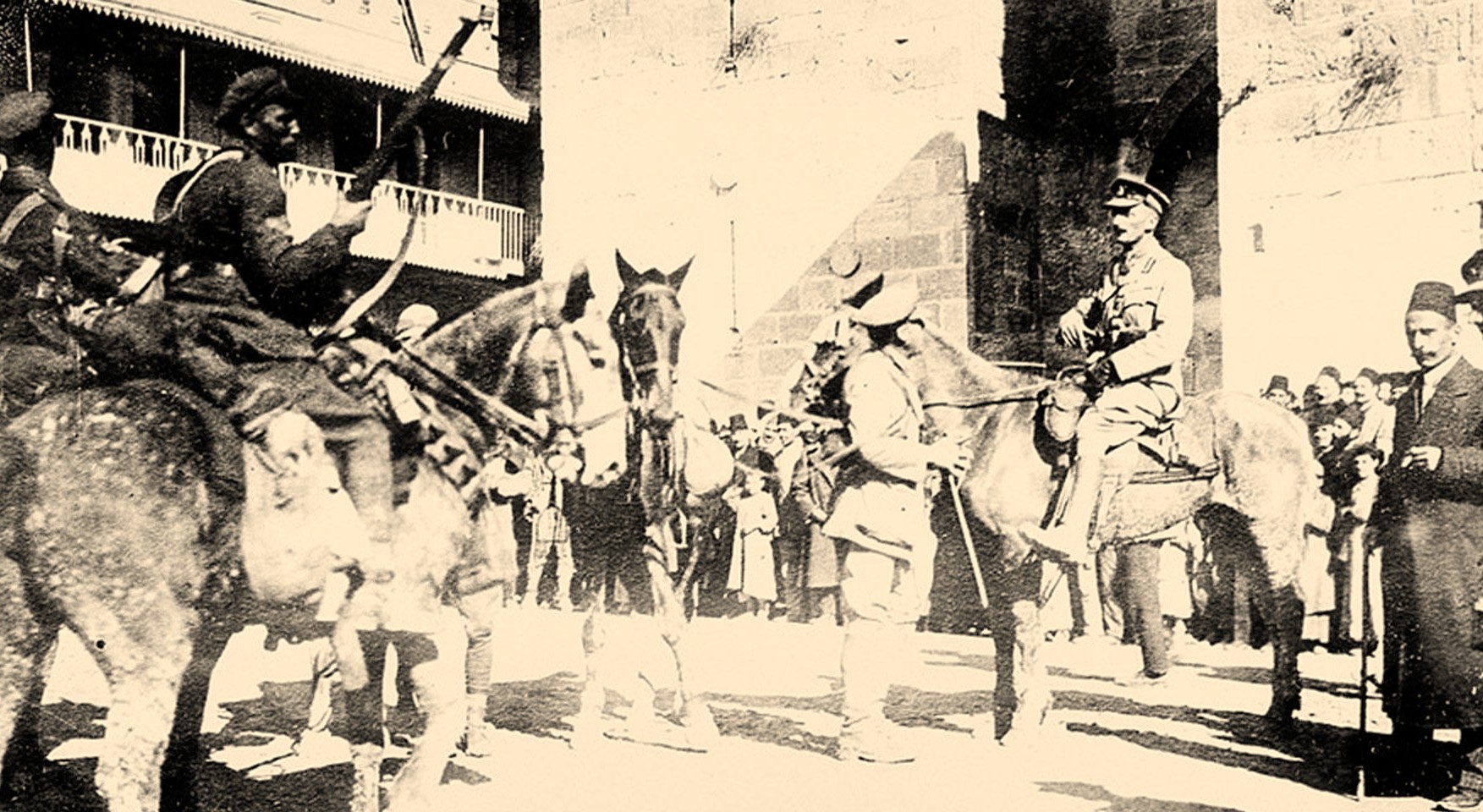
An important document from the history of the Palestinian struggle, the official statement of the Communist Party made in the immediate aftermath of 1929’s ‘Arab Revolt’ on its background and character.
‘The Revolt in Palestine: Communiqué by the C.C. of the C.P. of Palestine’ from International Press Correspondence. Vol. 9 No. 54 & 56. September 27 & October 4, 1929.
a) The Reasons.
The reasons of the sanguinary August revolt in Palestine are to be found in the entire policy of British imperialism in the Arab countries since the war. In its endeavour to make Palestine a strategic outpost on the Eastern bank of the Suez Canal, a stage on the air-route to India, and a military basis for the conquest of the entire Arabian peninsula on the one hand and for a war against the southern republics of the Soviet Union on the other, British imperialism elected to pursue a peculiar policy in this area, which is ethnographically and economically merely a part of the great Arab territory. The country wrenched out of the total Arab territory, turned into an independent state, and by the help of British bayonets and British administration turned into a national home for the Jews.
The entire post-war policy of the British imperialists in Palestine, it is true, has shown that they never really had the true realisation of Zionism, i.e. the erection of a national Jewish home, at heart. Not even the most elementary support for a colonisation by Jewish emigrants was afforded by the British Government; on the contrary, it turned the unfortunate immigrants who had been lured to the “national home” by the siren voice of the Zionist organisation and their Social-Democratic advocates (both in the pay of the British imperialist politicians) into poor, hungry “natives”, politically quite devoid of rights and economically exploited to the utmost by Anglo-Zionist capital. The Zionists themselves declare that by reason of the British policy the realisation of a national home for Jews in Palestine has become a chimera, an altogether Utopian idea.
On the other hand, however, the Zionist policy inaugurated by a Conservative like Lord Balfour has fully realised the object which the British imperialists really had in view, for it has driven a wedge of 150,000 Jews in between their military and civil apparatus on the one hand and the Arab population on the other. Though themselves persecuted and bullied by Great Britain (always with the exception of a small group of Zionist capitalists and Socialist leaders directly in the service of the imperialists), these 150,000 are yet the most advanced outposts of British imperialism in the Arab countries. Unlike the European colonies in South Africa, China, etc., this small colony has, thanks to the ingenious British policy, been turned into an outpost which, itself unprotected, yet serves to protect the interests of imperialism.
The main elements of this wily British policy lie in the fact that on the one hand the Jewish capitalists, who, with the aid of the Jewish social traitors of the Second International, have taken over the tutelage of the Jewish masses, and on the other hand the feudal Arab landlords and the Mohammedan clerical apparatus, are cleverly played off, the one against the other.
Since the end of the war there has been a systematic expropriation of the poor Arab fellahs or small peasants. The establishment of the few agricultural and urban colonies, which Zionism has managed to create within the last ten years at an enormous expense (there is mention of as much as 20 million pounds having been invested in various ways) could only be effected on the basis of an expulsion of the small Arab peasants. The smallness and poverty of the Jewish settlements, which the British only suffered with a view to maintaining the illusion of a Jewish national home as a political card in their hands, is just a proof of the practical impossibility of such a home under British rule. But the manner in which even these few settlements had to be erected on the ruins of the small Arab holdings, sufficed to make the Jewish colonies and the “Jewish danger” into a regular bogey for the poor, semi-nomadic peasants of Palestine and the surrounding countries. The hatred of imperialism, which had established its “civilising” rule in the land by means of an unscrupulous exaction of taxes, of forced labour, ill-treatment of the peasants, and measures of terrorism, was united with hatred of the colonists introduced under the protection of the imperialists; nay, it was even overshadowed by the enmity felt for the intruders who took away not only the money and work of the poor peasants but even what was dearest to them of anything, their small holdings of land.
The agrarian unrest which has set in since the British occupation, has been aggravated particularly within the last two years and has taken on the form of a serious agrarian fermentation. Hundreds of small incidents Afuleh, Jedro, Caesarea, Wadi, Hwaras, Infiath, etc.—all over the country have borne witness to the great embitterment of the working population in the open country. In the cities the proletarisation of the petty-bourgeoisie and the pauperisation of the intellectual classes made rapid progress. True to their imperialist mission, the Zionist leaders drew a line of demarcation between “Jewish” and “Arab” Labour, whereby the attention of the workers in the cities was to be diverted from the real reason of their impoverishment the imperialist policy which hindered the development of productive forces, and the dastardly exploitation by colonial operators and “compradors” and directed against the Jew. For even the official “Histadruth” trade unions (attached to the Amsterdam International) not only refused to admit Arab workers but set up the rule of “kibush avodah”, i.e. the replacement of Arab workers by Jews, which amounted to an expulsion of the Arab workers from their jobs.
The “front” thus erected between the Jews and the Arab by the imperialists, Zionists (poorly cloaked by a few impudent lies as to the “blessings” which Zionism has conferred on the Arabs in town and country) was on the other hand completed by the Arab big landowners, the clerical apparatus and the bourgeois “compradors”. These classes, which have ruled the country for centuries, have taken active part in the exploitation practised by the imperialists and Zionists, for was big landowners such as Sursuck, Tayan, and many others who sold the land worked by “their” fellah tenants to the Zionist colonisation agencies, thus seconding the expropriation by the colonisers. It is these circles, too (e.g. the heads c the clerical apparatus, “Medjless Islami or Supreme Council of Islam), which administer the real estate of the Mohammeda Wakf and collect the heavy taxes from the peasants by means of the Government apparatus. The British have taken good can never to interfere with this clerical apparatus or with the feudal rights, while the interests of the workers were trodden under foot. It is these circles, finally, that constantly exploit the peasantry by means of usurious rates of interests, fraud, and barefaced robbery. The bourgeoisie of the towns, meanwhile, is no less avid of profit than are the Zionists and imperialists, though they employ feudal-mediaeval methods alongside the modern capitalist ones used by the latter.
But it was just because this class of Arab parasites (which finds its political utterance in the national-reformist heads of the Arab Congress) saw the growing wrath of the masses and rightly appraised the menacing symptoms of the advancing agrarian movement, that they were determined to maintain control of this movement and not allow it to advance directly against the British imperialists either, since in this latter case it would probably have got beyond their control and the would have been landed in a difficult situation, or they would, at any rate, have had to make too great economic concession in favour of the people. In collusion with some of the British colonial officials, who, inspired by Colonel Lawrence, desire to make a coalition between British imperialism and Arab clerical feudalism into the dominating factor throughout the Middle East, the national-reformist leaders took all possible steps to prevent the movement rendered inevitable by the radicalisation and revolutionisation of the masses, from turning into an anti-militarist revolt and to deflect it in the direction of an anti-Jewish pogrom.
b) Incentive and Outbreak.
That the excitement had reached its highest point and that the movement was likely to become acute at any moment. could be seen by a series of incidents on the occasion of the Mohammedan festivals of “Nebi Mussa” and “Aual Muharrem” when there were turbulent demonstrations of the masses. Again and again, the Government proclaimed a “state emergency” with a view to preventing demonstrations. This particularly, when there was some danger of the masses adopting an openly anti-imperialist attitude under the lead c the Communist Party. All the police and military forces were mobilised to prevent this, as on the occasion of August 1st. The British imperialist Government, which continued to follow the old Conservative line even after the MacDonald Government came into office, would at no cost permit an outbreak of popular anger against imperialism and made careful preparations to deflect the struggle into the channels of national feeling.
The question of the Wailing Wall, which finally gave the immediate occasion for the events, had been dragged in “by the hair”, so to say. Both the British and the Mohammedan “Medjless” considered such a religious struggle the best safety-valve. The Zionists did their share towards turning the Wailing Wall into a symbol of power; it could no longer be a question of the possession of the wall (the question at issue between the Jewish rabbis and the Medjiess) but rather that the victory in this regard was made out by the agitational press on either side, as also by the religious and nationalist notabilities, to be symbolic of the virtual rule over Palestine. On the one hand, the Medjless took advantage of the backwardness and the almost complete illiteracy of the fellahs and bedouins for the purpose of depicting the fight against the Jews in the light of a “holy war’ and at the same time making them believe that the imperialist Government would refrain from intervening in the case of a massacre of the Jews (a clever Anglo-clerical trick, whereby the masses were to be prevented from settling scores with the Government itself, which, they were made to believe, would help them to destroy the Jews). On the other hand, the Zionist Fascists played upon the national chauvinism the young generation of Jews, educated on imperialist lines, making out the fight for the Wailing Wall to be a “defence national honour” and so forth. “Judah was born in blood and fire, in blood and fire it will grow”, sang the foolish fascist youths who paraded with flags through the Mohammedan quarters, thereby deliberately provoking the Arabs. The government fanned the flames on either side, desiring to strengthen its own position by this outbreak of a national and religious conflict, acquire an excuse for terrorising the masses bedouins, fellahs and proletarian workers, and demoralise the national movement. The Government recognised the danger a revolutionary, anti-imperialist peasant movement led by the working class of the towns and therefore preferred to drive the masses into the arms of the clerical and feudal Medjless id to let them vent their fury on the Jews.

The outbreak really ensued just in the way the representatives of the hyper-pacifist MacDonald, and the Zionist and clerical wirepullers desired it to. After a meeting of 10,000 Mohammedans, mainly representing the smaller peasant class, in the Mosque of Omar at Jerusalem, a powerful anti-Jewish movement broke out throughout the country with elementary force. In this connection there could be observed the “benign” results of Zionism for the Jews of Palestine itself. Zionism has caused the mob in Palestine to treat the words “Zionist” and “Jew” as synonymous. Much of the blame is due to the Zion-reformists, who, in response to the repeated appeals of the Communists to the Arabs to differentiate between the rich and corrupt Zionist leaders and the Jewish workers, who have common interests with the Arab working masses, again and again asseverated that the Jewish workers were the “best Zionists”. Thus the slogan of the Arabs was not “Death to the Zionists!” but “Death to the Jews!” and this was uttered with all the fanaticism of a “dshehad” or holy war. It now became regarded a sacred duty to slaughter as many Jews as possible, whether guilty or innocent, Zionists or workers. No one was to touch the British or other Christians, for had it not been announced “Dola maana”, “the Government with us”? The Jews had to be killed because they were Jews. The savage, senseless mutilations, such as were perpetrated at Hebron, Motza, and Saffed on old men, women, and children the bedouins singing in religious ecstasy while they slit abdomens and struck off the heads of little children) were the outcome of this splendid political “manoeuvre” by which the Government of progress, civilisation, and the Labour Party, lied with the most reactionary clericalism, drove a subject country into an orgy of blood so as to strengthen its own undermined political position. There is documentary evidence to the effect that in the early stages of the events the British police had orders to allow the Jews to be massacred at will without intervening.
c) From National Struggle to Anti-Imperialist Insurrection.
Things, however, did not develop quite as the clever British politicians had intended; for their purposes a modest “massacre of St. Bartholomew” among the Jews would have sufficed, justifying an increased British occupation (such as had become requisite in view of the active war preparations) and strengthening the British position of arbiter between the “wild Arabs” on the one hand and the “menaced Jews” on the other. The Jewish blood shed during the pogrom and the Arab blood to be shed during the inevitable consequent “punitive expedition” would have done very well to oil the wheels of British imperialism in the Arab East. The attitude of the masses, however, had not been taken into account.
The elementary force of the outbreak after eight years and a half of cruel and systematic imperialist oppression (the last rising, which also took the form of a pogrom, having been quenched in blood in May 1921) under the unscrupulously arbitrary rule of a handful of colonial officials and without the safety-valve of even apparent democracy or right of appeal, was far greater than the British imperialists or even the clerical leaders of the movement had ever imagined. A local movement in Jerusalem turned in a few days’ time into a Pan-Arab insurrectionary movement with aims far exceeding the massacre of the Jews. The situation thus became threatening for British imperialism. If it had been properly organised and systematically conducted (which it could have been only by the working class), this mass movement, which had spread to hundreds of thousands of peasants, bedouins, and city workers, would have taken the form not of a senseless religious war but of a powerful anti-imperialist revolution, ensuring a victory over imperialism at many important points.
A small example will show the truth of this assertion. If the powerful rural movement round about Jerusalem, combined with the rising of workers within the city on August 24th and 25th, i.e. before the arrival of the first British reinforcements, had, instead of pitting itself against the Jewish settlements, moved concentrically towards the interior of the town, it could undoubtedly have stormed the central Government buildings and got possession of the Government apparatus.
The Zionists, however, also did their share towards serving British imperialism and not permitting a development in the sense above indicated. Though unable at the first moment to deny the obvious responsibility of the British Government, the Zionists immediately started to exploit the situation in sense of a further accentuation of Jewish-Arab differences and established a united front with the British against the Arri Mere self-defence against the attacks of the fanaticised it was exceeded by the Zionist Fascists, who proceeded to revenge themselves on innocent Arabs wherever they were found to be surrounded by Jews, and here and there were counter-pogroms. Thus two poor innocent workers were beaten to death with truly bestial fury by a crowd of Jews in a main street of Jerusalem on August 24th; close to the Museum a poor fellah woman was foully murdered; Jewish Fascists murdered an entire Arab family of women and children; three Arab houses situated near the Jewish were pillaged and burnt down on the 26th (in revenge for the burning and pillage of the Jewish colonies of Hartov, Huldah, and Ed Tuviyah); on the road to Jaffa Arab shops were broken into and plundered. Though there were no organised attacks on Arab settlements which would have been absurd seeing as the Jews are but a small minority in the country the Zionist Fascists yet did all they could to confirm the Arabs belief that it is really the Jews who are their chief enemies, to prevent the treacherous Arab leaders from having occasion to allow the fury of the mob to turn against real enemy, the British imperialists.
Nevertheless, such a change of front was not altogether impeded. In the purely Arab districts (Nablus, Tulkarem, Transjordania) the angry Arabs collided immediately with British soldiery. At Jaffa, Hamdi-ef-el-Husseini, secretary of the Anti-Imperialist League in the Arab territory and leader of the national-revolutionary wing of the Arabs, openly advocated an anti-imperialist rising in place of the murder innocent Jewish inhabitants. At Haifa, the representative of workers in the Young Moslem Association warned his elder members against instituting pogroms and called upon to unite with the Jewish workers for the destruction imperialism and its Zionist adherents. Finally, the same trend was to be seen in the numerous skirmishes which took place (at Samakh, on the Syrian frontier, at the outlets into Transjordania, in southern Palestine, etc.) between the Bedouins and the British troops that entered the land towards the August.
Just at the moment when the clerical leaders of the movement betrayed their followers most basely (on the 21 August, the chairman of the Moslem Medjless the spiritual rector of the movement, the Mohammedan mayor of Jerusalem, and the chairman of the Arab Executive Committee issued a declaration, calling on their followers to subvert the movement had almost all along the line turned into an anti-imperialist rising. This fact is confirmed by the circumstance that on September 1st John Chanceller, the British High Commissioner, issued a proclamation in which he expressed indignation at the atrocities only of the Arabs and announced that as a “punishment” he had interrupted negotiations in progress regarding constitutional change Palestine (i.e. the Arab national-reformist demand for parliament); this at the same time revealed the imperialist “investigation” of the massacre and constituted a fresh provocation the Arabs.
Besides this, the British “reprisals” are being effected so cruelly and unscrupulously that, apart from the fighting on the borders, the indignation of the masses may easily lead to a renewed outbreak in the country itself. In any case the rising, deflected as it was into anti-Jewish channels, means represents the end of the entire movement, but the first stage in a new Arab revolution, just as the Syrian rising in 1925 was part of the same great anti-imperialist revolt. It has shown that the stability of British rule and the Zionist agencies in Palestine is just as unreliable and shaky as is that of French rule in Syria (where the Palestine revolt caused a demonstration of solidarity of many thousands and that of the British vassals Feisal and Abdullah in Iraq Transjordania, respectively (where serious friction also occurred.)
By an unheard-of terrorism the troops of MacDonald and Henderson attempted to stamp out the symptoms of emancipation which in spite of the most ingenious imperialist precautions have become apparent among the Arab colonial masses. Hundreds of suspects are arrested and put into irons; villages and towns are bombarded, maximum contributions imposed collected with brutal force (the Zionists and Zionist-Socialists including the treacherous “Left” Poale Zion, co-operating in this imperialist terrorism against the Arab peasants and workers and developing an awful propaganda which exaggerates the Arab excesses tremendously and carefully conceals those of the Jews.) Apart from their “organised” reprisals, the occupation troops practice a form of sport, racing around in cars and sniping at the Arab “natives” (including the women and children) in passing. Humanity and civilisation held a triumphal entry over smoking ruins.
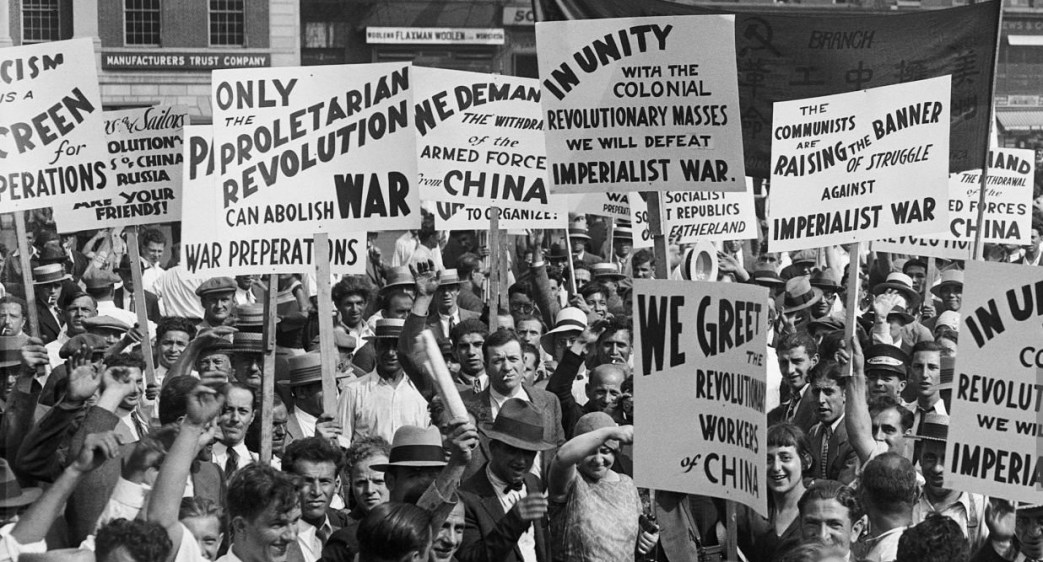
The pogrom-leaders of the Arab national-reformists and of the Zionist Fascist remained just as immune as did the British officials. But the revolutionary nationalist leader Hamdi Husseini, who had spoken against the pogroms and in favour of an anti-imperialist fight, has been arrested and is threatened with capital punishment; hundreds of innocent Jewish and Arab peasants are being condemned behind closed doors.
d) The Working Class and the Communist Party.
In this revolt the working class of Palestine did not come forward as an independent force with demands of its own, though there can be no doubt but that the working class of the cities (Arabs and Jews together) has grown substantially of late years and would, so far as its numbers were concerned and in view of the bad economic position of the workers, well have been in a position to play an important, nay a leading, role in the recent mass movement if it had come forward in a determined revolutionary spirit.
But the activity of the Zionist social-reformists has driven a wedge into the working class, not only by founding a Jewish chauvinist organisation, the “Histadruth” which upon the outbreak of the revolt became an appendage of Jewish fascism and the British imperialists, but also by exploiting the monopoly of organisation it had procured from the British and Zionists for the purpose of keeping the Arab workers out of the “Histadruth” and preventing their revolutionary organisation by all possible means. Further, there do not exist any purely Arab, revolutionary mass organisations in the country.
Thus the only international revolutionary organisation in the country was the Communist Party of Palestine, which is yet in its infancy and much harassed by constant persecution on the part of the British Government apparatus and the Zionist and Arab bourgeoisie. This Party alone stood for the interests of the working class as such. Untiringly it sought, in pamphlets, handbills, illegal assemblies, and even demonstrations (in the face of official terrorism, on August 1st), to impress on Jewish and Arab workers alike: Do not fight one another, but unite against British imperialism and its Zionist and feudal Arab bourgeois adherents. It may be said that at the outbreak of the movement the estimation of the position by the C.P. of Palestine British imperialism desires national-religious bloodshed so as to strengthen its own rule at the expense of Jewish and Arab workers was shared by the majority of both Arab and Jewish workers. The last appeal of the C.P., on the day when the revolt began, was approved by 99 per cent. of the workers at the Haifa railway shops, including many Jewish workers and even Socialists. As a matter of fact, though there was no fraternisation of Jewish and Arab workers, there were various remarkable instances of solidarity (individual Jewish workers being saved by Arabs in various cities and, again, Arabs being saved by Jews from the revenge of the Zionist Fascists). But, obviously because the influence of the C.P. was too weak in relation to both Jewish and Arab workers, there was a total absence of mass action, which could indeed only have taken the form of a fraternisation against British imperialism.
The course of events, however, clearly proved that if the proportionate strength of the workers and peasants had been greater (or, rather, if the fellahs had been under the influence of the workers instead of that of the feudal and clerical interests), there would have been every possibility of a victorious revolution and the establishment of a revolutionary-democratic dictatorship of the workers and peasants.
It is just for this reason and to prevent such development, at the head of which the C.P. would undoubtedly place itself, that the Zionists on the one hand and the Arab feudal chiefs on the other are doing their utmost to widen the national chasm yet more and to make religious warfare permanent. The “Davar”, the press organ of the Social-Fascists, publishes “songs of victory”, which culminate in a eulogy of the massacres and conflagrations and are intended to fan the national hatred among the workers. Similarly, the Arab national-reformists still proclaim that what is needed is a revolt against the Jews and not against the British and spread illusions abroad in regard to a prospective “neutral” British mission which will “bring the truth to light”.
Meanwhile the Communist Party proclaims: “Peace to the working people, war to the imperialist rulers! Continue the fight, not against one another but with one another against imperialism, Zionism, and the Arab national traitors. Do not allow yourselves to be disarmed. Create a government of workers and peasants which alone can guarantee to safeguard the interests of the workers. All Arab countries unite to form an independent republic of workers and peasants.”
If the Palestine workers and peasants can be sure of the solidarity and help of the proletarian masses in England, America, France, Germany, and the other imperialist countries, then notwithstanding all MacDonald’s aeroplanes and armoured cars, warships and machine-guns, notwithstanding all the diabolical pogroms initiated by his officials, in spite of the agitation of the Zionists and Social-Fascists and in spite of the treachery of the Arab feudal lords and bourgeoisie they may be certain of realising the great task of liberation.
International Press Correspondence, widely known as”Inprecorr” was published by the Executive Committee of the Communist International (ECCI) regularly in German and English, occasionally in many other languages, beginning in 1921 and lasting in English until 1938. Inprecorr’s role was to supply translated articles to the English-speaking press of the International from the Comintern’s different sections, as well as news and statements from the ECCI. Many ‘Daily Worker’ and ‘Communist’ articles originated in Inprecorr, and it also published articles by American comrades for use in other countries. It was published at least weekly, and often thrice weekly. Inprecorr is an invaluable English-language source on the history of the Communist International and its sections.
PDF of issue: https://hdl.handle.net/2027/uva.x002078458
 Revolution's Newsstand