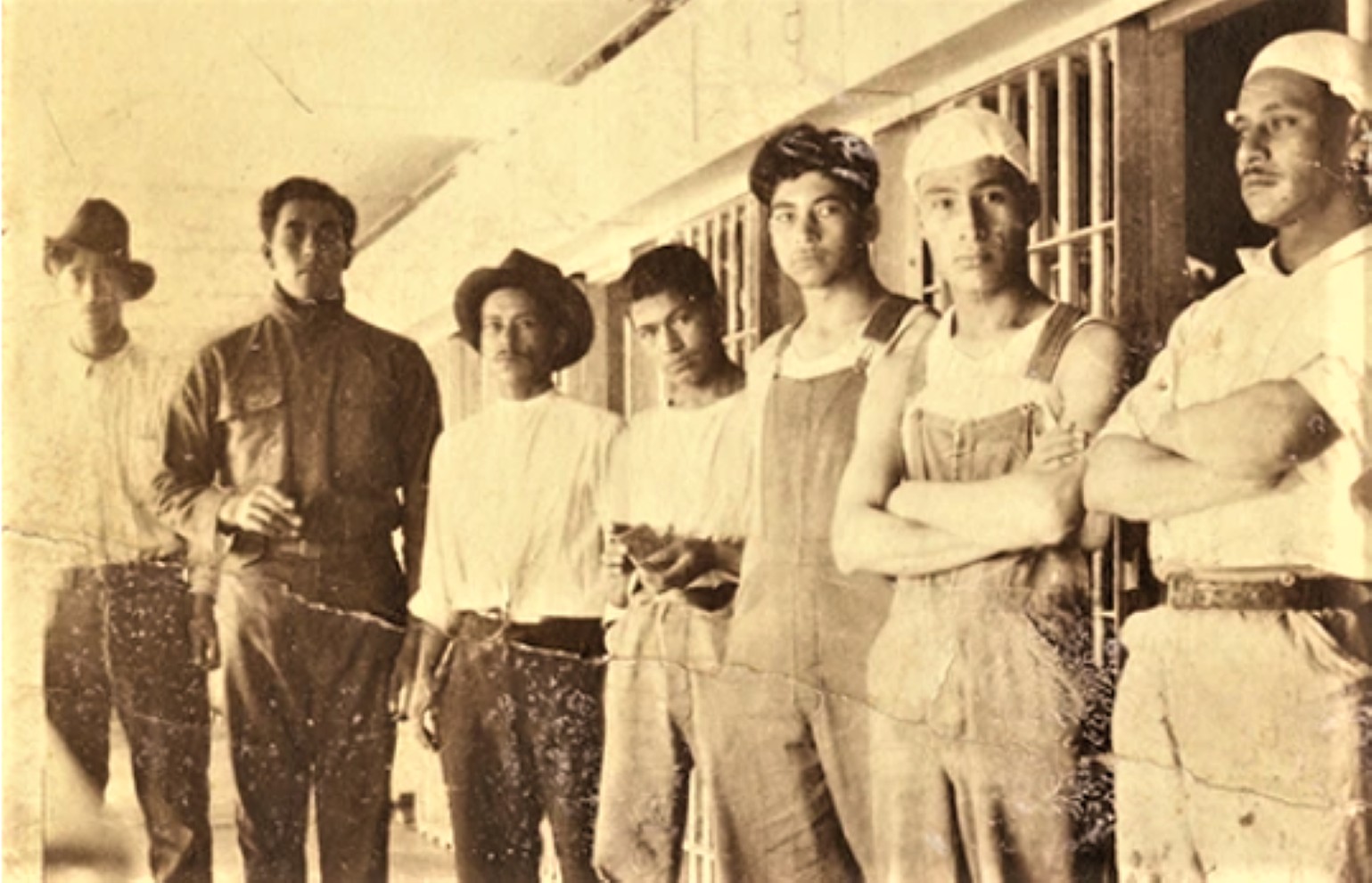
The A.F.L.-C.I.O. has, correctly, been dubbed the A.F.L.-C.I.A. for facilitating and implementing U.S. foreign policy. That role long predates both the C.I.O. and the C.I.A. Below, Dunne on how A.F.L. leaders pressured Mexican unions to demand the Mexican government support the U.S. government’s anti-Mexican immigration policies of the 1920s. That class collaboration in service of a reactionary agenda is, of course, also the chief domestic function of the U.S.’s official labor leadership.
‘How American Federation of Labor Officials Bully Mexican Labor’ by William F. Dunne from The Daily Worker. Vol. 4 No. 232. October 12, 1927.
The Foreign Policy of the Executive Council—Following the Lead of the State Department—Pan-American Labor Relations—“Purifying” Mexican Labor—Immigration and Political Refugees—The United Front of Capital and Labor in the Pan-American Commercial Conference—Woll’s Great “Victory”—The Cloak of Democracy.
In the field of international relations the executive council of the American Federation of Labor shows its real colors.
Its relations with the International Federation of Trade Unions follow almost exactly the policy of the state department toward the league of nations. Just as Wall Street’s state department maintains connection with the league of nations thru the attendance of envoys at the various conferences held under league auspices and “observers” who attend the league sessions, so the A.F. of L. executive maintains contact with the I.F.T.U., seeks to mold its course to conform to A.F. of L. policy and unites with it, as does the department with the league, against left wing and revolutionary movements.
VARIOUS affiliated international unions, Machinists, United Mine Workers, etc. are allowed to affiliate with the respective internationals of the I.F.T.U., but the correspondence; between Green and Oudegeest, secretary of the I.F.T.U., was referred to the Los Angeles convention without recommendation.
If and when Wall Street government joins the League of Nations, the A.F. of L. will become part of the I.F.T.U.—a dominant part UPON the Mexican Federation of Labor, A.F. of L. officialdom exercises continual pressure—as Wall Street government does upon the Mexican government.
Nine pages of the executive council report are devoted to Latin American relations. Most of this space is devoted to detailing the process by which the A.F. of L. leadership is making the policy of the Mexican labor movement conform to A.F. of L. requirements.
On August 6, of this year, a conference of representatives of the two federations met in Washington, D.C., and arrived at the following agreement:
1. That the Mexican government be petitioned to adopt a restrictive policy, and if necessary, to enact legislation to that end, excluding all peoples of oriental birth or extraction.
2. That consideration be given to the exclusion or restriction of other classes of immigrants deemed unsuitable TO THE MORAL, PHYSICAL, POLITICAL, AND ECONOMIC INTEGRITY.
3. That the Mexican government be petitioned to consider and to enact a restrictive emigration policy, WHICH, IN SUBSTANCE, SHALL CONFORM TO THE IMMIGRATION LAW REQUIREMENTS OF THE UNITED STATES.
4. That the Mexican government be petitioned to adopt a method of regulating emigration so as to give full and complete enforcement to the immigration policy herein recommended.
In return for this surrender of the Mexican Federation of Labor, the representatives of the A.F. of L. agreed to continue to allow Mexican workers to come into the United States without the quota restrictions which apply to other countries.
Point Two of the agreement puts the Mexican labor movement on record against political refugees of all kinds and is designed to set the minds of American imperialists, including the executive council of the A.F. of L., at ease by preventing workers persecuted by European governments finding an asylum in Mexico and perhaps continuing in that country activity in behalf of the working class—which might have repercussions in the United States.
This is the crux of the whole question and the other three points of the agreement are intended to strengthen Point Two.
It is clear Unit the A. F. of L. executive council gives its purely nominal support to the Mexican labor movement only on condition that it abandon what remnants of revolutionary integrity it still possesses.
In reporting on the Pan-American Federation of Labor convention, the executive council gives further evidence of its malign influence upon the Mexican labor movement. In the resolution submitted to the convention by the A.F. of L. delegation, and adopted under its pressure, there is a complete repudiation of the international character of the labor movement and a declaration of hostility to internationalism.
It is the “Monroe Doctrine of Ameri can Labor” that is put forward in such statements as: “we pledge ourselves severally and jointly to resist with all of the vigor and resources at our command any and every attempt on the part of some other labor movement to interfere openly or covertly with our affiliated organizations, or to attempt to dictate or determine the policies which shall govern us.”
The A.F. of L. of course is not interfering with the rest of the labor movements of the western hemisphere when it forces the “Monroe Doctrine of American Labor” down their throats and compels them to an agreement which if followed divorces them from the working class organizations of the rest of the world.
The A.F. of L. executive council is using the dominant position which it has as the head of the labor movement of the greatest imperialist nation, to create a Pan-American international of trade unions which can be used by American imperialism against the masses of the Latin American countries and for the interest of Wall Street.
ALMOST three pages of the report are devoted to an exposition of the activities of Vice President Matthew Woll as a delegate to the third Pan-American Commercial Conference.
The question naturally arises as to what an official of the American labor movement was doing as a delegate to a commercial conference, but this is understood if we recall that A.F. of L. officialdom seeks representation at these gatherings as part of its united front with the bosses and government.
Woll was one of the American delegation APPOINTED BY THE STATE LABOR DEPARTMENT. He refers in the to the following capitalists as “my colleagues,” making up the American delegation: Lewis S. Pierson, Chairman of the Columbia Bank and Trust Company; John H. Merrill, President All American Cables; Gano S. Dunn, President, J.G. White Engineering Corporation; F. Abbott Goodhue, President, International Acceptance Bank; Frank D. Waterman, President and Treasurer, Waterman Fountain Pen Company; Roy D. Chapin, President, National Automobile Chamber of Commerce; Franklin C. Remington, Chairman of the Board of Directors of The Foundation Company and Daniel G. Wing, President, First National Bank of Boston.
One would think that a labor union official would feel a little out of place in such a collection of capitalists. But not Vice President Woll. On the contrary, he reports a great victory for labor. True, the victory is not evident except to the trained eye of an efficiency unionist, but Woll writes lyrically as follows:
“Thus I am happy to report that an objective sought eleven and again seven years ago and frowned upon on both occasions, was unanimously approved at this time.”
What is this glorious achievement which puts another star in the crown of the executive council?
It consists in the fact that Woll was authorized by the kind-hearted capitalists who were his fellow-delegates, to introduce a resolution which recommended that future conferences should have as one point on the agenda “the subject of improving the material standards of life and labor of the masses of the people of the respective countries.”
It is true that the resolution committee of the conference amended this high sentiment by adding the words: “so that by improving the conditions of labor production fomented and consumption increased, thereby contributing to the development of commerce.”
But the undaunted Woll in his remarks letter to President Green, quoted in the report that: “…the change…is one only of form and not of substance.”
The policy here expressed is again that of efficiency unionism end worker-employer cooperation on an international scale.
The report on “International Relations submitted by the executive to the Los Angeles convention reveals official labor leadership working hand in hand with Wall Street government and American capitalists to undermine the militancy of Latin American labor movements carrying out its policy of cooperation with all imperialist agencies in this sphere as it does in its domestic policy.
This betrayal of the working class of the Latin American countries and United States is carried out under guise of “democracy”—which the official labor leadership interprets as support of the policy of the government of the United States which masks its role as a capitalist dictatorship by giving favors to labor leaders and the upper strata of labor in return for their support of candidates on the lists of both the capitalist parties, and continual war on the militant sections of the American working class.
The activities of the A.F. of L. executive council in relation to the league of nations are also of great importance and of a similar nature, but must be reserved for a later article.
The Daily Worker began in 1924 and was published in New York City by the Communist Party US and its predecessor organizations. Among the most long-lasting and important left publications in US history, it had a circulation of 35,000 at its peak. The Daily Worker came from The Ohio Socialist, published by the Left Wing-dominated Socialist Party of Ohio in Cleveland from 1917 to November 1919, when it became became The Toiler, paper of the Communist Labor Party. In December 1921 the above-ground Workers Party of America merged the Toiler with the paper Workers Council to found The Worker, which became The Daily Worker beginning January 13, 1924.
PDF of full issue: https://www.marxists.org/history/usa/pubs/dailyworker/1927/1927-ny/v04-n232-NY-oct-12-1927-DW-LOC.pdf
 Revolution's Newsstand