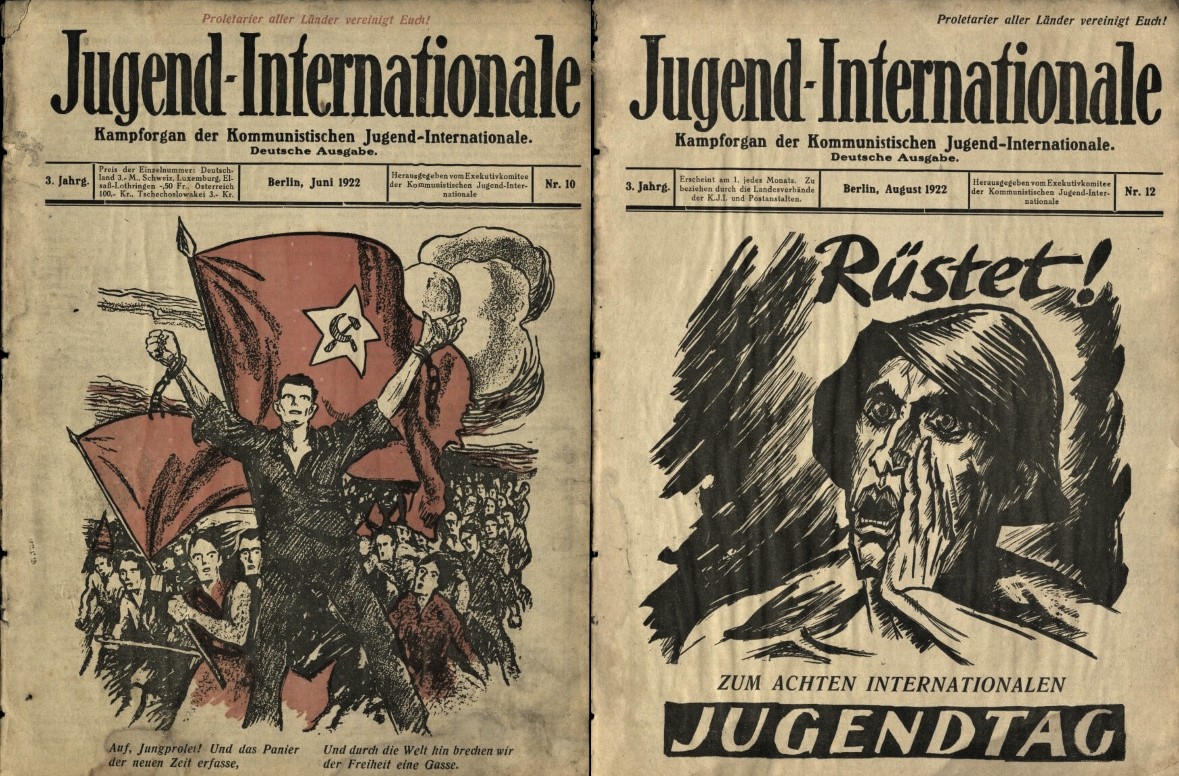
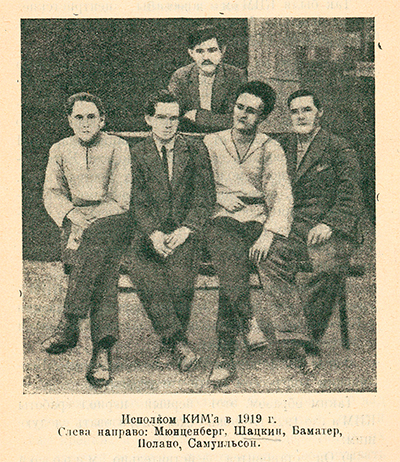
A richly detailed report of the the founding Congress of the Young Communist International held illegally in Berlin during November, 1919. Beginning with a history of the Socialist youth movement from 1907 through the World War and into the post-war revolutions; continues with delegate reports of organization emerging from the Second International from Austria, Czechoslovakia, Denmark, Germany, Hungary, Italy, the U.S. Norway, Russia, Spain, Sweden, Switzerland, and others; ending with a review of the debates and discussion. From this meeting an Executive Committee of the new organization was elected to include Leo Flieg (Germany), Willi Münzenberg (Germany), Luigi Polano (Italy), Oskar Samuelsen (Sweden), and Lazar Shatskin (Soviet Russia).
‘The Berlin Congress of the International of Youth’ from Communist International. Vol. 1 No. 11-12. June-July, 1920.
I.
1. The First International congress of Unions of Socialist Youth took place in 1907 in Stuttgart. It was called in the epoch of peaceful development of capitalism. But even for this epoch it managed to work out a revolutionary programme for the international movement of the proletarian youth: The struggle against militarism, and the participation of the youth in the political life of the working class. Such were the foundations of the young people’s movement. In its first period from 1886 (foundation of the first Young Guard organisation in Ghent) up to 1907. The Stuttgart congress was summoned when the organisations were still very weak. (The strongest of them counted: Belgium in 1909—about 8,000 members in 123 organisations; and Sweden in April, 1907—about 17,000). The Anarchist and Syndicalist influence, against which revolutionary Socialist elements had to carry on a desperate struggle was still very strong in them. But their organisations were revolutionary, they educated and prepared not middle-class officials of Party and professional bureaucracy, but revolutionary Socialists burning with enthusiasm.
Alas! The declarations of the Stuttgart Congress were not carried out. From 1907 on, first in Germany and then in the majority of European countries, Social Democratic parties and Trade Unions, who had no relations to the organisation of the Unions of Youth, and in many cases (Austria, Switzerland) had persecuted them—suddenly developed a strong affection towards “unexperienced youth” and resolved to direct it on the right road. At first Schultz, and after him other apostles of opportunism, frightened by the revolutionary spirit of the independent organisation—proclaimed a liberal “pedagogical” principle: “The Youth must not mix in politics.” Then, in the interests of Social Democracy, Anarchism was discovered among the Youth and as a result of theoretical transformation of the youthful proletarians into helpless children—sprang the idea of dissolving the Independent Unions of Youth and setting Committees of Youth, composed of representatives of parties and Trade Unions.
The German Social Democracy acted in touching accord with clause 17 of the Imperial Code, forbidding political organisations of the Youth, and with the German police that enforced it by aid of bayonets, prisons and whips. The new committees undertook with great efficiency to throw political ideas out of the heads of the Young people, and transformed the German Youth movement into an educational-sportive union with a slight Socialistic colour. Only a few organisations of proletarian youth succeeded in maintaining their independence and political activity. And for that reason the second congress of the International of Youth, summoned in 1910 in Copenhagen, passed unnoticed. It confirmed the Stuttgart principles of Liebknecht concerning antimilitarism, and the thesis of Roland-Holst on Socialist education. But instead of struggling for the independence of the organisations of Youth against the opportunist Social Democracy—upon the report of Danneberg, secretary of the International of Youth, a resolution was carried out of “combined work of the Socialist Unions of Youth with Socialist Parties and Trade Unions.”
2. The next international conference of the Socialist Unions of Youth took place in 1912, immediately after the congress of the Second International. The only question there debated was the question of the attitude of the organisations of Youth in the event of the great war. The conference went no further than to join the declarations of the congress of grown up Socialists.
Then the Great War broke out, and shattered the plans of convoking a congress of the International of Youth in August 1914, simultaneously with the congress of the Second International. The International secretary, Danneberg, then in Vienna, did nothing to re-establish international relations of the orgranisations of Youth. On the initiative of Swiss, Italian and Swedish comrades they met (unknown to Danneberg) at the Berne conference of the unions of Youth. Neutral countries were chiefly represented there, and the leading part was played by Scandinavia and Switzerland. The Central Committees of French and Austrian organisations refused to send their delegates. Germany was represented solely by three Southern towns who had separated themselves from their central committees. The Berne Conference of the International of the Youth had, undoubtedly, a revolutionary importance. In surroundings of the betrayal of the working class by the international Social Democracy, suddenly rang out in Europe the voice of the proletarian youth against imperialistic slaughter and social patriotism.
The conference called organisations of all countries to active political warfare. It proclaimed the complete independence of the Youth movement. It established an “International Day of the Youth”—a day of struggle against militarism, against Socialist betrayal, for Communism and class war. It elected as International Secretary comrade Munzenberg.
But as the Berne conference coincided with the period of Zimmerwald, when the differences of opinion between the Zimmerwald Right and Left were not yet clear—declarations were not meant for a Communist revolution and for a further delineation in the labour movement. And it committed a great mistake—adopting the Kautsky motto of general “disarmament” in the question of struggle against war—as revolutionary and realisable in capitalist society.
From then on meetings of the Bureau of the International of the Youth took place annually, and as the war developed and the workers of the whole world became more and more revolutionised, it placed itself more and more on a purely Communist basis, as did the quarterly review The International of Youth, published by Munzenberg.
3. In 1919 began the childbirth pangs of the Berlin Congress. It was called for the Summer by the Zurich secretariat of the International of Youth, at Basel, and by the Central Committee of the Russian Communist Union of Youth at Moscow. Then upon the agreement of both organisations with the Hungarian comrades, the Congress was transferred to Budapest. But the critical position of the Hungarian Soviet Republic persuaded the bureau to select Vienna as the place for the Congress, where it was to convene August the 25th.
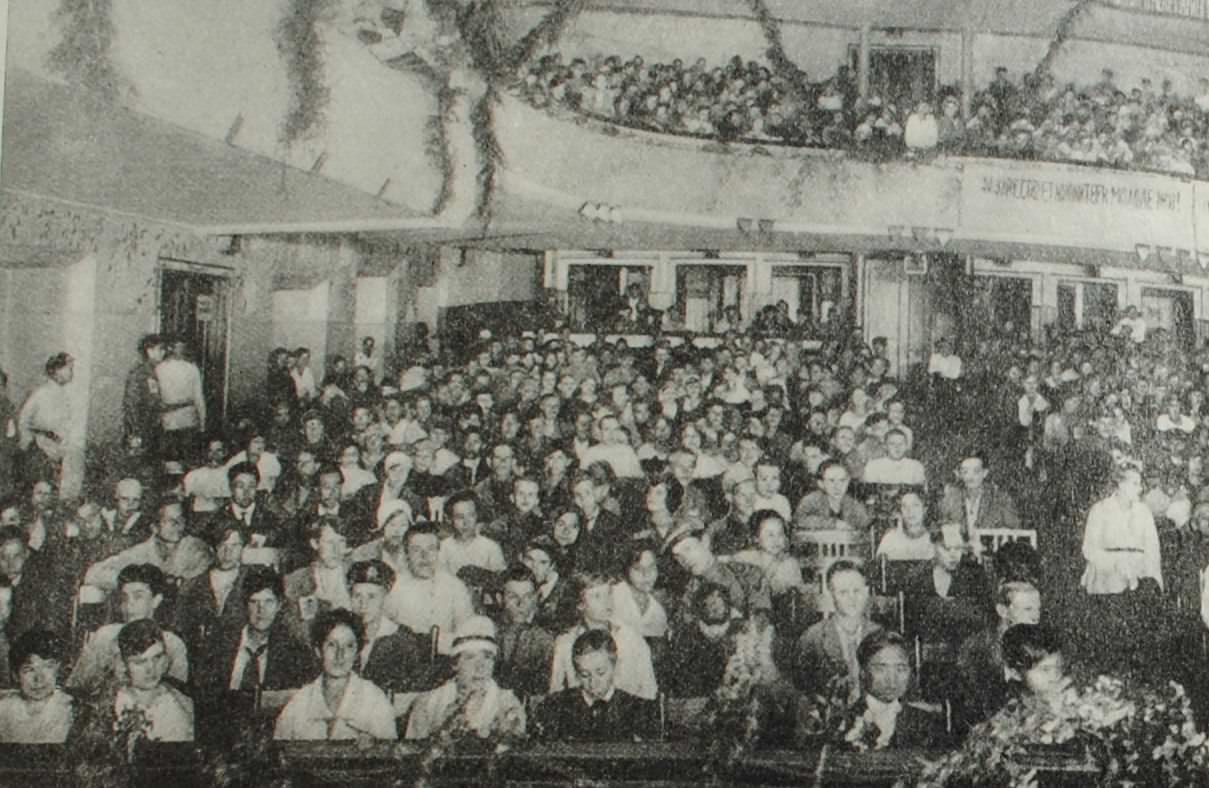
Various circumstances, however, prevented this plan from succeeding. At the appointed time only the representatives of Russia, Poland, Austria, Italy, Germany and Hungary arrived in Vienna. At a conference of these delegates a temporary committee of five members was elected, and charged to prepare and summon in the near future a congress in Germany. This committee, consisting of representatives of different countries, succeeded, after unthinkable difficulties, in summoning representatives from 14 organisations of Youth of different countries to Berlin, where from the 20th to the 25th of November the congress of the International of Youth took place.
The Berlin congress of the International of Youth was the largest of all the international congresses of Youth, by the number of organised Young proletarians, represented at it. No eminent leaders of Socialism took part in it. The delegates were mostly young workers, unknown in wide international circles. But behind it—unlike the Stuttgart congress—stood large organisations of proletarian Youth, who had gone through a hard school of revolutionary struggle. Therefore the declarations of the Berlin congress will have a tremendous effect on the Youth movement of the whole world.
II.
I. The decisions of the Berlin Congress of the International of Youth are no fiction. They were discussed in all countries for many years. And what is more—they were prepared by a practical struggle of the Unions of the Youth in the whole world. Therefore I will go into a detailed description of the position of the Youth movement in all the different countries, profiting by local reports made by the delegates to the Congress, and other material which I have gathered from the press, from letters and private conversations.
The predominant influence at the Berlin congress belonged to Russia and Germany. Not only because it was chiefly they who had organised the congress, but also because in those two countries, in connection with their strong revolutionary movement, the organizations of Youth are the strongest. Therefore the situation of the Russian and age Youth movement is of the greatest interest or us.
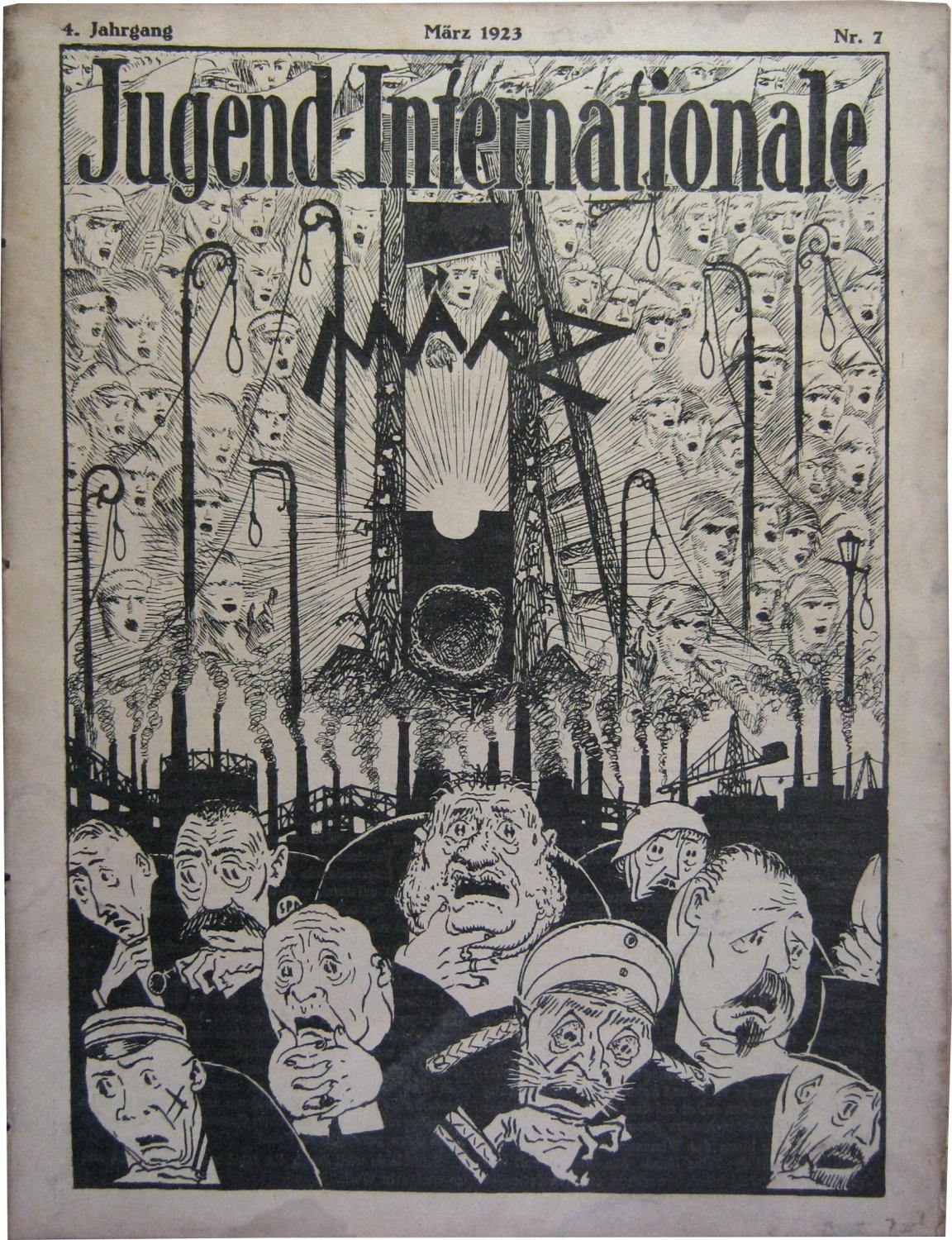
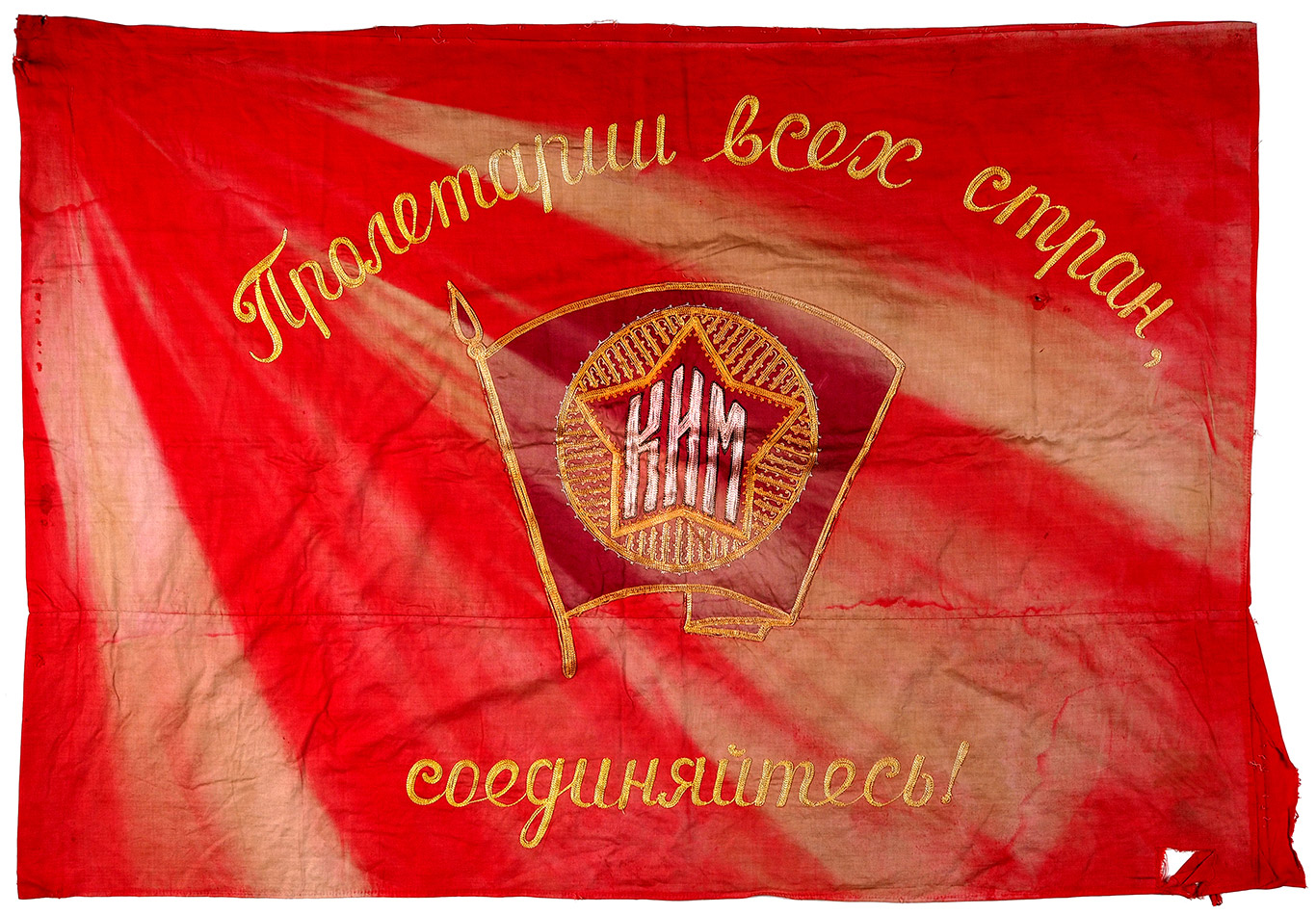
II. The Russian Communist Union of Youth has existed only 18 months as an All-Russian organisation. Up to its first congress in October 1918, in which 175 delegates represented 22,000 organised members, the movement was incomplete and elementary. The strongest organisations existed in Petersburg and in Moscow (already in the Summer of 1917). At the Second All-Russian Congress (October 1919) the number of its members amounted to 95,000, and at present the Union numbers about 250,000 members in 3,129 organisations. Such a speedy development of the Russian Youths movement is explained, of course, by the specially favourable conditions of proletarian dictatorship. The Russian Communist Union of Youth, though setting itself the same task as the West European organisation, directed its work on other lines than the Youth of Western Europe. Up to now its attention has been chiefly directed to the civil war. It gave its best forces to the front as Red officers, agitators, organisers, volunteers and medical corps. All its verbal and published agitation was submitted to the motto: “Everything for the victory over the counter-revolution.” Now in connection with the turning of Soviet Russia to peaceful work in the domain of Socialist industry, its chief problem becomes the schooling of conscientious practical workers in national economy and the struggle against disorganisation. Together with this, in connection with a more peaceful atmosphere, its activity in founding a Socialist school and in reorganising the work of the young, is all the more strengthened. A typical feature of the Youth’s movement in Russia is the absence of any Youth organisations except Communist ones.
III. Much harder work falls to the lot of the “Free Socialist Youth of Germany.” This organisation was founded at the conference of opposition groups to the old Social Democratic “Working Youth,” held in Jena, in January 1916. They declared war on social patriotism and the waverings of the members of the centre. They enunciated, as the chief principle of organisation, the motto: “First clearness—then majority.” Karl Liebknecht was the god-father of this new union, and his revolutionary enthusiasm and influence are noticeable in all the activity of the “Free Socialist Youth.” During the war, compelled by the repressions of the Kaiser’s regime to exist illegally—it was under his direction that they struggled against imperialism and militarism. They prepared a numerous staff of future members of the German Communist Party. Carrying on a continual bitter struggle against the religions and bourgeois Youth associations, as well as with the Scheidemann “Working Youth,” they spread its influence in the broadest circles of proletarian youth. Up to October 1918 there existed in Berlin and several other centers special groups of Youth, which actually joined the Independents. In October 1918, as a result of compromises on both sides, a union of both organisations took place at the All-German Conference in Berlin, and the Independents acquired a great, though not a predominant, influence in the “Union of socialist Youth.” Before the group of “Spartakus” broke away from the Independent Party, “Free Socialist Youth” found itself in organisational connections with the latter. The November Revolution, in which the working youth took a warm part, opened a wide horizon before the “Free Socialist Youth.” Thousands of experienced and faithful comrades returned from the front and from prisons. There arose the possibility of ‘legal work. The revolutionary enthusiasm in the working class caused a few new young proletarians to rush into the organisation.
The Central Committee of the Union began to publish a fortnightly review, “The Young Guard.” In January 1919, the Communist Party was founded. In connection with this, before the German Youth organisation arose the question of her relation to the Socialist Parties. At the All-German Conference in February 1919, the “Free Socialist Youth” recognised the Communist Party as the only revolutionary one. At the Weimar conference in October 1919, it finally accepted the programme of the Spartakus Union. At the same time, in the process of daily labour the last connections with the Independents, of which the greatest importance for our organisation was their financial support were gradually being broken. Conserving its political and organisational independence, the “Free Socialist Youth” became actually a Communist organisation, in complete accordance with all its former activity.
This caused the few remaining Independent elements to abandon it. The rupture took place at the Weimar conference, where from several hundreds delegates about thirty split off. The dissenters formed under the banner of “Nonpartisan Socialism”—a new union, “The Proletarian Youth,” which actually was lead by the Independents. Taking into consideration the revolutionary spirit of the Proletarian Youth in Germany, and a strong turn to the left among the party of Independents—we can boldly foretell the early death of the new organisation. The reaction in Germany conducted by the Social Democrat Noske again drove the central organs of the “Free Socialist Youth” into illegal existence. The same happened to many local organisations of the union. But in spite of new obstacles, the “Free Socialist Youth” grew stronger uninterruptedly. It has a strong organising apparatus which embraces all the provinces of Germany. Its central organ, “The Young Guard” (appearing from September 1919 illegally) is published in 40,000 copies. “The Free Socialist Youth” founds its branches in factories and works, organises the students, begins to work in the country. The connection with the Communist Party becomes stronger and stronger.
IV. The Situation is slightly worse in German-Austria. The old “Union of Young Workmen,” led by Danneberg during the whole time of the war, keeps to the principle of the Socialist centre. Carrying out loyally its obligations in regard to the protection of the precious Fatherland, at the same time it “grieved about the terrible calamities, which have beset the people.” This double-faced policy weakened the strength of the opposition. The latter managed nevertheless to grow, and strengthened so much that in 1917 the Social Democrats were compelled to expel it from the Union. This opposition, though weak in numbers, worked illegally until October 1918, preparing the ground for the Communist Party and the Communist Union of Youth.
Only after the dethronement of the Hapsburg monarchy, the Communist Union of the Proletarian Youth of German Austria was organised. Its first congress took place in August, 1919. Its weakness is explained, apart from the newness of the movement, chiefly by the fact that from the very beginning of its work the Union gave all its best forces to the then rising Communist Party. Also, in view of the general conditions of its activity, it is incapable of giving to the working youth the same splendid educational work as the Social Democratic Union.
Beginning from the first congress of the Communist Union of Austria, one notices a decided crisis in its activity. Its organisations start rapidly growing in the provinces. The number of its members augments (up to November it amounted to one thousand. The fortnightly review of the union “The Communist Youth,” continually improves its resources and distribution. For the 7th of September (International Youth Day), 7th of November and 8th of January, 1920 (Liebknecht Day) special numbers appeared in 45,000 copies. The Union lately participated in a strike of trade-schools, and this caused its President comrade Richard Schiller to be arrested.
The advantage of the Austrian over the German Union lies in the complete legality of its work, which does not exclude, however both arrests and executions of the demonstrators.
Unfortunately the Austrian Union of Youth—contrary to the German one—is in a great measure infected by the “Putsch” theories, which have caused dissension between them and the Communist Party, which has already freed itself of this “infantile disease.” One must hope that the revision of the tactics of West European Communist organisations will also take place in the Austrian Youth Union. The revolutionizing of the Austrian proletariat, pushed on by a continuous, catastrophically growing disorganisation, the marked rupture in the Social Democratic Union, the improvement in the work of the Communist Union of Youth, the support of the International of Youth—are the guarantees of a rapid expansion of our movement in Austria in the nearest future.
As well as in Germany and in Russia, the Communist Youth movement has developed very strongly in Italy and Sweden.
V. The Italian organisation of Socialist Youth has passed over entirely without any split, to the Communist platform. This absence of serious interior dissent and struggle with the grown up (which in other countries was chiefly caused by political differences between the revolutionary Union and the opportunist Party) gave the Italian organisation the possibility of maintaining itself during the Great War, and developing an incredibly strong activity when the war was over, in the period of the World Revolution.
This is undoubtedly strongly aided by the revolutionary spirit of the Italian proletariat, and the miserable conditions of the peasantry and the educated class. During the war the Italian Union of Youth, as well as the Party, stood on a firm international platform. On account of this it was many times subjected to cruel repressions by the Italian Government. The exile of comrade Schweide, the martyrdom of Marinozzi and hundreds of other victims of the “civilized” Italian Government, are brilliant proof of the heroism of our Italian comrades. The Russian Revolution roused enthusiasm among the Italian youth. They organised obstruction during the voyage in Italy of the Kerensky delegates—meeting them with shouts: “Long live Lenin!” The idea of Soviet power and the Third International became the centre of gravity of agitation for the Italian Union of Youth. As soon as the war was over, the organisation started rapidly to grow. Up to November, 1919, it counted about 30,000 members and its weekly review, “The Van guard” appeared in 25,000 copies. According to the latest information the number of members in the Italian Union has reached 40,000 members. The organisation has begun to spread in the most out of the way spots of Italy. Efficient work is done by the Italian Union in the army, where it forms secret councils of soldiers. In the Union itself there is a preparatory school for the Red Guard. The Italian Union always participated actively in the establishment of strong international connections between the Youth of all countries (for instance, the participation in the summoning of the Berne Conference in 1915, the invitation to the Spanish and Grecian Youth to join the International of Youth, etc.).
Now the Italian Union is striving to digest the number of new members, which it has absorbed in the last year.
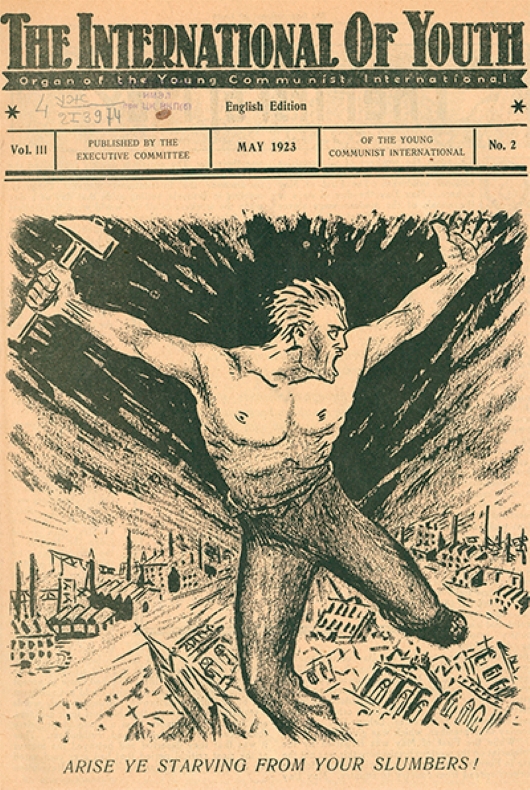
VI. As well as in the hot climate of Italy, the Youth movement develops in the cold climate of Sweden. Here the Social Democratic Union of Youth went over entirely to the platform of the Communist International (officially in July, 1919). During the war it was the only revolutionary Socialist organisation of Sweden, which struggled against the opportunism of Branting’s Social Democracy. In spite of some errors (disarmament and others) the Swedish Union has preserved strictly, up to the present day, its fine traditions of antimilitarist struggle, having once prevented a war between Sweden and Norway (1915—1918) and forming the chief obstacle to the Swedish activists: In the first period of its development, the Union went through a hard struggle with the “Young Socialists” (anarcho-syndicalists) which had split from it but who now represent an insignificant number.
During the war, as well as in the present moment—the centre of gravity in the work of the Union lay in the struggle with the social patriots. From this struggle was born the Swedish Left Socialist Party. Its leaders, among whom we will name our fine comrade Héglund—were educated in the Union of Youth. At the present time it is the Party’s chief support. One can find in it no trace of the humanitarian centre (Lindhagen and others) which still exist in the other parties, though without having a great influence there. The number of members of the Swedish Union grew from 18,717 members in 1917, to 30,000 members in 1920. Its splendid paper “Stormklockan” comes out weekly in 25,000 copies. Having with the Left Socialist Party a special printing office “Vpered,” the Union develops a wide publishing activity, publishing hundreds of books, leaflets, appeals, pamphlets and placards, paying special attention to information concerning life in Soviet Russia. Its verbal agitation is splendidly organised. Red motorcars, red boats—periodic agitation tours of the most eminent leaders of the Swedish Communist movement. All this can serve as an example for organisations of Youth of all countries. The Swedish Union pays its greatest attention to the work in the army having long ago revised its line of antimilitarist policy. The Swedish Union took the warmest part in the creation of the Communist International of Youth. It has a great (and very favourable) influence on the Youth movement of Denmark and Norway, and in the All-Scandinavian Association of Unions of Youth.
VII. In Norway the Youth movement carried on, beginning in 1907, a struggle with the opportunist elements of the Labour Party. This struggle especially increased after the October Revolution, caused the passing of the whole Norwegian Socialist Party to the Communist International in the spring of 1918. The same work is now being done by the Norwegian Union in the trade Unions, through their special clubs, organised according to different industrial branches. The anti-militarist campaign, founded on agitation inside the bourgeois army, is conducted with special energy. Conferences of revolutionary soldiers are being summoned, the last of them taking place in the beginning of February 1920.
The number of members of the Union amounts to 12,000; they are organised in 70 departments in 20 districts of the country. The weekly paper of the Union, “Class Struggles,” appears in 8,000 copies, and contains 8 large pages. The agitation work of the Union, especially in favour of Soviet Russia and the Communist International of Youth, is carried on with great success.
VIII. In Denmark the Youth movement is more weakly developed. Here the Social Democratic Union of Youth developed slower than the communists, which is explained by the general situation in Denmark. Only in October 1919 a strong Left Party split from the old Social Democracy, and fused with the formerly organised Revolutionary Party, which joined the Communist International. At the same time the Social Democratic Union of Youth also left the old Party. The internal dissensions between the social-patriotic minority and the revolutionary majority interfered severely with the organisation work of the Union. In February 1920 the social-patriots left the Union.
This fact will, no doubt, strengthen its work in gathering wide circles of young men, in spite of the fact that it has to give all its best men (Comrades Christensen, Helberg, Erwig and others) to the new Party. The Social Democratic Union of Denmark numbers at present about 10,000 members and publishes a fortnightly review, “Forward.”
IX. The revolutionary Youth movement in France is still in a very incomplete stage. The Socialist Youth organisation was greatly weakened by the war. Its National Committee maintained the point of view of “defense of the Fatherland.”
However the opposition inside the Union grew very rapidly, especially in the department of the Seine. Together with the development of revolutionary events in Europe, the organisation moved to the Left—”Longuetists” up to now have a predominance in the National Committee. The Seine Department, that of Marseilles and other organisations of the Union have already expressed themselves in favour of the Third International. The quarrel between the insignificant majority of Longuetists and the decided minority of Communists is bound up with the organisational “for or against autonomy”—that is, for or against the removal of the proletarian Youth from under the tutelage of the Centre, in order to reorganise itself under the Communist banner. One can affirm with confidence that in the nearest future the present minority will become the majority. On the other hand, the Syndicalist organisation of Youth, also little noticeable during the war, in its congress in September 1919, decided to join the Third International. But there, too, has remained a great deal of Syndicalist confusion, such as Neomalthusianism “as a revolutionary measure.” One can now confidently hope that the two organisations will unite under the Communist banner. Such a policy is carried on in France by the Executive Committee of the International of Youth. Now already, judging by the Paris “Humanité,” both organisations arrange combined meetings. France was not represented at the Berlin Congress at all, for technical reasons. A detailed report from the Socialist organisation of Youth was sent to the Congress, from which it could be seen that the French comrades consider themselves bound by the decisions of the International Congresses.
X. For the same technical reasons, the American delegate of the “Independent Young People’s Socialist League,” who was already in Stockholm, did not appear at the Congress. This small organisation during the war remained faithful to the International. Its president, comrade William Kruse, was condemned by the Chicago Court of Justice to several years of hard labour. As soon as he got out of prison he entered the group of the centre of the old Socialist Party. Therefore, between him and the organisation, which had become more revolutionised, there arose a conflict. The Young Peoples’ Socialist league elected as its President comrade Oliver Carlson, who stood on a revolutionary platform. The Party nominated Kruse as its candidate for that post, and in his hands remained the organ of the League. The chief point of discussion in the League was its relation toward the Socialist and the Communist Parties. The Congress, summoned in December 1919, which was to decide this important question, was dispersed by the American police. We are sure that the American Young People’s organisation will in the near future join the Communist Party and the Communist International of Youth. The cessation of internal dissent in the League, and the growth of the revolutionary spirit in the proletariat, promise a rapid enlargement of the ranks of the American Young People’s League, now numbering only 6,000 members.
In England the organisation of Youth formed itself only at the end of 1919. Up to that time there existed merely Socialist Sunday Schools for grown-up children. Then an organisation of Youth was formed in Glasgow, whose task was the Marxist development of its members. Its work was actually the continuation of the work of the Sunday schools. The new Union, which embraces all England, already resembles the Unions of Youth of the Continent. They have elected as their President Hodge, an eminent leader of the miners, who participated especially in the struggle for nationalisation of mines. Unfortunately up to now it has been impossible to determine the political colour of the new organisation.
XII. In Hungary the union of Youth was completely destroyed by the counter-revolution. A great number of the members of the Union were shot or are in prison. Only a small number succeeded in emigrating to Austria, from where they are endeavouring to reestablish (under unthinkably hard conditions) the activity of the Hungarian Youth in the way of organising small illegal groups of Young Communists. Before the overthrow of the Soviet Republic, the Union numbered about 120,000 members and took a great part in defense of the Republic and the Soviet organisations, paying the greatest attention to the reorganisation of the working youth and their education.
XIII. The small Swiss Socialist organisation of Youth (about 3,000 members) conducted during the whole war a revolutionary Socialist campaign against opportunism and the centre, especially in the question of “defense of the Fatherland.” After the destruction of the Zurich branch, and the Central Committee of the Union, in November 1917, which was followed by the seizure of the paper, “The Free Youth,” and the exile of the Union’s secretary comrade Munzenberg, the activity of the Swiss organisation of Youth was greatly weakened. This was aided also by internal quarrels within the Union, which arose in connection with the founding of an ultra-revolutionary Communist Party, and the undecided policy of the left group, of Social Democrats. These quarrels divert the Union’s attention away from its direct task of organisation and Communist education. The situation in the Swiss Union has improved. A new paper is published in Basle “The New Youth.” The centre of gravity is removed to organisation work. The struggle between the Union, Communist in spirit, and the Social Democratic Party, has again become sharper. The Central Committee of the Party has placed before the Union, as an imperative condition for its support, the withdrawal of the Union from any political activity and complete submission to the Party which was, of course, decidedly rejected by the Youth.
XIV. The Belgian “Young Guards,” who have behind them an old tradition of revolutionary anti-militarist struggle, who have carried through, during the German occupation, illegal international work stand now on a Communist platform. Their Brussels paper, “Socialism,” stands on the platform of the Communist International. The “Young Guards” boycotted the last elections to the Parliament, and for that reason the Belgian Socialist Party is going to expel them from membership.
XV. In Holland together with the Central Committee of Youth appointed by the opportunist party, (Organised on the model of the German “Working Youth”) there existed for a long time a revolutionary organisation “Zaer” (the Sower), working with the Dutch Communist Party and publishing the paper “The Young Socialist.” During the war was founded a revolutionary Syndicalist organisation of educated youth, which probably, in the near future, will join the “Zaer.” We consider it our duty to mention here the death of an eminent leader of the Dutch revolutionary youth, Comrade Van Amstel; which was the cause of Holland not being represented at the Berlin Congress.
XVI. The Spanish Organisation of Youth (5,000 members) passed entirely in the end of 1919 to the platform of the Communist International.
The Madrid organisation, numbering 1,500 members, conducted formerly some work in that direction.
XVII. Portugal up to now has only a Syndicalist organisation of Youth detailed information concerning which is lacking.
XVIII. Of the Balkan organisations the Greatest is the Socialist Union of Rumania (6,000 members) which publishes a fortnightly review “The Young Socialist” in 4,000 copies; until now it worked with the Rumanian Socialist Party, pushing it to the left. The question of the relations of the Rumanian Youth towards the Communist International up to now is not solved, though the predominance of the left wing is clear. The Bulgarian Communist Union of Youth, judging by its paper “Mladenskaja Pravda” develops its activity on very broad lines. In Servia the Socialist Youth movement was destroyed by the war. Now they have organized a Communist Union, numbering already about 2,000 members. We have practically no information concerning the groups of Greek Youth in Athens and Salonica, who conducted an international agitation during the war.
XIX. The Tchech organisation has lately decided to join the Communist International, and is supporting the left wing of the Party in its struggle against the opportunists and the Centre. It is publishing a paper “The Young Socialist.”
XX. In Poland the Communist organisation of Youth in spite of police persecutions, has its clubs in Warsaw, Lodz, Dombrov and other industrial centres of the country.
III.
I. The order of business at the Berlin Congress was printed in the previous number of the Communist International.
After greetings and reports from the delegates the Congress listened to a report of the representative of the Third International concerning the political situation. The chief thesis of the report, popularising the declarations of the first Congress of the Communist International, did not arouse special discussion. The discussion concerned in greater part tactical questions. But in the chief questions (Proletarian dictatorship, Soviet power, Red Terror, struggle with the Centre, and so on), the opinion of the Congress was quite unanimous. With the resolution concerning the report the of political situation, it was decided to consider as the first point the programme of the Communist International of Youth. The discussion of the programme, the plan of which was drawn by the Central Committee of the Russian Communist Union of Youth, formed the central point in the order of business, and aroused the greatest animation. On the question of parliamentarism, the congress expressed itself unanimously in favor of using it for revolutionary aims, adding that the participation in the elections must every time be decided by the national organisations, depending upon the conditions of time and place. Therefore, in spite of the desirableness of a revolutionary use of parliamentarism, the Swiss organisation of Youth was right in refusing to support the list of Social Democrats, which contained socialists from Greulich to…Platten; and the Belgian Young Guard, which boycotted the elections owing to the absence of Communist candidates. The political struggle, and the preparation during its process of hundreds of thousands of Young proletarian fighters—such is the first and chief task of the Unions of Youth at the present time. The discussion started long ago between the Social patriotic and Kautsky organisations of Youth (or old men with long beards but “young souls” on one side and the Communist unions on the other, is at an end. “The youth must not mix in politics! This is a matter for grown-ups. The Unions of Youth have merely theoretical and educational problems. They must not interfere in Party and political discussion”—such is the ideology of social patriots and members of the centre who are tutoring the Youth. “The Youth is the revolutionary part of the proletariat, its Vanguard in the struggle for Communism. The struggle itself is the best unrivalled measure of Communist education” such is the motto of the young Communists.
2. In connection with the question of political struggle of the Youth Unions is the question’ of their educational work.
Some of our comrades decidedly protested against the expansion of the educational work of our organisations in the direction of “unsocial” science and arts. They consider such work as luxury in the present times. The Austrian and Rumanian comrades declare that it would be an utter loss of time, energy and money, which must now be concentrated on one task, the overthrow of capitalism.
The Congress expressed itself on another aspect: Directly after the overthrow of capitalism comes the epoch of proletarian dictatorship and Socialist administration, when one cannot do without educated workmen. The working class, for a complete victory of Communism, must conquer every kind of knowledge and develop it further from the Marxist point of view. Also the Youth is striving for knowledge. If we do not give it to them, they will seek it in bourgeois and social patriotic organisations. Of course, when barricades are in the streets it is ridiculous to talk of educational work. But in the intervals between the barricades there are periods which one must profit in the consciences of the young fighters.
3. The same argument of “luxury” arose in the discussion of the question concerning the part played by physical development in the Unions of Youth. Here, in addition, was pointed out the danger of our organisations degenerating into sporting societies. But in this question the Congress accepted the point of view of the necessity to bring the elements of physical education into the Unions of Youth. Firstly, because we are striving to educate a man in harmony with everything—a man not only strong in spirit—but strong in body. Secondly, because under the incredibly hard conditions of work in bourgeois governments (prisons, trials, illegal existence) the physical health of the members of our organisation acquires a great practical importance for the whole movement. Thirdly, because the young like every kind of sport, and with a clever handling of this inclination the bourgeois leads the proletarian youth by their sporting instinct to a national and chauvinistic ideology (boy-scouts). Also sport can serve us as a means of gathering wide circles of young men—and thus bring them to serious political work. The question of the economic struggle of the Unions of Youth, that is concerning their work in defending children from the exploitation of capitalists and the reorganisation of labour on Socialist principles as soon as capitalism is overthrown—passed practically without discussion.
4. The decision on one of the most important questions of the movement of Youth—the question of militarism and the struggle against it shows how much the Youth movement has grown in the last ten years. At the Berne conference of 1915 the motto of “general disarmament,” especially respected by Kautsky, Wilson and also…the Scandinavian organisations of Youth—was still accepted. This motto of liberal pacifism is now finally swept away by the Berlin Congress. The experience of the peace at Versailles and the Russian, German and Hungarian revolutions, have proved that the bourgeoisie needs arms for future imperialistic wars, as well as for crushing the rising proletariat, and that therefore it would be an utopia to expect the banishment of armament without the banishment of bourgeois governments, Therefore the task of the proletariat is to prepare armed revolt, that is, the formation of Red Guards and Red Armies. The so called antimilitarism in principle did not find a single defender at Berlin. The relation of the Communist Youth to the social patriots and the centre and its organisations of Youth, is clear; it is—merciless struggle, revelation of their betrayal, as well as exposure of the beautiful sentences concerning the non-interference of the Youth in polities, of their self-sufficient part in the information of the world culture, and so on, under the flag of which they lead the vilest betrayal of the proletarian Revolution.
V. Much more serious was the question of the relations of the Communist Union of Youth to the Communist International. There is no doubt in the necessity of combining the work of these two organisations, of the closest relations between them. The only disputable question was of an organisational character, of certain “distribution of labour” between them, which is undoubtedly necessary. On this point the Congress enunciated two leading principles. 1) The organisations of Youth are not political parties, they accept the programme of the Communist Parties of their countries; 2) The organisations of Youth must be independent. This independence does not exclude an organisational connection with the party—on the contrary, it is necessary. This sums up the programme of the Communist International of Youth In the question of organisational relations of the International of Youth and the Communist International, the minority of the Congress considered that the International in regard to the Communist International is a fraternal organisation with equal rights. This minority based itself on the revolutionary traditions of independence of Youth, movements, and on the greater authority and activity of an international union of the proletarian Youth, if it were quite independent of the adults. The majority of the Congress, admitting that the International of Youth is a part of the Communist International, followed the chief principle of the present Communist movement—centralisation. In this lies the chief difference between the Third International and the Second. This principle would be overthrown if the Youth, the Women, every Trade Union and so on, having their International connections, would build them quite independently from the Communist International. It is clear that the admission of the International of Youth into the Communist International—meaning the recognition of the latter’s political guidance of its congress and executive organ—cannot deprive the International of Youth of its independence in organisational, agitative, and propagandist work, and of a free discussion of the most important questions of principles and policy of the World Revolution.
VI. Up to the present time, in some countries there have existed separate Socialist and Communist groups of students and even school children. Some of these as, for example, the group of the revolutionary students of Paris, have taken part in the struggle against the imperialistic war, and in warm support of Soviet Russia. The Congress had to express its relations towards them, moreover because an international Congress of student organisations was summoned in December in Geneva. In its declaration denying the necessity of special organizations of educated Youth, the Congress was guided by the following principles:
1) The necessity of bridging the chasm between the intellectual and physical workers.
2) The desirability of using the educated Communists for work among the proletarian youth.
3) The necessity of abolishing the unwholesome monopoly which the young educated class has acquired for the discussion of the school question, and of inviting broad circles of working youth to join this discussion.
The decision on the question of separating special groups of educated element within the general organisations of Youth, the Congress left discretion to the national unions, to decide according to the different conditions of Labour in different countries. We can certify with pleasure that the international union of Communist Student organisations (Geneva, December 1919) agreed with the point of view of our congress.
VII. The constitution of the International of Youth aroused very little discussion. Its leading principle is the centralisation of the world movement of the Youth, large powers and heavy responsibility of the executive organ. An important decision is that in each country only one organisation can be a member of the Communist International. This paces the members of the non-invited Austrian Social-Democratic and the German Independent organisation of Youth in a dilemma, they must either join the Communist Unions on the basis of their revolutionary program, or be excluded from every kind of international connection—for there is only one International up to the present. At the same time the rule which demands from all organisations entering the International of Youth, the recognition of the Berlin programme, establishes a homogeneity of formation without which it cannot struggle actively. The manifesto of the Congress of the Working Youth of All Countries (printed in of the Communist International) was accepted without discussion. It was a result of the accepted programme.
VIII. Having discussed a number of small, but important questions, indicated in the short report, published in Ne 9. of the Communist International, the Congress elected an Executive Committee of five comrades having an absolute authority for local organisation and capable of working. This Committee, having worked under the most difficult illegal conditions for five months, has proved to be worthy of the responsible task laid on it by the Congress. The Communist International of Youth is the largest, oldest and most experienced organisation of the Third International. It stands in the vanguard of the revolutionary battles of the present time, it is one of the foundations of Socialist construction and one of the guarantees for its success in the nearest future.
The ECCI published the magazine ‘Communist International’ edited by Zinoviev and Karl Radek from 1919 until 1926 irregularly in German, French, Russian, and English. Restarting in 1927 until 1934. Unlike, Inprecorr, CI contained long-form articles by the leading figures of the International as well as proceedings, statements, and notices of the Comintern. No complete run of Communist International is available in English. Both were largely published outside of Soviet territory, with Communist International printed in London, to facilitate distribution and both were major contributors to the Communist press in the U.S. Communist International and Inprecorr are an invaluable English-language source on the history of the Communist International and its sections.
PDF of full issue: https://www.marxists.org/history/international/comintern/ci/old_series/v01-n11-n12-1920-CI-grn-goog-r3.pdf
 Revolution's Newsstand