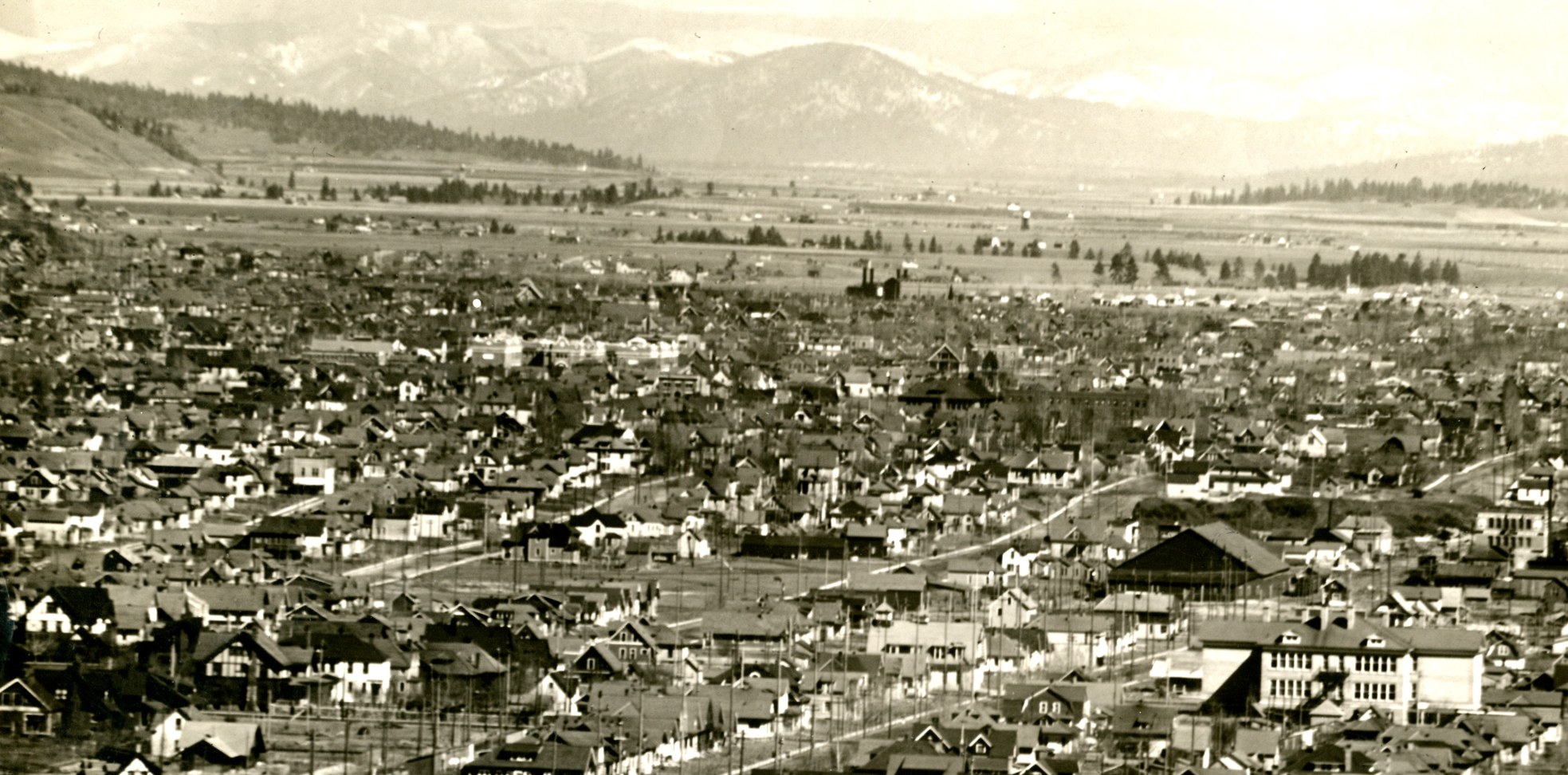
The I.W.W.’s ‘Industrial Union Bulletin,’ published in Chicago, folded in early 1909 after the split with the S.L.P. and a financial crisis. Spokane, with its 4,000 members placed at the center of a growing region, was chosen as the publication sight for a new effort, the ‘Industrial Worker’ focused on the Western I.W.W. Below, a look at the economy, politics, and wobbly activity in the city at the time. Shortly after this writing, Spokane would be the scene of among the most violently contested I.W.W. ‘free speech’ fights.
‘Industrial Union Grows in Spokane’ from Industrial Worker. Vol. 1 No. 19. July 22, 1909.
The progress of the Industrial Workers of the World so far has not been so much in the direction of gaining control of the industries of Spokane, such as they are, but rather has it been due to a persistent and successful attempt to organize the workers in the industrial district tributary to Spokane. The real industries of Spokane are not those of an important nature in a productive sense. The Washington Water Power Co. is the chief power in a literal and physical, as well as a “political” sense. The real estate sharks and the grafting bogus mining companies compete with the disreputable quacks. Both prey on the lack of education on the part of the gullible. The Washington Water Power Company controls the Spokane river where it falls over the rocks, and the water power and energy of Nature are harnessed by thieves to extort profits from the people and to employ the most spiritless and unmanly scabs that ever operated a street-car line. The Washington Water Power Co. also operates a “union” called the Independent League of American Workingmen. Bosses and slaves can all be members of this outfit as well as of the American Federation of Labor which includes such contractors as the notorious Thomas Maloney and spiritless slaves who will let their wives go hungry, rather than have the manhood to fight the robbers.
Industrial control of this town must necessarily include control of the industries on the outside which support it. The I.W.W. is already the largest union in the town, and that in spite of the politicians and the opposition of the employing class from the Washington Water Power Co. down to the police judge–that matchless patriot. The I.W.W. in Spokane numbers about 4,000 members and we have already been a thorn in the side of the employment agents to the extent that they have passed a law abolishing the employers’ U.S. Constitution which recognizes negro slavery and also free speech.
Not being a charity or “benevolent” organization, the I.W.W. has for its chief purpose the bringing on of a revolution. The many cases of sickness and wounds received by the members at the hands of the enemy, have made it advisable that a sick or injured member receive some little temporary relief, rather than be forced to depend on charity of the fellow workers. To this end we have in Spokane a hospital fund which is sustained by dues at the rate of 50 cents per month from those members of the I.W.W. who are willing to take advantage of it. A member in good standing who has a hospital stamp in his book is entitled to hospital benefit at the rate of $10.00 per week for ten weeks while sick and disabled or crippled from injury. This is but a small item and merely serves in cases of emergency for those who would otherwise be left to the tender mercies of the enemy. On the whole, general satisfaction has resulted from the hospital benefit plan, though there have been a few complaints from those who have not complied with the rules laid down by the union in regard thereto, and who presented claims which were unfair to the union and the other fellow workers who contribute.
We have the largest union ball in the city which will seat about 800 people with comfort and more in an emergency. Four meetings a week with lectures on industrial union are having an enormous influence in stirring up discontent on the part of the overworked and underfed slaves and great results are looked for during the coming fall and winter.
“The Unemployed Problem.”
Because our members are not recruited from the ranks of the cowardly and spineless home-guard, we are often called the slum element and the undesirables. This, coming from the politicians–those friends of humanity–and the respectable employing class is flattery to us who have seen our members by the scores going to jail in defense of our natural right of free speech. The backbone of the working class in the Northwest is, of course, found in the ranks of the I.W.W. The members of the separated unions are not, as a rule, moved by considerations of duty and courage is a foreign word to them! Some few men in the last nine years have, even in Spokane, had the matchless bravery to vote for socialist friends of labor when their masters had an election, but there it ends. From the bartenders separated union, whose walking delegate gets $50.00 per week, down to the editor of the separationist paper, “The Labor World,” the jail has yawned in vain for the organizers and officials of Mr. Taft’s A.F. of L. Most of these, lackeys of the employing class, whether they support their masters on the industrial or the “political” field, must finally be forced to stand with the I.W.W., not from principle, for that is lacking, but from compulsion. Think how degrading it would be for a fat bartender to be in the same union with the lumber-jack whom he has just made drunk and perhaps “rolled”! The discontented, the independent, and therefore the jobless, are the first ones to join the I.W.W. The time is not far distant when with the outside industries organized, especially the mining, the lumber, and the farming industries, the “unemployed” in Spokane will no longer be driven out of town through the snow by a policeman on horseback or sent to the chain-gang by Mann, the police judge. Industrial control will answer a thousand questions asked us by the preachers, the grafters, the politicians, whose questions are pointed by a bayonet or the policeman’s club. The outrages which have been enacted on the members of the working people of Spokane, from the clubbing and wounding of Paul Seidler at the hands of a deputy sheriff. down to the arrest of our members for speaking) on the street, and the brutal kicking of Albert V. Roe by Policeman Jellsett will bear fruit in time to come! May we be able to hurry the day when not we, but our mortal enemies will be before the unanswerable bar of industrial power.
The Power of Music in the Revolution.
With the number of military bands, among which is that at the army post at Fort Wright, and with the religious music of the masters from the pipe-organs of the churches up to the grand strains of the Salvation Army, the masters are availing themselves of the influence of music to stir up hatred for our Japanese and “foreign” brothers, and to lull to sleep the cradle cries of the infant revolution. Some of the songs which have been composed by our members are not necessarily pearls of literary composition. They are the plain outcry against the every day robbery of the employment sharks and the foul conditions of the modern “ergastulaae,” the grading and lumber camps. No doubt the sound of “La Carmagnole” was unpleasant and unrefined to the ears of the aristocrats of France a hundred years ago, but the aristocrats perished to the sound of that same “Carmagnole.” We have advanced to the point where it is no more necessary to cry “to the lamp-post,” with the employers: but what could be more tragic than the cries of the working class industrially organized–“to the gravel pit with the employment sharks”? Brace up!
This is no pipe-dream. Only get in and hustle for the union, and the enemy is ours!
The meetings of the I.W.W. in Spokane have also been made attractive by instrumental and vocal music. We have our own brass band and a fine plano which enliven the meetings of the union. These with an up-to-date moving picture machine add entertainment to the talks an economics. Rather than drawing away attention from the revolutionary principles of the I.W.W., these factors have greatly roused interest. It is certain that time and money spent in the encouragement of those’ with a musical talent, are well repaid in the added results to the organization of the working people. Europe’s map was changed by the sound of the Marselllaise. Can not America’s industrial geography be changed to the sound of “The Red Flag”?
The Industrial Unions of Spokane.
There are now four working industrial unions in Spokane and vicinity. The Mixed Local, No. 222 was the first chartered and dates from the foundation of the I.W.W. Next, the Public Service Workers’ Industrial Union, No. 434; the Building Constructers’ Industrial Union, No. 223; and the Hotel and Restaurant Workers’ Industrial Union, No. 132. These unions are all in a flourishing condition and growing dally. They total up about 4,000 members. The affairs of the I.W.W. in Spokane, as far as related to matters pertaining to all the industrial unions; propaganda, the renting of the hall, the paying of general expenses, etc., are attended to by the Executive Committee which is composed of two members from each industrial union. This committee meets once a week or oftener if necessary, to audit and pay bills, arrange meetings, and do all such things as are generally for the welfare of the I.W.W. in the locality. The members of the committee act under instructions from the unions they represent, and the Secretary of the Executive Committee is present in the hall all day to transact the running business, receive dues, issue cards, attend to calls for workers, etc. Many employers come to the hall after men, and it is expected that our own labor exchange will before long take the place of the employment agencies, those dens of thievery. The Spokane Industrial Unions also print the “Industrial Worker,” which is issued through the Executive Committee, which employs an editor for that purpose. The local I.W.W. paper is a growing power in the Pacific Northwest, and the workers are already referring to its columns to learn the industrial conditions, and to find out about jobs, the state of the Union and matters of interest to the working people. The growing power of the I.W.W. in Spokane is not due to any favorable conditions in this section. Far from it! Our advance has been made by the efforts of the members, the rank and file, and the organizers which have been so heartily assisted by the membership in general.
The coming year gives the most faint-hearted–and there are few faint hearts among a body of revolutionists–the greatest encouragement for the future welfare of the I.W.W. What with the visits of Elizabeth Gurley Flynn, and the fact that the National Organizer, Fred W. Heslewood will make Spokane his headquarters from now on, the prospect is certainly bright for the ONE REVOLUTIONARY LABOR UNION FOR ALL WORKERS, THE I.W.W.
The Industrial Union Bulletin, and the Industrial Worker were newspapers published by the Industrial Workers of the World (IWW) from 1907 until 1913. First printed in Joliet, Illinois, IUB incorporated The Voice of Labor, the newspaper of the American Labor Union which had joined the IWW, and another IWW affiliate, International Metal Worker.The Trautmann-DeLeon faction issued its weekly from March 1907. Soon after, De Leon would be expelled and Trautmann would continue IUB until March 1909. It was edited by A. S. Edwards. 1909, production moved to Spokane, Washington and became The Industrial Worker, “the voice of revolutionary industrial unionism.”
PDF of full issue: https://www.marxists.org/history/usa/pubs/industrialworker/iw/v1n19-jul-22-1909-IW.pdf
 Revolution's Newsstand