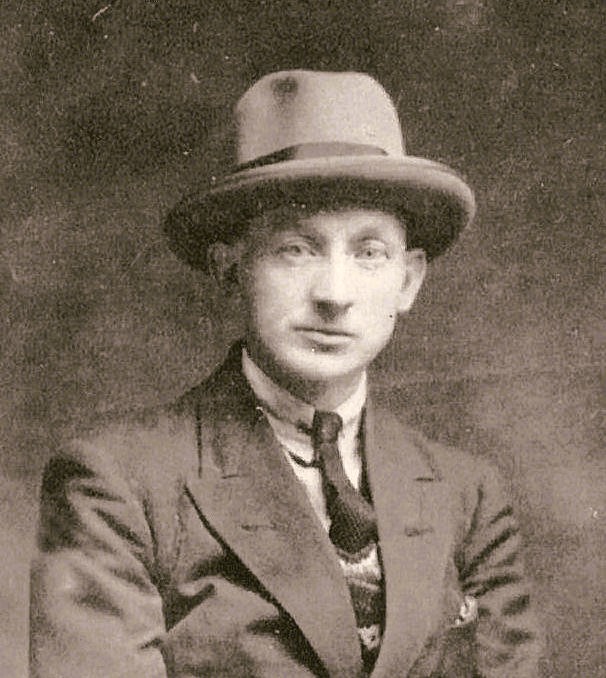
Ireland saw a counter-revolution in the 1920s and the once vanguard labor movement went into deep decline. Here, Jack Carney, then Executive Secretary of the Irish Worker League, with a two-parter on Irish labor in the late 1920s.
‘The Crisis and Future Irish Labour’ by Jack Carney from International Press Correspondence. Vol. 9 Nos. 6 & 9. February 1 & 22, 1929.
Since the rout of the Irish Labour Party at the last general election, the party has gone from bad to worse. Within the inner councils there were hot discussions. The division within came out in the open at the recent election of officers for the Irish Senate. The Labour Party put forward a candidate for vice-chairmanship, an office carrying with it a salary of £1000 per year. Senators Foran and Duffy, both members of the Irish Transport and General Workers Union, voted openly against the nominee of the Party. Johnson, on his election as a senator had announced his resignation as secretary; following the vote of Senators Foran and Dully, R.J.P. Mortished, considered the “intellectual” head of the Party, tendered his resignation.
Previous to this there had been on foot in Dublin an alleged “Unity” movement, which claimed to bring about the unification of the workers of Ireland into one organisation. Unions that were Irish and were the result of opposition to British unions joined with the latter in this alleged unity move. The new council in Dublin met, and at the second meeting the Irish Transport & General Workers Union withdrew, leaving the situation as it was before the move was made for unity. The new council sits but carries no weight with the workers. On important issues it remains silent and at times brings itself before the public by a deputation to poor law authorities appealing for a few more shillings extra relief, while other unions are battling for the development of employment schemes to absorb the growing army of unemployed.
The fight in Ireland, along trade union lines, is one for the organisation of Irish workers into Irish unions. Recently Ernest Bevin visited Dublin. He received such a hostile reception that he retired before the running fire of Irish trade unionists. In Belfast there were more speakers on the platform than there were workers in the audience. The reason for this is not far to seek. The wages of transport workers in England are from £1 to 28- less than what they are in Ireland. If the Irish transport workers were organised into the British union, a national agreement would find wages reduced from 13 to 9 shillings per day. Where Bevin’s union has gained a foothold, as for instance, in the Dublin tramways, the workers have had to submit to a reduction of five shillings per week. Every worker on the tramways is compelled by his employer to belong to Bevin’s union.
The strongest British union in Ireland is the National Union of Railwaymen. It finds itself faced with the growing strength of the Workers Union of Ireland. Rationalisation has reflected itself to a large extent in the railway construction shops of England. Here the railway workers work for 20 to 25 shillings per week less than the Irish workers similarly employed. The result being that members of British unions in Ireland are being dismissed because members of the same union in England are doing the same worker cheaper. The result that follows is the dismissal of Irish workers from the railways of Ireland. The Workers’ Union of Ireland has had to bear the brunt of the battle because the dismissals were directed at the beginning against the semi-skilled and unskilled, the majority of whom are organised in the Workers Union of Ireland. Now come the railway directors and dismiss the running staff and also demand reduced wages. The National Union of Railwaymen, due to the policies of the leaders, Thomas, Cramp & Co., stand helpless before the attacks of the railway companies. The men grow restive and so the mass meetings of the Workers Union of Ireland are the largest in the country and its membership increases daily. There have been up to date over 2500 Irish railway workers dismissed. The Workers Union of Ireland has brought the fight from the industrial field and now demands that the railways of the country be taken over and controlled by a national council composed of representatives of the workers. This move has been enthusiastically received by the railway workers. The officials of the British unions are afraid to face this issue before their own membership, and so out of these day to day struggles the demand for Irish workers in Irish unions grows.
The demand of the Opposition in the Free State parliament for lower taxation, occasioned by the serious depression of Irish agriculture and the competition of British trusts, finds the employers demanding from the Government either reduced taxation or reduced wages, in this struggle the Government tries to retrieve its position by making itself the leader in the fight for lower wages. The rank and file of the trade unions demand action. The class collaboration policies of the Irish Labour Party and Trade Union Congress are opposed to any strikes. The representatives of trade unions against whom the fight is directed find themselves differing with leaders of the party, who turn more to middle class support for a coalition to form a government. As the fight grows more intense the demands upon the trade union leaders grow more insistent. Hence this split within Irish Labour Party.
The “industrial” leaders of the Labour Party cannot regain the confidence of the rank and file. The condoning of executions, the open incitement to direct war upon the rebel forces and the pacts between them and the employers, have made it forever impossible for them to regain their control over the working class. Small unions under the domination of former large unions like the Irish Transport and General Workers Union now fight to throw off this control. Each day finds them involved in a struggle and each day finds them turning to the Workers Union of Ireland which has the largest number of unskilled workers organised in Ireland. During the “stable” years, when the country was torn in twain with an armed struggle, the price paid for the treacherous neutrality of the Right Wing was a class collaboration agreement. Today the employers feel comparatively secure. Rank and file workers throughout Ireland are now awakening. The crisis within the Irish Labour Party is proof positive. The Irish Labour Party can never return to anything like its former position. It lies discredited and broken, a warning to all those who believe that they can fool all the workers all the time.
The Future of Irish Labour.
The area under wheat, over the whole of Ireland, for the year 1928 declined by four thousand acres, or a total production decline of seven thousand tons. In the Irish Free State there were an additional four thousand acres put under wheat cultivation, yet the weight of grain harvested was by over thirty thousand tons less than 1927. In the North of Ireland the area under oats was reduced by two thousand five hundred acres, but the total crop increased by one thousand tons. There has been more barley sown, with the increase in area all over Ireland of eight thousand seven hundred acres, though production declined by two thousand seven hundred tons. We have a similar situation in regard to potatoes, the area under which, for the whole of Ireland, increased by one thousand six hundred acres, but the production declined by one hundred thousand tons.
The farms are composed of what are known as agricultural holdings. These holdings have been heavily mortgaged as a result of the severe decline in agriculture. This decline is due to the tremendous scale upon which agriculture is conducted in Canada, America and the Argentine, also the efficiency of Danish agriculture, in comparison to Irish agriculture. Any attempt to combat this decline in Irish agriculture by a continued resort to the old established methods is foredoomed to failure. The farmers are not in a position to meet their mortgages, consequently they are not in a position to buy the essential machinery.
The banks have been suing farmers for the money advanced to them. In all cases they have obtained court decrees, but they have been unable, on account of the poverty of the farmers, to obtain any return of monies loaned. Where farms have been put up for auction they have had to be withdrawn owing to lack of bids, again due to lack of money. The banks are now taking over the farms and putting the farmers into them as managers. In other words, the banks are going into the agricultural industry instead of loaning money to the farmers.
Henry Ford has decided to have all tractors for European countries made in Cork, Ireland. The new tractor-combine, together with the hydro-electrical power to be generated from the Shannon Scheme, where it is estimated there will be an excess of 155,000,000 horsepower within a short time, is going to change the whole face of Irish agriculture. The control of Irish farms by Irish banks, that is, by British finance capital, will mean mass production in Irish agriculture. Peasant proprietorship will receive its death blow.
The Shannon Scheme is also going to mean the decentralisation of industry and instead of the large industrial centres of Ireland being confined to the sea coast, the inland territories will be opened. Already a copper mine, with an immediate output of 4,000 tons, has been located in County Kerry. This opening up of the inland part of the country will mean the breaking down of the division between the town and country.
The major political parties view these changes in terms of commercial prosperity. They will battle against the workers in order through the bait of cheap labour to attract foreign capital. De Valera speaks in the euphonious language of “living a more simple life”. Cosgrave is as direct in his opposition to the workers as Mussolini. The Irish Labour Party passes out from the political life of the Irish working class unhonoured and unsung. The opportunity for a real Workers’ and Peasants’ Party presents itself. This party will have to fight for the immediate needs of the masses and slowly restore the confidence of the masses. Betrayed and disillusioned, deluded with the idea that the gun is a substitute for education and organisation, misled by pseudo-Communists, the working-class of Ireland present a serious problem and the task of organising them into a Workers’ and Peasants’ Party is no light one.
Arising out of the recent dismissals of engine drivers and firemen on the Irish Free State Railways, a division has been created in the ranks of railway workers engaged in running the trains. The transfer of men from Dublin to Cork, Waterford and other cities and the consequent displacement of men from these cities has led to complete ostracism of the transferred workers. In the case of Cork it was found impossible to secure lodgings for the transferred men and when a hotel was secured, the windows of the hotel were smashed by the sympathisers and supporters of the dismissed men. The bungling attitude of the British trade union leaders, Cramp, Gore, and others of the British unions has created a feeling of deep resentment in the minds of the Irish railway workers. A rank and file committee is already at work and is receiving widespread support from all sections of the railway workers. The objective of this committee is an Irish Railway Industrial Union.
The steady and consistent work of the elements ranged around the Workers Union of Ireland is bearing good results. The work of this militant section of the Irish working-class has been rendered somewhat difficult by the failure of alleged Republicans (“Anti-Imperialists”) to realise the necessity of welding the national struggle along with the class struggle. The fight of the employers, backed by the Government; the rationalisation of Irish industry; the bank control of Irish farms, together with the tremendous economic development that will come through the inauguration of the Shannon Scheme, will mean the welding together of the industrial and agricultural workers of Ireland. The Irish revolutionaries will be saved the problems of the U.S.S.R. in regard to the peasantry.
The future of the Irish working-class and peasantry is none too rosy, but with a nation wide campaign among the industrial workers, on the lines of industrial organisation as against craft organisation, and a campaign of education among the peasantry, the success of the revolutionary movement in Ireland is assured.
International Press Correspondence, widely known as”Inprecor” was published by the Executive Committee of the Communist International (ECCI) regularly in German and English, occasionally in many other languages, beginning in 1921 and lasting in English until 1938. Inprecor’s role was to supply translated articles to the English-speaking press of the International from the Comintern’s different sections, as well as news and statements from the ECCI. Many ‘Daily Worker’ and ‘Communist’ articles originated in Inprecor, and it also published articles by American comrades for use in other countries. It was published at least weekly, and often thrice weekly.
PDF of full issue: https://hdl.handle.net/2027/uva.x002078458
 Revolution's Newsstand