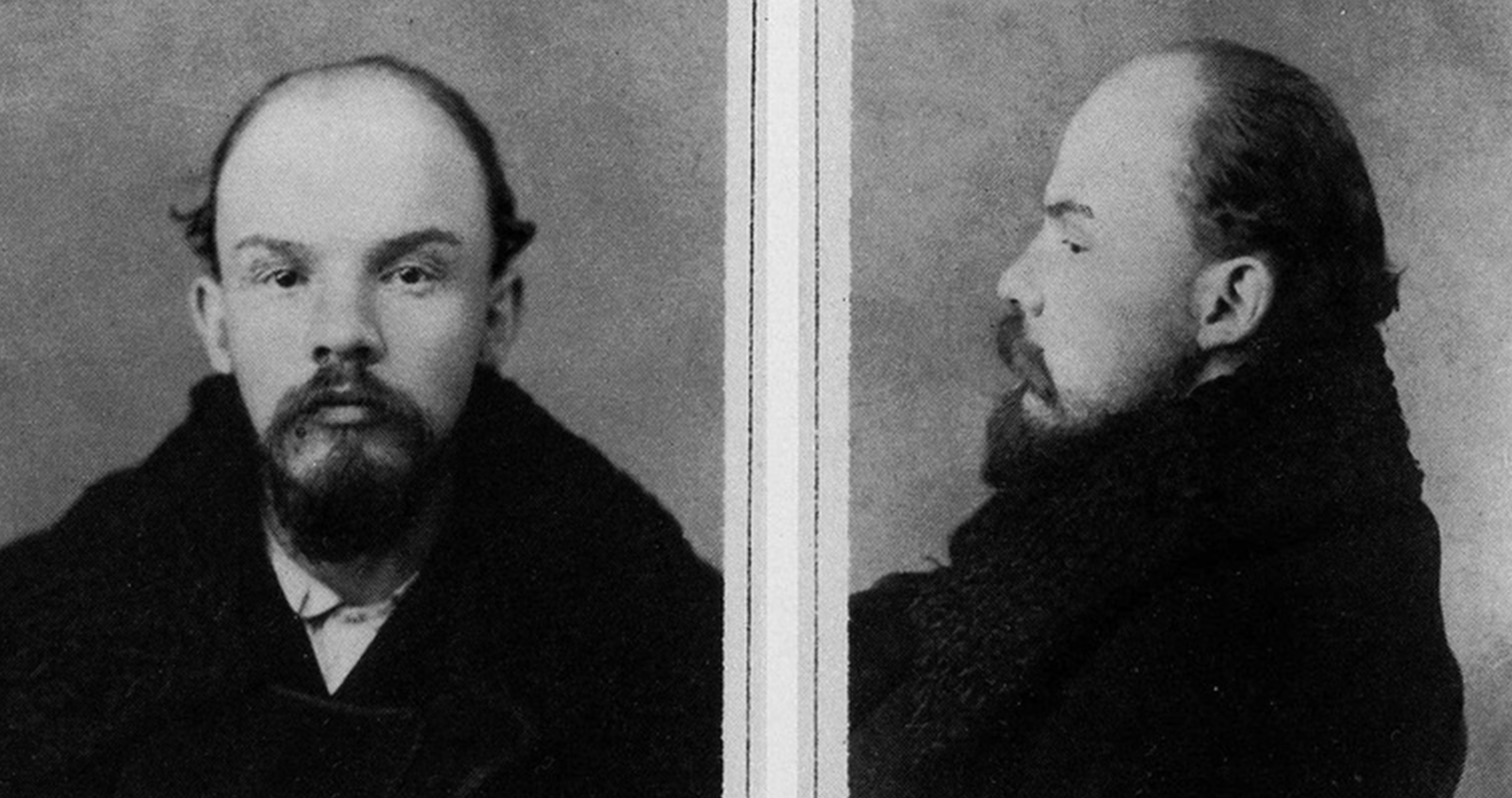
An unpublished article of Lenin’s from the end of December, 1917 or early January, 1918 found by his sister, Maria Ulyanova.
‘Those who are Terrified by the Collapse of the Old and Those who are Fighting for the New’ (1918) by N. Lenin from International Press Correspondence. Vol. 9 No. 8. February 15, 1929.
The following article, hitherto unpublished, was written by Lenin at the end of December 1917 or at the beginning of January 1918. The original manuscript was recently handed over by Comrade Uljanova to the Moscow Lenin Institute. Editor.
“The Bolsheviki have already been in power for two months, and instead of the socialist paradise we see a hell of chaos, of civil war and a still greater decay than before”, so write, say or think the capitalists and their conscious and semi-conscious adherents.
The Bolsheviki have been in power only two months, we reply, but we have already made a tremendous step forward to Socialism. Those who do not see this either do not wish to see it or are incapable of judging the historical events and their connection. These people will not see that the undemocratic institutions in the army, in the village and in the factory have been almost completely destroyed in a few weeks. There is not nor can there be any way to Socialism except the way through this destruction. They will not see that, in place of the imperialist lies in foreign policy, which prolonged the war and cloak the robbery and annexations with secret treaties, there has been set up a real, revolutionary democratic policy, a real democratic peace; these can already point to such a practical success as the armistice and the hundredfold increase of the propagandist forces of our revolution. These people do not wish to see that workers’ control, the nationalisation of the banks are in course of being realised; these are, however, only the first steps to socialism.
Those people who, blinded by the routine of capitalism, deafened by the tremendous collapse of the Old, by the noise, by the crash, by the “chaos” (an apparent chaos) of the sinking and collapsing century-old edifice of Tsarism and of the bourgeoisie, terrified by the extreme intensification of the class struggle, by its conversion into a civil-war, into this sole just, sole sacred–sacred not in the priestly but in the human sense of the word–war of the oppressed against the oppressors for the overthrow of the oppressors, for the emancipation of humanity from every yoke, cannot understand the historical perspectives. As a matter of fact all these blinded, deafened and terrified bourgeois, petty-bourgeois and “lackeys of the bourgeoisie”–often without knowing it themselves–allow themselves to be guided by those old, naive, sentimental, intellectually tasteless conceptions regarding the introduction socialism, which they know from “hearsay”; they seize upon single fragments of socialist doctrine, they repeat everything which the ignorant and semi-ignorant concoct regarding this doctrine and impute to us Marxists the idea, in fact the plan, of “introducing” socialism”.
Such ideas, not to mention such plans, are alien to us Marxists. We knew and repeatedly said that one cannot “introduce” Socialism; that it grows up in the course of the most strenuous, severe—severe to raging, to desperation–class struggle and civil war; that between capitalism and Socialism there lies a long period of “birth pangs”; that force is always the midwife of the old society; that the transition period from a bourgeois to a socialist society corresponds to a special State (i.e. a particular system of organised force over a definite class), that is, the dictatorship of the proletariat. The dictatorship presupposes and means the condition of a shattering war, a state of war-measures against the opponents of the proletarian Power. The Commune was the dictatorship of the proletariat; and Marx and Engels reproached the Commune with the fact, and considered it as one of the causes of its collapse, that it did not make sufficiently energetic use of armed power for suppressing the resistance of the exploiters.
To all intents and purposes all this intellectual outcry over the suppression of the resistance of the capitalists represents nothing else but a repetition of the old “compromising tendency”, to put it politely. If however, one wishes to speak with proletarian candour, then one must say that, in essence the outcry against the present proletarian force which is being employed (unfortunately still too feebly and without sufficient energy) against the bourgeoisie, against the sabotagers, against the counter-revolutionaries is: continued funkeyism. “The resistance of the capitalists is broken” the good Pechechonov, the opportunist Minister announced in June 1917. The good fellow never dreamed that the resistance must be really broken, that it will be broken, that this breaking means, in scientific language, the dictatorship of the proletariat, that the suppression of the resistance of the capitalists and, therefore, the systematic application of force against a whole class (the bourgeoisie) and its confederates, characterises a whole period.
The greed, the dirty, malicious, savage greed of the money-bags, the fear and servility of those who eat their bread, this is the real social basis of the present outcry of the intellectuals, from the “Rjetch” up to “Novaya Shisn”, against the employment of force by the proletariat and the revolutionary peasantry. That is the objective meaning of their howl, their miserable talk, their farcical cry for “liberty” (liberty of the capitalists to oppress the peoples) and so forth. They were “prepared” to recognise Socialism if humanity could arrive at it at once, by an effective jump, without quarrels, without a fight, without gnashing of teeth on the part of the exploiters, without the numerous attempts on the part of the exploiters to defend the old order or to return to it by devious clandestine ways, without such attempts always evoking the fresh “replies” of revolutionary proletarian violence. These intellectuals, who eat the bread of the bourgeoisie, were “prepared”, in the words of the well-known German saying, to wash the fur without making it wet.
The bourgeoisie, and the officials, clerks, doctors, engineers etc. who are used to serving it, resort to the most extreme means of resistance. That frightens the intellectuals. They tremble with fear and they howl and whine still louder regarding the necessity of returning to “compromises”. We, however, and all sincere friends of the oppressed classes can only rejoice at the extreme resistance of the exploiters, as we expect the maturing of the proletariat to power not from bargaining and persuading, not from the school of sweet sermons or learned declamations but from the school of life, from the school of struggle. The proletariat must learn to be the ruling class and finally vanquish the bourgeoisie: it does not acquire such a capacity all at once. It must learn it in the fight. And only a serious, obstinate, desperate fight can drive home this lesson. The stronger the resistance of the exploiters, the more energetically, the harder, the more ruthlessly and successfully will they be crushed by the exploited. The more numerous the attempts and the efforts of the exploiters to defend the old, the more rapidly will the proletariat learn to drive its enemies out of their last retreat, to tear up the roots of their rule and to destroy even the ground from which wage slavery and the profit and the liberty of the money-bags could (and must) grow up.
The extent to which the resistance of the bourgeoisie and its servants grows, to the same extent grows the force of the proletariat and the peasantry allying itself with it. The exploited become stronger, mature, grow, learn and exterminate the “old Adam” of wage slavery to the same extent as the resistance of their enemy, the exploiters, grows. The victory will go to the exploited, for life is working for them, for they have on their side the force of numbers, the force of the masses, the force of the inexhaustible sources of all self-sacrificing people, of all the honest, of those who are urging forwards, of those who are advancing to the building up of the New, the gigantic reserves of energy and talent of the so-called “simple people”, of the workers and peasants. To them belongs the victory!
International Press Correspondence, widely known as”Inprecor” was published by the Executive Committee of the Communist International (ECCI) regularly in German and English, occasionally in many other languages, beginning in 1921 and lasting in English until 1938. Inprecor’s role was to supply translated articles to the English-speaking press of the International from the Comintern’s different sections, as well as news and statements from the ECCI. Many ‘Daily Worker’ and ‘Communist’ articles originated in Inprecor, and it also published articles by American comrades for use in other countries. It was published at least weekly, and often thrice weekly.
PDF of full issue: https://www.marxists.org/history/international/comintern/inprecor/1929/v09n08-feb-15-1929-inprecor.pdf
 Revolution's Newsstand