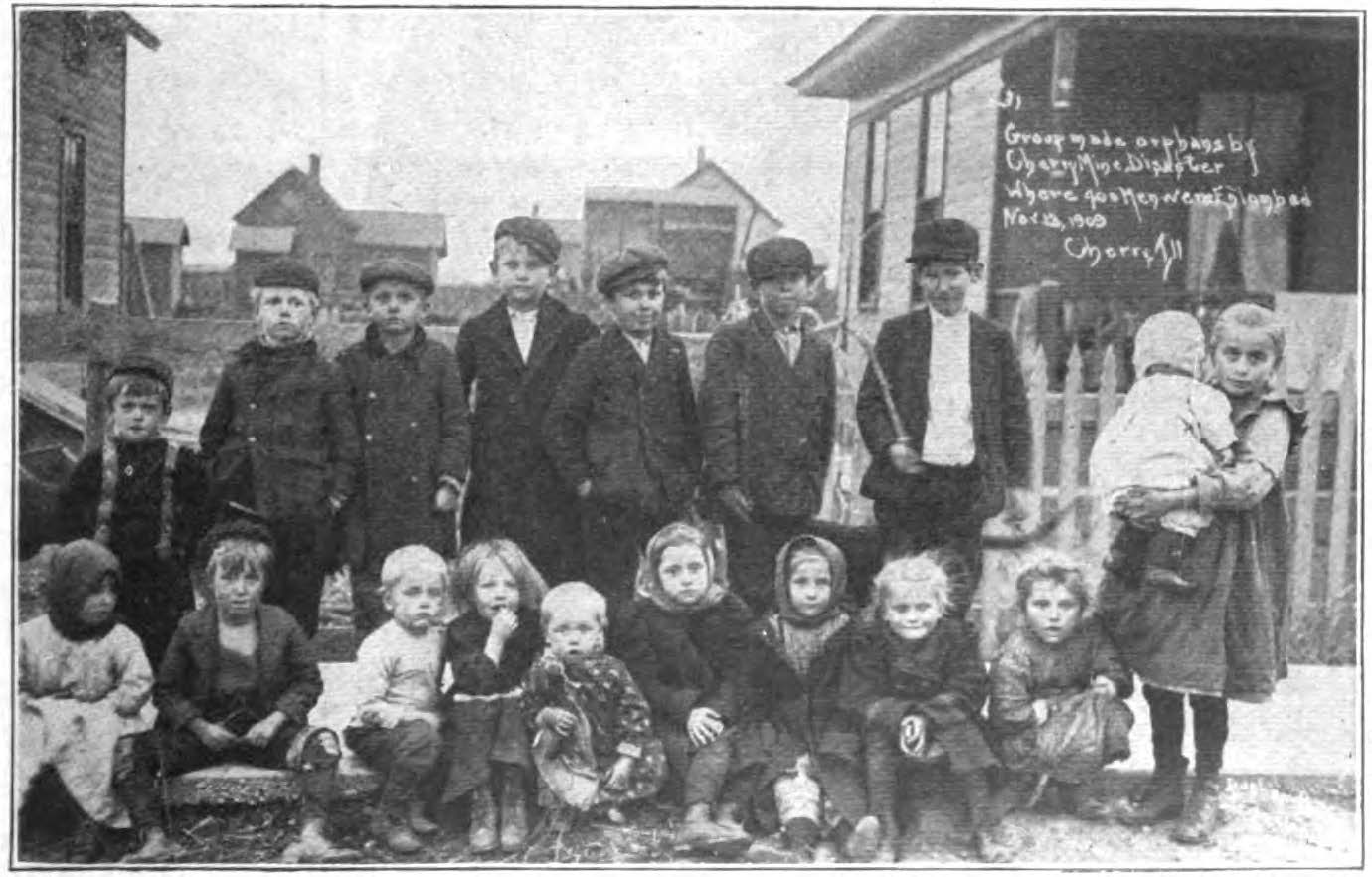
On November 13, 1909 two hundred and fifty-nine men and boys working in the mines of Cherry, Illinois were incinerated in a fire, leaving over one thousands children without fathers as winter began. Theresa Malkiel on the child victims of capitalist profit.
‘One Thousand Orphans’ by Theresa Malkiel from The New York Daily Call. Vol. 2 No. 289. November 25, 1909.
How little can the rich man know
Of what the poor child feels,
When hunger like some dark demon foe,
Nearer and nearer steals.
In a calm, unconcerned tone, as if announcing the outcome of a football game, the capitalist press tells us that there are one thousand orphans left at Cherry, Ill.
Heart-broken and silent these orphans crowd around the burning mines. Their eyes are fixed on the ground under which their fathers are fast passing away from the world of the living. At times their parched lips move and from them comes an agonized cry for their dear ones, the cry that would come from the throat of our children were we on our death bed. But above it, and drowning it comes their cry for bread.
Mothers and fathers of the working class, think of it–one thousand fatherless waifs whose heart-rending cry: “Daddy, a bit of bread!” echoes through the land, even before the unfortunate wage slaves are brought to the surfaces.
Who will help these poor, forlorn ones on this wintry morn?–who will come to console the wretched widows, to nurse the dying children as they lie pale and quivering for want of food.
A few years ago when the miners struck for better wages the almighty Baer told them that God in His infinite wisdom had appointed him the guardian of the coal regions and he alone knew what was good for them.
Driven by the knout of a capitalist government, by want and starvation, the rebellious miners bowed low and submissively went back into the deep bowels of the earth to risk limb and life, not for themselves, for what did they get beside food to drag on their miserable existence?–but for the benefit of Mr. Baer.
They have obeyed faithfully the dictates of state and church to uphold the laws of race preservation and have multiplied accordingly.
Never thinking that by doing so they were supplying their fast dying ranks with new martyrs. They had no time to think. Their whole life was one continuous performance for the benefit of the rich. A grim moving picture show. Day in and day out from morn till night they traversed the inner layers of the earth, sending forth to the world warmth and light, which meant comfort and cheer.
Now they are gone, buried alive like a horde of obnoxious rats, just as winter with its keen frosts and winds is knocking at the door. The miners did not save any coal for their own grates, though tons upon tons lie over them. They did not provide their unfortunate orphans with warm clothes–they could not, had they wanted to.
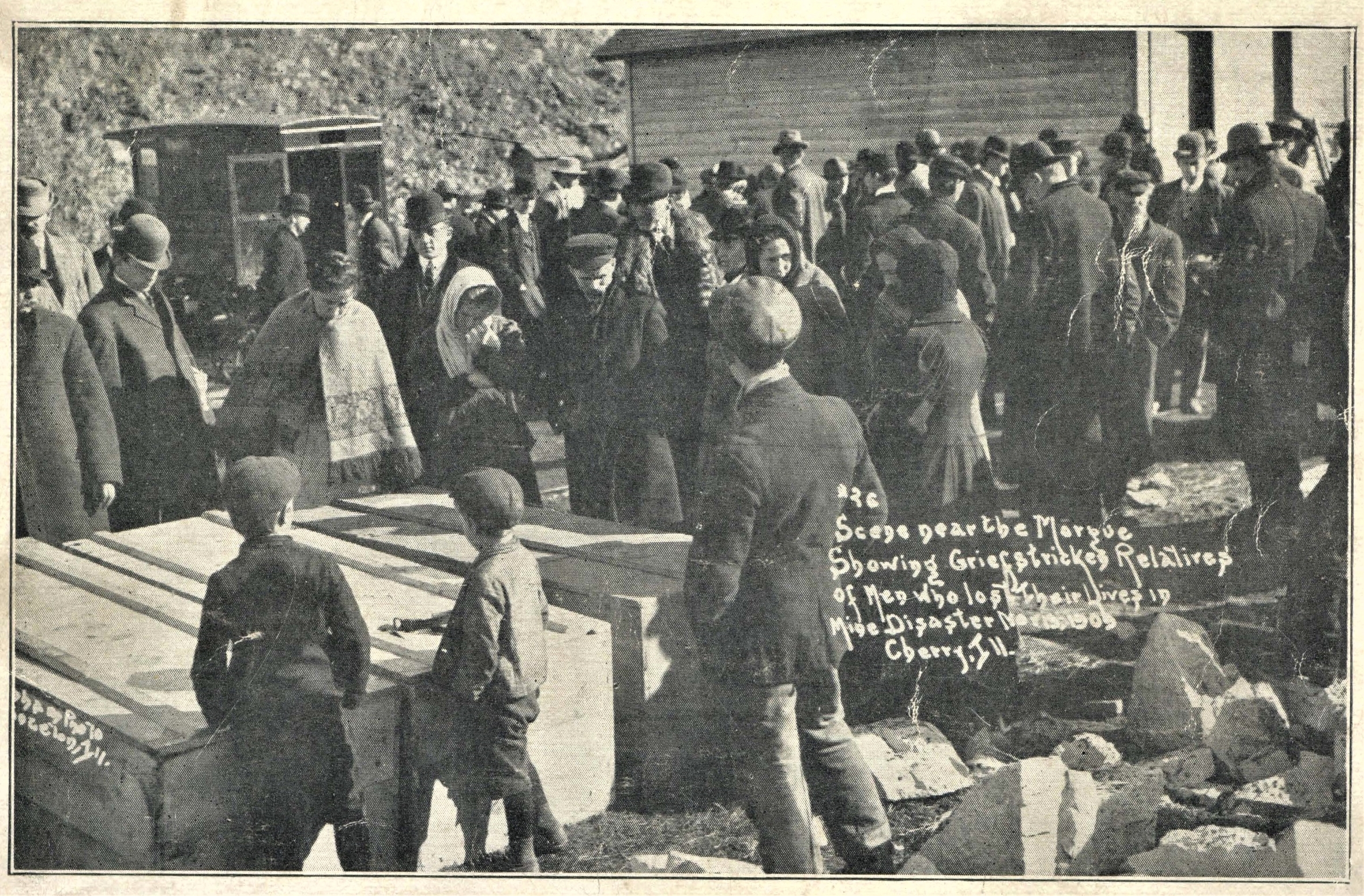
Who will help these forlorn lambs? The rich know nothing of the trials of the poor. And what is worse–they do not want to know. They are willing enough to manage them as long as the poor can work and pile up their fortunes. For the rest they are divided into two separate worlds with a wide gulf between them.
Will Mr. Baer consider himself responsible for the welfare of the fretting widows, the starving orphans? Will he offer them a home, shelter them from this cold, unmerciful world?
Will Mr. Roosevelt think of the poor who did not shirk the duties of motherhood? Will Mr. Taft and the United States Congress think of them when passing upon the employers liability law?
They will not. But you working-men and women. You who struggle and suffer yourself. You whose children may find themselves any day in the same situation. Will you stand aside and look on calmly at this wholesale slaughter of men? Will you, too, forsake these innocently suffering orphans? Will you shut your ears to this ever increasing cry for bread?
You should rise, like one man, and with a gigantic cry of protest arouse the slumbering conscience of this so-called land of the free. Workingmen of many nations were entombed together by the greed of capitalism, and workingmen of all nations must rise and overthrow the capitalist regime.
The New York Call was the first English-language Socialist daily paper in New York City and the second in the US after the Chicago Daily Socialist. The paper was the center of the Socialist Party and under the influence of Morris Hillquit, Charles Ervin, Julius Gerber, and William Butscher. The paper was opposed to World War One, and, unsurprising given the era’s fluidity, ambivalent on the Russian Revolution even after the expulsion of the SP’s Left Wing. The paper is an invaluable resource for information on the city’s workers movement and history and one of the most important papers in the history of US socialism. The paper ran from 1908 until 1923.
PDF of full issue: https://www.marxists.org/history/usa/pubs/the-new-york-call/1909/091125-newyorkcall-v02n289.pdf
 Revolution's Newsstand