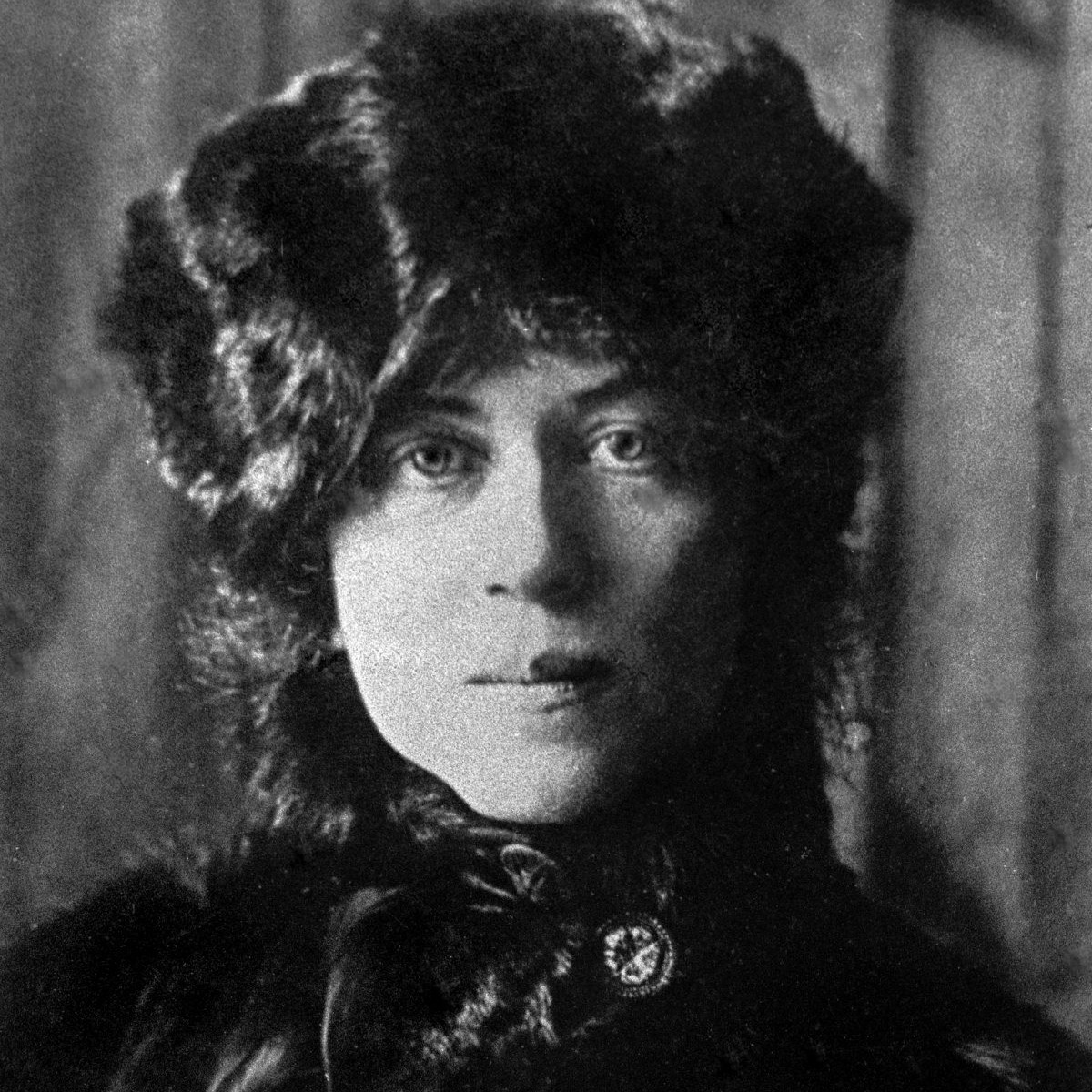
The full text of Kollontai’s review of women in Soviet Russia four years into the revolution, including the methods of organizing women and legal status, as well as participation in government, education, health care, unions, the Party, the Red Army and Civil War.
‘Peasant and Working Women in Soviet Russia’ by Alexandra Kollontai from Soviet Russia (New York). Vols. 5 & 6. Nos. 6 & 1. December, 1921 & January, 1922.
THERE is no separate woman’s movement in Russia. The struggle for proletarian dictatorship and its realization, as well as all other endeavor tending toward the creation of the new commonwealth, is conducted by the proletariat of both sexes. Moreover, to insure the success of unified work and struggle, the Communist Party considers it imperative to add to its many problems the problem of enlisting all the active women in the constructive work of the Soviet State in the struggle against the enemies of the first Labor Republic of the world, in or outside of Soviet Russia.
At the dawn of the proletarian Revolution, in the spring of 1917, the Executive Committee of the Bolshevik Party began by publishing a special magazine entitled “The Working Women” in which the problem of the enfranchizement of the working women was fully considered. This organ served for agitation purposes among the working women, and also helped to rally them under the banner of Bolshevism.
In the rosy period of bourgeois chauvinism and of the Kerensky administration, at the time when the poisonous flowers of “compromise” with the bourgeois government of Russia had not as yet faded away, the editorial board of the “Working Women” organized in June, 1917, an international meeting, as a protest against the bloody world war. This was done as a reply to the threat of military advance fostered by Kerensky. At this international meeting (the first public international meeting in Russia) an appeal was made to the solidarity of the workers of the world. During the period of the hardest struggle of the workers for Soviet Power in autumn 1917 and at the time of the menacing attacks of General Kornilov, the class conscious women followed the Bolsheviks, taking an active part in the civil war. The vast masses of the working and peasant women, however, stood aloof from the movement. They remained passive, bearing the ever-growing burdens of economic dislocation, misery and suffering, all these being the inevitable consequences of the civil war.
The October Revolution and the seizure of power by the workers conferred all economic, civil and political rights on women. This opened a new era, putting an end to the century-long inequality. Henceforth women were to enjoy in Soviet Russia equal opportunity in all phases of life, economic and social.
From the very first days of the October Revolution the Communist Party hastened to utilize the assistance of the communist women and the support of all those working women, who were in sympathy with the Soviet Government. Women began to be appointed as commissars and to carry out other responsible state work. Great responsibility and work of importance have been entrusted to them since then. One woman was from the very beginning of the Soviet Government a member of the Council of People’s Commissars of Russia. The women generally learned to become active in the construction of the newly-formed Soviet system. But apart from this, broad masses of women, especially the peasantry, were very antagonistic to the Soviet Government. They failed to realize that only through the power of the Soviets would women be emancipated. For example, the efforts of the Commissariat of Social Welfare to transform the Alexander-Nevsky Monastery into a home for invalids, were met with a storm of opposition. Together with the priests the women marched through the streets of Petrograd singing religious hymns, carrying ikons as a protest against this act.
The most counter-revolutionary utterances were heard chiefly at the food-distributing centres. This was due to a lack of understanding of the new order of government which inaugurated a new system of food distribution. The mechanism of food distribution at the beginning entailed waiting in long lines, and the women, already exhausted by four years of capitalist war, wearied by the high cost of living, lost patience and showed great discontent.
The doors of the Communist Party were wide open to the toiling women but the women stood aside. The laws afforded them full right to participate in the Soviets. Thus through the Soviets they were given the opportunity to improve conditions at large and their own life in particicular; but, notwithstanding this, the vast mass of working and peasant women dreaded the Soviet Government. The Communists were regarded by them either as destroyers of order and tradition, or as atheists, who were intent on separating the Church from the State and on depriving the mothers of their children by giving them over to the State. The fears and discontent of the women, as well as their antagonism toward Communism, were prompted mainly by their suffering, hunger and other privations.
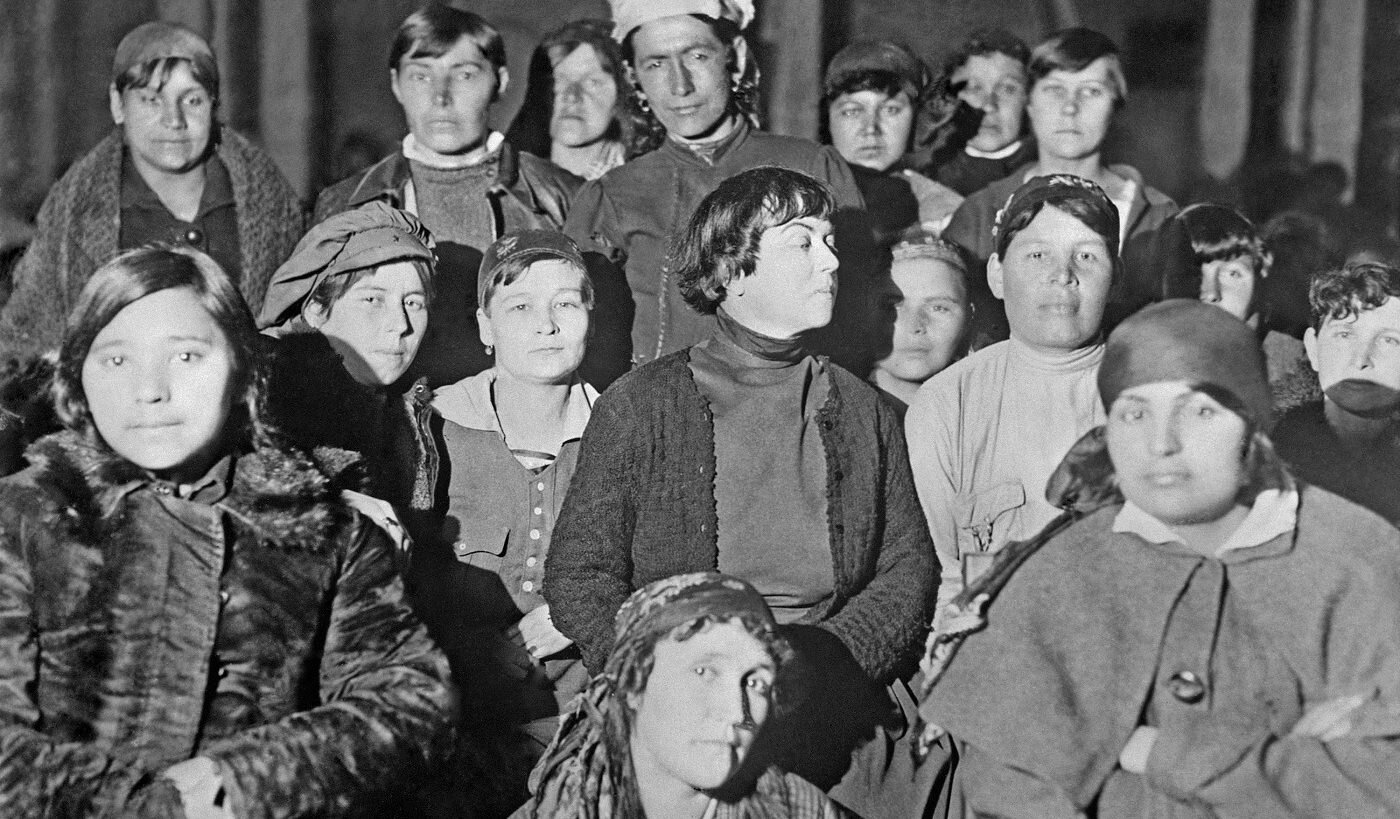
When, in the fall of 1918, the counter revolutionists, aided by the Czecho-Slovaks, attempted to put an end to the Bolshevik power and to abolish the Soviet Government, the Communist Party realized the necessity of imparting to the proletarian women a feeling of class consciousness. Those women who stood aloof from the work of strengthening the Soviet power became more or less conspicuous factors in the counter-revolution. It was deemed necessary by the Party, in the very interests of Communism, to win the sympathy of the women and to recruit them into staunch supporters of the Soviet order. The general methods of Communist propaganda and agitation proved insufficient. The problem of approaching the poorest strata of the working and peasant women had to be solved in another manner. The conditions called for a method of political work which would practically instruct the women to make use of their rights and enlist them in the constructive work of a new labor state.
Methods of Organizing the Working Women
Thanks to the initiative of a small group of active women members of the Party, supported by the Central Executive Committee of the Communist Party, the first All-Russian Congress of Proletarian Women was held in Moscow in November 1918. More than a thousand delegates elected by working and peasant women of all parts of Russia were gathered at this convention. Agitation was fostered, and a new line of political work among the working women was laid. With the guidance of the Communist Party it was decided to organize committees of propaganda among the women. These committees aimed at enlisting the proletarian women in the process of building up the Labor Republic and awakening their activity in the struggle to realize Communism. The efforts made by the committees to achieve this purpose received the full recognition of the Communist Party.
The method of these committees was to carry on propaganda not only by word of mouth, but chiefly by action, by deed, by practical work. The idea was to develop conscious and active Communists by setting the women to actual and constructive work in the Soviet institutions. This would make a practical change for the better in their conditions of life. With this view the committees created a special apparatus: regular conferences of working women’s delegates which served as a means of contact between the proletarian women and the Party. Every shop and institution sends one delegate for every 25 to 50 women to the weekly delegates’ meeting. These delegates are elected for three months. At these meetings the delegates become acquainted with the current political events and the work of the departments which particularly relates to the emancipation of the women, such as education, public kitchens, protection of motherhood, etc. The delegates not only attend the meetings, but their activities also spread to various governmental institutions, such as the Committees for the Improvement of Labor Insurance, Motherhood Welfare, Inspection of Soviet Institutions, etc…They study the practical method and system of Government organization, being appointed, by a special law, to different Soviet departments for two months practice. As the work of the Party among the women expanded, it became necessary to strengthen its forces. In the autumn of 1919 the Party reorganized the Committee of the Working Women into special departments. At present there is a special women’s department in every local district committee, as well as at the Central Executive Committee of the Party. The Women’s Department does not confine itself to merely enrolling the women, but also encourages initiative in them to participate in the formation of the Communist order. The Central Working Women’s Department has presented to the Party and the Soviets various practical measures, tending to free the women from their drudgery.
Work of the Women’s Department
Thanks to the initiative of the Department for Work Among the Women, a law was passed abolishing punishment for abortion. At the Eighth All-Russian Congress of Soviets a resolution was passed, calling upon the women for active work in the reconstruction of the economic system of production. This was followed by a provision including women in the various economic and administrative bodies which rule and conduct production in the Soviet State. A special committee for a nation-wide campaign against prostitution, as well as the organization of special committees to assist the work of protection of childhood and motherhood, was inaugurated by the initiative of the Women’s Department.
Various other measures pertaining to the welfare of the working women were brought into life by the persistence of the Women’s Department; thus for example special points protecting the health and interests of mothers were outlined in April, 1920, when the compulsory labor law was worked out. In April, 1921 the Council of People’s Commissars passed a law worked out by the Women’s Department which permits working women to be sent for two months to Soviet institutions with a view to training them into active workers and promoters of social welfare.
Women in the Construction of the Soviet State
During the two and half years of special work done by the Party to win the women for Communism great success has been achieved in paving the way of the Workers’ Republic towards Communism. At present the passive, indifferent attitude on the part of the women toward the Soviets has totally vanished with the exception of some very obscure parts of Russia where the Party has not as yet organized strong Women’s Departments. The membership of the women in the Party represents 9 or 10 per cent of the total membership.
Indirectly through their delegates the women are drawn into the big field of actual work for the formation of the State based on Communist principles. Thirteen provinces, according to the latest information, had about 110,556 women participating in the special Saturday Work (subbotniki), and about 4,459 worker and peasant women have been working in various Soviet institutions. Thus by having these women participate in the economic reconstruction of the country, as well as aiding the Red Army and the peasantry and taking an important part in the infant question as for instance the “Child Welfare Week”, etc., they take an active part in all the Party and Soviet campaigns. The Communist Party not only brings forth fresh workers to function in the Soviet organization, but educates them as conscious and staunch supporters of the Labor Republic and Communism.
Although from the very first days of the Revolution women have been elected to the Soviets, yet there were only individual cases where women were entrusted with important administrative work. Even at present the women are not largely enough represented in the Soviets. In the 13 provinces previously spoken of, 635 members make an average of 53 in each province. The more characteristic fact is that there are 574 women members in the district Soviets and only about seven in the provincial Soviets. In the Province of Moscow there are 1,500 members, and only 137 women. In Petrograd there are 340 women members, in Samara 30, in Kharkov 40, in Odessa 10. And still the number of women engaged in various government institutions has grown immensely within the last years. In ten industrial provinces 3,344 women perform now important and responsible work in various government offices. Out of the 704 delegates of the working women, who have been sent to perform some practical work in different Soviet departments in the province of Moscow, 41 have become superintendents of various branches of work; 519 women have been delegated to work as students in different institutions. In Petrograd about 733 women are student workers and 4,660 do temporary work in the Soviet institutions. A very significant service to the government has been rendered by the women in the inspection of various institutions such as soup-kitchens, hospitals, children’s homes and other institutions of the Social Welfare Department.
Women in Army Service
While rendering valuable service to the country in their medical work, women also served the Republic faithfully and bravely when the Revolution was exposed to danger from attacks by the counter-revolutionaries. The history of the civil war for the past three years reveals episodes in which women have played a conspicuous part. In 1919, when the White Guards were besieging the District of the Don Basin and Lugansk, Denikin threatening Tula, while Yudenich was approaching Petrograd, the women, side by side with their male comrades, helped to smash the enemy forces. These women were determined to defend these cities to their last drop of blood. When Denikin was at Tula, threatening Moscow, the women resolved that he would gain entrance to the city “only over our dead bodies”.
The women, owing to their vigilance, were able to detect many errors and the conscious abuse of the work on the part of numerous clerks and professionals of the former bourgeois class. The evil conduct of many of these workers has been ably disclosed by the women. As inspectors the women have shown remarkable ability. This accounts for the fact that there were about 25,000 women inspectors throughout Soviet Russia, according to relief work here, has defined the general policy the last reports of the Commissar of Workers’ and Peasants’ Inspection. In twelve industrial provinces there were 3,436 women inspectors selected from the delegates of the working women. In Petrograd about 50 women participated in the investigations of the hospitals. According to the report of the Department of Health, women have played a great part in the improvement of hospital conditions of the Red Army by organizing sanitary units, by mending the linen of the soldiers and by taking careful notice of all the needs of the hospitals. They have also rendered great comfort to the wounded men by reading to them from papers, books, magazines, and by writing letters for them. All this has proved of great service to the suffering soldiers in the hospitals.
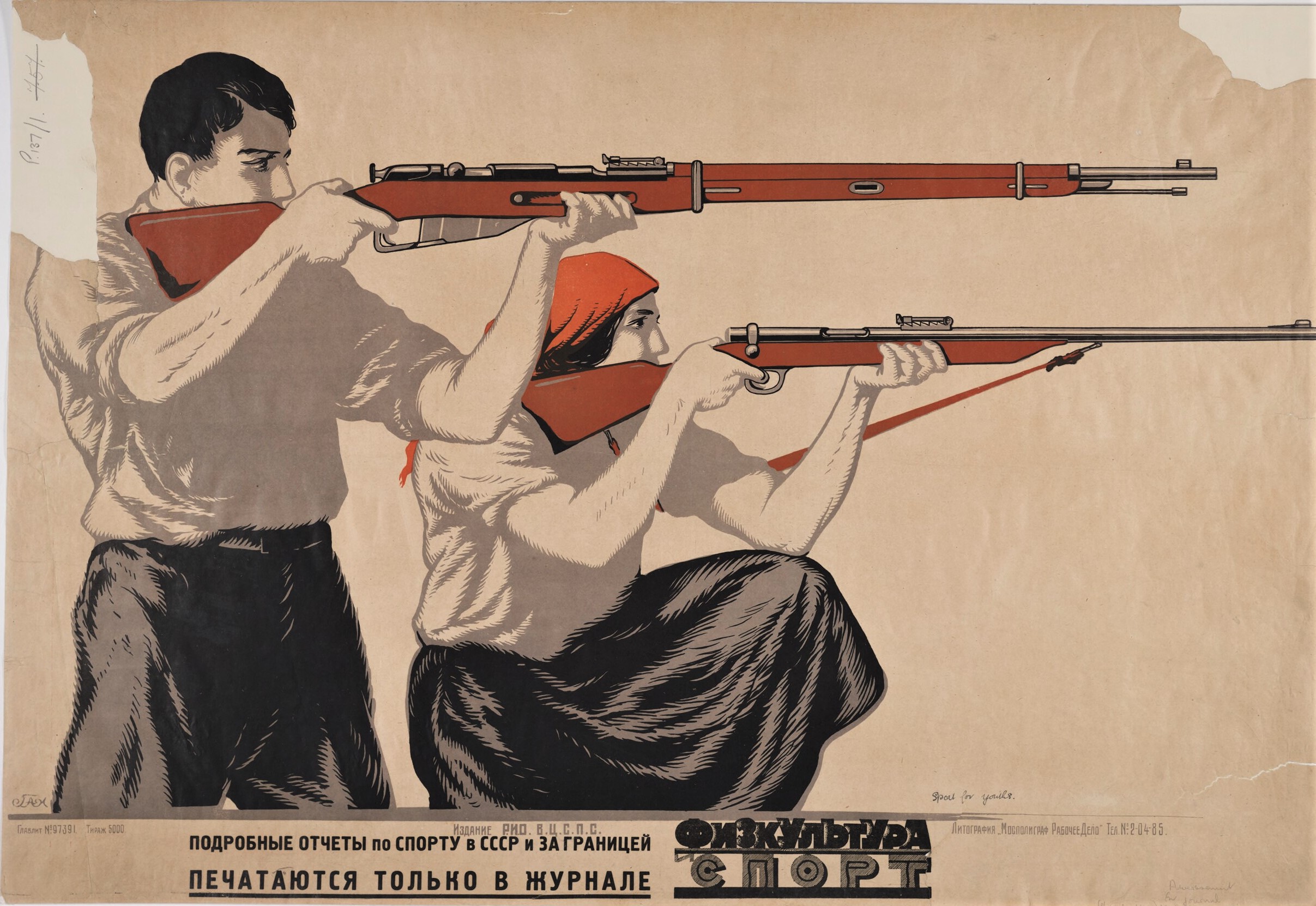
The heroism of the Petrograd women when Yudenich in 1919 was but a few miles from the city is well known. The energetic proletarian women not only sent 500 nurses to the front, but performed actual military service. They dug trenches in cold dreary weather, they took an active part in machine gun companies and helped to put up barbed wire around the city of Petrograd. In the special detachments against deserters the women also proved to be very alert.
When the Workers’ Republic was confronted with military invasion it had to resort to the active support of the women, contrary to the pretense of bourgeois society that “woman’s place is in the home.”
II.
THE very thought of having women active in military affairs appears repugnant to bourgeois society. This society fears that it might tend to disrupt family ties and thereby undermine the functions of private ownership and class-rule. Although during the imperialist war women were engaged in various kinds of war work throughout Europe, especially in England, this was not so much an actual government function as more or less a mere patriotic propaganda gesture.
The attitude towards the women who are called upon to render aid in the protection of the Workers’ Republic in Soviet Russia is quite different. The Workers’ Republic regards the function of women in the army for the self-defence of the country as just as essential as their sharing equally the burden of the chief economic problems. Therefore woman’s work in military affairs is called for not only by temporary military expedients, as in an imperialist war, but for the safeguarding of vital interests. In the struggle during the transition period in Russia, in the interest of the New Proletarian State, it is the duty of every citizen not only to work, but also to perform military duties. The ability of each citizen is carefully considered in order to utilize it in the most essential manner. Women, because of the necessity of production, are not eliminated. The more extensive the support of the wide masses becomes, the more successfully does the Red Army of workers and peasants protect the country. The women particularly should be as much concerned in the victory of the Red Army at the front, as they are in the successful maintenance of the freedom granted them by the Soviet Government. The November Revolution, by abolishing inequality, proclaimed the women as equal citizens, according them all the rights of such. The contention of bourgeois society that women must be entirely dependent upon men has rapidly lost ground. Calling women to arms dispelled the last prejudices fostered by the bourgeoisie, reducing them to mere reminicences of the past.
In 1917, when the first barricades for the class war were being erected, the women’s part in the revolution became quite conspicuous. At the formation of the Red Guard, nurses’ units were organized by women also. Voluntary groups to aid the brave fighter for the cause were instigated by the women.
However, the participation of women in war work has not been carried on according to a special plan. Only in 1918, when the Red Guard was transformed into the Great Red Army, when the Workers’ Republic called upon men and women equally to support the front, was a definite plan for the utilization of women’s services outlined.
At the very beginning, units of Communist Women were organized for the purpose of agitation and political work in the Army. A number of these political workers perished with their male comrades in the defence of the Proletarian Republic. Communist women were also to be found as members of the military revolutionary councils. In the political branches of the Army a great organizing ability of the women has been discovered, as shown by the brilliant talented organizer Comrade Varsenica Kasparova.
Up to the present the number of women who have been actually performing military duties is not very great. But the militia system tends to bring about a fundamental change in the matter of extending the universal military training to the women. It will cause the women’s military forces to become well organized. With the development of the new military machinery all the young women of the ages of 16 to 18 are obliged to drill equally with young men. Those under military age attend special courses for physical training and preliminary military drill. Universal Military Training has existed since June, 1920. Since then, in Moscow alone, over 1,000 women have had regular military training, while about 5,000 more are drilling at present.
Furthermore, the women have shown themselves very efficient in the medical units of the Red Army. Their heroism and self-sacrifice have been proved by their noble deeds. In 1919, special courses for Red Nurses were formed, and over 6,000 obtained nurses’ certificates.
The following table shows the number of work ing and peasant women who completed these courses:
Year–No. of Red Nurses throughout Russia–In Moscow–No. of attendants–In Moscow
1919–1,264—280–1,005–440
1920–2,442–***–1,193–447
Totals: 3,706—280–2,198–887
The working and peasant women have been the life of this work. They served as an inspiration to the soldiers, whom they regarded as comrades, not merely as our “poor soldier boys” as they were considered by the bourgeois lady-nurses. This comradely attitude plays a great part in the present struggle of Soviet Russia.
In the summer of 1921 the first graduation from the military courses for women in Petrograd took place. Besides the military training, special courses for women’s field telephone and telegraph service have been founded. The last graduation in Samara and Simbirsk in 1920 supplied active workers for the Southern and South Western fronts.
The military training conducted all over the country is for the purpose of creating strong reserve forces to guard the country against enemies. So far the women have responded splendidly to every call issued by the Red Front during the past three years. The industrial centres have been especially responsive, having sent many women to the front. The proletarian women, owing to their class-consciousness, feel the strong ties between themselves, as free citizens of the Republic, and the success of the Red Army on the battlefield. While on the firing line women have faced danger fearlessly during the defensive war, and have shown unusual heroism and bravery, which has been noted by Chief Army Headquarters.
According to the statement issued by the latter, about 1854 women in the Red Army have been killed or wounded. A number of them have been taken prisoners of war, while a great many, such as physicians, nurses, members of machine gun corps, have been decorated with the Order of the Red Flag.
Women and Public Dining Rooms
In the organization and supervision of public dining rooms, women have done enormous work. Particular attention has been paid by them to the children’s dining rooms. The women delegates do actual duty in these places, as for instance, in Kiev and in the Province of Moscow. Through the energy and the initiative of the women delegates, dining rooms have been opened at many factories and shops.
In the principal cities of Russia, practically all the population is being fed at the Public Dining Rooms. Thus the idea of relieving the women of their daily drudgeries is becoming more and more nearly realized. While no bourgeois government ever took steps towards freeing women from the humdrum of their daily existence, the Workers’ Republic in three and one half years of revolution has already accomplished a good deal toward this end.
Child Welfare and the New Education
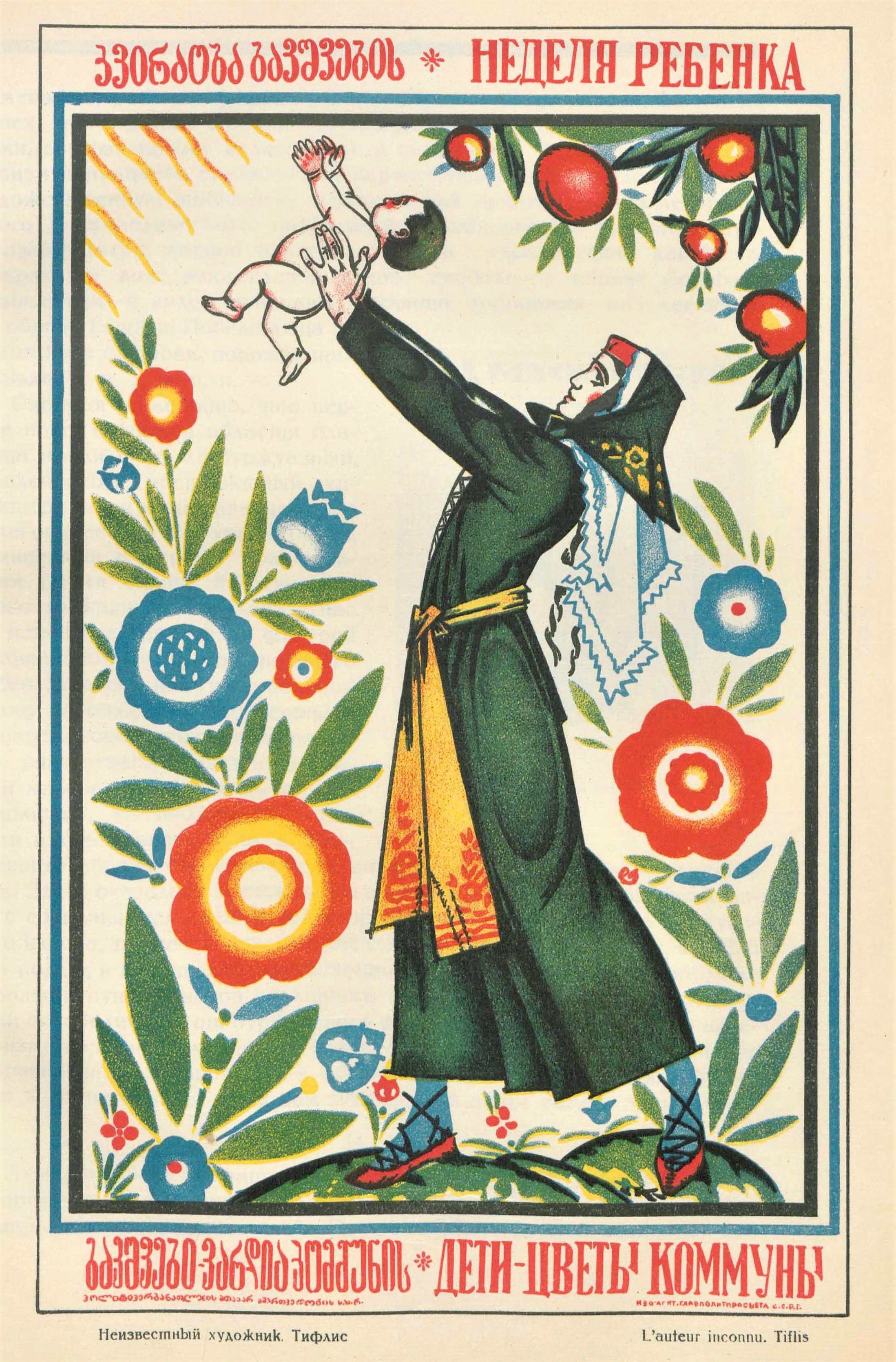
One of the problems nearest to the heart of the working women is that of child welfare and the new methods of education, which accounts for their active interest in this work. Special training courses for women attendants, instructors, and organizers of nurseries exist not only in the principal cities, but in many small towns of Russia. To all these schools the working women delegates are being sent. The working women delegates are sent to nurseries, kindergartens, children’s homes, etc., to help organize and improve these institutions. Under the guidance of the communist women, a new atmosphere of child education on communist lines is created. The old forms of benevolent institutions for the “poor orphans”, such as existed under the bourgeois rule, have been entirely abolished. It is true that the lack of clothing, regular food supply, books, stationery, etc., serves as a great obstacle in transforming these institutions into model establishments. Nevertheless the communist women, thanks to their energy, have succeeded in awakening the interest of the working women in the children’s homes and nurseries; through the efforts and invaluable energy of communist women, such as comrades Nikolayeva, Lilina, Elisarova, Dashen, and many others, this great but difficult work is developing rapidly.
Comrade Krupskaya (Ulianova-Lenin) and Menshinsky, are the initiators of the system of uniform labor schools.
Protection of Motherhood
The Women’s Department keeps also in close contact with the Department of Child and Motherhood Welfare. The function of this committee is to enforce all the decrees pertaining to the welfare of motherhood which have been passed in the Soviet Republic. Owing to various circumstances, especially to the hard economic conditions brought about by the war, these laws have not been enforced as widely as necessary. These committees, under the supervision of the Women’s Department, carry on a propaganda to protect mothers. Thus the working women themselves, becoming acquainted with the principal laws of safety in working conditions for pregnant and nursing mothers, assist in putting these laws into effect. Although since the revolution the principle of equal pay for equal work has been instituted, in reality the wages of most of the women are far lower than those of the men. As woman’s skill in labor is not so highly developed as man’s, women are therefore generally put into a lower wage category. Apparently little has been done to improve most unhealthy surroundings, which react harmfully upon the physical condition of the women. The Mothers’ Welfare Committee must be on guard against all these evils. The committee enlists the cooperation of the working women in its task putting into effect decrees pertaining to the safety of labor for women. Guided by the committee the working women are on the lookout for pregnant working women; they improve sanitary conditions by installing wash stands, help organize public dining rooms in the workshops, etc.
In Ukraine, the women, under the guidance of Comrade Moirova, are doing splendid work along these lines. They organize in all enterprises little units for the protection of motherhood. There the working women are to be found at the head of many institutions: nurseries, kindergartens, children’s homes, homes for mothers, etc…
The introduction of nurseries, so far, extends chiefly to the working women in the towns; it has rarely penetrated into the villages. The latter have but a few summer nurseries, which are especially needed during the season of field work.
Nevertheless, this problem will be solved successfully upon the material improvement of the general conditions in the country.
Abolition of Illiteracy
The working women have aided greatly in the campaign against illiteracy, having been called upon by the Women’s Department of the Central Executive Committee of the Communist Party to help in this work. At present in a good many provinces women delegates are engaged in inspecting, organizing, and instructing in the schools. A good number of them are studying the principles of education.
The educational problem was very broadly discussed at all the women’s conferences during the past few years. To solve the problem more successfully, the proletarian women on their own account have taken census of the illiterate female population, as the women of Yekaterinburg have done.
Women in the Law Courts
Women are also to be found in the courts of Russia in the capacity of jurors or judges. This has been especially popular among the oriental women of Russia. They have been living in domestic slavery for centuries, and are still oppressed by the heavy religious yoke. Now having been proclaimed free citizens by the laws of Soviet Russia they are entering upon a new life. They have begun to take an active part in the social life, having chosen the law courts as the first support for their freedom. The women of Bashkiria and Turkestan are already performing judiciary functions.
Working Women in the Schools
The Women’s Department, in their search for the most essential utilization of women’s working power, selects a number of women who are detailed to different schools.
The special attention of the working women is called to the courses of study on the “Protection of Childhood and Motherhood”. The head of the National Department for the Protection of Childhood and Motherhood, Comrade Lebedeva, has organized these courses very ably and has succeeded in raising the general standard of this work, as well as of the training for Red Nurses and attendants.
The working women are also directed by the Women’s Department to different Party Schools in which they form 10 per cent of the total attendance. In 1920, through the Women’s Department, 3484 working and peasant women have been sent to party schools in 10 provinces.
At the Sverdlov University–the chief party school–a special section for the study of political work among women has been established.
Literary Propaganda among the Women Besides these schools, meetings and other methods of oral propaganda, the Women’s Department also conducts an extensive literary propaganda. Seventy-four weekly papers issue a special page each week devoted to the woman question.
Besides this, the Central Women’s Department issues a weekly bulletin in which it proposes the program for work, and delegates, instructions, theses for propaganda and various information dealing with the working women’s movement. The Central Women’s Department publishes also a monthly, “Communist Women” with a circulation of 30,000 copies.
The special literary Committee of the Central Women’s Department supervises the issue of special literature, such as pamphlets, leaflets, etc., on questions dealing with the working women’s movement. For the past half year over 400,000 copies of pamphlets dealing with problems concerning party work among the women have been issued by the Women’s Department. The report of the First International Communist Women’s Conference has also made its appearance recently.
Women and the Problems of Production
At the present time, when the Workers’ Republic is faced with the problem of constructing a new economic system of production along communist lines, there arises the necessity of having women share the responsibility for this work.
The new form of the organization of labor is based on:
1) A precise registration and efficient distribution of all the labor forces of the Republic–women included.
2) Collective instead of individual housekeeping.
3) Reconstruction of the social standard of life on a new communist basis, so as to enable the women to contribute the whole amount of their labor to the production of common goods.
The appeal to both sexes for equal participation in the productive activity of the Labor State greatly alters the mutual relations of men and women. The dependence of woman upon her master and bread-giver, her husband, is rapidly vanishing. At present, the mighty Workers’ Republic of Soviet Russia is the only bread-giver equally to men and women. “Those who work shall eat”. The successful development of the new Commonwealth based on communism helps the women to gain more and more of a foothold in all phases of work. Since masses of men have been called to arms, women have entered all branches of state and industrial work. According to the information issued by the National Council of Trade Unions, women form a majority in many industries.
WOMEN IN THE TRADE UNIONS
Unions—Membership—Percentage of Women
Food Workers—230,000—***
Public feeding workers—100,000–74.5
White goods workers—140,000–74.2
Tobacco workers–30,000–73.5
Artists–250,000–71.4
Hospital and dispensary workers–300,000–62.6
Textile workers–335,000–58.8
Domestic workers–***–53.2
Government employees–800,000–40.0
Glass and porcelain workers–35,000–39.8
Printers–60,000–39.2
Art workers–80,000–37.3
Stationery workers–22,000–37.1
Chemical workers–130,000–31.0
Agricultural workers–200,000—25.0
Workers on communal farms–178,000–24.8
Metal workers–500,000–24.7
Transport workers—100,000–23.3
Leather workers—150,000–21.6
Miners—275.000–18.0
Woodworkers–100,000–14.9
Water transport workers–200,000—14.5
Railroad workers–1,000,000–14.2
There are but few industries in which women are not represented. But, although the women are predominant in many industries, their representation in factory administration committees is still very limited. So for example: in the executive administrative bodies of the textile industry in 38 provinces there are about ten women members out of a total of 194, with the exception of Kostroma, where women are in the majority on the board of management of the Unions.
Results
Without the vast mass of proletarian women on the labor front no effective success can be achieved. Nor is the full emancipation of ten million workers easily attained unless it is on a communist basis. It is not actually possible to form the machinery of the new Commonwealth without the help of women.
The Great Change
The great change brought about by the October Revolution has shown the workers the true light. The strain which they are bearing in this period of civil war has strengthened the will of the workers of both sexes. They now follow the great slogan of Karl Marx: “The workers shall gain their freedom by their own efforts”. The working women in the cities, as soon as they became conscious of their rights, readily linked up their chances for the future with those of Communism. But the awakening of the peasant women is coming much more slowly. Therefore it is the duty of the Party to find a way to arouse the class consciousness of the peasant women.
A great event is also taking place in Soviet Russia: the awakening of the Moslem women. In all the Eastern Republics of Soviet Russia, populated by Musulmen, the Women’s Department is conducting very vital work. A great effort is made to rally these women to the banners of the Soviet Republics and Communism. Large conferences of working women have been held all over Eastern Russia; preparations for the First All-Russian Congress are in progress. A conference of Eastern women communists has recently taken place in Moscow. Communist women of Bashkiria, Kirgisia, Tataria, etc., dressed in their national costumes, but their faces covered by the veil prescribed by the Moslem religion, came to Moscow to their convention.
The Women’s Department has also begun to work amongst the intellectual working women, such as teachers, writers, medical and telephone workers.
The enormously difficult work done by the Women’s Department may be reviewed with joy and gratitude. Through the efforts of this Department the women have been drawn to all kinds of constructive social and state work and have become fully conscious of their citizen rights. We find the working or peasant woman engaged at various responsible tasks. She is at the head of a department, she acts as a commissar, she organizes public dining rooms, or directs the social care of children. She is represented in all phases of activity for the welfare of the State. She forms a part of the machinery of the new Commonwealth. Her interest in the work is greatly inspired by her duties as an equal citizen with man. The class-consciousness of the women has grown immensely in these three years of social revolution. Women’s power of organization has expanded immensely, assuming a real mass character. It has become self-evident that without the cooperation of the proletarian women in the Workers’ Republic, the solution of its many problems is impossible.
Soviet Russia began in the summer of 1919, published by the Bureau of Information of Soviet Russia and replaced The Weekly Bulletin of the Bureau of Information of Soviet Russia. In lieu of an Embassy the Russian Soviet Government Bureau was the official voice of the Soviets in the US. Soviet Russia was published as the official organ of the RSGB until February 1922 when Soviet Russia became to the official organ of The Friends of Soviet Russia, becoming Soviet Russia Pictorial in 1923. There is no better US-published source for information on the Soviet state at this time, and includes official statements, articles by prominent Bolsheviks, data on the Soviet economy, weekly reports on the wars for survival the Soviets were engaged in, as well as efforts to in the US to lift the blockade and begin trade with the emerging Soviet Union.
PDF of full issue: https://www.marxists.org/history/usa/pubs/srp/v4-5-soviet-russia%20Jan-Dec%201921.pdf
PDF of 2: https://www.marxists.org/history/usa/pubs/srp/v6-7-soviet-russia%20Jan-Dec%201922.pdf
 Revolution's Newsstand