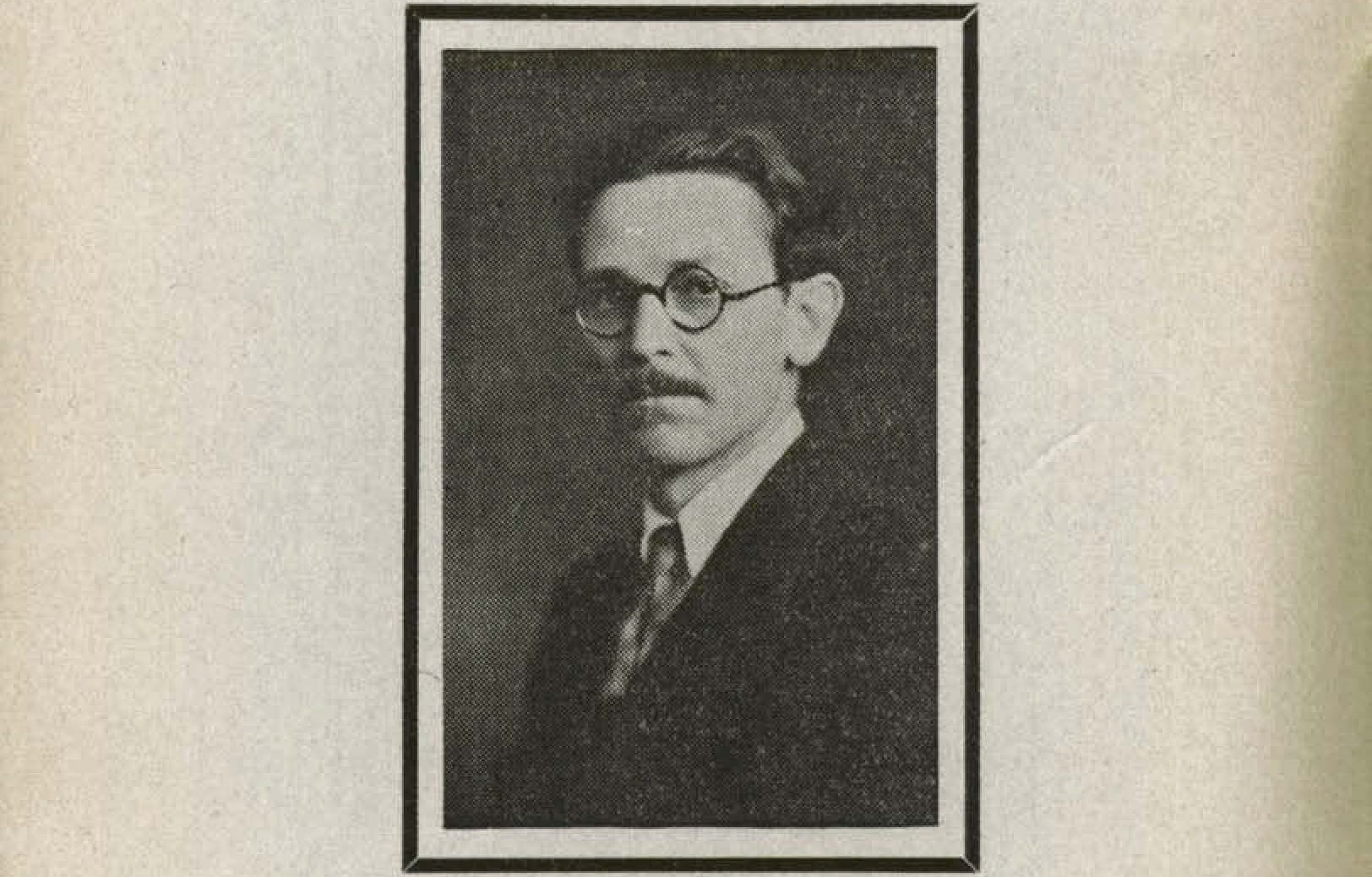
An essay from Kantorovitch on utopias and the relationship of Marx and Engels to the ‘Utopians.’
‘Living Marxism’ by Haim Kantorovitch from American Socialist Quarterly. Vol. 2 No. 2. Spring, 1933.
I.
WE have all heard, more than once, that Karl Marx is the father of Socialism. Some say it with anger. “If not for that Jew, we would not have this nuisance called Socialism.” Others say it with pride: See how great our Karl Marx is, he “created” Socialism. Both are wrong, whether the socialist movement be a blessing or a curse, it is not due to Karl Marx, or to any other man. Great mass movements are, it is true, always connected with the names of great leaders, but they are not due to them. They grow like weeds in the field. No one knows their origin. No one planted them, no one wanted them. They grew because they had to. Causes, unknown to them and independent of them, brought them to life. The leader will come later. His job will be that of the gardener. He will cultivate this wild growth; he will give it form and expression. If the time is ripe and conditions are favorable, he may even somewhat change its direction. That is all. No leader, no matter how great, can do more; no leader, no matter how great, can create something out of nothing.
Karl Marx and Friedrich Engels were of course no exceptions. There would have been no Marxism had they not found all the materials for their structure ready at hand. Marx and Engels found ready at hand a Socialist movement, even if small and insignificant; socialist theories and ideas even if hazy and unclean; and what is of more importance, a working class that had already begun to become conscious of its interests and its power, a class oppressed and in a rebellious mood. The workers in Germany were ready for Lassalle. The workers in England already had had their experience in the Chartist movement. Everywhere labor unions and workers’ political and educational organizations were springing up; Socialist and Communist organizations were in existence everywhere. Great strikes, often bloody, became a daily occurrence. Revolution was in the air; 1848 was not far away.
This was the environment in which Marxism was born. The material was at hand, but unorganized, uncultivated, a wild growth that was awaiting its gardener.
What was the Socialism that Marx found?
Engels labeled them “Utopians” and this name stuck to them. It is often used with a sneer. To call one Utopian is, in our time, an insult. When the bourgeoisie press labels Socialism a Utopia, it is meant as a slight to it. But what is a Utopia? An ideal not yet realized. Everything that is has sometimes been a Utopia. “As a matter of fact, it is our Utopias that make the world tolerable to us,” remarks Lewis Mumford very rightly. “The cities and mansions that people dream of are those in which they finally live.”1 If Utopia is as Mr. Mumford says it has become, “another name for the unreal and impossible”, the so-called Utopian Socialists were not Utopians at all. They were realists in their way and their dream was the dream of Socialism, a dream that is now becoming a reality before our own eyes.
Marx and Engels had a very high opinion of their Utopian forerunners. They freely and willingly acknowledged their debt to them, but accept their Socialism they could not.
Utopian Socialism was as unscientific as it was unrealistic. Excellent critics of society as they were, the Utopians had not the slightest knowledge of its inner mechanism; materialists though they were, they approached society, its laws and evolution from a purely idealistic and metaphysical point of view. What was wrong with the world according to the Utopians was that human reason till now had failed to find the true principles upon which society should be organized. Ignorance of “true reason and justice” was at the root of all evil. “All the nations of the world,” complains Robert Owen,2 “…are to-day governed by force, fraud, falsehood and fear, emanating from ignorance of governors and governed.” This view of Owen is common to all Utopian Socialists of his time, as well as to all Utopians of our own time. All that is necessary for the reorganization of society is the “true principle.” In our time it is the “blue print” the “right plan” that could appeal to all “reasonable and good people”. Once this true principle is found, the rest will take care of itself. The Socialists and social reformers of our day who call conferences to work out the “blue print” for Socialism are really continuing the work of the Utopians.
Summing up the ideas of Utopian Socialism Engels says, “If pure reason and justice have not hitherto ruled the world, this has been (in the conception of the Utopians) the case only because men have not rightly understood them. What was wanted was the individual man of genius who has now arisen and who understands the truth.”3 Once this “individual man of genius” is here everything will be all right; he will show us our errors and the way to eternal happiness. The question, why this individual man of genius has been so late in arriving does not bother the Utopian. Social changes are, for him, in no way connected with time and space. That the man of genius has not arisen, is for the Utopian not an inevitable event, explains Engels, “It is a mere happy accident. He might just as well have been born five hundred years earlier and might then have spared humanity five hundred years of error, strife and suffering.”
Socialism is for the Utopian in no way bound with space and time. It may be established at any time, at any place. It does not depend on the stage of development of society, but only on the “happy accident” of the rise of a great leader. Utopianism is said to be a stage in the evolution of the history of Socialism which we have long since passed. But when one hears that all that China needs to establish Socialism is a Lenin, one is not so sure whether Utopianism is really a thing of the past.
Not only of time and space was Utopian Socialism independent, but also of social life. Socialism was for the Utopians an eternal truth that had nothing to do with either the problems or the struggles of their time. Society was divided, of course, into economic classes. There were bitter class struggles in their time. There is, of course, no doubt that these class struggles were the real, if unconscious, motives behind their search for the “true principle” on which to rebuild society. It was the plight and poverty of the masses that stirred them. Nevertheless it never occurred to them to base their Socialism on the struggles of the masses for a better life. Utopian Socialism was for the workers but not of the workers. Their appeal was not made to any class in particular but to all classes, to humanity. Socialism was to be built up by good people who could understand the “true principle.” The rich and powerful are best fitted for this task. Most of the Utopians were afraid of the workers and their struggles. Saint Simon threatened the French capitalists that if they did not accept his plans the workers would get them. “Robert Owen was evidently of the opinion,” says M. Beer4 “that it would do no good to society to reveal to the workmen the mysteries of wealth making and the principle of Communism before they had made a successful attempt to reorientate their character, to extinguish their violent class-warfare against the rich.” He knew of the “class-warfare” of the workers against the rich, but this class-warfare had to be “extinguished” before the workers could be available for his socialist principles. There was no place for the workers as workers in the Utopian socialist movement. All the working class had to do was to wait until good people would create socialism for it.
The working class did not wait even at the time when Utopian Socialism was at the height of its popularity. A labor movement was developing. The class-struggle had begun to take on more and more conscious forms. Trade unions sprang up everywhere. They knew nothing about Utopian Socialism, and the Utopians thought little of them. In his controversy with Proudhon, Marx showed the necessity and the historical significance of the trade unions “which in spite of all the apprehensions and warnings of Utopians and economists, the workers have gone on establishing and perfecting in order to be able to withstand the domination of capital.”5
II.
The Utopians did not notice, and if they noticed, saw no connection between this rising labor movement and their own socialist ideals. For Marx this movement was the basis and guarantee of his socialism. The triumph of socialism is the triumph of labor in its class-struggle against all other classes of society. Proletarian Socialism is born with Marxism.
For the task of creating proletarian Socialism, Marx and Engels were both well prepared. They had gone through the Hegelian school where they had learned to abhor all eternal and ultimate truths upon which Utopian Socialism rested. From Hegel they learned that “truth…was no longer…a collection of ready dogmatic statements which once discovered must only be thoroughly learned, truth lay now in the process of knowledge itself.”6 The Hegelian Dialectic which Marx and Engels made their own precluded all possibility of Utopianism. “From this point of view the history of mankind no longer appeared as a wild whirl of senseless deeds of violence, all equally condemnable at the judgment seat of mature philosophical reason and which are best forgotten as quickly as possible, but as the process of evolution of man himself.”7
But not only from Hegel did the founders of modern socialism learn to distrust all such fine words as eternal reason, true justice, ultimate truths. History itself disproved them. A study of history revealed to Marx and Engels the fact that behind all these high sounding words were hidden material, economic interests of some class in society. The ideological forerunners of the French Revolution believed that they fought for abstract principles of truth, reason, equality, etc. But, what were the actual results of this fight?
“We know to-day,” Engels says, “that this kingdom of reason was nothing more than the idealized kingdom of the bourgeoisie; that their eternal right found its realization in bourgeois justice; that this equality reduced itself to bourgeois equality before the law; that bourgeois property was proclaimed as one of the essential rights of man; and that the government of reason, the Contract Social of Rousseau came into being and only could come as a democratic bourgeois republic. The great thinkers of the eighteenth century could, no more than their predecessors, go beyond the limits imposed upon them by their epoch.”8
The criticism of capitalism is doubtless a necessary thing. There was no lack of it in Utopian Socialist literature, but this is not enough; drawing pictures of the future society may be good propaganda, but propaganda is only of value where it arises out of and can appeal to some real interest of some social class. The drawing of blue prints for revolutions may be a fine pastime for those that have nothing else to do, but these are not the things that make or unmake social orders. “Great historical movements,” says Marx, “had been always determined by mass-interests, and only in so far as they represented these interests could the idea prevail in these movements. Otherwise the ideas might indeed stir up enthusiasm but they could not achieve any results.” To put socialism on a realistic basis it was necessary not to invent new ideas but to find out whether there are objective forces in society leading to it, making it necessary and possible, and whether there are in society people in whose interest it is to fight for it. In one of his earliest works Marx, discussing the possibilities of a German revolution, declared that the revolution is possible only “in the formation of a class in radical chains which finds itself in bourgeois society but is not of it.”9 This is not yet the Marxian theory of the class struggle, but it already shows the direction in which Marx’s thought moved. Revolutions are not made by people who become enthusiastic over ideas. On the contrary only those people become enthusiastic about revolutionary ideas who are compelled by their material interests to make revolutions. Revolutions, social changes are not accidents, and can not be made at will. Social evolution follows its own laws. Of course man makes his own history, but he makes it under given social and economic conditions, with “tools” afforded to him by the whole former development of society, within the limits of social possibility. Marx, of course, never denied the power of ideas in society as some critics contend, but Marx knew that ideas do not fall ready made from heaven, that ideas and ideals are themselves deeply rooted in the material conditions of life, that they appear and disappear with the appearance or disappearance of material conditions and material interests which they reflect. “The growing perception that existing social institutions are unreasonable and unjust, that reason has become unreason, and right wrong, is only proof that in the modes of production and exchange changes have silently taken place with which the social order, adopted to earlier economic conditions, is no longer in keeping.”10 The material interests which are behind human behavior, as well as human thinking, are rooted in the modes of production and exchange. “In the social production which men carry on they enter into definite relations that are indispensable and independent of their will; these relations of production correspond to a definite stage of development of their material powers of production.”11 It is in the development and change of the modes of production that the key to the history of ideas can be found. The Utopian Socialists did not understand it, but they were themselves no “happy accidents” but results of the development of changes in the social mode of production. They reflected the economic situation of their time. That their socialist ideas and theories were so primitive and crude was simply due to the crude state of development of the capitalism of their time.
III.
At the outset of his career Marx declared, “We do not proclaim to the world in a doctrinaire fashion any new principle: ‘this is the truth, bow down before it.’ We do not say: refrain from strife, it is foolishness! we only make clear to men for what they are really fighting, and to the consciousness of it they must come whether they will or not.” Contrary to all former Socialism, Marx and Engels did not go after new and better blue prints. They set the task for themselves to “interpret the struggles and aspirations of the age.”12
And what were the most outstanding facts in social life that called for interpretation? It was the class-struggle. Armed with the materialist dialectical method, Marx and Engels perceived that the class-struggles of their time are not accidental, nor are they temporary or passing. The class-struggle theory became the most fundamental principle in Marxism, because in the antagonism of the classes, in their fight for their class interests, Marx and Engels saw the driving force behind all social change. Changes in mode of production which are “in the last analysis” the causes for all other changes, manifest themselves in the forms of class-interests, class ideals and aspirations. “The history of all hitherto existing societies is the history of class-struggles.” This declaration of the Communist Manifesto is fundamental in the Marxian view not only of the past but also of the future. Marx did not discover the class-struggle, others had done so before him. Marx was not even the first to detect the power of the class-struggle in history, but he discovered the role of the proletariat in the class-struggle, the class that was somehow overlooked by those who did see and understand the class-struggle.13 In the class struggle that is going on independent of our ideas of it, Marx and Engels saw the “inevitability” of Socialism. The class-struggle has reached a point where it becomes more and more an open war between the classes that are determined to uphold the existing social and economic order, and the class, that is being driven by its class-interests to fight for its destruction. The class-struggle has now reached a stage in its development when it is nearing its end. Class society has reached an impasse. It can not go on much longer. It must end in the abolition of all classes; it is bent towards a classless society.
The realization of Socialism is not dependent on true ideas, or on reliable blue prints. It will come as the result of the class-struggle of the workers. Every step in the class-struggle is a step in the direction of Socialism. Every strike for wages or shorter hours, every fight for labor laws or social reforms, are simultaneously fights for Socialism. Revolutionary romantics may not like it; they may call it opportunism, reformism and what not, but if so, Marx and Engels were the fathers of opportunism and reformism, just as much as of scientific socialism. The social revolution is for Marx not an act that is accomplished once for all, but a process of class-struggles. The social revolution, Marx and Engels realized, cannot come as a result of a conspiracy of some revolutionary minority, but as the result of the long drawn out fight of the working class for power. This fight for power is not and can not be the fight of a sect. It is the fight of classes not of sects. It is the open democratic, political struggle of the working class. The Communist Manifesto therefore declares, “The Communists are not a special party in contradistinction to other labor parties. They have no interests apart from the interests of the whole proletariat; they set up no principles according to which they wish to mould the proletarian movement.” This is often misinterpreted. These words in the Communist Manifesto do not mean that the Communists (i.e. Socialists) are not to come to the labor movement with principles and theories of their own. On the contrary Marx and Engels always emphasized the necessity on the part of Socialists to bring their principles and theories to the existing and fighting labor movement, to interpret for the labor movement their own struggles and aspirations, to bring to their consciousness the realization of “what they are really fighting for.” To make the workers that participate in the class-struggle, even when they don’t realize it, class-conscious, is the most important task for the Socialist. The warning in the Communist Manifesto that “the Communists are not a special party in contradistinction to other labor parties” was a warning against the sectarian mood of most Socialists of their time, which tended to make Socialism a party not only in no way connected with the living and fighting labor movement, but also against this movement. It is a warning against all those who would rather have a set of Socialist Saints, than be “contaminated” by the impious and practical labor movement. To make an end to sectarianism in the Socialist movement, to connect Socialism with the broad, living labor movement, to place it on a broad, legal, political and democratic mass basis was the special contribution of Marxism to socialist tactics, and this remains until to-day as the living soul of living Marxism.
NOTES
1. The Story of Utopias, by Lewis Mumford, p. 206.
2. The Life of Robert Owen, by himself, p. 106.
3. Engels, Socialism, Utopian and Scientific, p. 53.
4. History of British Socialism, Vol. 1, p. 173.
5. M. Beer, Life and Teachings of Karl Marx, p. 64.
6. Engels, Feuerbach, etc., p. 41.
7. Engels, Socialism Utopian and Scientific, p. 85.
8. Ibid, p. 49-50.
9. Selected essays, by Karl Marx, p. 37.
10. Engels: Socialism Utopian and Scientific, p. 95.
11. Karl Marx, Preface to “A Contribution to Political Economy.”
12. M. Beer, Life and Teachings of Karl Marx, p. 46-48.
13. When Max Nomad enlightens the readers of “Scribners” (March 1933) that Marx was “original” in his theory of the class-struggle, the readers, and probably Nomad himself may think that he made a very great discovery, whereas this Mees cd can be found in any book on Marxism, as well as in the writings of Marx himself. But Nomad dees not of course know what Marx did contribute to the class-struggle theory. The entire article is merely a shallow repetition of what Marx’s enemies used to say about him.
Socialist Review began as American Socialist Quarterly in 1932. The name changed to Socialist Review in September 1937. The journal reflected Norman Thomas’ supporters “Militant” tendency of the ‘center’ leadership. Beginning in 1936, there were also Fourth Internationalists lead by James P. Cannon as well as the right-wing tendency around the New Leader magazine also contributing. The articles reflect these ideological divisions, and for a time, the journal hosted important debates. The magazine continued as the SP official organ through the 1940s.
For a PDF of the full issue: https://archive.org/download/radical-society_spring-1933_2_2/radical-society_spring-1933_2_2.pdf
 Revolution's Newsstand