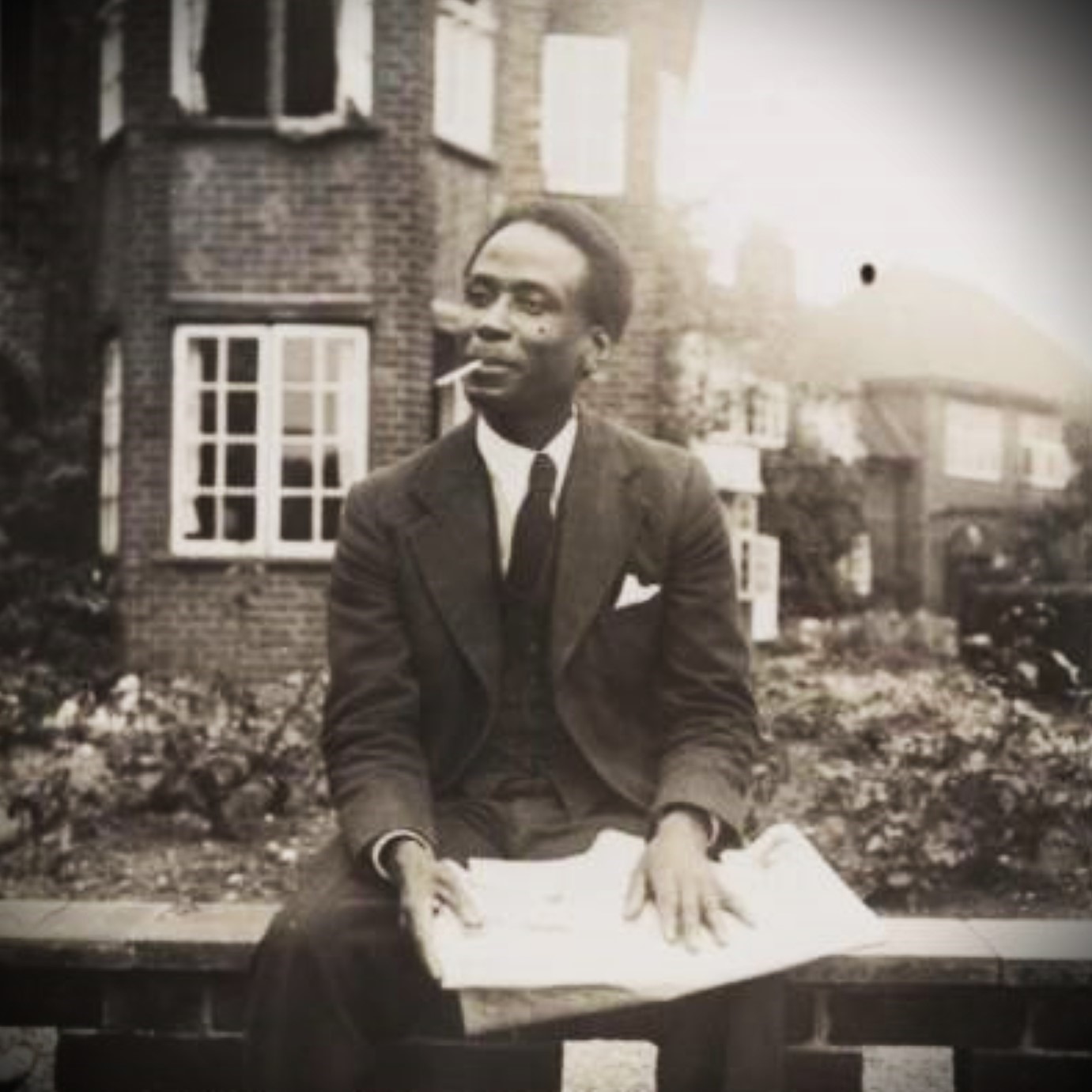
An early statement of perspectives from the just-formed International Negro Trade Union Committee, a section of the Profintern, by George Padmore.
‘Problems of the Negro Workers in the Colonies and U.S.’ by George Padmore from The Negro Worker. Vol. 1 No. 2. August-September, 1928.
The RILU, through its recently established International Negro Trade Union Bureau in Moscow, intends rallying together and organizing the Negro workers of the world along class lines so that they too might be able to effectively play their historic role in the world revolutionary movement.
Colonial Conditions
The Negroes in Africa and the West Indies and South American colonies are the victims of the most ruthless forms of imperialist oppression by the great capitalist powers—Great Britain, France, the United States, Belgium, Spain, and Portugal.
The entire African continent is divided among, and dominated by these European and American robber-States who are viciously exploiting the natural resources and labour power of millions of blacks. Africa has been completely raped and its peoples reduced to wage slavery.
Liberia and Abyssinia, the two remaining African nominally sovereign States, are under the financial control of the bankers. In the former republic, Harvey Firestons, the powerful American rubber manufacturer with the co-operation of the American State Department, and Herbert Hoover, Republican Presidential candidate, has secured a monopoly on the rubber production of the country and its finances.
In Abyssinia the “J.T. White Corporation” an American engineering and construction firm, has negotiated and secured the contract for building extension water-works on the Blue Nile, which will greatly affect the British cotton industry in the Sudan, Again Abyssinia is menaced by the recent Anglo-Italian Treaty which practically means the partition of the country between Mussolini and Chamberlain.
In other sections of the continent—Portuguese, French, British Belgian and South African–the most intensive process of industrialization is tacking place.
Millions of natives are being turned into landless proletariat and driven to work for foreign capitalists under the most horrifying conditions in the mines, plantations and railroads.
The same process is taking place in the West Indies and the South and Central American colonies (the Guianas, British, French and Dutch, and British Honduras). The agricultural and mining resources in these colonies are entirely controlled by foreign capitalists, chiefly British and American.
Exploitation of British Guiana
For example; the colony of British Guiana although slightly larger than Great Britain has a small population which resides largely along the Atlantic coast line. In pre-war days sugar and rum were the chief products of the colony, but to-day foreign capital is penetrating the country and tapping the hitherto untouched natural resources of the hinterland. The bauxite industry which was first exploited by a Canadian company is now entirely in the hands of American capitalists. Diamond, gold, timber, especially balata wook, are some of the industries into which millions are being poured.
Efforts are now being made to attract cheap labour from the West Indian islands so as to enable the imperialists to pursue their programme of exploitation of the colony. The native Negro and East India population have already shown signs of resistance, and are organizing into workers’ and farmers’ unions. The British Guiana Workingmen’s Association is a militant proletarian movement among the Negroes of the colony.
With respect to the West Indies, the agricultural industry has been hard hit since the war, by the development of the beet-root industry in Europe. Thousands of once independent farmers and sugar planters are reduced to the rank of wage labourers.
Factories, especially in connection with the asphalt and oil industries, have sprung up in the large islands and this has created a proletariat. The labour movement is growing at a tremendous pace. The peasantry together with the workers are showing signs of militancy both against the foreign and native bourgeoisie. This unrest shows itself in the number of spontaneous strikes which occur in the various islands from time to time. The greatest need among these people is proper leadership to crystalise and direct their efforts.
The longshoremen’s strike of Trinidad in 1924 was one of the most open expressions of the potential fighting qualities of the natives.
During one of the busy shipping seasons of that year, the longshoremen went out on strike against a threatened wage cut by the shipping companies (Royal Mail Steam Pocket Co., Harrison Line, Lomport and Holt; Royal Netherlands, etc. The men did not only refuse to handle freight, but organised into armed corps and marched through Port of Spain, the capital, and closed down all the shipping firms until a settlement was arrived at. The military commander of troops (Colonel May) not confident as to the reaction of his garrison, refrained from provoking an armed uprising by calling out his men. The town was under the control of the workers for day, who permitted all other business, except shipping, to be conducted until the bosses co ruffled with their demands.
After the strike was over the leaders were arrested, some were imprisoned and others deported. The capitalists, through their organized agencies, Chamber of Commerce, Business Men’s Club, and government officials, launched a campaign against the Workingmen’ s Association but failed to drive it underground.
These were memorable days in that outpost of the British Slave Empire, but it registered a victory for a young working class.
It is the historic task of the RILU to penetrate these colonies and give guidance to this youthful but healthy colonial movement.
It is the duty of these colonial peoples to rally to the standard of the RILU in their militant struggle for freedom and emancipation from imperialist oppression.
Negroes in America
In the U.S. 98% of the Negroes are workers and poor farmers.
They suffer the worst forms of oppression as workers, and as racial minority group. Their greatest enemies are the American capitalist-imperialists, and next the political misleaders within their race.
These Negro lackeys and office-seekers are paid by the ruling class to befuddle the masses and to corrupt and crush militant fighters wherever and whenever they dare to challenge the powers that be.
The Negro workers will have to organise along industrial lines and when this is done, to ally themselves with those white workers who realise that “labour in a white skin cannot emancipate itself as long as labour in a dark skin is enslaved.” That section of white workers who to-day realise this is the militant left wing (TUEL) of the American labour movement. The corrupt and Negro-baiting bureaucracy of the A.F. of L. hates and despises the Negro masses. Men like Green, Woll and John L. Lewis have never attempted to organise the unorganised, most of whom are Negro workers. They leave this large section of workers to fish for themselves, and thereby enable the capitalists to use these unfortunate men as strikebreakers and scabs in time of crises. Negro workers and their leaders must protest against this vicious practice of discrimination. They must stand back of the “NEGRO WORKER” and the RILU which is prepared to fight for their full social, political, and economic equality„
Where they fail to gain admission into the trade unions, they must organise themselves, and through their organised strength break through the barriers of discrimination and show the enemies of organized labour that they are prepared to fight for the same economic opportunities as the white workers. This task is no easy one, but already Negroes have demonstrated their militancy and revolutionary spirit and a willingness to take an active part in the class struggle. During the miners’ struggle thousands of Negro miners fought side by side with their white brothers. Several of them served on leading and responsible committees whilst others were actively engaged in organising the unorganised miners.
The salvation of the Negro race in America, like all other minority groups in capitalist society, rests in the final analysis with the class conscious Workers. They alone can supply the mass power which is necessary for militant struggle. The Negro intellectuals can play their part only provided they are prepared to adopt militant tactics and revolutionary action. The reformists have tried for the last sixty years to ameliorate conditions but in the year 1928 Negroes are still lynched, Jim-Crowed, and segregated, ostracised, disfranchised and exploited in a thousand different ways.
These twelve million black men and women must organise, agitate and fight for their rights as citizens and men!
The RILU champions and fights for the complete emancipation and freedom of the oppressed and exploited the world over.
Negro workers of the world! Organise your labour power and join hands with the class-conscious white workers of the world and oppressed colonial peoples, Chinese, Indians, Indonesians, etc., for the overthrow of capitalism, imperialism, and the liberation of the working class.
First called The International Negro Workers’ Review and published in 1928, it was renamed The Negro Worker in 1931. Sponsored by the International Trade Union Committee of Negro Workers (ITUCNW), a part of the Red International of Labor Unions and of the Communist International, its first editor was American Communist James W. Ford and included writers from Africa, the Caribbean, North America, Europe, and South America. Later, Trinidadian George Padmore was editor until his expulsion from the Party in 1934. The Negro Worker ceased publication in 1938. The journal is an important record of Black and Pan-African thought and debate from the 1930s. American writers Claude McKay, Harry Haywood, Langston Hughes, and others contributed.
Link to full PDF of issue: https://www.marxists.org/history/international/comintern/negro-worker/files/1928-v1n2-aug-sept.pdf
 Revolution's Newsstand