
Before the Biro-Bidjan Autonomous region was created in the (very) far Soviet east in 1928, the N.E.P. period saw a series of kolkhoz (communal farms) created by the Committee for the Settlement of Toiling Jews on the Land in Ukraine, Crimea, and today’s Belarus. Formed in response to the uprooting of many traditional Jewish communities by the Civil War and invasions with the aim of reestablishing those communities, but also importantly to ‘enfranchise’ those Jews who had under the Dictatorship of the Proletariat, lost their ability to participate in politics because of their ‘non-productive’ status. Work in the communal farms would make full citizens of the many middle class Jews who had first opposed, but came to support during the Soviet Republic in the Civil War.
‘Jewish Colonization in Soviet Russia’ by Morris Backall from The Daily Worker. Vol. 2 No. 205. July 11, 1925.
WHEN the workers of Russia organized the Soviet form of government they established complete national freedom in their country. They took a deep interest in the list of all the people inhabiting the land, they found that the middle class among the Jews is too large. It is true that the peasant is also a middle man, but he is a productive one, while the Jew was non productive, and a non productive element stands in conflict with the entire situation of a Communist country.
The Jewish population in czaristic Russia were not allowed to live in large industrial cities and states. The industries in the Ghetto were not large enough to employ a great deal of workers, and the government owned factories, even in the Ghetto were closed to Jewish workers.
Jewish employers sometimes refused to employ Jewish workers, because they could find cheaper labor among other people, so the Jews in Russia were compelled to become the go-between for the village and the city and be the merchant, the broker, the middle man.
Jews Back to Land.
At the conferences of the Jewish section of the Communist Party of Russia in 1918-1919, the question of settling the Jews on land was raised, but Ukrainia and a portion of White Russia was occupied in 1919 by the Germans, and the question was how to bring back the Jews to their former settlements. In June of 1919, at a second conference of the Jewish section of the Communist Party in Soviet Russia, the question of settling Jews on land was the central question of the gathering and the Jewish commissariat issued a manifesto in regard to Jewish colonization in Soviet Russia.
But in August, 1919, the Soviet government had to evacuate Ukrainia. In 1920, in the Jewish districts the terror of the whites reigned and the Jewish population was afraid to show itself on the streets and right afterward military Communism was striving for economic reconstruction which had on its program the bringing of peasants to the city, and not colonization on soil.
It was Trotsky’s plan of the labor army to bring thirty million peasants into industry, and therefore the idea of settling Jews on land was out of question.
Restriction of Private Business.
In 1921 came the N.E.P. (new economic program) and some of the Jewish population had the Illusion that the old possibilities of speculation had returned.
In 1922 this Jewish population of Soviet Russia awakened from this illusion. They understood that this is N.E.P., but the old times cannot return any more, the little merchant is unable to compete with the government owned stores and co-operatives, that private business must give way in Soviet Russia.

In the meanwhile in Soviet Russia, labor became a very valuable element, people began to be proud of productive effort; the psychology changed, because of this new objective condition.
Productive Labor Necessary.
About a million and two hundred thousand Jews are now living on labor, but there are six hundred thousand that have no source of livelihood, and the question for them is, either to starve or to occupy themselves with productive labor.
The tendency to colonize the Jews on land found its expression in voluntary settlements of about sixty thousand Jews on soil, without anybody’s efforts. The Jewish Communists of Soviet Russia, therefore, started a big campaign for colonization. They did not invent the problems, they did not also invent land, they only found the address to it.
In 1922, when the old Soviet Russia exhibition of agriculture took place the Jewish Communists demanded a pavilion for the Jewish peasants in the exhibition. In 1923, the pavilion was built and hundreds of thousands of visitors praised the great efforts of the Jewish peasants for their very modern agricultural accomplishment.
Land Committee Organized.
At the thirteenth Communist party convention in Soviet Russia, the question of colonizing Jews on land became a general government question because of the very elaborate discussion of how to change the government policy of private business, and as a result of the great discussion at the party convention, the Comzet (land committee) was organized.
What are the results? The government gave to the Jews forty-live thousand desiatin (a desiatln is over two acres) in one place In Ukrainia, in the district of Cherson and Krlvorog. The Cherson circle is divided In three lines, first, Nikolalev and Cherson, second Cherson and Merepo on the way to Charkor, and third, Nikolaiev and Dolinsipaia, it is a triangle. In the triangle alone there is thirty-six thousand desiatin and the thousand in the Krlvorog district of the state of Jekaterinoslav. The district of Cherson reaches the river Mingovicz, which is surrounded with all Jewish colonists.
Jews Given Land.
The second stretch of land was given to the Jews this year in Crimea, with eight thousand desiatin and ten thousand desiatin in White Russia, and also another piece of land in Crimea. The program of colonization is as follows: four thousand five hundred families with a population of twenty-five thousand will be colonized this year.
Every person is supplied with transportation for which he pays only one-fourth of the regular price. Every young man that is of military age gets a postponement for three years. They also get an exemption of taxes for several years. The families that are going to Crimea are also getting wood to build houses free, and also getting seeds on credit for several years.
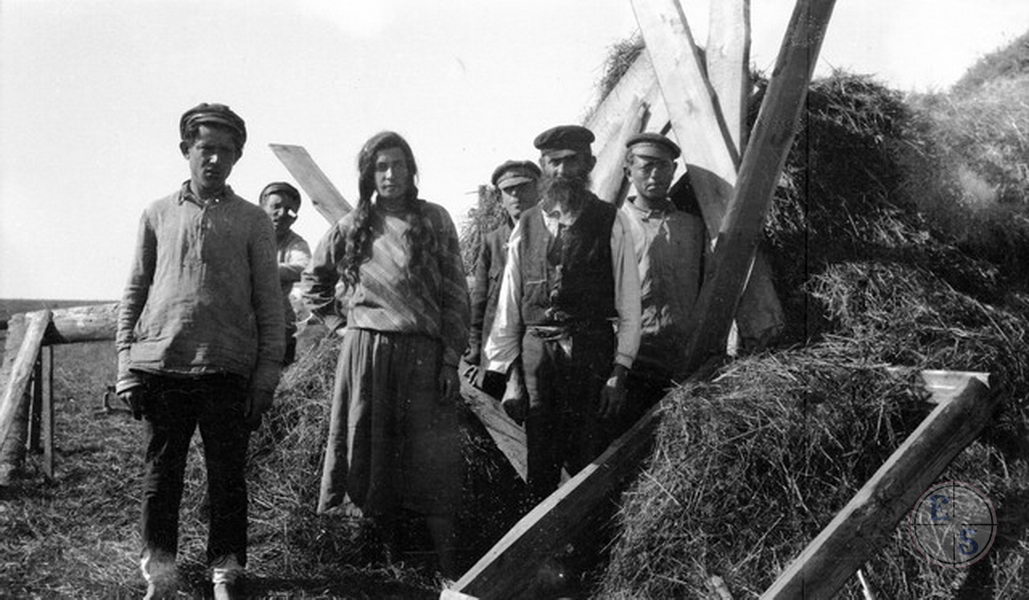
The Jews are colonizing first as pioneers, every small or larger town sends out first, a small group of its people and then they are making themselves ready to colonize by whole towns. In Crimea settles this year, three hundred families, and in Ukrainia three thousand and the rest in White Russia. It costs six hundred rubles to colonize a family. The Comzet is still short a half million dollars for this year, hut for the next year the program is to colonize ten thousand Jewish famines and yet a poorer class of Jews, and the need will be eight hundred rubles for each and every family.
American Jews Must Help.
The “Narkomzet” of Soviet Russia is ready to give to the Jews enough land to colonize hundreds of thousands of Jews. It offered a million and a hundred thousand desiatin in the district of Shelabisk on the Ural, but the funds to make it possible ought to be raised in this country. The Jewish workers organized themselves in the “Ikor,” but they are finding difficulties to arouse the class consciousness of the Jewish workers in the trade unions which are still largely under the influence of the Forward and are blind even to such a great necessity.
The Jewish distribution committee on the other hand did receive favorable reports about Jewish colonization in Russia and is undertaking a big campaign for funds.
There are 125,000 Jews already colonized in Russia, occupying 250,000 desiatin land. This is only the beginning. In Palestine only fifty thousand desiatin are held by Jewish farmers and it Is after forty years of activity, this shows what national means in freedom a Communistic state.
The Daily Worker began in 1924 and was published in New York City by the Communist Party US and its predecessor organizations. Among the most long-lasting and important left publications in US history, it had a circulation of 35,000 at its peak. The Daily Worker came from The Ohio Socialist, published by the Left Wing-dominated Socialist Party of Ohio in Cleveland from 1917 to November 1919, when it became became The Toiler, paper of the Communist Labor Party. In December 1921 the above-ground Workers Party of America merged the Toiler with the paper Workers Council to found The Worker, which became The Daily Worker beginning January 13, 1924.
PDF of full issue: https://www.marxists.org/history/usa/pubs/dailyworker/1925/1925-ny/v02b-n154-supplement-jul-11-1925-DW-LOC.pdf
 Revolution's Newsstand