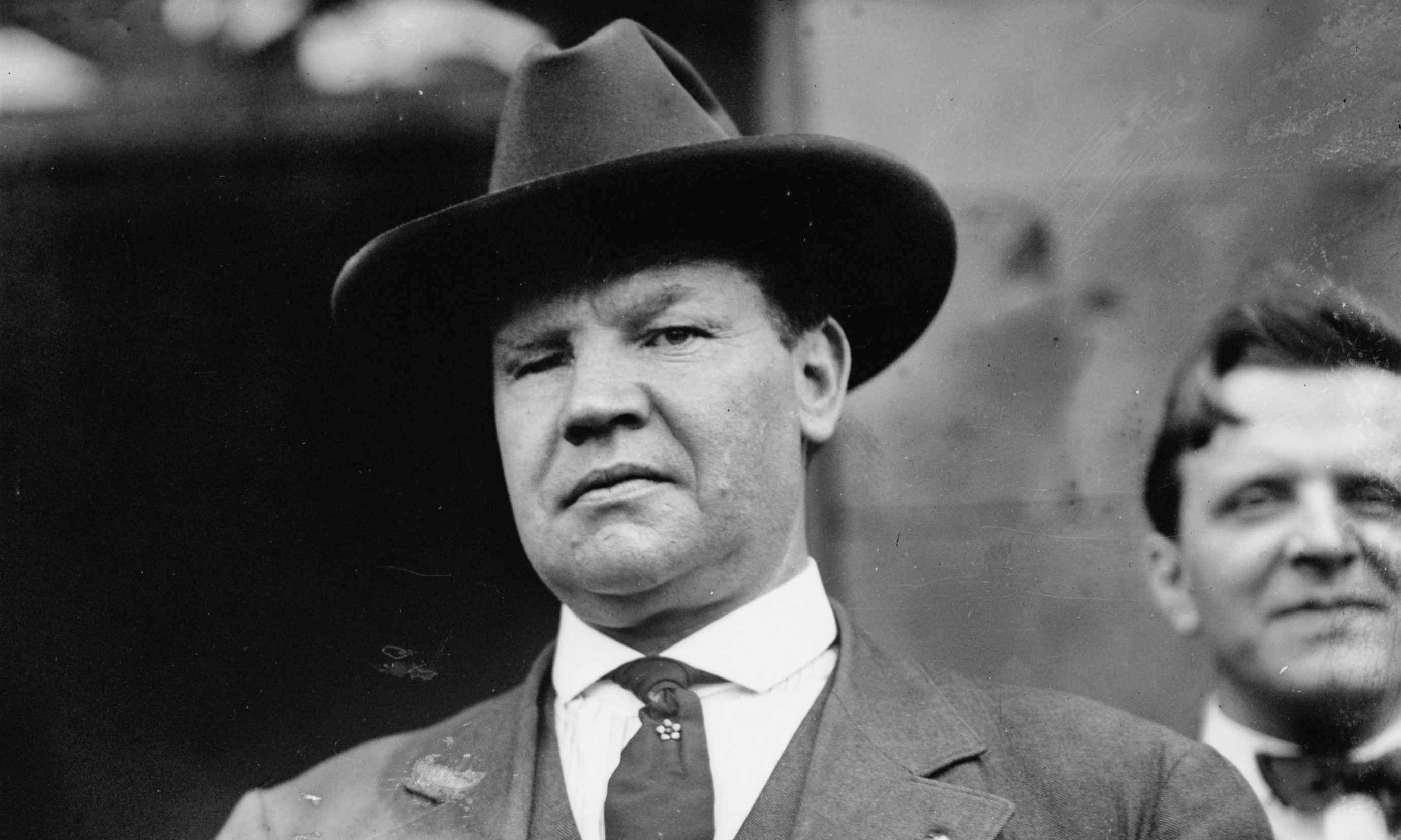
Haywood brings the electricity and charges his Uniontown audience.
‘Haywood at Uniontown, Pennsylvania’ by J. Edward Smith from International Socialist Review. Vol. 13 No. 4. October, 1912.
Under the auspices of the Socialist Party, Fayette County Local, William D. Haywood addressed the largest audience ever assembled to hear a socialist speaker in Fayette county. Haywood had been advertised in the usual manner—no extraordinary efforts had been put forth. The services of the transportation companies were kept down to the minimum. The park management was unprepared for the entertainment of the crowd. With five capitalist daily papers in this county, none of them even referred to the fact that this meeting was to be held. Neither did they refer to the fact that it was held, and was the biggest success ever made in this county.
But the people got to the park just the same. They began arriving at 12:30 and kept coming until 4:30 by rail, automobile, horseback, on foot—well, they just got there some way, and what a crowd it was! It was a quiet, orderly, patient and a determined crowd, men and women and a few children. It was a representative crowd, too, well proportioned. The exploiter and exploited were there, the “professions” were there—clergy, lawyers, doctors, politicians, public officials, detectives, merchants and farmers—all waiting for 2:30, the time appointed for the lecture to commence.
The time arrived but no Haywood. Then 3 o’clock, and still no Haywood, but the crowd kept growing all the time in spite of the fact that many were going away disappointed. Then 4 o’clock and no Haywood or message from him. And yet every car that arrived was loaded to the limit. Then 4:15 arrived and with it Bill Haywood. The handclapping and cheers at the street car station announced the fact to those waiting in the park that he had arrived. A few quick introductions and Haywood hurriedly entered the park and made his way rapidly to the platform on which he was to speak.
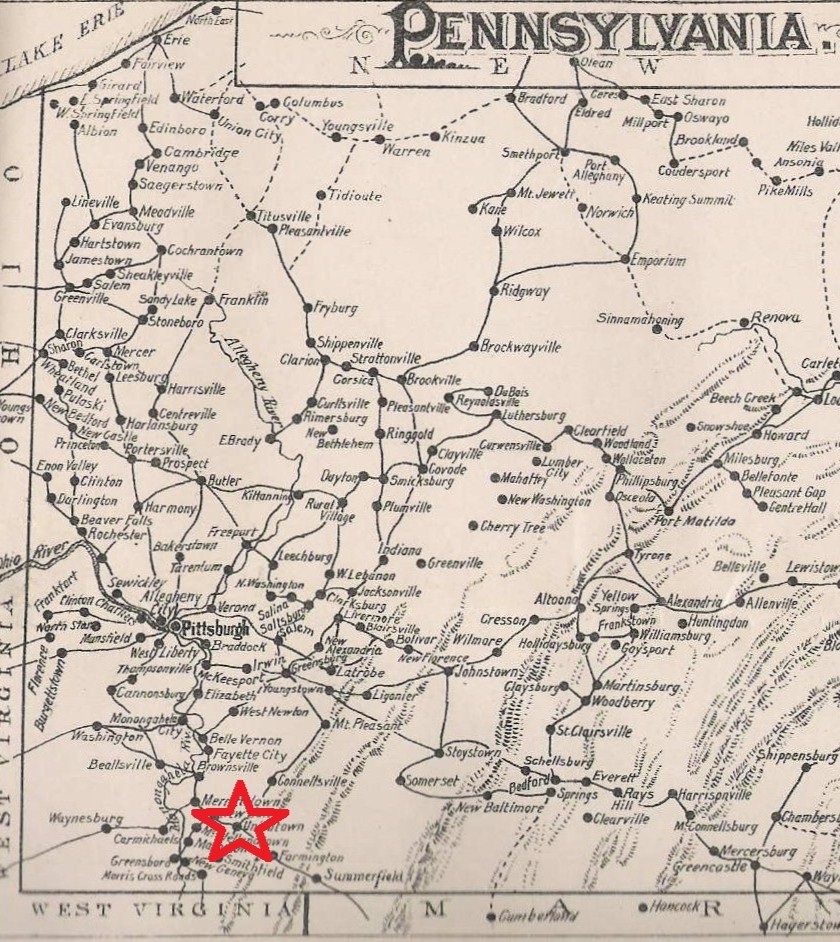
Chairman Hanley, in a very few words, stated the object of the meeting. He then introduced the Italian speaker, who, in a ten minute speech, made the welkin ring, for if applause is any indication of a hit, he must have made a four-baser.
Without any waste of ceremony the chairman introduced William D. Haywood. As he arose and stepped forward, he was greeted with a burst of applause that made him turn around and learn that he was not simply facing an audience, but was completely surrounded by those determined to hear him. Many claimed that over three thousand were present, but to be very conservative, there was no less than 2,500 persons who had waited three hours to hear Haywood. The speech was delivered with a power that convinced all who heard of his deep sincerity.
There was no play to the gallery; there was no bid for applause, there was no tickling the humor and no attempt to play upon the sensitive feelings. It was the great strong voice of labor to labor, and there is none other so powerful!
As the speaker drove home fact after fact—why we have the class struggle and what it is—you could see a tear here and there trembling on the eyelashes of strong men. You could see a tightening of the lips, or you could see a frame quiver. It was a tense, serious crowd, and it stood or sat, as it could, all eager attention for two solid hours. If there were any doubters as to the class struggle when he commenced, there was none when he finished. Neither was there any lack of information as to how to end the class struggle. It was a great meeting!
The people had traveled for miles; they waited patiently for hours, not a soul present knowing whether Haywood would come or not. Yet they stayed on and they were not all socialists by any means. This shows that the people have their eyes open. They want the socialist message and they will have it in spite of all the other class can do. — J. Edward Smith.
The International Socialist Review (ISR) was published monthly in Chicago from 1900 until 1918 by Charles H. Kerr and critically loyal to the Socialist Party of America. It is one of the essential publications in U.S. left history. During the editorship of A.M. Simons it was largely theoretical and moderate. In 1908, Charles H. Kerr took over as editor with strong influence from Mary E Marcy. The magazine became the foremost proponent of the SP’s left wing growing to tens of thousands of subscribers. It remained revolutionary in outlook and anti-militarist during World War One. It liberally used photographs and images, with news, theory, arts and organizing in its pages. It articles, reports and essays are an invaluable record of the U.S. class struggle and the development of Marxism in the decades before the Soviet experience. It was closed down in government repression in 1918.
PDF of full issue: https://www.marxists.org/history/usa/pubs/isr/v13n04-oct-1912-ISR-gog-ocr.pdf
 Revolution's Newsstand