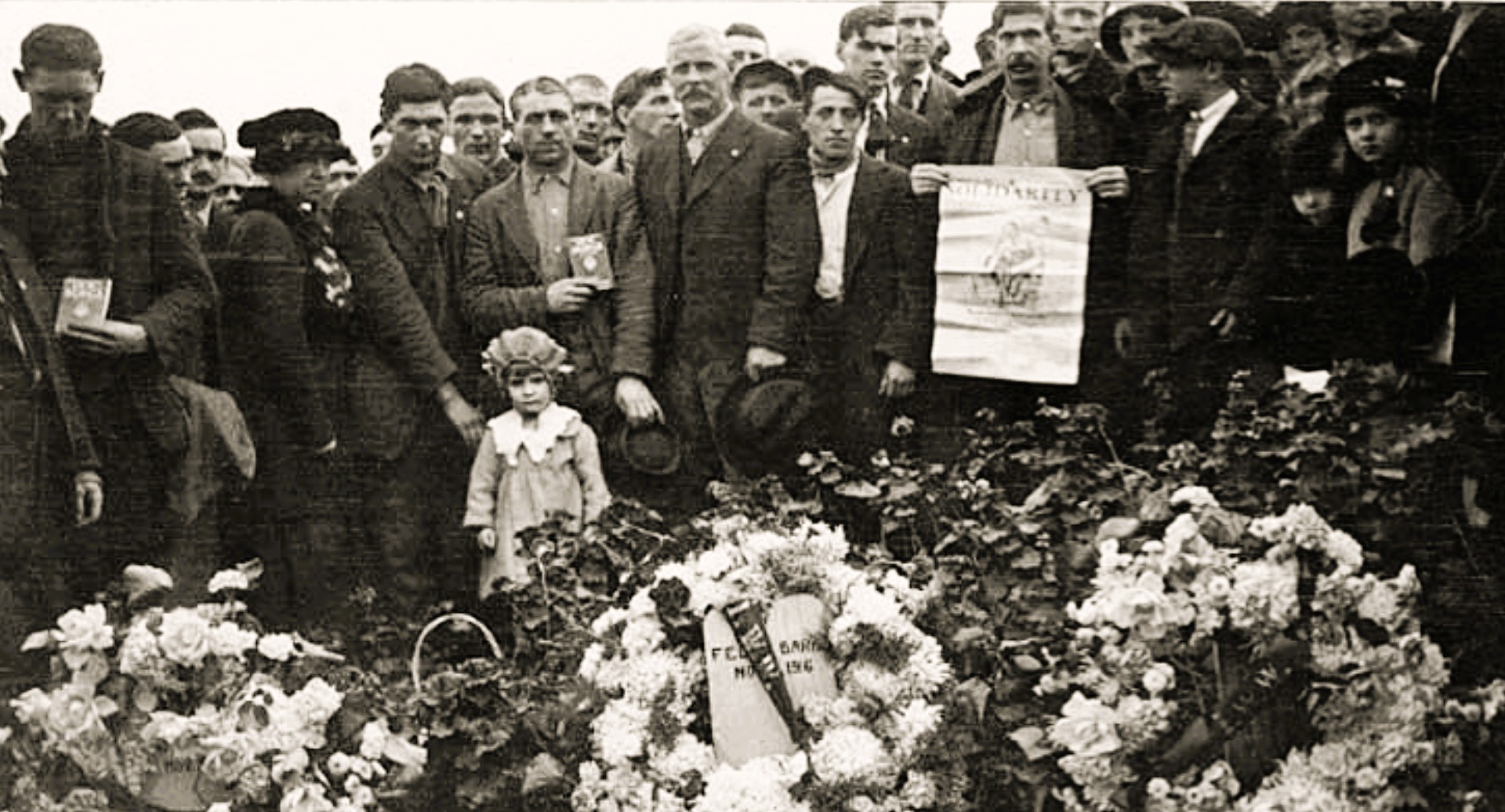
A moving essay by the editor of Industrial Worker, J.A. MacDonald, as he travels from Seattle to Everett to see the Verona for himself, talk to local comrades, and attempt to visit prisoners in jail. The ‘Everett Massacre’ of November 5, 1916 was the culmination of a long confrontation in the are between workers and the lumber bosses. That day hundreds of armed thugs attempted to prevent the landing of of I.W.W. activists from Seattle onboard the Verona as it docked in Everett. The I.W.W. defended themselves, with two gunthugs killed and two dozen wounded. At least five wobblies died, potentially a dozen more drowned, and another thirty were wounded.
‘Everett Thuggery and Working-Class Heroism’ by J.A. MacDonald from Industrial Worker. (new) Vol. 2 No. 3. May 1, 1917.
Trip on Verona Suggests Many Phases of Class Struggle; Brutality Does Not Avert But Hastens Movement of Toilers Towards Freedom; Movement Stronger and More Firmly Rooted in Everett Than Before Massacre; Fussilade of Shots Heard Round the World.
On Friday the editor of the Industrial Worker went to Everett on the Verona. The Secretary there told us that he would have Mayor Merrill give us a fitting Everett-welcome with a band–vigilantes of course.
In the trip we had two objects. We wanted at leisure to examine the steamboat which led a band of workers to a shining place in the story of the struggle of men for blood-bought freedom–and the “City of Smokestacks” to the destiny of merited loathing, contempt and infamy. On the pages of the history of the future the place to which Nero attained as the result of a long reign of barbarous brutality, Everett reached among cities in one crowning Sunday afternoon of fiendish death orgy.
History is full of analogies and contrasts: There is Cortez and Pizzaro throwing Indians to their bloodhouds in the name of God–Oh, God, how many crimes are committed in thy name; how many hands red with slaughter have been stretched to thee for benediction—There are the Cloughs and the Hartleys throwing the workers to hounds more bloody in the name of profit.
There is Pontius Pilate, the judge, washing his hands and lawyer thugs of Everett with hands that cannot be washed of the blood of labor!
There is Judas Iscariot with the manhood and nerve to commit suicide in atonement for his crime–and the traitors, the betrayers of the workers in Everet? without the manhood or the nerve to rid a world of their offal carcasses!
Giants and Pigmies.
At noon we left the Coleman dock with its busy bustle which did not for one moment hide from us that it was a place of slavery. We could see the work being done by a race of giants working for a pigmy. But the giants did not know they were giants and the pigmy did not know its own littleness.
As the boat moved from the pier, others were watching the shipping of the port of Seattle as it lay in a wide crescent, one of the great monuments to organized labor,–organized by the masters for the masters it is true–but organized. But instead we looked at the other side of the story, the slivered, shot and bullet punched front of the Verona–
“Look at that and they said there were neither rifles nor shotguns on the dock.”
A man of about thirty, wearing a yellow raglan, was showing the bullet holes to a woman evidently of the lower classes; her clothing showed she was not a working woman. Other passengers gathered and an Empire builder in rudely stagged overalls, a blue mackinaw coat and working boots broke in:
“And they lied!”
For a short time they looked at the bullet holes with their stirring message of the class struggle, but evidently all they had the power to see was the shattered boards. Lost to them was the hurtle of forces for the ownership of the world of which the scene was so suggestive.
Gradually they moved away, and with the scissorbills’ natural inclination for what does not concern them, they spoke of the one common topic of discussion where fools meet–the war. One said he could not understand why the workers were not enlisting. He evidently did not know there were recruiting offices in Seattle. Blind mole in a world the product of evolutionary forces he did not understand, he did not know that the punctured front of the Verona was his answer.
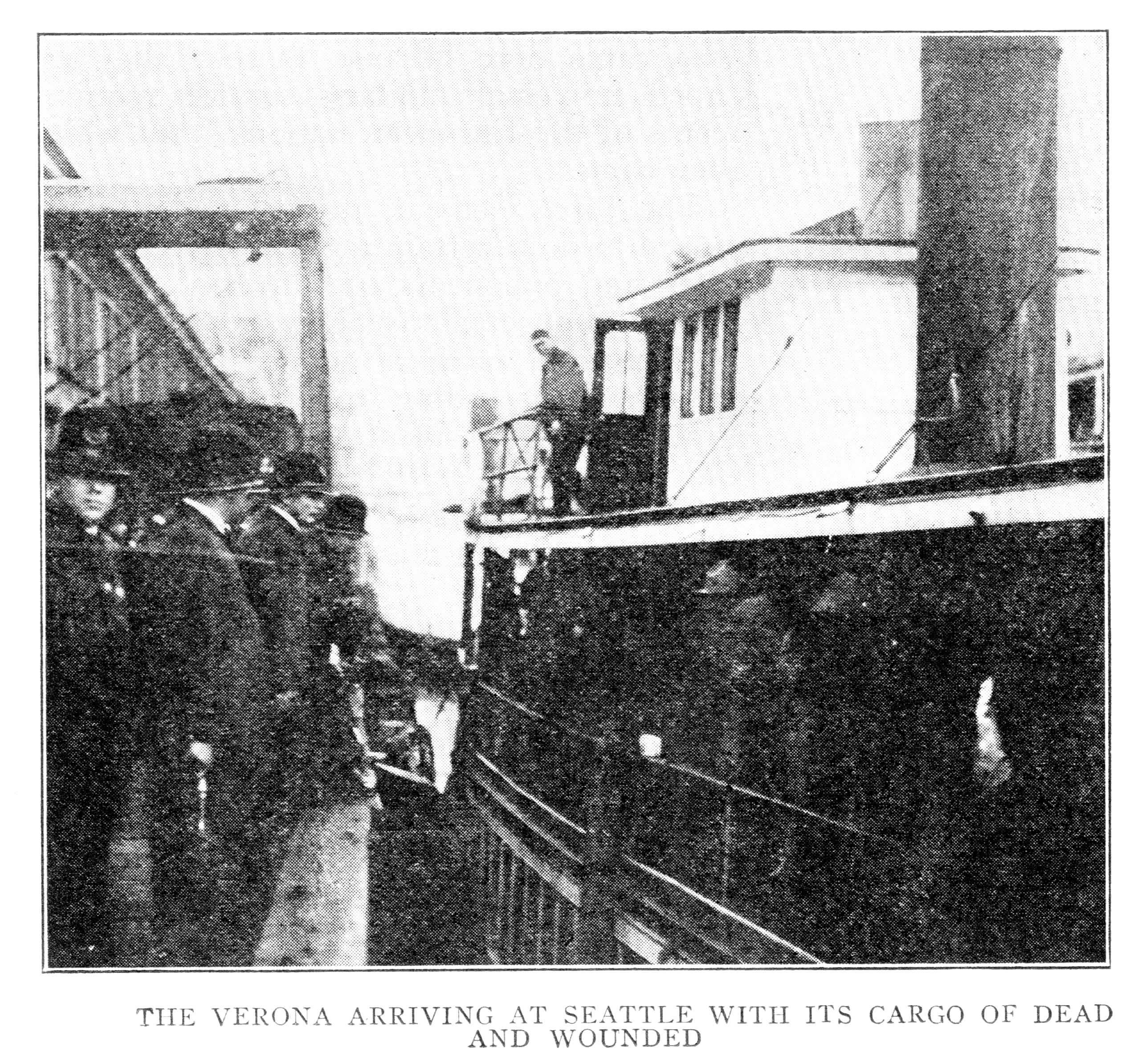
To them the Verona was but an incident, a topic of conversation. It represented but a poor means of transportation, by which the willingness of travellers to stand poor accommodations on account of good scenery was capitalized. They could not imagine the happiness and elation which broke in song from the hearts of workers bent on a great mission.
We lost sight of the passengers, puny, insignificant, little-purposed flotsam, rudderless on the sea of life, as we imagined these same decks on the morning of November fifth. There were boys with the idealism of youth, when great things seem easily possible, their thoughts focused on the future. There were men old in the one struggle which means anything other than slavery for humanity. The recruits in the struggle for freedom rubbed shoulders with veterans of that handful who pitted their lives and their overalls against the armies, the thugs, the gold, the power and loot entrenched in the strongholds of industry.
Greatest Words in Vocabulary of Labor.
And with the songs they sang we can imagine blended the words of comradeship, unity now and hope for the future, the greatest words in the vocabulary of labor–“Fellow Workers.” Do you know what these words mean? You do not if you have not heard them on the lips of the crusaders of the social revolution! Denied the comradeship that go into “home,” “sweetheart,” “baby,” all the tenderness, all the strength, all the devotion, all the aspirations of these men are focused and compressed in the words “Fellow Worker.” There is in it all the moods of nature: the sigh of the winds, the boom of the surf, the crooning of love mingled with the notes of the storm and the thunders of battle. We can hear these notes as soft, as low, as wild, as stirring as the lives they lead mingled with the notes of “Hold the Fort,” the battle song of Labor.
Excursions, the common enjoyment of life, had been denied them, but their’s is the power to enjoy greatly, feel deeply. It was one of the few periods of enjoyment in lives of slavery and toil. In remarkable contrast with the misery of their lives and the destitution which is the reward of the producers was this Sunday excursion and the beauty of the scenery on the shore, till they thought that these shores, meant to be the property of all, had been monopolized by the few. Even this but reminded them of their mission, and filled them with the joyous thought of a great duty to perform.
A Scene Sadly Heroic.
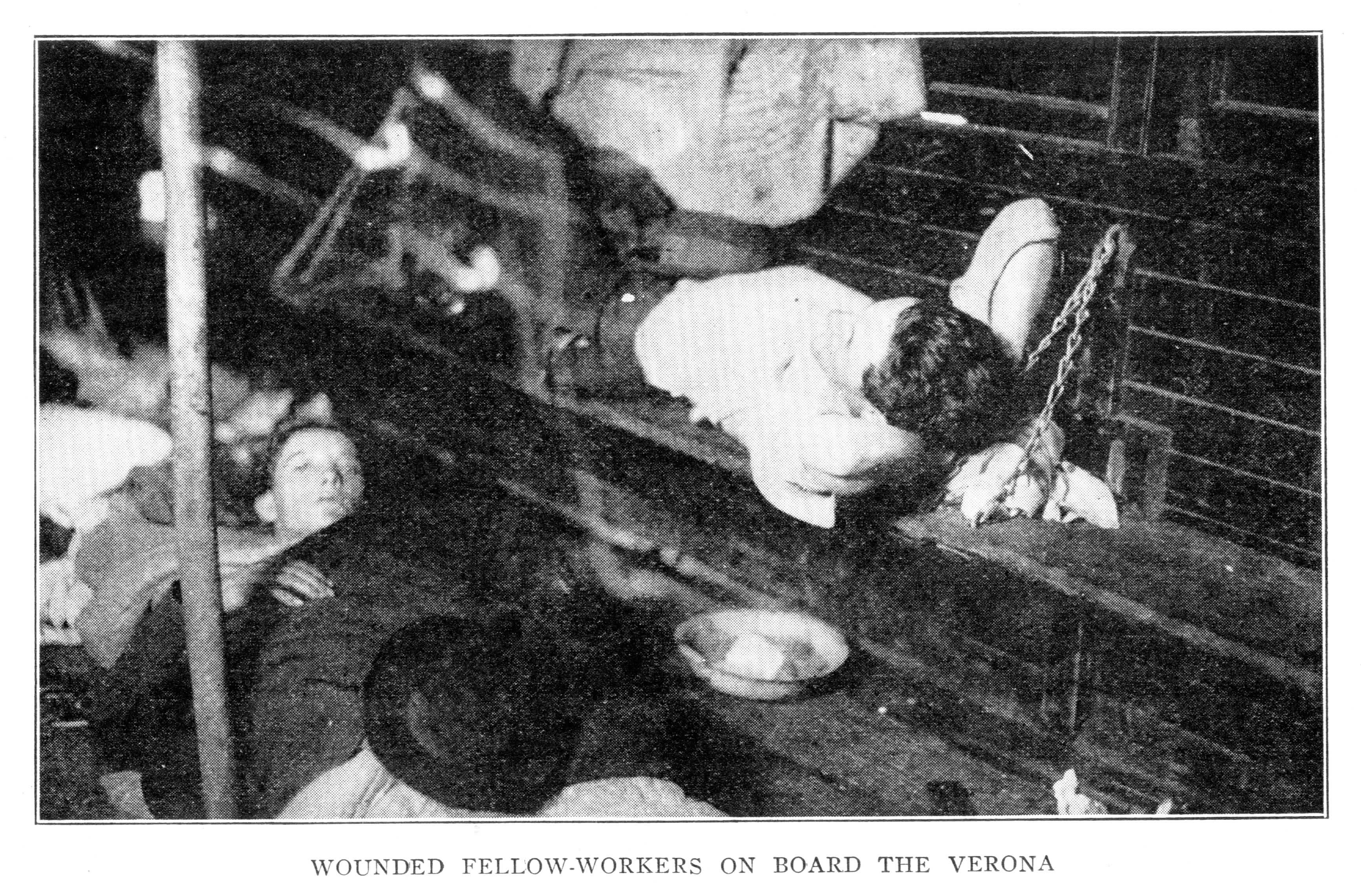
Then presented itself to our mind another scene on these same decks a scene sad as slavery, but showing that men of the working class can die as heroically as they can live, that Labor is invincible. We saw these same decks covered with the death fruit of master-class rapacity, cowardice and barbarity. We saw men who were a few hours ago exultant in the strength of their purpose breathing their last on decks seeping with their blood. We pictured them propped in the arms of their friend as they sang their challenge to the old and the dawn songs of the new. Shot by the murderous bullets of hireling ruffians, they died!–men measuring up to every standard of manhood, themselves forming a standard by which to measure the working-class of the future.
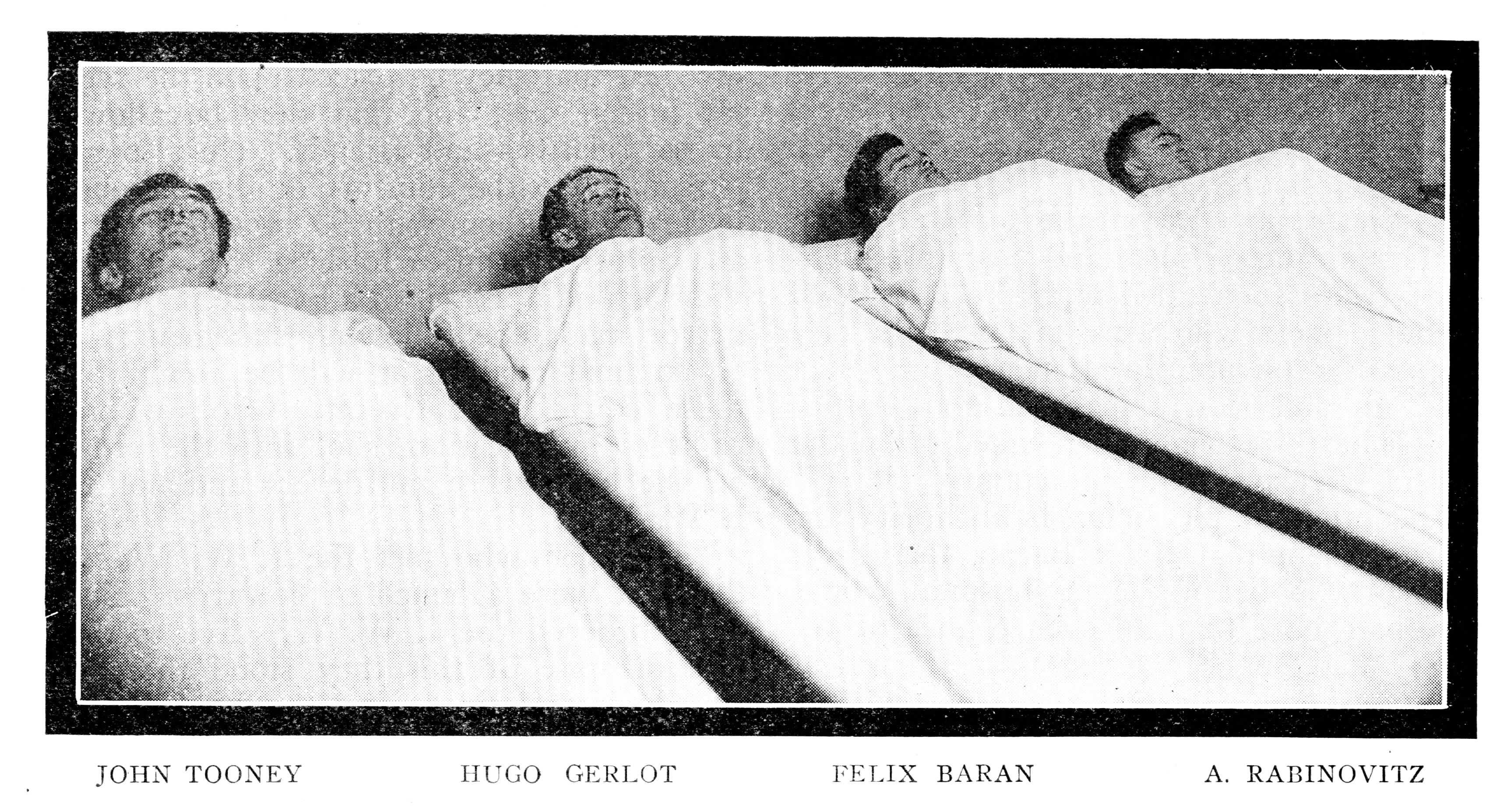
Fools! Murderers! Tools! You sought to destroy the onward sweep of Labor with thugs, gunmen, rifles, shot-guns, revolvers. Five are dead, others found a grave in the waters on your shores!
Taken Up by Army of Industry.
But what of those who saw them die! Some went on that deck mere unionists wanting to grab from your table a little of the wealth they produced; they came back revolutionists determined on your doom. Thru the noise of a warring world drowning the thunders of the cannon came the answer to their story. They who clothe you, who feed you, who shelter you and whom you have in return robbed and ruined are marshalling their power. The volley of your gunmen, your challenge to the workers of the world, has been heard and mingled with it is the strains of “Hold the Fort” dying with the life of a worker. but to be taken up by the army of industry, nevermore to die till it mingles with the death rattle of your system.
We thought of the centuries of murder, clothed with respectability and enacted into laws, which the workers had endured. We thought of the millions murdered yearly in the mad scramble of parasites. We thought of the Grabows, the West Virginias, the Michigans, the Minnesotas, the Colorados thru which labor had passed. We thought of the industries with the lives of children flowing into the machine at one end and the blood of children flowing out of the other, all in the name of democracy, profit, civilization, we saw labor awaken, become conscious of its power assert its might. Reared by men of the same stamp as your victims, on the ruined slaughter houses of the present, we saw arise a new and real civilization, masterless, and slaveless, with man the creator, the master and not the slave of the product of his muscle, and his brain.
A Dream Coming True.
A dream! Yes, a dream, but as a dream far higher and nobler than the hell-conceived nightmare of a reign of gold. A dream, yes a dream, but a dream that the workers are expressing in organization, that organization is expressing in power and that power will express in the emancipation of toil.
Passing a point jutting out into the Sound while the mar in the raglan was wondering what would happen if a submarine were to get loose in the bay, till finally we had to tell him that we supposed Everett would want. I.W.W.’s they had not murdered to enlist to defend them, we saw the City of Everett. We saw docks stretching out into the bay, a hill covered with business houses and a railroad depot and at the water’s edge vast piles of lumber beside vast lumber mills generation or more of workers had built Everrett out of forests, they had laid out its streets, built its homes and embodied their lives into its mills and lumber piles. Then thru the ordinary capitalistic crookedness in the ordinary capitalistic way the Cloughs, the Hartleys, the Ramwells, with the aid of lawyers fitted to be on the board of strategy of Hell.
A servile crook and booze fiend in charge of justice of the capitalistic variety! A mayor with the barbarity of a Geronimo and the mentality of an idiot! Workers preaching on the streets that the loot did not belong to the robbers! What was under these conditions more logical than murder? What highwayman would stop at murder when he could buy others to do his killing under the protection of his legal tools. Murder was perfectly logical under the conditions in Everett. Murder is always perfectly logical in a society founded on the survival of the fittest–criminal.
As we landed on the dock we saw the evidences of the perfectly logical method in which the perfectly logical murder was committed. Inside the wharehouse on the end of the dock two boards were taken off the side. One learned in the art of warfare had probably suggested two ranks one kneeling and the other standing as the best methods for throwing lead into workers. All over both warehouses are the holes punched by bullets from inside the houses. There are bullets imbedded in the seats of the waiting room plainly shot by thugs of uncertain aim. In the clock in the waiting room next to the ceiling is the pathway of a bullet. At what was it fired? A thug was probably trying to shoot God, as the Commercial Club did not need him; they had Thug MacRae, Thug Cooley and big boss Hartley.
That the Commercial Club hirelings were successful in the murder of workers, the wounding of others, the jailing of many is now history. But deliberate murder was not planned without a purpose. That purpose was the destruction of working-class organization in the city of Everett and the unrestricted reign of gunmen. That never was massacre more unavailing we were next to learn. We went to the I.W.W. Hall in the city of Everett. Not the I.W.W. hall, which had been closed when some time in October we spoke on the streets. After being continually driven out of that hall by the hirelings of the Cloughs and the Hartleys–and refusing to stay driven out in the characteristic I.W.W. way–they had finally been driven out by the workers of Everett. Defying the economic power of the masters these workers made the hall their rallying point till they forced the movement into a larger and better hall. Here we found workers of the same fighting class who have made the I.W.W. the terror and despair of the bosses. Asleep a few months ago, thousands of Everett workers have been jolted into wakefulness by the massacres and brutalities of Everett thugdom. This is one Everett rallying point of what has been aptly called “Irrepressible I.W.W.” There is another which we were next to visit. Guided by one of the members we went thru the city labor had builded for the Hartleys. On the way we passed the Commercial Club where the thugesses of Everett were having a tea or blood party; and an afternoon’s diversion eating some of the wealth produced by the class their husbands sought to massacre. We feel these women, if they have anything of the sensibility which go with womanhood, are sufficiently punished. Are they not married to gunmen?
Soon we were at the County Jail. After the workers had built the Commercial Club for their boss, they next built the jail for themselves! We went into the office. On the desk was a copy of the “Industrial Worker.” By the way, let us here say that some of the biggest boosts the “Industrial Worker” gets is from thugs and deputies who explain what they would do to the editor–if they only had the nerve, or the booze to generate the nerve.
Unconcerned, Forgetful of Self.
We told them who we were and were given the same loving look that a grizzly bear gives a sheep. We asked to see all the men in the jail but were told it was too late. Next time we go it will probably be too early. Three of the workers were brought to the office in the front where we talked. In the conversation there was nothing of regret, no words of compromise, no consideration of the hardships of incarceration to men of the great out of doors. With the charge of murder hanging over them they were not interested in their own future half so much as in the growth of the organization which is the expression of their revolt against the thraldom of industry. If they had been in the I.W.W. Hall or on the job they could not be more unconcerned in all except the future of the working-class There was the brightness, the clear thinking, the comradeship which has made the I.W.W. the greatest fraternal organization in the world present in every gesture, every sentence, and the poise of these fighters. One said: “I did not know much about the I.W.W when I joined. I have been educating myself in here. I will be better educated when I get out; I will make a better delegate.” “What if you do not get out?” asked another with a laugh.
“Then I will let the farmers, the Lumber Trust and the bosses organize the workers into the I.W.W. They organized me.” Months of captivity will develop and accentuate the flaws in any man’s nature, but in the cases of these men it was evident that the great purpose and ideal around which are centred their thoughts kept them cheerful and companionable. Their days are days of study; and pouring thru the bars more mighty than the winchester of the Lumber Trust are the songs of the industrial revolution. It is safe to say that the brightest place in the city of Everett and the most interesting is in the back of its jail.
For a moment we went to the outer gate from which we could see the lower tier of cells that answer in a land of liberty, the aspirations for liberty, in a land of democracy answer the call for democracy. Hands were raised in greeting; men we knew and those whom we did not uttered the words which will yet be the battle cry of a class, “Fellow Worker.” Altho in a jail yet we did not pity them. Our feeling one of inspiration envy and admiration.
Yes, and determination to be worthy of being the “Fellow Worker” of such men.
Kindred With All Progress.
Unconscious they that the jails and the contempt of the world make them kindred with those on whom human progress has ever depended. But vaguely, inexpressibly, must come to them as they lay in iron cells the realization that the future is not being cast in the throne rooms, banquet halls, amid gay laughter, music and frivolity, but in the darkness of prison cells illumined with the vision of future freedom. Vividly has it been brought to their attention that the history of humanity is not written in champagne but in human blood; that its staging is not in the voluptuous scenery of gandy functions, but that always sounding the doom of the old, prefiguring the new stands a prison, a cross, a gibbet. Take from the history of the past the men who made the hemlock, the prison, the thumb screw, the payment of being pioneers of the future and there is left but the story of butchers or nonentities as meaningless as the laugh of an idiot.
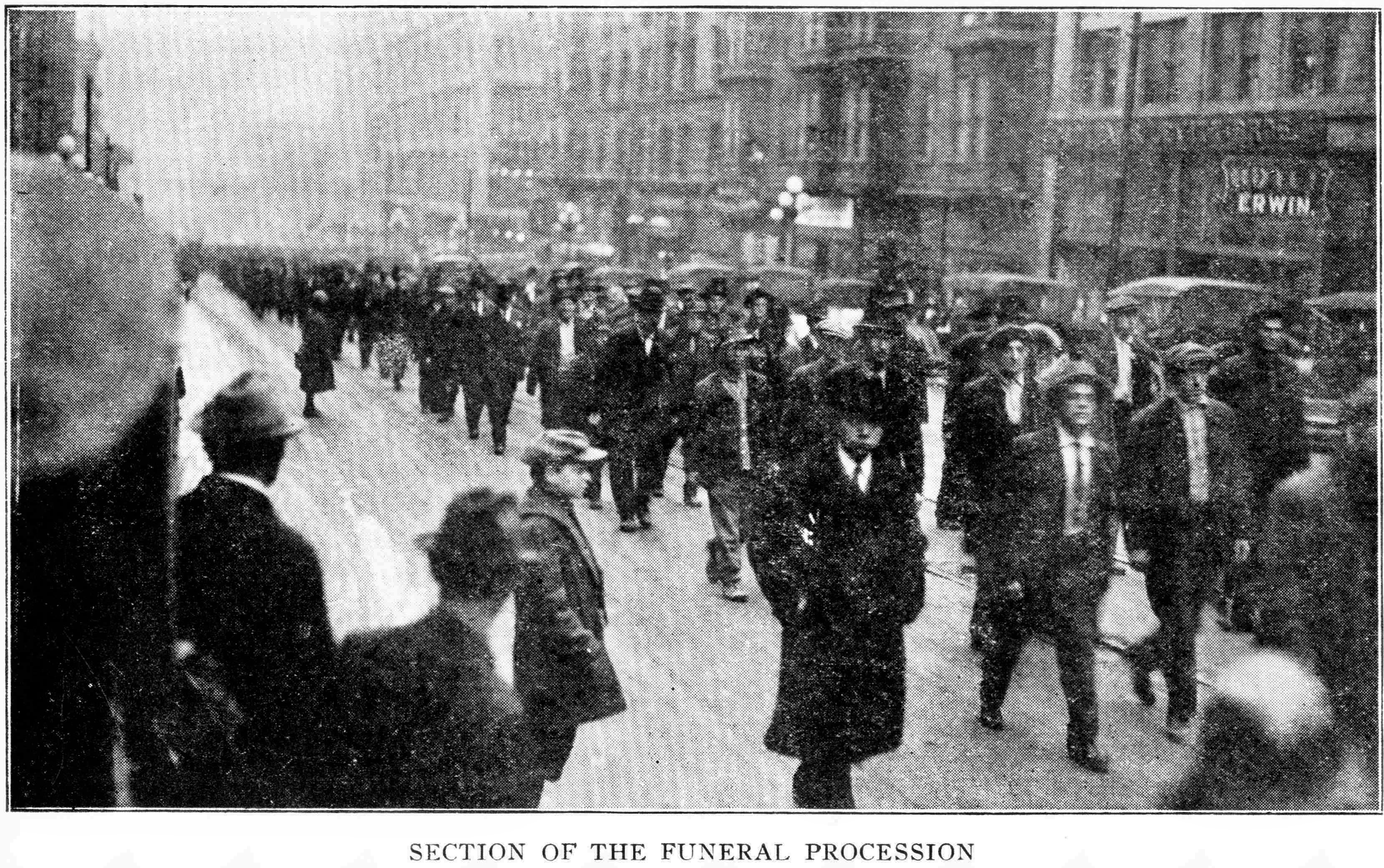
If man with his instinctive groping for higher things is not the supreme joke of a supreme lunatic, if evolution is leading us other than to slaughter, prisons such as that at Everett–prisons athrill with the spirit of revolt which is ever the spirit of progress–are far more significant than the barbaric splendor of a tinsel civilization of blood.
Men such as those murdered at Everett, drowned at Everett, enjailed at Everett for dreaming of a real democracy, will be the inspiration in the fight for still greater future freedom for humanity. Not ours to do them credit, a slave in a world enslaved in chains of its own making; they belong to the future. They are a part of the heroism of all ages which has no race or creed of clan: they are personifications of the unceasing spirit of progress, proof that history has a meaning and humanity a goal.
The Industrial Union Bulletin, and the Industrial Worker were newspapers published by the Industrial Workers of the World (IWW) from 1907 until 1913. First printed in Joliet, Illinois, IUB incorporated The Voice of Labor, the newspaper of the American Labor Union which had joined the IWW, and another IWW affiliate, International Metal Worker.The Trautmann-DeLeon faction issued its weekly from March 1907. Soon after, De Leon would be expelled and Trautmann would continue IUB until March 1909. It was edited by A. S. Edwards. 1909, production moved to Spokane, Washington and became The Industrial Worker, “the voice of revolutionary industrial unionism.”
PDF of full issue: http://iw.applefritter.com/Industrial%20Worker/1917/1917%205%201%20IW.pdf
 Revolution's Newsstand