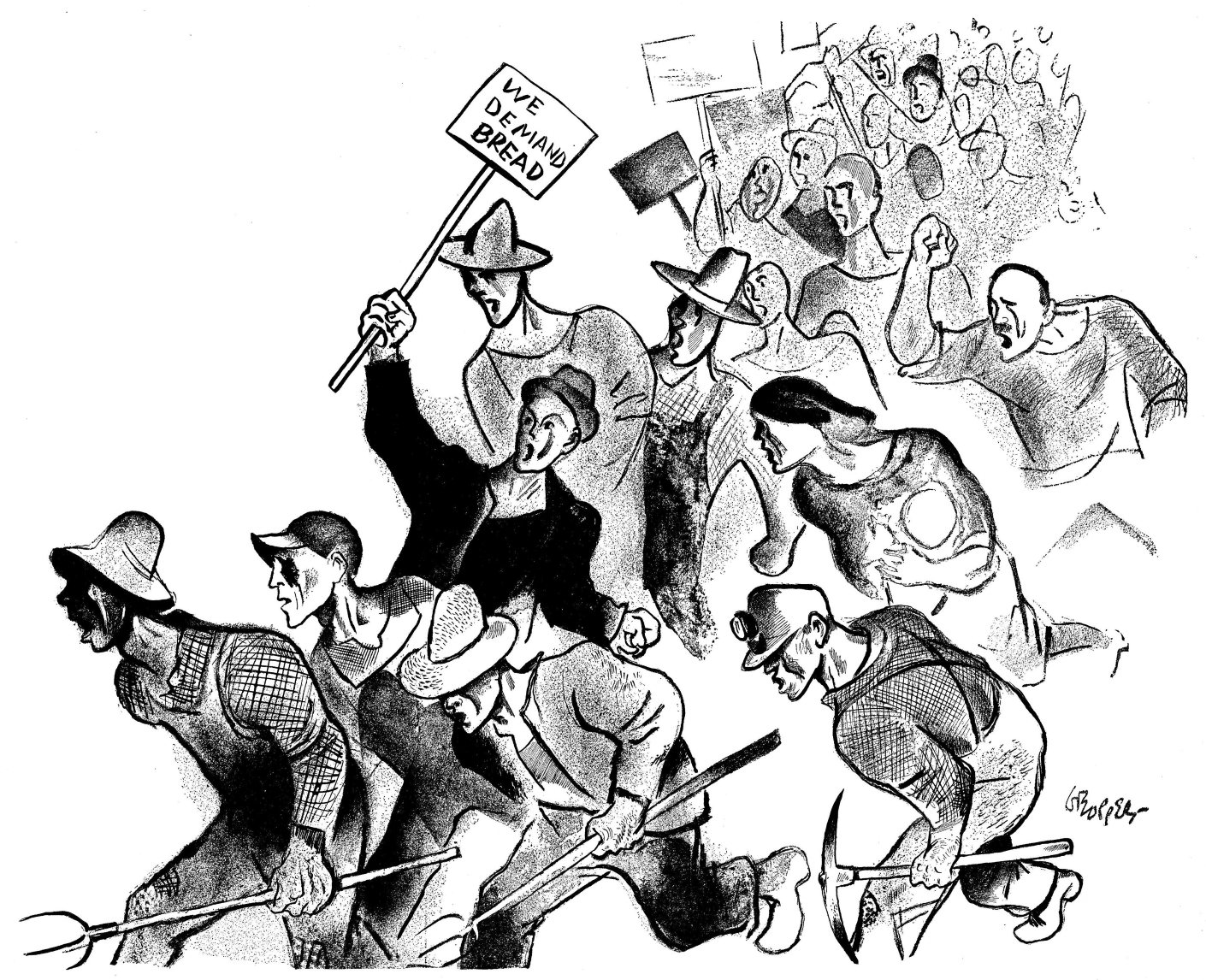
The Great Depression creates new conditions and consciousness along an ‘open-shop’ Ohio River that sees thousands gather in Steubenville demanding aid.
‘1,500 Miners March on Steubenville for Relief’ from The Daily Worker. Vol. 8 No. 175. July 22, 1931.
6500 TAKE PART IN MASS MEETING
First of Its Kind In Steubenville
BRIDGEPORT. Ohio, July 21. Fifteen hundred striking miners, their wives and children marched on Steubenville this morning to Courthouse Square. Joined by 5,000 Steubenville workers, a meeting was held and a committee elected who County Commissioners, all in face of the ultimatum of Mayor Conley that the march and meeting would be broken up by all forces at the disposal of the city and county.
This first meeting is the first of its kind in the history of Steubenville, a stronghold of the Wheeling Steel Corporation, where not even during the steel strike was it possible to hold a mass meeting.
The hunger marchers paraded through the steel workers section in an impressive demonstration with workers on foot from 5 a.m., many munching dry bread as they walked.
The County Commissioners reiterated their proposal to the hungry workers to send their children to the poorhouse and referred them back to the State government. One commissioner asked permission to speak at the meeting. This he was refused. He was told by Bill Calvert, chairman of the committee. “This is not our policy. If you want to make a speech, organize a meeting yourself.”
The speakers were Sivert, Bohus, Calvert, Carr of the National Miners Union and Triva of the Trade Union Unity League, Truhar of the Women’s Auxiliary. Jones, a Negro woman, and Harvey for the Communist Party. The demands for immediate relief of $10 weekly for five dependents, unemployment insurance, defense of the Soviet Union, release of all class war prisoners. Mooney and Billings and others, protest against the massacre of Alabama Negro share croppers, against the legal lynching of the Scottsboro boys were unanimously adopted at the meeting.
The Daily Worker began in 1924 and was published in New York City by the Communist Party US and its predecessor organizations. Among the most long-lasting and important left publications in US history, it had a circulation of 35,000 at its peak. The Daily Worker came from The Ohio Socialist, published by the Left Wing-dominated Socialist Party of Ohio in Cleveland from 1917 to November 1919, when it became became The Toiler, paper of the Communist Labor Party. In December 1921 the above-ground Workers Party of America merged the Toiler with the paper Workers Council to found The Worker, which became The Daily Worker beginning January 13, 1924.
PDF of full issue: https://www.marxists.org/history/usa/pubs/dailyworker/1931/v08-n175-NY-jul-22-1931-DW-LOC.pdf
 Revolution's Newsstand