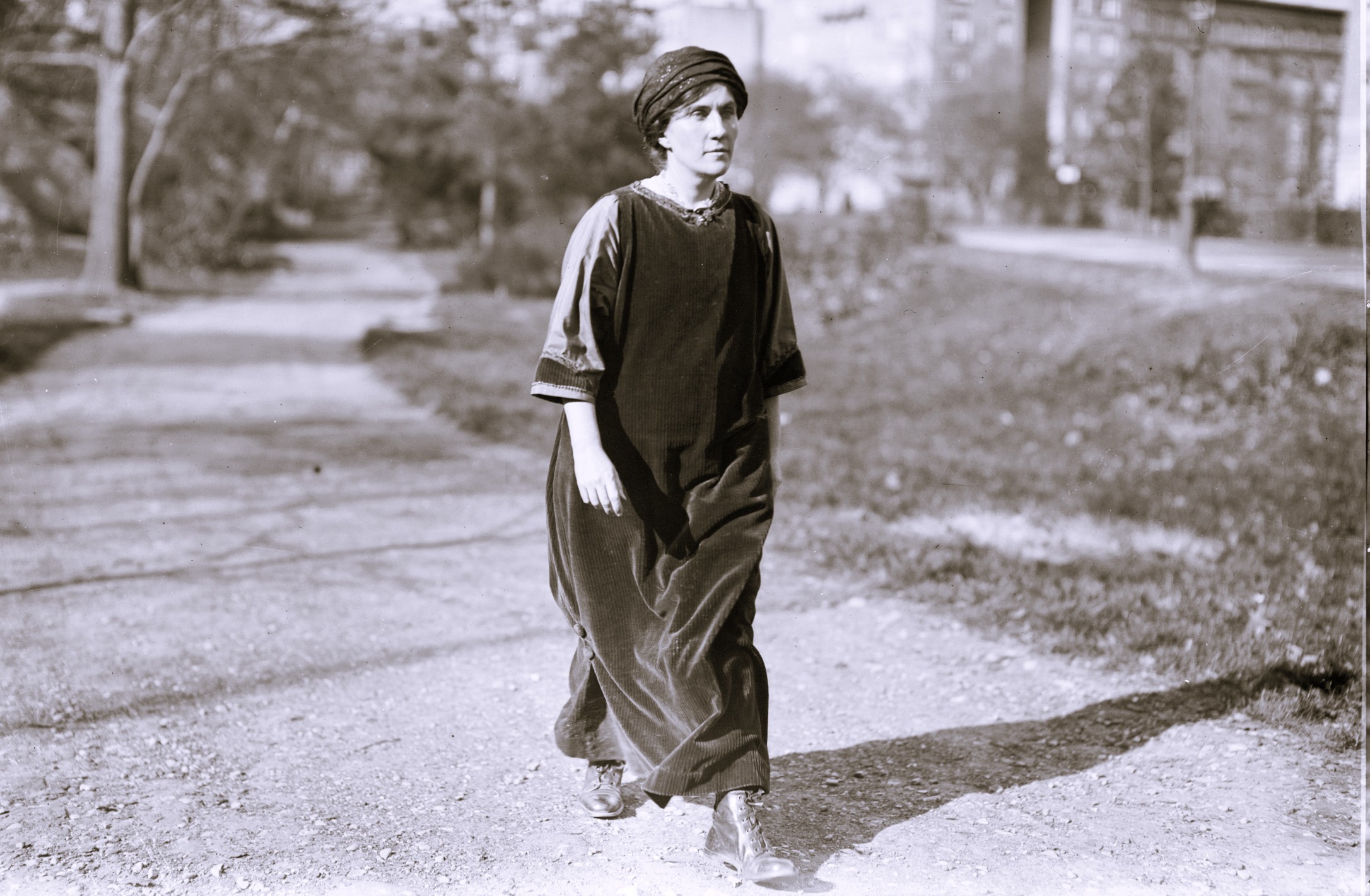
A look at the too-short life of the radical teacher Henrietta Rodman, who threw defiance into the faces of the ‘Lusk Committee.’
‘Noted Rebel Teacher Dies in New York’ by Harry Godfrey from Truth (Duluth). Vol. 13 No. 299. March 30, 1923.
She Said, “15-year-old Minds Overlaid With 50- Year-Old Crusts of Habit Dominate the Public Schools in the United States”
New York. Henrietta Rodman is dead. The New York city board of education, under which she served as public school teacher more than half of the 45 years of her life, will pass no resolutions, for Henrietta Rodman, time and again, and almost single-handed, battled against the board for her beliefs. Her beliefs were that education should be honest; that teachers should not bow down before anything but truth; that married teachers who became mothers should keep their jobs. For upholding the latter belief she was suspended for a year. But she won. New York public school teachers now may marry and have children, and must he given leaves of absence when they are about to become mothers.
Miss Rodman’s educational activities, however, were only a part of a life devoted to causes, persons and movements she regarded as progressive and constructive. These included, of course, unpopular movements: Suffrage; better relations between the Negro and white races; workers’ education; housing reforms: cooperatives; East Indian freedom; the Farmer-Labor party, and finally, open and successful defiance of the notorious Lusk law which purports to make public school teachers “loyal.”
It was her flat refusal to appear before a secret committee appointed under the Lusk law to investigate charges against teachers “loyalty” that brought Miss Rodman into nation-wide notice. Summoned to appear before this inquisitorial body, she responded with a letter not only refusing, but mercilessly analyzing and exposing the whole system of public school education of which she had 25 years’ intimate personal experience.
“The trouble with our public schools,” she wrote, “is that they are old and repressive. There are a few new buildings, some young women teachers who hope to be married, some young men who expect to be lawyers, and millions of children. Everything else is old—old aims, old methods, and old minds in control. There is no room for the creative Impulse in the public schools. They are filled to overflowing with the past and the present; what has been; what is. There is no room for what may be…The tendency of the 15-year-old mind overlaid with a 50-year-old crust of habit, is stolid acceptance of things as they are, dread of change, intolerance of the creative spirit because creation is change. This is the mind that dominates the public schools of the United States.”
That letter settled the Lusk “loyalty” law. From that moment it practically ceased to be, although as this is written the legislature is debating its repeal.
Miss Rodman’s death from brain hemorrhage was a direct result of her incessant activity to make the world a better place to live in. It was said of her that she probably influenced more girls than any other teacher in the largest city in the world. She was one of the organizers of the local teachers’ union.
Just before her illness she had launched a cooperative housing committee to build an apartment house with cooperative nurseries, laundry and dining rooms, so that women with children might be free to work. She herself, although she kept her maiden name, was married and had three adopted children.
Her father, the Rev. Washington Rodman, an Episcopal clergyman, was censured by his bishop and mobbed during the civil war for preaching against the American institution of Negro slavery.
Truth emerged from the The Duluth Labor Leader, a weekly English language publication of the Scandinavian local of the Socialist Party in Duluth, Minnesota and began on May Day, 1917 as a Left Wing alternative to the Duluth Labor World. The paper was aligned to both the SP and the IWW leading to the paper being closed down in the first big anti-IWW raids in September, 1917. The paper was reborn as Truth, with the Duluth Scandinavian Socialists joining the Communist Labor Party of America in 1919. Shortly after the editor, Jack Carney, was arrested and convicted of espionage in 1920. Truth continued to publish with a new editor JO Bentall until 1923 as an unofficial paper of the CP.
PDF of full issue: https://www.mnhs.org/newspapers/lccn/sn89081142/1923-03-30/ed-1/seq-1
 Revolution's Newsstand