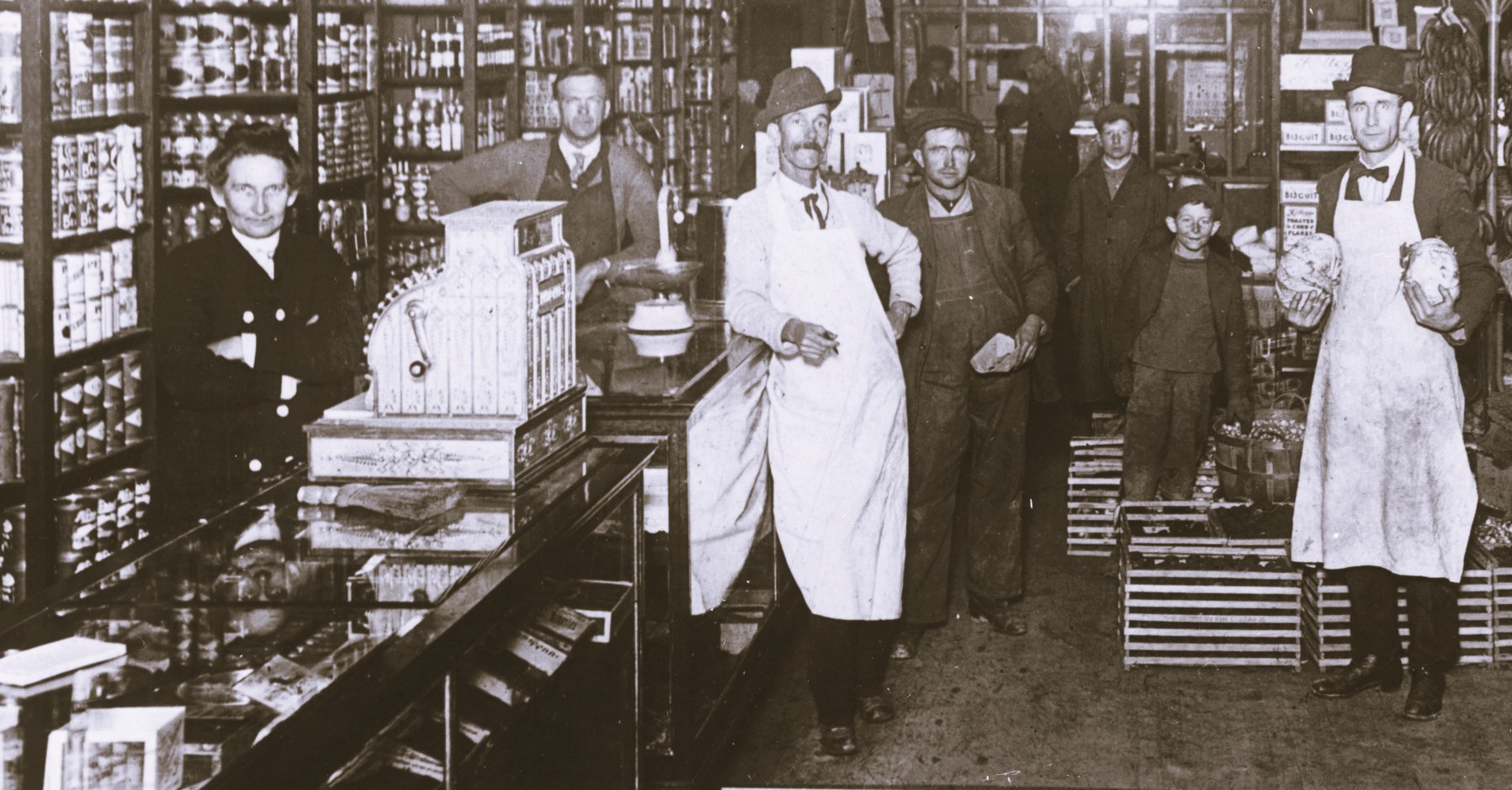
Mary E. Marcy, writing as Jack Morton, says questions concerning the ‘consumer’ are the wrong questions.
‘Lo! The Poor Consumer!’ by Marcy E. Marcy from The International Socialist Review. Vol. 16 No. 6. December, 1915.
There are some people who are always wailing about the high prices charged the “poor consumer.” They are concerned for fear that the “consumer” will not get all the good things of life. They want the “rights of the consumer” to be conserved and they don’t want the working class to get higher wages or shorter hours for fear the “poor consumer” might have to pay more for his shoes or his clothes, his automobiles or his railroad journeys.
But the revolutionist is not at all concerned with the “consumer.” We are perfectly willing to draw a charmed circle around the workers and all the good things of life which they have produced and shut out everybody else except the children, the sick and the aged until they are willing to render some actual service of some kind to society.
How much should a man consume? How much should he be entitled to consume? George Bernard Shaw says that all men and women who perform some useful function in society should enjoy equality of income, and many people agree with him. But some folks want to produce more than other folks and want to consume more than other people.
When a man or woman enjoys working ten hours a day, in which he produces twice as much as his comrade who desires to work only five hours a day, the man who works double time, and produces twice as much as his fellow workers, should receive the value of the things he has produced. He may want to produce much this year in order to be able to loaf much next year. He may desire to produce much in order to consume or to give much.
The Consumer
The capitalist newspapers talk about “producers” and “consumers” as though they were two distinct classes. Every producer must be a consumer, must eat his meals, have clothing and shelter or he will be unable to work. The working class, or producing class, the group of men and women who actually produce all the wonderful, beautiful and necessary things in the world, is able to consume only a small portion of the things they produce because the wages they receive are so much lower than the value of the shoes they make, the houses they build, the hauling they do, or the food they produce.
You garment workers cannot buy the $800.00 worth of suits you made last week with your $200 or $150 in wages. You miners cannot buy the $1,000 worth of copper or coal you have dug out of the earth with your $300 in wages. You produce what your boss gets and you consume only the small amount your wages will buy.
The trouble is that your employers take your products, or else, as in the case of the railroads, they charge a price for hauling things and pay you only a meagre portion of the value of the service you railroad men perform. The wages you workers receive are only a small part of the value you produce, or of the service you render.
I know several automobile workers, and several stockholders in automobile companies. The workingmen, who make all the machines, receive about $25.00 a week in wages. The stockholders, who do not work and perform no useful function, receive. from their capital investment from $10,000 to several hundred thousand dollars a year.
The few capitalists, who do nothing, are able to use or to buy more than they can possibly consume, because they have taken the wealth we have made. We producers are able to consume only poor meals, cheap clothing, and have to live in small flats and unhealthy tenements because we accept wages instead of demanding the whole value of the things we make, or of the services we render.
It is the people who live on Riverside Drive and Fifth Avenue, or the Lake Shore Drive and in the exclusive residence districts who have money to buy much, or to consume much—these people who produce nothing.
It is the steel mill, the cotton mill and factory workers, the farm hands and garment workers, the building construction workers, the railroad men, the miners and shopmen who produce much—serve much—perform useful functions, and who receive so small a portion of the value of their products that they can consume little.
A small capitalist, who draws $10,000 a year dividends from a steel mill investment, once declared in our hearing that he favored Government Ownership of the Railroads, provided the railroad rates would then be only the actual cost of running the roads. He thought this would help the poor consumers.
But this would not be Industrial Democracy! This would not mean Socialism! We are not concerned with the consumer but with the railroad workers. Revolutionists do not think about lowering prices or railroad rates. We want to give the railroad men the entire value of the service they perform, only about one-fourth of which they now receive.
We don’t want to cut the price of coal. We want to see the miners getting the entire value of the coal they dig instead of one-fifth of the value of their products. And so on down the line.
We desire commodities to exchange for the necessary social labor time contained in them and we desire the workers to receive the full value for these commodities—so that the workers who produce eight hours of value will be paid for eight hours instead of for three or two, as they now do.
We wish to see men and women consume according to their products. We intend to abolish the wages and profit system, to eliminate the profit-takers and see them join the army of producers who will themselves receive the full value of the goods they make, or of the services they render to society.
A commodity—a pair of shoes, a coat, a ham or a bedstead will then represent so many hours of necessary labor and it will exchange for commodities containing an equal amount of necessary labor. The worker will receive the value of his product instead of wages and there will be nothing left for the profit-takers.
Then the man who produces a $50.00 product will receive $50.00 and be able to consume $50.00 products in turn, and the able-bodied man or woman who refuses to perform some useful function in society, or for society, will be unable to live in luxury or in comfort on the wealth made by the working class.
The International Socialist Review (ISR) was published monthly in Chicago from 1900 until 1918 by Charles H. Kerr and loyal to the Socialist Party of America. During the editorship of A.M. Simons it was largely theoretical and moderate. In 1908, Charles H. Kerr took over as editor with strong influence from Mary E Marcy. The magazine became the foremost proponent of the SP’s left wing growing to tens of thousands of subscribers. It remained revolutionary in outlook and anti-militarist during World War One. It liberally used photographs and images, with news, theory, arts and organizing in its pages. It was closed down in government repression in 1918.
PDF of full issue: https://www.marxists.org/history/usa/pubs/isr/v16n06-dec-1915-ISR-riaz-ocr.pdf
 Revolution's Newsstand