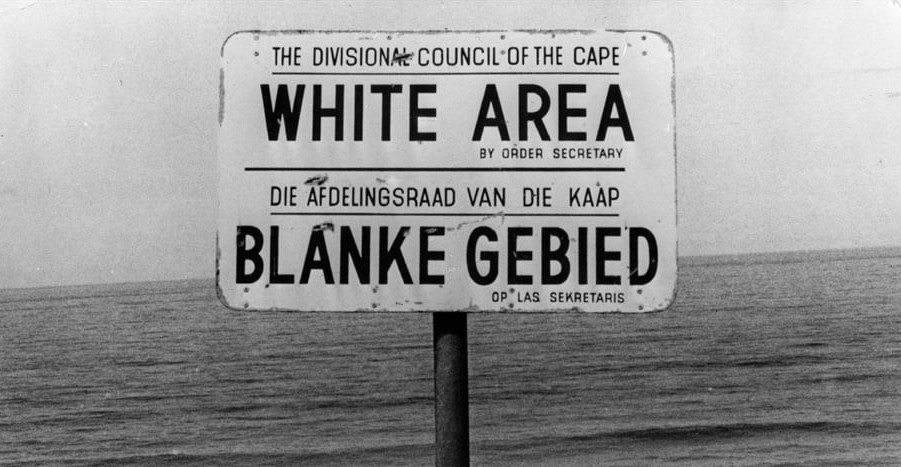
While the Apartheid regime proper came about after 1948, it, of course, built itself upon Britain’s colonial regime’s decades of legalized dispossession, segregation, disfranchisement, and racist exploitation. Among the most important laws in that process were 1927’s Native Land and Native Disfranchisement and Representation in Parliament Bills. James Shields, a central figure of the 1920s S.A.C.P. looks at the legislation.
‘Herzog’s Legislation to Enslave South African Natives’ by James Shields from International Press Correspondence. Vol. 7 No. 13. February 10, 1927.
The proposed new native legislation of the South African Pact Government which will shortly be brought before Parliament is thoroughly anti-working class in every respect. Not only does it aim at increasing the burden of capitalist exploitation on the back of the vast native population, and clears the way for an onslaught on the existing standards of the white workers. The new legislation which will be dealt with at the forthcoming Parliamentary session is made up of the four so-called native bills which were outlined last year by General Hertzog. These bills comprise Native Disfranchisement and Representation in Parliament Bill, Union Native Council Bill, Coloured Persons’ Rights Bill, and the Native Land Bill.
It has been stated by the Premier and others that these four bills are to be considered solely as one piece of legislation, and that no particular bill can be passed by itself but must be taken in conjunction with the other three. What is the aim of this new legislative policy? A brief examination of the various measures is very illustrative.
First of all the proposals contained in the Native Disfranchise and Representation in Parliament Bill lay it down that the Cape native vote is to be abolished. Up to the present time this vote is the right of some fifteen thousand natives in the Cape Province who form approximately a little less than 8 per cent of the total voters’ list in that area. In return for the taking away of the Cape franchise the native population throughout S. Africa is to be permitted to elect seven Europeans M.L.A.’s to the House of Assembly. It is significant to note, however, that the said seven M.L.A.’s will only be elected by Chiefs, Headmen, and other prominent natives” designated as electors by the Governor General. The seven so elected will have no vote on questions of confidence.
Secondly, there is the Union Native Council Bill which provides for the election of a National Council of Natives comprising fifty members. Of these fifty members fifteen are to be Government nominees the remaining thirty five being elected by the same “electors” who will vote for the seven M.L.A.’s They will have no power to decide on serious questions affecting the native masses, but will merely be (owing to the nature of their selection) a coterie of Government supporters to assist in carrying out official Government, policy.
Thirdly, there is the Coloured Persons’ Rights Bill which is supposed to provide the opportunity for the Cape coloured people (Eur-Africans) to attain an equal status in every respect to that of the Europeans. In the first place however this Bill lays it down that only coloured persons who conform to a European standard of life will come within the scope of the Act. If a coloured man is descended from parents one of whom happens to be an aborigine he will be classed under the heading of “Native’. And what will be the rights of those coloured people who come under the scope of the Bill? There is mention made, but no details stated, of the coloured people being given social. economic and political rights the same as the Europeans. If the Bill becomes law they will be allowed to vote for the return of one white M.L.A. for the whole of the country, but will not be permitted to vote along with Europeans for Parliamentary representatives. This state of affairs is to remain in force for seven years after which time it may be revised.
Last of all comes the Native Land Bill, the real crux of the whole scheme. To understand the new Land Bill it is necessary to know the gist of the Smuts’ Land Act of 1913, for it is precisely upon that Act that the present Bill is founded. The Smuts Land Act of 1913 was drawn up in the interests of the big white land monopolists who had become alarmed at native encroachment in various areas. The, 1913 Act was introduced in order to prohibit and discourage native land acquisition, and to relegate the natives to the so-called reserved areas. To these areas the 1913 Act added nothing but merely, as it were, stabilised their existence. It is significant to note that the native reserves are dotted about the various Provinces, presumably with a view to preventing native unity and autonomy.
Now comes the Hertzog Land Bill which contains provisions even more drastic than its predecessor of 1913. Not only does it grant no more land to natives but rather the reverse, seeks to take away some of the land they already have. It lays stress on the fact that “released areas” will be thrown, open for competition between Europeans and natives. What does this actually mean? It means that the opportunity is given to the big white land monopolists to buy out those natives who have succeeded in establishing themselves in these so-called released areas. Put into other words it means the commencement of a wholesale driving of natives from the land altogether, for the natives will never be able to compete successfully with the whites for the purchase of land.
According to the 1916 Year Book there were over 1,600,000 natives living in European areas, and that number must have considerably increased since that period. Most of these elements will undoubtedly be bought out, and the question therefore, arises where can they possibly turn to? Certainly not to the crowded native locations which have continually shrunk and most of which are already supporting something like 80 or 90 inhabitants to the square mile (in some cases 200 to the sq mile), and consequently are congested to the utmost. In any case the Government has fixed a maximum acreage for each tribe and laid it down that land can only be acquired by tribes or kindred groups and not by individuals. This procedure serves a dual purpose, for it not only prevents individual acquisition of land, but it relegates particular tribes to specific areas and so puts a heavy obstacle in the way of tribal fusion. Again we ask the question, to where can these landless elements turn?
In part two of the Land Bill the answer is provided to this question. According to part 2 of the Bill every native, who cannot find a foothold on the land or on the crowded reserves, must become a servant on any terms he can get. “For a native to be unemployed and homeless is a criminal offence” punishable by law. From this ruling also it likewise follows that should a native landworker become dissatisfied with his employment and throw it up, he is liable to be thrown into gaol. So well calculated is the purpose of the Government with regard to flooding the land with landless natives that it has included a clause, whereby Government machinery is to be set up to “pro- vide for a fair distribution of the labour force amongst employers”. This same machinery will also function in wiping out any possibility of one employer outbidding the other for native labour. In conjunction with these measures however, it is definitely laid down in the Act that each farmer is entitled to employ a certain number of native Labour Tenants, the Labour Tenant in such case being required to render to his employer a yearly period of labour amounting to 180 days. Truly the introduction of serfdom with a vengeance. Again, these Labour Tenants will be bound by contract (this contract making it necessary for the tenant’s dependents wife, children contributing their quota of work) and registered as servants for the purposes of the Masters and Servants Act. The latter item means that breach of contract renders the Labour Tenant liable to prosecution.
What is likely to be the effect of the legislation as a whole? And what will its practical consequences be? It can only work out in one way, and that is by intensifying cheap labour competition both on the land and in the industrial centres. With a huge native labour supply let loose on the land the bywoners and landless whites will be driven into the towns in search of work, and consequently will be used as a lever for depressing existing standards. Labour conditions of labour tenants and their dependents (child labour) will likewise render thousands of natives superfluous in the domain of agriculture, and force them also into the towns, forming a dangerous competition to the workers in industry.
Such is the policy of the Labour-Nationalist Government (the Pact), a policy which aims at flooding the labour market with cheap native labour and further concentrating the owner- ship of land in the hands of a few. This is the menace which hangs over the heads of the, South African masses. How are they preparing to combat it? Unfortunately the most important sections of the labour movement, the Trade Unions, appear to be still fast asleep. Not so the Labour Party, however, which definitely takes up the cudgels on the master class’ behalf by spreading the illusion that the proposed legislation is a scheme for giving land to the natives and s segregating them apart from the whites to develop on their own lines. This falsehood has been repudiated by no less than the Government Secretary for Native Affairs, Major Herbst, who openly declared that “territorial segregation is a dead question…segregation is not a principle of the Land Bill”.
The native masses, however, are beginning to be brought to a realisation that all is not well by the authoritative declarations of a number of important bodies which have grasped the real meaning of things. The Joint Council for natives, a Liberal humanitarian body composed of European and non-Europeans, has issued a manifesto in which it roundly condemns the Bills in no uncertain fashion. The African National Congress has declared that “the Bills contain no good points for natives”. The I.C.U. (Industrial and Commercial Workers’ Union) whilst not knowing too much about the Bills has also raised its voice against them. The Coloured Peoples’ Welfare Association has decided to fight the Bills tooth and nail. The Government Native Conference at Pretoria recently consisting of select Government nominees revolted against the proposed legislation to the great surprise of its sponsors, the Government itself. Whilst last but not least the Communist Party is preparing to publish a true analysis of the Bills for distribution among the working The chief t task confronting the militant working class elements at the moment is the securing of a united front of all these oppositional elements in conjunction with the organised trade union movement in order to conduct an intense campaign for the withdrawal, and defeat of the proposal anti-working- class measures.
International Press Correspondence, widely known as”Inprecorr” was published by the Executive Committee of the Communist International (ECCI) regularly in German and English, occasionally in many other languages, beginning in 1921 and lasting in English until 1938. Inprecorr’s role was to supply translated articles to the English-speaking press of the International from the Comintern’s different sections, as well as news and statements from the ECCI. Many ‘Daily Worker’ and ‘Communist’ articles originated in Inprecorr, and it also published articles by American comrades for use in other countries. It was published at least weekly, and often thrice weekly.
PDF of full issue: https://www.marxists.org/history/international/comintern/inprecor/1927/v07n13-feb-10-1927-inprecor-op.pdf
 Revolution's Newsstand