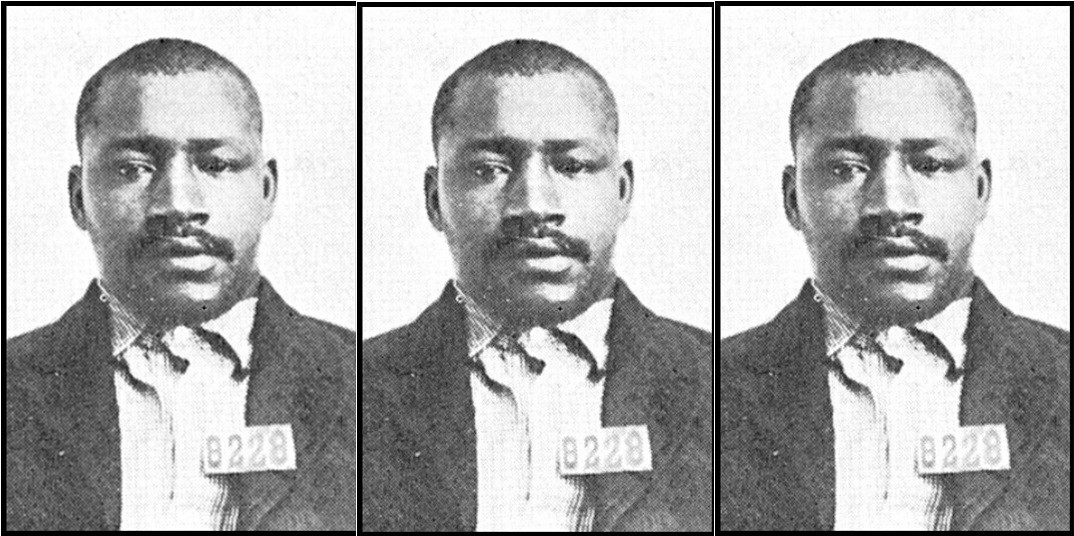
A rare report on the activities of legendary U.M.W.A. organizer and Socialist, Dan ‘Few Clothes’ Chain from the editor of Pittsburgh’s ‘Justice’ in a larger look at the radicalization of a generation of West Virginia miners and the need for the national Socialist movement to step up to the challenge during the Paint/Cabin Creek mine war.
‘The War in West Virginia’ by Fred H. Merrick from The Commonwealth (Everett). Vol. 3 No. 120. April 18, 1913.
Armored Trains, Illegal Guard, and Court-Martial
Correspondent on the Ground Tells the Whole Truth About the Struggle of the Miners Against Coal Barons in Their Battle for Freedom and Industrial Democracy.
(By Fred H. Merrick in Justice.) Charleston, W. Va., March 31. The class struggle is one of those peculiar social phenomena which must be microscopically examined in its native habitat in order to be understood. It is necessary to breathe the natural and social atmosphere of mountainous West Virginia in order to appreciate the character of the struggle now going on here. The outside world does not understand West Virginia and the “Little Switzerland of America” does not understand why the outside world fails to appreciate the significance of the terrible strife there. Some years since I was personally familiar with this locality and the psychology of the people, and until I arrived this time I was disposed to feel that I understood things as they were. I have discovered my mistake. Years ago the miners were desperate but cowed. Private guards and courts hounded them from valley to valley and the coal digger in a blind, vague way nursed his wrongs and as opportunity offered sought personal revenge or joined with small groups of other miners in a futile attempt to improve his economic conditions. Then this rugged mountaineer radiating mental and physical virility, detesting slavery in any form, contemptuous of riches and luxury would fight any definite program. He simply fought because he felt he was wronged. He had little hope of victory, but fought as the worm that turns.
Miners Now Socialists.
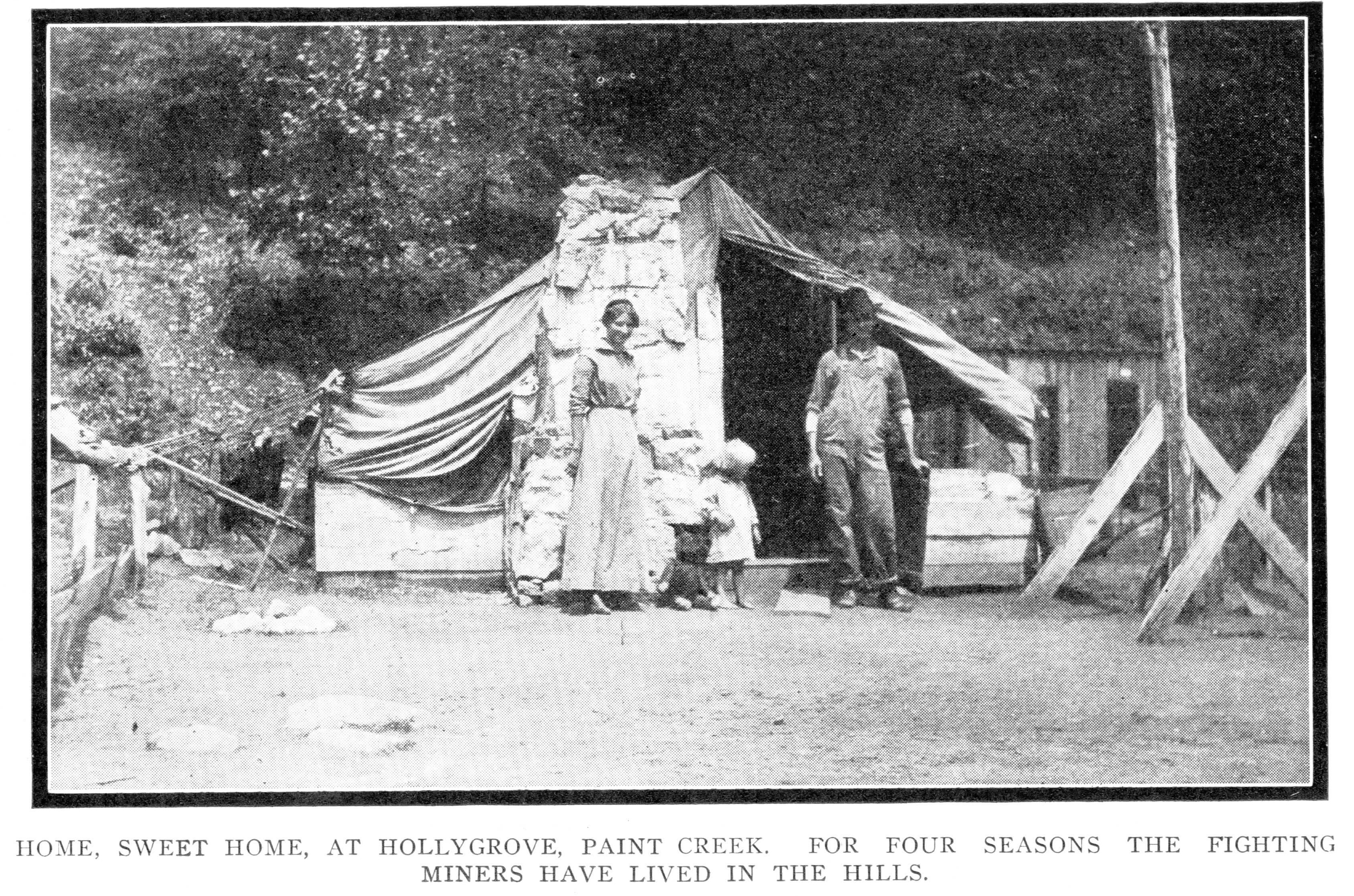
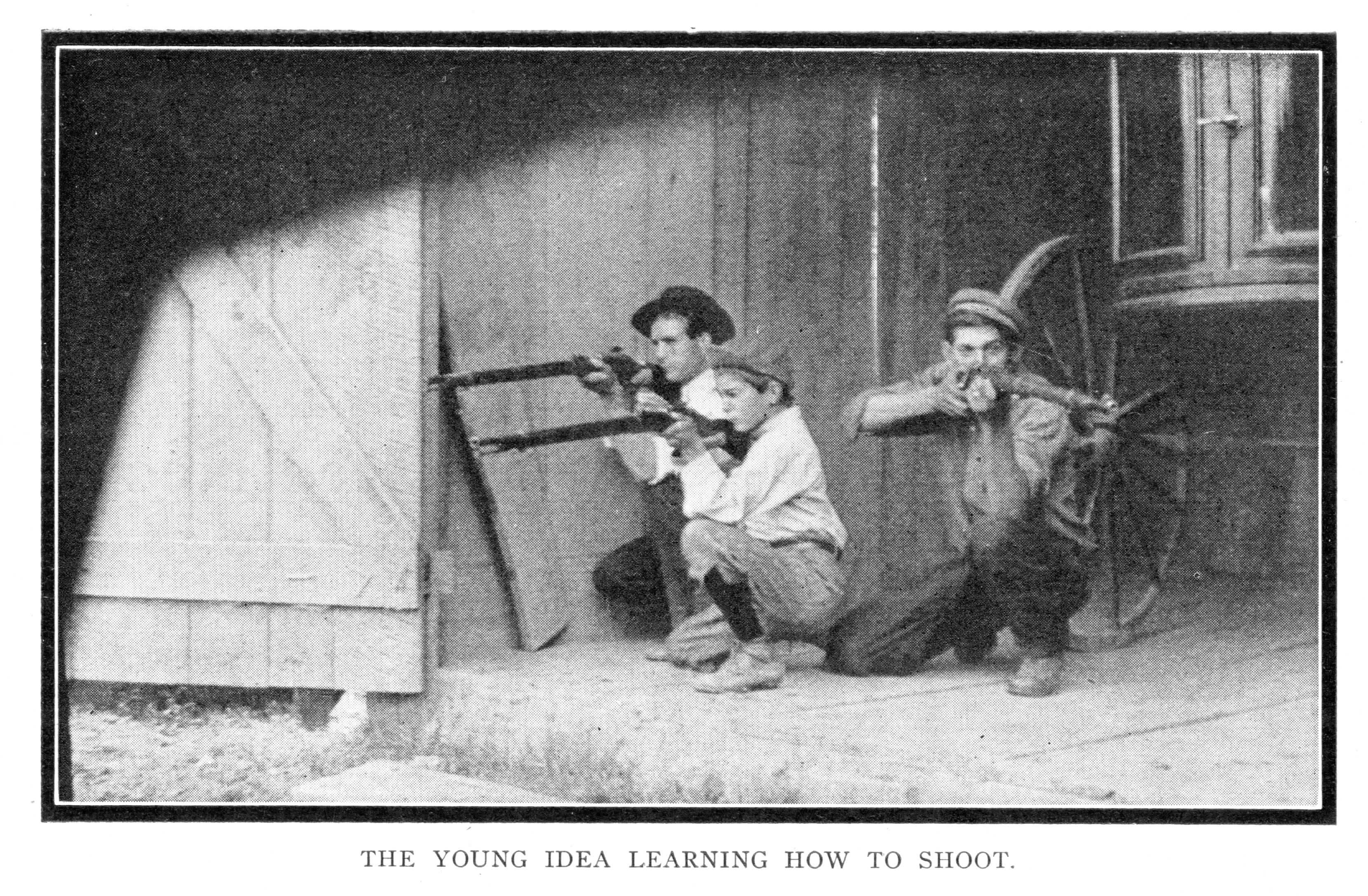
But something has happened during these years. These physical giants’ intellects have learned of the propaganda of socialism. They have heard of economic classes. The West Virginian is an idealist and after they had listened to socialist lectures and read socialist literature these “hillbillies” shut off from the rest of the world began to realize they were part of a great international movement which had as its goal the overthrow of capitalism, which was typified to them in the enormous coal corporations, the brutal thugs known as mine guards. To them industrial democracy became a great ideal for which they were willing to die. Around the socialist party and their union these natural born revolutionists, men and women, white and black, began to rally. They had discovered a great organized movement whose philosophy and elemental principles not only gave some rational explanation of why mining capitalists and politicians should rob, shoot and betray citizens of the state, but taught that the miners were not only justified in employing whatever force was necessary to secure their rights, but that arbitration on the industrial field was impossible. These virile workers instinctively seized upon the vital kernel of the socialist philosophy, stripped it of all the husks of academic discussion and joyfully appropriated as the basis of moral justification for their acts. That is why the present struggle is such a bright one to the miner. Despite the year of hardship and the bitter winter, these miners are as jovial a set of men as you ever saw, and to suggest the possibility of anything but victory to them is sheer nonsense. They have raised the present strike to the plan of actual class war and the fights between the miners and the illegal mine guards whom the state authorities have refused to outlaw and disarm, have assumed the dignity of great battles and are known as the Battle of Mucklow, etc.
Dan Chain Loyal Socialist.
Scores of instances of the idealizing effect of socialism upon the miners might be cited, but one is sufficient. When Harold W. Houston, state secretary of the socialist party, and attorney for the miners, visited a giant negro miner, Dan Chain, bettor known among his mining pals as “Few Clothes,” at the Moundsvllle penitentiary where he had twice been sentenced by a drum-head court-martial, he grasped the hand of the lawyer and with deep emotion said, “Mr. Houston, tell the boys I’se a better socialist than ever I was.”
Since the present gubernatorial incumbent, “Doc” Hatfield, has taken office recently and is claiming that he will deal fairly, the miners propose to give him a reasonable time to show s that he is the shining exception among capitalist politicians. William E. Glasscock, the Roosevelt governor who has just vacated the office, made a miserable failure of his attempt to pose as “labor’s friend.” For many months the C. & O. railroad has gratuitously furnished the mine guards with an armored train from which they may invade mining camps and fire upon defenseless human beings. The miners, who have a keen sense of humor, even in the midst of tragedy, dubbed this train “The Bull Moose” and this is the name it is known by far and wide.
Hatfield has yet to approve, modify, or countermand the findings of the military commission appointed by Governor Glasscock. Mother Jones is being detained in the bull pen at Pratt incommunicado and John W. Brown, for many years national organizer of the socialist party, and Charles H. Boswell, the fearless and trusted editor of the Labor Argus, and several other socialists were sent to Point Pleasant jail pending Hatfield’s action and due to the flood have been removed to another county. The object in taking these men out of this district pending final action seems to indicate a wholesale fear of public opinion, just as the establishment of the court-martial as a substitute for jury trial indicates that it would be impossible to convict the agitators of the absurd charges upon which they are held before twelve citizens. Pending Hatfield’s final judgment, which will not become public property before next week, a sort of tacit truce is on and there are no new developments. This offers us a good opportunity to take a bird’s eye view of the situation in status quo so that we may be prepared to make a historical examination of the stirring events that have made revolutionary labor history among these mountain valleys. The story is voluminous and as a key to the detailed history of the struggle we must understand the methods employed on both sides before we can intelligently estimate the justification for the conduct of the opposing forces engaged in what is really civil war and which threatens to spread throughout the Commonwealth and engulf the notoriously corrupt government of this state and the greedy and soulless corporations who represent the extreme methods of capitalism.
The Legal Status.
Numerous miners have been sentenced by court-martial to terms in the penitentiary and in each case have later been pardoned or paroled, evidently to pacify the angry miners, who seemed to be more thoroughly aroused rather than intimidated by these acts of tyranny and secondly to prevent the attorneys of the miners getting a hearing in the U.S. supreme court on the constitutionality of a drum-head court-martial sentencing civilians without trial to a state penitentiary.
In the case of Dan Chain, it was claimed he broke his parole and again became active in the strike and was returned to the penitentiary. It is possible that tomorrow the supreme court of appeals of West Virginia will hear arguments on this case. It is more probable that it will be at a later date. He is the only miner in the penitentiary at the present time and his attorneys proposed to carry his case to the U.S. supreme court.
The Situation Industrially.
The U.M.W. of A., both locally and internationally, and the socialists locally are behind the miners. When the miners struck a year ago, they demanded an eight-hour day the abolition of the mine guard system and the short ton in measuring coal, that is 2,000 instead of 2,240 pounds, and a check weighman. These demands are most moderate for several reasons. In the first place, operators of other fields are at a much greater expense in mining coal than in this district, as here it practically lies on the surface. Transportation to market is extremely convenient and cheap both by water and rail. In the next place the scale of wages paid here is lower than in any other coal field, for while the Illinois or Pennsylvania miner may make from $3 to $4.50 a day, the West Virginia mine slave toils for an average of only $2 and only has work about seven months of the year.
In the second place, the political laws of the state are supposed to secure practically all these things to the miners and they are only striking to enforce political laws. These same laws make the arming of private guards by coal and lumber companies illegal.
In the light of these facts and also that the U.M.W. of A. demands an eight-hour day in other fields where the scale of wages is higher than here it seems strange to an industrialist that President John P. White in his negotiations with Hatfield should submit a proposition of settlement which should provide only a nine-hour day. Tomorrow is April 1 and it was the original plan of the U.M.W. of A. to call a general strike on New Rix and Coal river. But since negotiations have been entered into, following the conciliatory policy of the U.M.W. of A. President White issued a proclamation asking these miners to stay at work at least until something definite resulted from the negotiations with the Cabin and Paint Creek operators. Word comes, however, that the conduct of the guards in that district in assaulting miners as well as the tyranny of the mine bosses will cause the miners to disregard any advice of passivity and that the strike zone will shortly extend to include hundreds of mines.
“Political Action” in West Virginia.
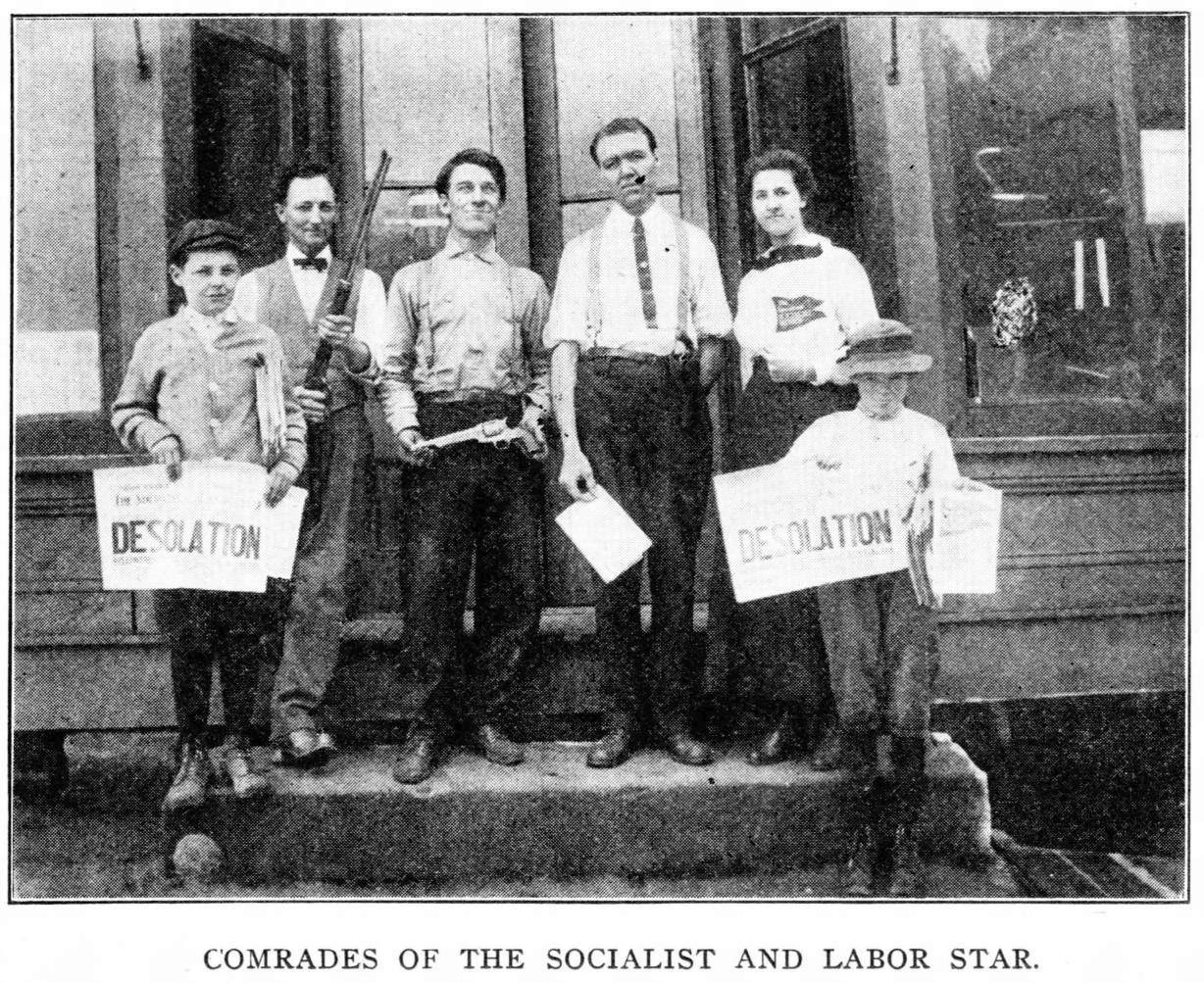
The present fighting miners of West Virginia is the direct product of socialist propaganda as it was taught through this district by agitators of the socialist party. As an educational factor the socialist party has done inestimable good. The miners have made logical application of the theories of socialism to the concrete situation they face and what seems inexplicable to them is the apparent lethargy of the great socialist movement in view of such a gigantic struggle going on before them. What they have yet to learn as well as the membership of the socialist party is that a socialist will quite often talk theories that he will not have the courage to support concretely. That he gets a certain amount of intellectual pleasure and amusement flirting with radicalism, but unless his daily economic struggle drives him to the necessity of it he will not apply the theories of force as set forth in the socialist philosophy.
Miners Mostly Socialists.
The miners, 90 per cent of whom have votes in this district and who comprise an actual voting majority in Cabin Creek, which is one of the exceptions in the United States, after hearing socialist speakers, first decided to employ political power to back up their efforts in their union. They were rather unusually fortunate, due to their overwhelming numbers and succeeded in “getting control” of the political government on Cabin Creek in the form of two justices of the peace and a constable. This may seem a very humble political victory, but it was all there was on Cabin Creek. When the strike came this political power began to be used by the workers. The Baldwin thugs who were strutting around as armed mine guards in violation of the state law, were arrested, disarmed and sent to jail. The same thing happened to the scabs. The railroad company had judgments rendered against it for killing hogs, etc., belonging to the miners. In various ways this political power was used as an aid to the miners, such as they had never known before. But if the theory of the industrialist is correct that political power is always subordinate and supplementary to economic power, then this condition could not exist long with mine owners possessing greater economic and consequently greater resultant political power. This was shortly demonstrated when martial law was declared. Immediately the military commission set up the claim that they had jurisdiction over all civil authorities and Adjutant General Elliott, a formerly notorious lobbyist of the Standard Oil company, whose questionable practices about the halls of the legislature became a state scandal and who was always reputed to handle Stephen B. Elkins’ dough-bag in this state, issued an order to confiscate the docket of this socialist justice and when the ‘undesirable” official declined to surrender his docket and his authority as a civil officer to a military commission he was taken by force, being a cripple, and lodged in the bull pen at Pratt, where he has lain for two weeks without any charge against him, simply held shorn of all political power by the mine owners in the form of the adjutant-general.
But this is not the only lesson the miners have learned of the limitations of political action. Almost a year ago they appealed to another department of political government, the judiciary.
The Washington Socialist was a weekly newspaper of the Socialist Party of Snohomish County published in Everett, Washington and edited by Maynard Shipley. Closely aligned with the Industrial Workers of the World, who were strong in the Pacific Northwest’s lumber industry, the paper ran for only 18 months when it was renamed The Northwest Worker with Henry Watts as editor in June, 1915, and again Co-Operative News with Perter Husby as editor in October, 1917. Like virtually all of the left press, the Co-Operative News was suppressed in June 1918 under the Federal Espionage Act.
PDF of full issue: https://chroniclingamerica.loc.gov/lccn/sn84025731/1913-04-18/ed-1/seq-1/
 Revolution's Newsstand