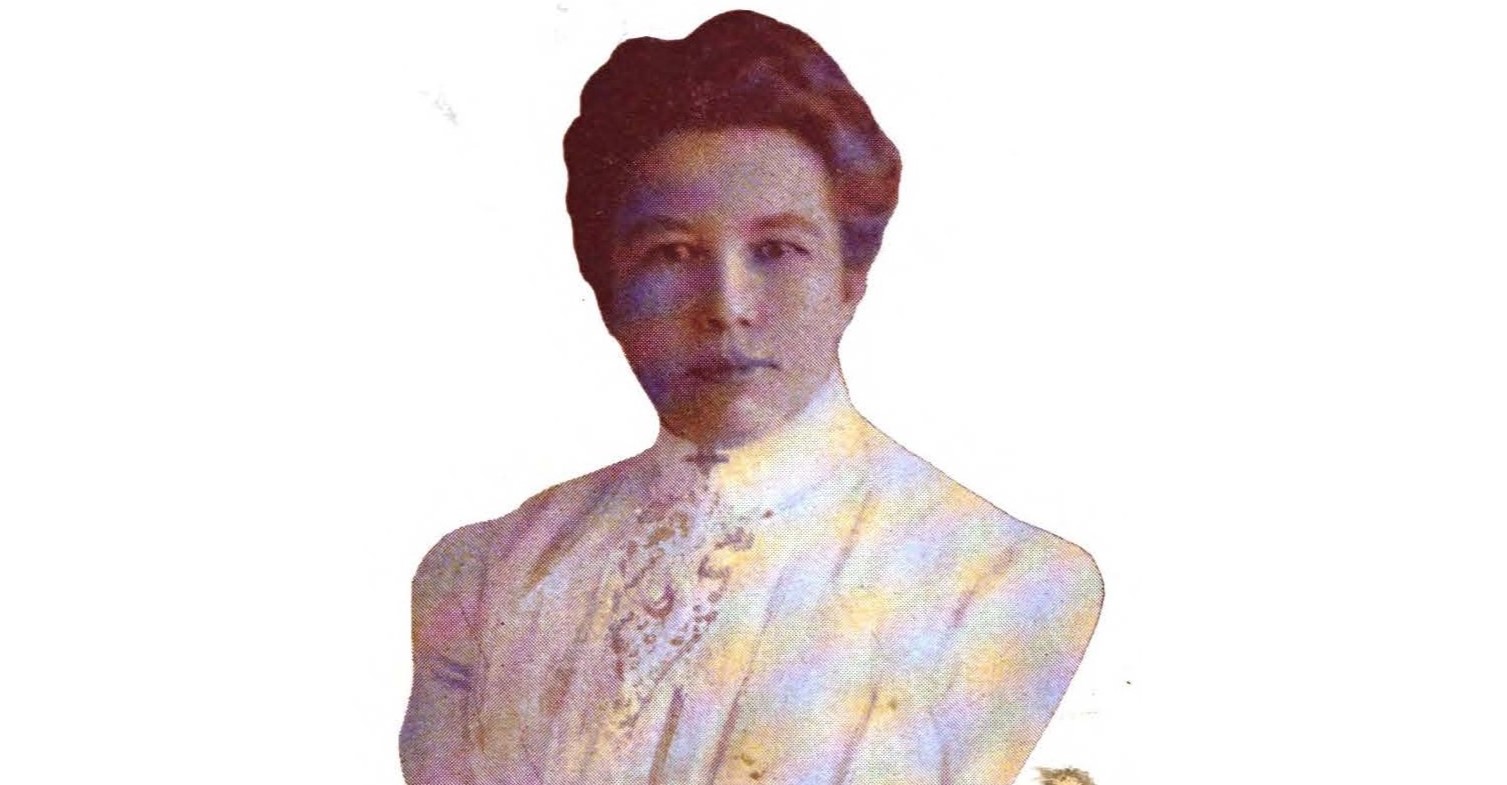
Caroline Nelson says the first step in a winning labor movement is to stop fighting the class struggle within the rules laid down by the capitalists, always a losing strategy.
‘It is Necessary to Get Rid of the Rich Man’s Ethic’s’ by Caroline Nelson from Revolt (San Francisco). Vol. 2 No. 22. November 25, 1911.
An Organized Working Class Would Have the Otises Behind Bars
In the East, organized labor is having a convention, where Sammy Gompers, the president, shrieks, “It is the Socialists,” every time any radical measures are proposed. At the same time the cry for an industrial form of unionism becomes louder and louder.
In Los Angeles two kidnaped labor leaders are on trial for their lives for a crime that occurred hundreds of miles from the scene of their activity, in a place they had never even visited. But let us be thankful that the highest official in the United States has so far not pronounced them guilty or “undesirable citizens,” as Teddy the Terrible did four years ago when capital staged a similar scene with Haywood, Pettibone and Moyer as victims, and Orchard as chief confessor. But that taught capital a lesson, and instead of farmers for a jury there is going to be smart business men, who hate labor unions with the same ardor that they hate the supposed gentleman with the horns and hoofs, and it looks very much as though labor’s sinews of war are to exhaust itself by a cunning trick. So that when the real battle is faced it is played out. All the legal brain and talent in the country is for sale and with a good purse there is an over supply, with deep feeling and tears thrown in, but with an empty purse it becomes as scarce as the proverbial needle in the haystack. Labor puts four dollars in the capitalists purse for everyone it keeps for itself. So if this hideous struggle is to be measured by rows of dollars we don’t care to discuss it.
Spreading over a large territory there are thirty-five thousand men on strike. What are they striking for? Let us see. Every man and woman working on the Harriman lines is taxed a monthly tax to keep up hospitals. The shopmen demand representatives on the hospital board. They demand recognition of their shop federation, an eight-hour day, and in some cases A FEW MORE CENTS AN HOUR. Those were the crumbs that they begged from the rich man’s table and were denied. That which was particularly offensive to the railroad bosses was that they had all federated into one union in shop. A budding of industrial unionism’ that must be nipped, and the shopmen give the company lots of time to prepare for this nipping, and the trainmen that remained at their posts are used as the nippers. One craft scabbing on the other by carrying and supplying out-of-work scabs, for the bosses. Who are the real scabs, and the most dangerous scabbery? Why is it that labor, after dozens upon dozens of lost battles of this kind, has not yet learned the lessons, and proved to themselves the futility of advancing in a little bunch upon the world of united capital by laying down their tools?
The shopmen’s president, Reguin, has answered the above question in a speech in Dreamland Rink some time. ago, when he said:
“We must win this battle. We have already won, for the simple reason that our trade is a highly skilled trade, and that the company cannot replace our men.”
Highly skilled trade! How often have we not heard that in the past. For some time we have been dancing on what we supposed to be the grave of the aristocracy of labor. Certainly, we know that the aristocrat is dead, because he has been killed by a hundred new inventions, and smashed into pulp by centralization of the industries. Thousands of him is out on the highway tramping. And we thought the other part of him had learned that he is part and parcel of the common herd, and just as much, if not more so, at the mercy of capital. But here we find that he is still holding sway among the shopmen. Or is it the leaders who play Hamlets and conjure up this ghost? A ghost is a thing that is dead but doesn’t know it, according to Pat.
There are calculated to be about five million men out of work in the United States. If we estimate that there are a hundred a hundred thousand highly skilled mechanics among them, which is putting it low, we are not wondering where the Southern Pacific can get shopmen to take the places of strikers. We only wonder why the workers didn’t attempt to tie up the whole road or strike on the job.
Yes, strikes on the jobs have proven in Europe to be the most effective means of bringing the boss to terms. It simply means that everything goes wrong in the shop and on the road instead of in the striker’s home. It means that the bosses’ interests suffer instead of the strikers, their families and little children. It means that the strikers can touch the boss’ heart because they have their hands upon his pocketbook. It means that the workers have reached the spiritual plane of understanding, as the preacher would say, where they know human life is the most sacred thing in the universe, including their own, and that the boss’ goods in comparison is a cheap, vulgar, trivial things that their own hands have shaped. The bosses on the contrary hold the view that in comparison with their goods, human life is cheap and vulgar; that is, the life of the worker. Their own hide they hold sacred–enough. And our laws are laws of the bosses. Our penal institutes are filled with so-called criminals. Their “crimes” are in the main against private property, many the time committed to sustain life. We live under the laws of the rich, which is the law of the beast. It spells get both feet in the feeding trough filled by labor, and hold it against all comers.
Let the workers get rid of the rich man’s ethics, including the notion of “aristocracy” in the ranks of labor, and strike together as they work together and the world is theirs. The tables would then be turned. When instead of labor begging for a few crumbs and be turned down, it would be the bosses that would be doing the begging from labor, and appealing to their manhood to be merciful and kind. Instead of the McNamaras behind the bars, we would have the Otises.
But this doctrine is not inculcated into the child mind, and the child mind of the worker is complacently given over to the murderous ethical teaching of the rich man’s philosophy, smeared over with honeyed words of fairy tales and decorated with bravery; valor and trust. The worthiness, patriotism and what not, stronghold of the capitalist is in our schoolhouse. As long as we give them our children they will give us the devil, and pick our heroes out for us. They will fill our ranks with molly-coddles that fear to act and to speak. They fill up our ranks with muddle-heads who dish out such twaddle as that “single tax and Socialism is the same thing,” or that if a man’s legs move in different directions at the same time they will meet in the co-operative commonwealth, because that is the only way to get there.
Let us stop worshipping the gods of iron and stone or silver and gold, and ghosts and other dead things upon the rich man’s altar, and worship and deify the living God of human life flung into the gutter and packed in dirty tenement districts and worked to death and killed and maimed and starved and tortured, in the mines, mills and factories. That is our God nailed upon the industrial cross by the powers that be, who are still mocking him and spitting upon him. And we find workers to-day, who, to get a little cheap respectability from the upper class, never miss a chance to spit upon Him and mock Him.
Revolt ‘The Voice Of The Militant Worker’ was a short-lived revolutionary weekly newspaper published by Left Wingers in the Socialist Party in 1911 and 1912 and closely associated with Tom Mooney. The legendary activists and political prisoner Thomas J. Mooney had recently left the I.W.W. and settled in the Bay. He would join with the SP Left in the Bay Area, like Austin Lewis, William McDevitt, Nathan Greist, and Cloudseley Johns to produce The Revolt. The paper ran around 1500 copies weekly, but financial problems ended its run after one year. Mooney was also embroiled in constant legal battles for his role in the Pacific Gas and Electric Strike of the time. The paper epitomizes the revolutionary Left of the SP before World War One with its mix of Marxist orthodoxy, industrial unionism, and counter-cultural attitude. To that it adds some of the best writers in the movement; it deserved a much longer run.
PDF of full issue: https://www.marxists.org/history/usa/pubs/revolt/v2n22-w31-nov-25-1911-Revolt.pdf
 Revolution's Newsstand