
Chicago’s District Organizer with an internal report on difficulties of Communist organizing in that city’s then foremost industry, meat packing.
‘The Party in the Chicago Stockyards’ by Bill Gebert from Party Organizer. Vol. 7 No. 4. April, 1934.
THE Stockyards Section in Chicago is the most important section of concentration in the city of Chicago. It has a tremendous task to organize and lead the struggles of the stockyards workers.
The composition of the stockyards workers are Negroes, Mexican, Lithuanian, Polish, young native American workers, quite a large section of Irish-American. In short it is a decisive section of the proletariat of the city of Chicago. The stockyards in the city of Chicago are influential politically and economically in the life of the city. It is the dominant industry.
The stockyards workers have a tradition of militant strike struggles which have been betrayed by the treacherous officialdom of the American Federation of Labor. Today the conditions of the stockyards workers are such that there is a growing discontent and growing revolt against these conditions. Wages are on a Starvation level. A section of the workers are working part time; there are thousands of unemployed stockyards workers. At the present time the stockyards are increasing in production somewhat, primarily as a result of the U.S. government orders for canned beef for the Army.
United Front Through Department Committees is Key to Problem
In the stockyards we have two shop nuclei. From time to time we are issuing a shop bulletin, the Daily Worker is being sold to some extent outside of the gates. There are weak union groups of the Packing House Workers Industrial Union and in addition there are unions of the A.F. of L. and a Stockyards Labor Council. The key to the stockyards problem is the united front from below of these organizations, through the organization of department committees. Our experience so far shows that this is the basic task confronting us in the Yards. These department committees will unite workers, members of different unions and unorganized workers, who are in a position to develop struggles around concrete problems, grievances and demands confronting the workers in the yards. This is a stepping stone towards developing, preparing and organizing bigger struggles leading to mass struggles of the workers.
The second task is developing an opposition movement inside of the unions of the A.F. of L. and the Stockyards Labor Council, and in the course of these activities strengthening and building the P.H.W.I.U., as the majority of the workers in the stockyards are unorganized.
That the workers are ready to fight was demonstrated by the strike of the 800 livestock handlers a couple of months ago. This strike was supported by the masses of stockyards workers and if this strike was not spread, it was because we had not been a factor in building department committees and had not been able to establish a mass P.H.W.I.U. Today the livestock handlers are again speaking of action, because the 10 per cent increase in wages which was forced through militant action was given to them not as an increase of wages, but an increase of working hours corresponding to the total 10 per cent increase in wages.
In addition to the development of the work inside of the yards, it is advisable in this state of development to organize neighborhood groups of unemployed and employed and language groups (Mexican, Polish, Lithuanian, etc.), with the objective of bringing the workers through these means into the department committees to the union and Unemployment Councils. These are the tasks, these are the problems and how we are to tackle them.
Section Decisions Not Carried Out
First of all, let us examine some of the recent decisions made by the sections of concentration around the stock: yards. In addition to the Stockyards Section, (Section 11), Sections 2 and 7 are also concentrating on the stockyards. At a recent meeting of the District Committee (January 27-28), Sections 2, 7, 11 and the Communist fraction inside the P.H.W.I.U. each pledged to recruit 10 stockyards workers into the Party, that is, to recruit before the National Convention of the Party 40 stockyards workers. Three weeks passed since the leadership of the Sections 2, 7, 11 and the fraction made this pledge. During these three weeks of “hard work” they were successful in recruiting three workers into the Party. At such a tempo of work it will take us to complete the task set by the Section Committees themselves, not until April 1st, but until New Year, 1935. The fact that we proceed in such a slow tempo reflects the weakness of the work in the stockyards among the masses of stockyards workers, unemployed and employed. We cannot gay here, however, that a certain part of the membership is not active, but that the leaders of the Sections are not sufficiently alert to all the problems confronting the stockyards workers there, and are not able to mobilize the membership politically for work.
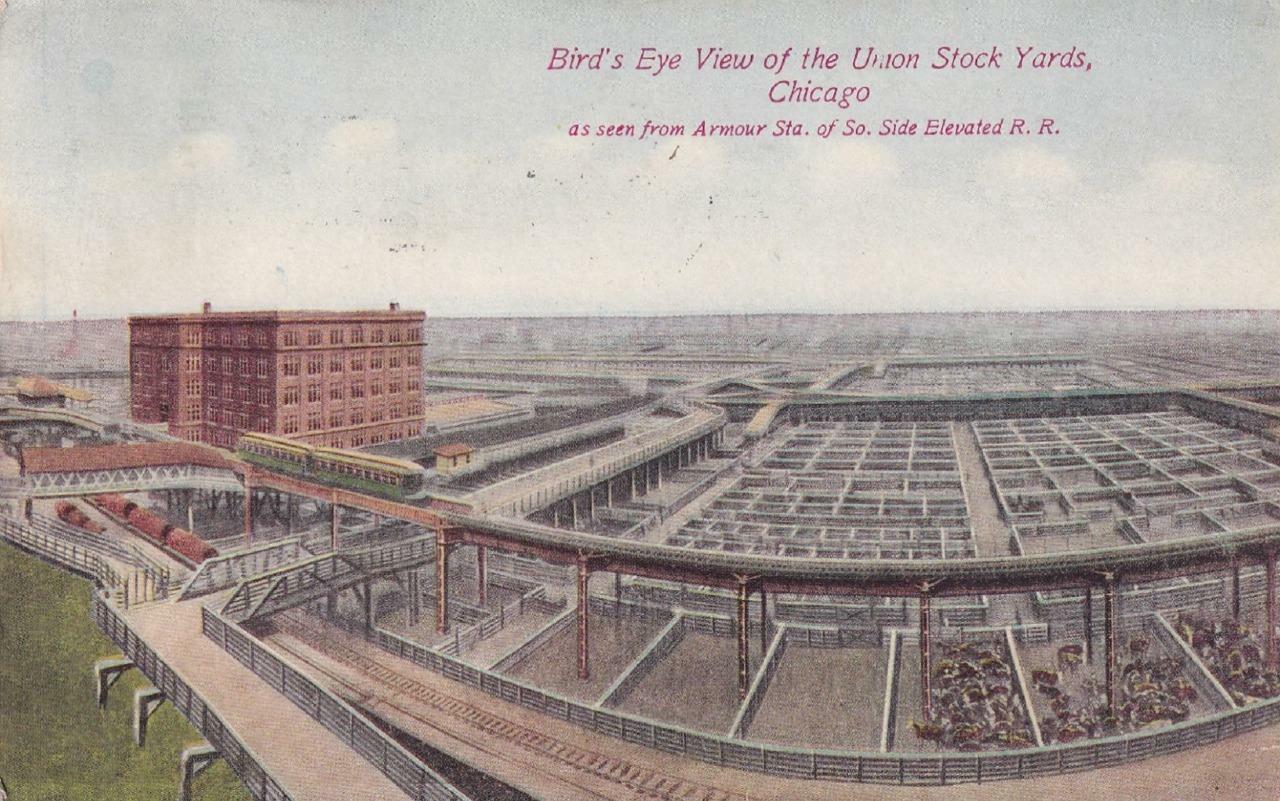
The District Committee of the Party and the National Committee of the Food Workers Industrial Union strengthened the forces by assigning two leading comrades to work with the comrades with the Section Committees and the union. Unfortunately there is some tendency to consider that only those that were assigned are responsible for the work and shall carry on the work. There must be a change in this, involving together all the forces of Sections 2, 7, and 11 to accomplish the tasks set by the Section Committees themselves in the point of concentration, the stockyards.
The District Committee time and again has not only reviewed the work of the stockyards, but given necessary political guidance and help to formulate the policy and decisions and strengthened the forces to carry them through. Unfortunately not all the decisions of the District Committee have been carried through. At present, the District Committee must thoroughly discuss these questions with the Sections 2, 7, and 11, and the leading fraction in the P.H.W.I.U.
Stockyards Conference Proposed
It has been decided to organize a conference for the purpose of strengthening the work in the stockyards. The conference will have a mass character with delegates to the conference elected by the workers in the departments with the opposition ground inside the A.F. of L. and Stockyards Labor Council as well as delegates from the working class organizations, Negro and white, on the south side of Chicago. The purpose of the Conference will be the setting up of a committee to help to carry on the work in the stockyards. It is proposed to combine this conference with a demonstration of the employed and unemployed workers of the south side of Chicago to the stockyards demanding that the meat produced for the U.S. Army be distributed to the unemployed through the committees of the employed and unemployed workers. This task was unanimously accepted by the Section Committee and the leading fraction of the P.H.W.I.U. will bring results only if the preparatory work for the conference will intensify the building of department committees, and the organization of neighborhood language groups of the stockyards workers. When we will visit and penetrate not only organizations of the workers close to our movement but organizations of other workers, both Negro and white, young workers and women workers: when we will go to the churches and fraternal organizations, everywhere, for the definite purpose of rallying workers for the demands of the workers inside of the yards as well as the unemployed, then we will be able to build organization among the packing house workers as well as the Party and Y.C.L. It is in the light of these tasks that the Stockyards Section Conference must be prepared, that these and other problems confronting our Party in the stockyards must be discussed by all units in the Stockyards Section and units concentrating on the yards. The section leadership must be held responsible for fulfillment of their pledge to the District Committee to recruit their quota of workers into the Party and increase the mass work in the yards. There must be also further improvement in the composition of the leadership in the Sections by drawing into the Section Committees the more advanced workers from the yards and unemployed workers who show initiative in their daily work among the masses. Carrying out this we will at least make the first step towards improving the work in the yards.
This work in the stockyards section must not only be confined, however, to the Stockyards Section itself, it must become the task of the whole Party in the District. The C.C. placed the problem of the stockyards before the entire Party nationally. The Chicago District must give maximum attention to the problems of the yards. Every member of our Party, and fractions of all the mass organizations, must be mobilized to overcome the lagging behind of the work in this most important concentration point, the stockyards.
The Party Organizer was the internal bulletin of the Communist Party published by its Central Committee beginning in 1927. First published irregularly, than bi-monthly, and then monthly, the Organizer was primarily meant for the Party’s unit, district, and shop organizers. The Organizer offers a much different view of the CP than the Daily Worker, including a much higher proportion of women writers than almost any other CP publication. Its pages are often full of the mundane problems of Party organizing, complaints about resources, debates over policy and personalities, as well as official numbers and information on Party campaigns, locals, organizations, and periodicals making the Party Organizer an important resource for the study and understanding of the Party in its most important years.
PDF of issue: https://www.marxists.org/history/usa/pubs/party-organizer/v07n04-apr-1934-Party%20Organizer.pdf
 Revolution's Newsstand