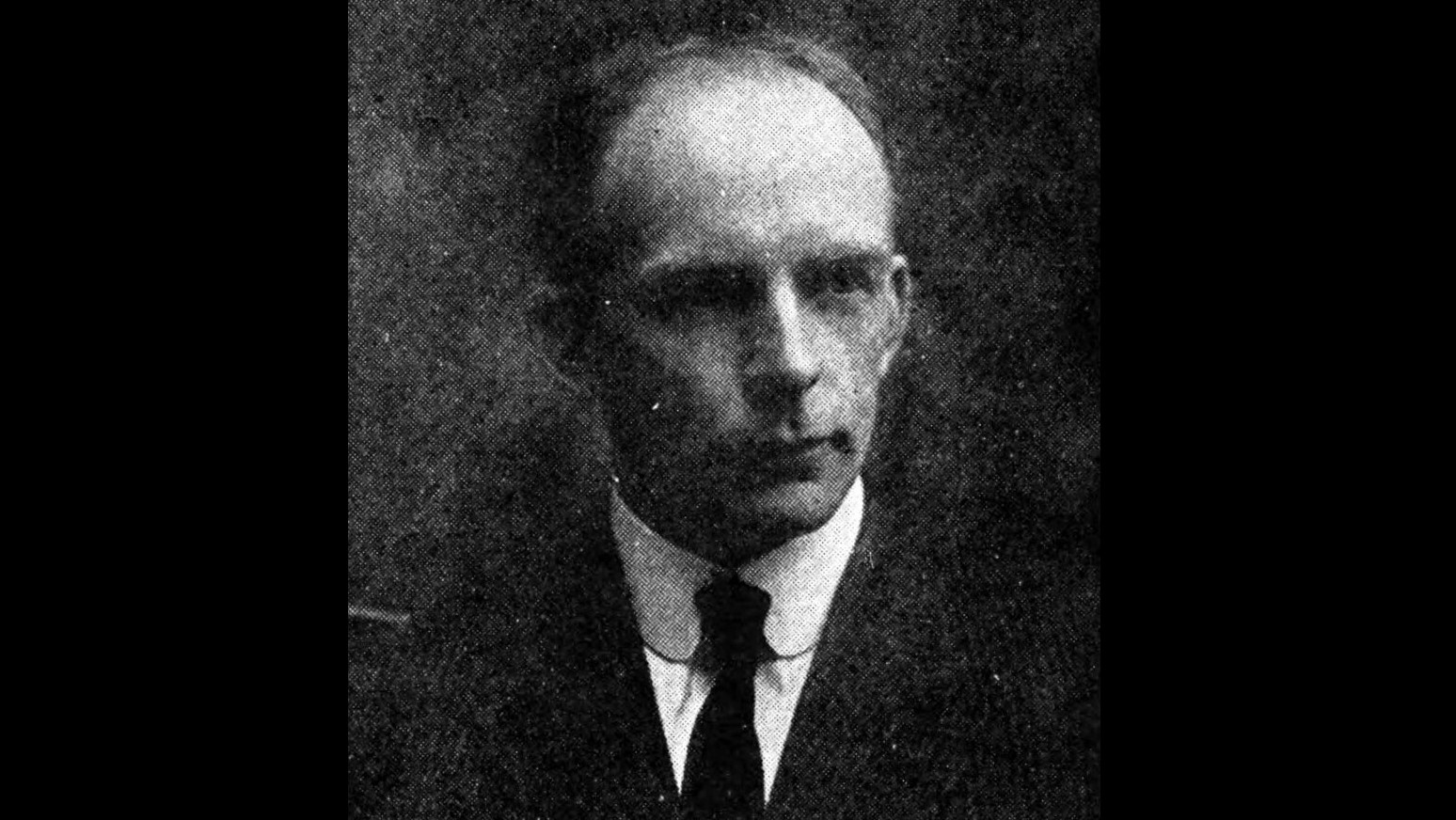
With severe repression and the Communist Party formally banned, one of the great debates that fractured the early U.S. Communist movement was over the character of the organization; above or below ground. Writing under a pseudonym while in prison, Ruthenberg argues that while some underground activity will always be necessary in the revolutionary struggle, a secret organization is not only incapable of mass mobilizations, it is deforming to political life.
‘The Need for Open Work’ by David Damon (Charles E. Ruthenberg) from The Communist (Unified C.P.A.). Vol. 1 No. 2. August, 1921.
The Communist Party is definitely an outlaw organization in the United States. The manifesto adopted by the Left Wing, while still a part of the Socialist Party, and that of the Communist Labor Party, have been declared illegal, although these programs attempted to maintain a semblance of legality by using vague phrases in describing the tactics advocated to overthrow the capitalist state. With the present openly stated purpose of the party, that the use of armed force in the struggle to overthrow the capitalist state is an inevitable phase of the Proletarian Revolution, there is no question that the Communist Party will be able to maintain its existence only as a secret, underground organization, until such time as the imminent victory of the Proletarian Revolution enables it to boldly assume the open leadership of the struggle.
The problem to be considered is: Can the Communist Party as such (a secret, underground organization), fulfill all its functions in preparing the ground and leading the working masses in the revolutionary struggle against the capitalist state? And if not, by what method can it function in the open?
The position of the Communist International on the question of legal and illegal methods is very clear. It urges that both methods must be part of the tactics of the Communist Party. Where bourgeois democracy still permits the party to exist openly, it must develop an underground organization in preparation for the time when it will have to meet the attack of the capitalist state and to do that work which cannot be done openly; and where capitalist terrorism has forced the party underground, it must take advantage of every means to conduct open work. The Communists of the United States have been criticized by the Communist International because of their failure to take advantage of all the available means for carrying on open work.
One need not look far to find the reason for the position of the Communist International, that the party must avail itself of all the possibilities of open work where it can maintain itself only as an illegal, underground organization. If the revolutionary struggle were nearing a crisis, with great masses of the workers already arrayed in a conflict with the capitalist state, the Communist Party would not need to concern itself greatly about the possibilities of open work, but in a country in which the working class masses are still so far from the conscious class struggle as in the United States, where they are still dominated by such an ideology as that of which the American Federation of Labor is the official expression, or in the case of the unorganized, where they still support with practical unanimity political parties so openly arrayed against their class interests as the Republican and Democratic Parties, in such a country it is necessary to conduct a widespread agitation to destroy the illusions which hold the workers loyal to their capitalist exploiters. Anyone who has participated in underground work will admit its difficulties. The need for secrecy, of not exposing the organization, hampers the work at every turn. The cost in labor and money to carry on work secretly is many times greater than in performing the same work openly. It is doubtful, under the conditions of underground work, whether it will ever be possible to carry on an agitational campaign of such an extent as necessary to meet the conditions in the United States today.
This is not all. The Communist Party must gain prestige in the eyes of the masses. It must win the confidence and through it the leadership of the mass of workers. Can this prestige be established and leadership won merely through the literature of the party—by an organization whose representatives are unknown to the workers, which they never can see in action? It is very doubtful. Prestige, confidence, leadership can only be established by winning it upon the field of action, in such a way that the workers recognize and see the men and the organization which are seeking to become their leaders in the class struggle. To accomplish this would be indeed a difficult task for a secret, remote, unseen organization such as an underground organization must be of necessity.
Further, the members of the Communist Party themselves need the stimulus and encouragement which will come to them from great mass meetings and demonstrations which they know to be the work of the party, even though they are carried out under the name of another organization. Every movement, even the Communist Party, needs the consciousness that its work is having an impact upon life, to build the morale and stir the fighting spirit which will carry it forward. The greater part of petty, soul-destroying bickering which has helped so much to keep the Communist Movement in this country sterile, has been due to the fact that the conditions of underground work threw the membership inward upon itself, in place of outward in an attack upon the capitalist class.
All of the foregoing forces the conclusion that in order to function effectively in the present situation in this country, the party must find means of carrying on open work. There is no question here of the party, as a party, becoming an open organization. The underground organization has its tasks, tasks which are of first importance, which cannot be carried on openly. It must keep before the workers the goal of overthrowing and destroying the capitalist state; it must develop a membership which understands the full implications of its program an educate this membership to assume the leadership of the masses; it must have its tentacles reaching out into every form of workers’ organization, striving to sway, to control, to develop revolutionary purpose; it must maintain its illegal press and distribute its illegal literature in which its whole program is fearlessly presented; it must prepare the organization and means of using armed force in anticipation of the revolutionary crisis. These tasks cannot be accomplished by an open organization.
What is argued here is that to conduct its work most effectively the Communist Party must have two arms, one out in the open, functioning publicly, the other unseen, secret, underground.
Let us see what are the dangers of such an organization, which must be met in deciding upon the organization form. No doubt the greatest danger to be apprehended for the party for the party from an open organization which cannot, and does not advocate the full program of the party, is that it will attract a large number of workers who are not Communists who might, if the organization form did not prevent it, who might, gain control and wrest the open organization from the party. Another danger is that the open work will, because of its comparative safety, attract the party workers and thus endanger the underground work.
The first of these dangers can be met by so organizing the open arm of the party that none but Communist Party members can participate in its control. It cannot be an organization with a dues paying membership which is open for any worker to join. The second danger cannot assume serious proportions if a party discipline is established under which party members are assigned the work they must perform.
Essentials of the Open Organization.
In order to fulfill the requirements set forth above, the open organization must be known to the masses as the legal expression of the Communist Party. There is no valid reason why this should not be so. The UCP during the period of its existence created an open organization which was known as an auxiliary of the party. In some cities the authorities and the White Guard organizations of the capitalist class charged that this organization was but the camouflaged UCP, but no attack was made upon it and its work was not interfered with. The fact that such connection is established by general repute cannot serve as the basis for prosecution so long as no provable connection can be established between the open organization and the Communist Party, and its activities are not of an illegal nature, and in the open organization becoming known as the open expression of the Communist Party, the party purpose is served in that the prestige of the activities of the open arm redound to the credit of the Communist Party.
Emulating the Bolsheviks who changed the name of their party in 1918 to the Communist Party, there were up to a dozen papers in the US named ‘The Communist’ in the splintered landscape of the US Left as it responded to World War One and the Russian Revolution. This ‘The Communist’ began in July 1921 after the “Unity Convention” in Woodstock, New York which created the Communist Party of America, Section of the Communist International uniting the old CPA with the CLP-CPA party. With Ruthenberg mostly as editor the paper acted as the Party’s underground voice, reporting official party business and discussion. The Toiler served as the mass English-language paper. This ‘The Communist’ was laid to rest in December, 1922 with the creation of the above-ground Workers Party. An invaluable resource for students of the formation of the Communist Party in the US.
PDF of full issue: https://www.marxists.org/history/usa/pubs/thecommunist/thecommunist6/v1n02-aug-1921-com-CPA.pdf
 Revolution's Newsstand