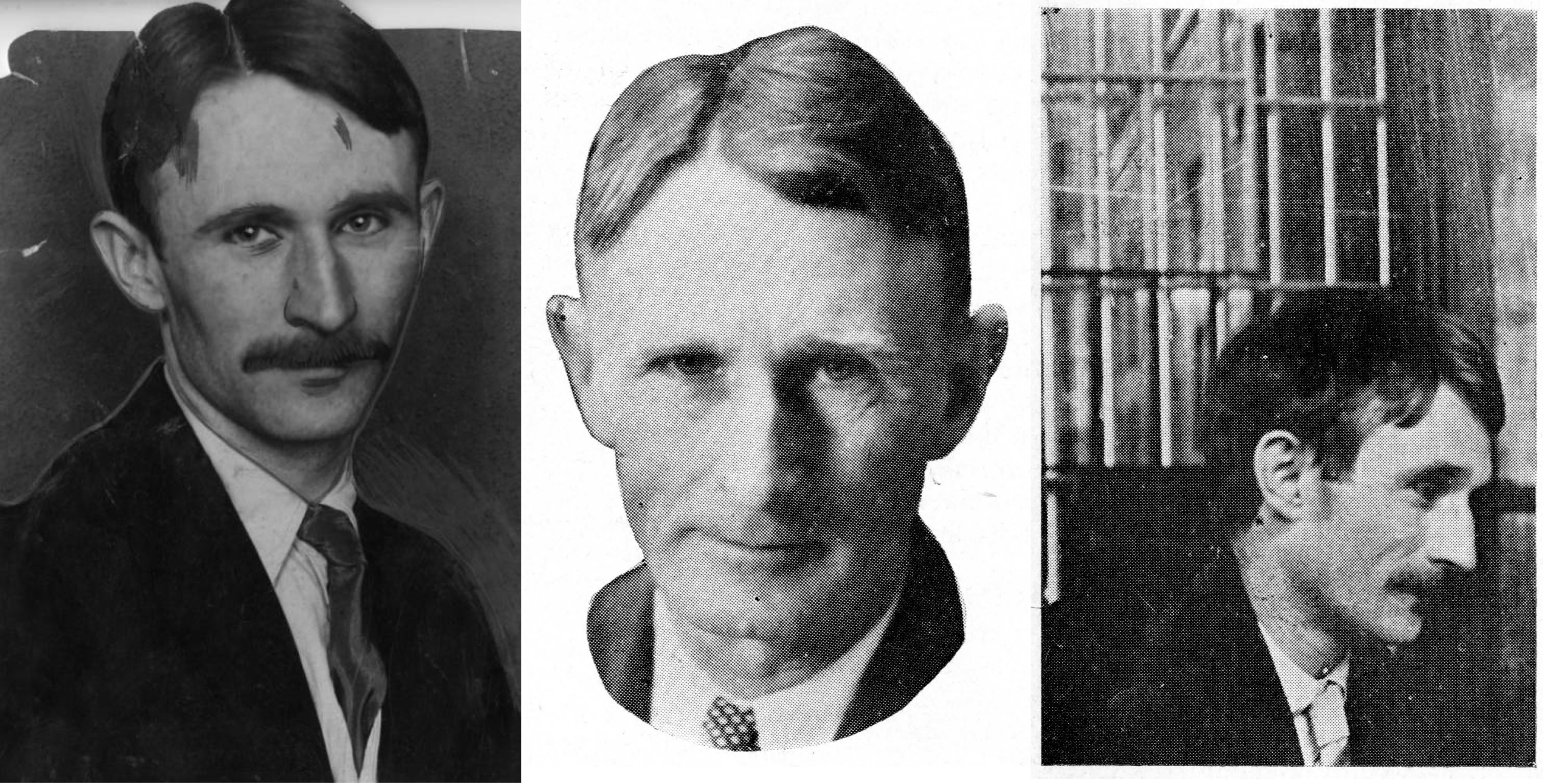
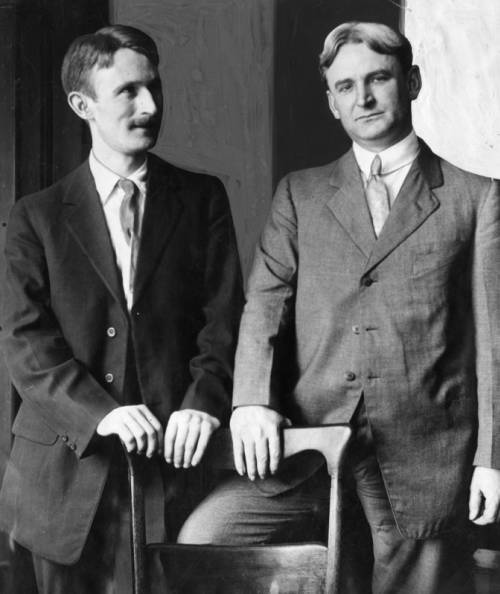
Foster had a long relationship with McNamara, visiting him in prison and holding discussions over many years. His appreciation below. Another of our past political prisoners, this one to die in prison after serving thirty years, deserving greater respect and remembrance today. The case of the McNamara brothers that shook the Socialist and labor movements, exposing existing divisions and creating new ones. John J. and James B. McNamara were accused of the bombing of the anti-union Los Angeles Times building on October 1, 1910 resulting in at least 20 deaths. At first they pleaded innocent, with luminaries such as Samuel Gompers, Clarence Darrow, and L.A. Socialist Job Herriman defending them, while many in the radical left denounced them as provocateurs–the brothers were fairly conservative, craft union Democrats. With just days to go until an election in which Job Herriman was making a strong run for Los Angeles mayor, the McNamaras changed their plea, admitting their guilt in a campaign of bombings, Many ‘respectable’ leaders abandoned the brothers immediately. John was sentenced to fifteen years; James to life. He would grow politically in prison, becoming a champion of all political prisoners. And prison is where he died, on March 8, 1941.
‘J.B. McNamara: Proletarian Fighter’ by William Z. Foster from Labor Defender. Vol. 11 No. 2. February, 1935.
EVERY sincere participant in the workers’ class struggle draws inspiration from the splendid qualities of the toiling masses. Their simplicity, honesty, courage, solidarity and enthusiasm are unfailing sources of encouragement. But never have I met with an individual worker who has been such an inspiration to me as J.B. McNamara, now serving his 24th year in San Quentin penitentiary in California.
Many times I have visited him in the passing years and each time I have developed fresh admiration for his quiet courage, his confidence in the workers, his indomitable fighting spirit. McNamara has much of the unwavering loyalty and iron fighting quality that goes to make a Dimitroff.
McNamara’s imprisonment has been an especially bitter martyrdom. It will be remembered that he, together with his brother J.J., head of the Structural Iron Workers’ Union, was arrested in 1911 for dynamiting the Los Angeles Times building, during the general strike of metal workers. Later D. Caplan and M. Schmidt were arrested and convicted, Schmidt still being in San Quen tin doing a life term.
If bomb there was, it did not cause the real damage. This was due to a leaky gas main which caused the explosion that snuffed out a score of lives.

The evidence against the McNamaras was very damaging. They determined to fight it out in court, nevertheless; but their lawyer, Clarence Darrow, the top A.F. of L. representatives, Lincoln Steffens, friends, relatives, all begged the McNamaras to plead guilty. It was the only way, they said, to save the labor movement and to protect many other leaders and militants from jail. After a long resistance, the McNamaras finally yielded and pleaded guilty. J.J. was sentenced to 15 years and J. B. to life imprisonment.
Although the plea of guilty was not of their origin, the McNamaras were widely and bitterly condemned for making it, even by those responsible for it. It was made to appear as an attempt to shield themselves at the expense of the labor movement. Friends turned against them, A.F. of L. officials excoriated them, the workers were given to understand that they had betrayed the trade unions, and even the revolutionary movement itself misunderstood and practically abandoned them.
Such a base charge was especially out of place when directed against the McNamaras, as their unflinching courage had already been amply demonstrated in the class struggle. In reality, their plea of guilty, mistaken though it was, was in keeping with their previous courageous record. It was a brave attempt to save others by sacrificing themselves in a bad situation. But their gesture was completely misunderstood, and condemnation was heaped upon them from all sides of the labor movement.
The ensuing long imprisonment has indeed been difficult. There was J.B., misunderstood and often slandered by the very ones for whom he had sacrificed his liberty and freely risked his life. Tom Mooney is a prison mate of J.B. ‘s. His imprisonment, too, has been hard and he has made a noble fight for his freedom. But at least Tom has always had the satisfying consciousness that the workers understand him and are fighting for his release.
But McNamara has been denied this sustaining realization. Little of the applause and the glory has been his. With only the faintest hope of eventual release, he has had to make his lonesome fight all these long years.
It has been a situation that would break the heart of an ordinary man. But not J.B. McNamara. He has stood the storm of it all like the firm oak of a man that he is. Never a whine or a whimper has come from him. Not a cry for help has he uttered. Never has he asked any mercy from or made any concession to the capitalist enemy. In his prison life he has maintained an upright attitude that the other prisoners respect and that not even the harshest regime could break. And through all these desperately hard years he has retained a sublime faith in the working class that had so largely misunderstood him, and, indeed, almost forgotten him.
“Retained a sublime faith,” did I say? J.B. McNamara has done that and much more. He has developed a new and broader understanding of the workers and their world-wide struggle. The prison has been his university. In the long, dreary years he has improved his mind and become a revolutionist. He now realizes that the workers cannot solve their problem by a few heroic battlers carrying on terroristic work, but they must unite as a class, destroy the capitalist system and build a new, free society as the Russian workers have done. A fitting conclusion indeed for such a resolute fighter as J.B. McNamara to arrive at.
McNamara has been in San Quentin prison now for almost 24 years. He is the oldest political prisoner in the world in point of jail time. In any country of Europe he would have been amnestied many years ago. But in “free,” “civilized” America this unconquerable hero of the class war is treated worse than a common murderer and made to wear his life out in prison. Nor is there the slightest sign that the ruling class in California ever intends to release him.
The task of freeing McNamara rests with the working class. As we fight for the release of Thaelmann, Mooney, the Scottsboro boys, the I.W.W. prisoners and all the rest of our jailed comrades, we must join in our demands an insistent one for McNamara’s liberty. J.B. McNamara is a veritable symbol of the invincible proletarian fighting spirit. He must be freed.
Labor Defender was published monthly from 1926 until 1937 by the International Labor Defense (ILD), a Workers Party of America, and later Communist Party-led, non-partisan defense organization founded by James Cannon and William Haywood while in Moscow, 1925 to support prisoners of the class war, victims of racism and imperialism, and the struggle against fascism. It included, poetry, letters from prisoners, and was heavily illustrated with photos, images, and cartoons. Labor Defender was the central organ of the Scottsboro and Sacco and Vanzetti defense campaigns. Editors included T. J. O’ Flaherty, Max Shactman, Karl Reeve, J. Louis Engdahl, William L. Patterson, Sasha Small, and Sender Garlin.
PDF of full issue: https://www.marxists.org/history/usa/pubs/labordefender/1935/v11n02-feb-1935-orig-LD.pdf
 Revolution's Newsstand