A project of A.J. Muste’s Conference for Progressive Labor Action, the Pioneer Youth were a national network formed in 1924, perhaps best known for work in the mining communities of West Virginia during the early 30s as part of a general workers’ education drive by the C.P.L.A. there.
‘Vacationing With Pioneer Youth’ by W. Walter Ludwig from Labor Age. Vol. 19 No. 7. July, 1930.
SUMMER camping for children is no longer a luxury which only the well-to-do may enjoy or a philanthropy extended by charitable organizations to “get the kiddies off the hot streets.”
Through the camps of Pioneer Youth of America which begins this summer its seventh camping season, creative and educational camping for children has been put within the reach of self-respecting trade unionists. Their national experimental camp in New York just opened (June 28) will continue for ten weeks until September 5th and will be supplemented by camps conducted by the Baltimore and Philadelphia branches of Pioneer Youth.
High up on a picturesque forested mountainside in the foothills of the Catskills, six miles south of Kingston, the national camp site of I40 acres commands a view of the countryside for miles around. The camp has excellent facilities including modern plumbing, a large social hall, dining hall, artesian well, lake, and swimming pool. Within a quarter mile of the main building, the children 9 to 16 years of age are grouped in the five tent colonies according to ages, the boys and girls living in separate quarters. Although all campers live in tents, the main hall and several smaller buildings provide for rainy day and indoor activities.
Pioneer Youth has won a unique place in the camping world for the creative educational quality of its camping. With no set program, awards or prizes, the activities are based on the individual child’s interests and capacities as developed through integrated group activities. New activities develop as the children‘s interests grow.
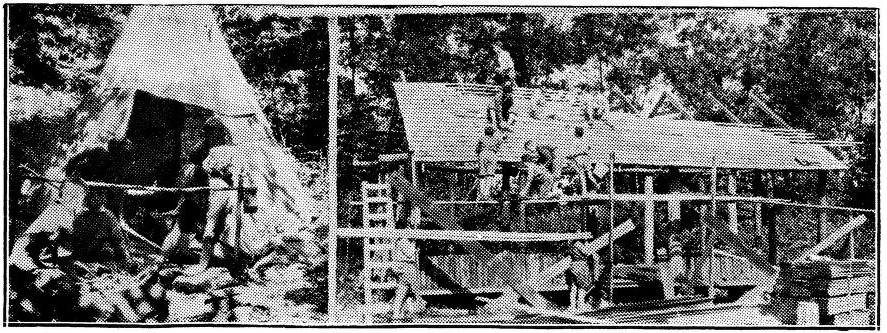
In the shop are tools and materials for many kinds of work. Airplanes and boats are made as are also primitive musical instruments such as tom toms, and cigar box violins. Arts and crafts activities are closely related to camp needs. A tree house in an old maple, an Indian tepee, a lean-to for overnight hikes, and a large rough hewn open log cabin built by the 1ntermediate boys were among the construction jobs done last summer.
The lake provides boating and canoeing and a cement rimmed swimming pool with constantly changing water proves so enticing that almost everyone swims, many twice a day. Games such as baseball and basketball are played on the athletic field as are also handball, volley ball, and tennis. Situations related to camp life provide material for dramatics. Ancient landmarks aroused interest and the result was a play about old Rifton. A send-off to two counselors who left for the World Youth Peace Conference required pageantry and folk dances. The camp orchestra furnished music for plays, pageants, and comic opera. Overnight trips and hikes, a nature trail through the woods and a large telescope for astronomy are among the means by which the children become acquainted with woodcraft and nature lore.
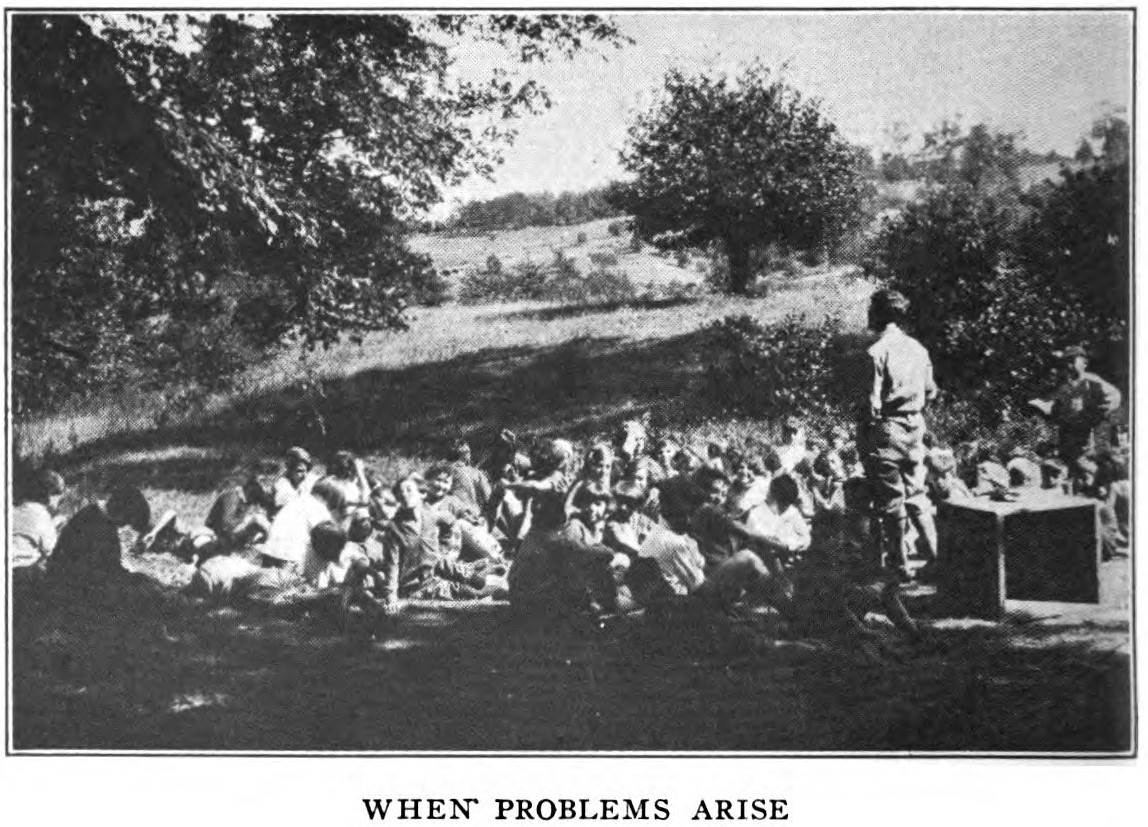
Numerous community projects such as the camp store, bank, postoffice, and library are conducted by the children and help to develop a sense of social responsibility and a democratic camp procedure. The older boys and girls are planning to hold again this year a conference over the Labor Day weekend on some social or industrial problem.
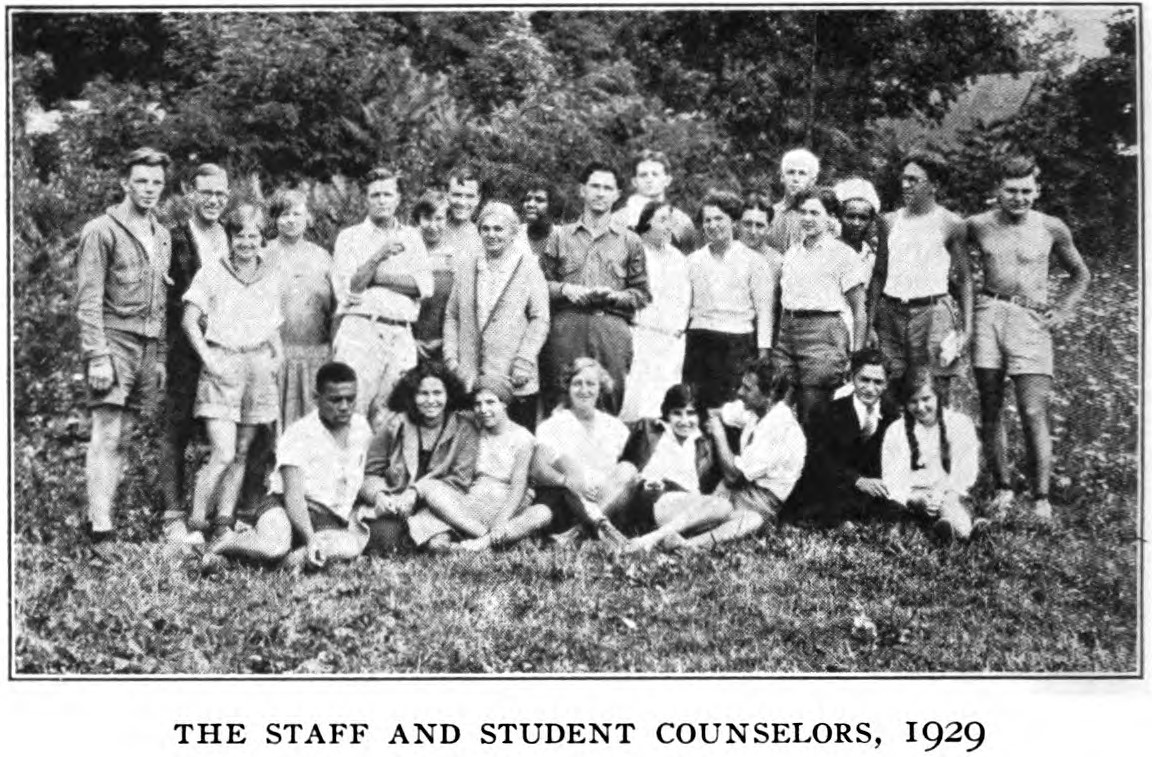
Alexis C. Ferm, formerly director of the Modern School at Stelton, N.J. and on the Board of the Manumit School, will direct the camp this season. He is a pioneer in the progressive educational movement and well qualified to continue the camp’s development begun and for six years conducted by Joshua Lieberman, former director of the camp. Henry Paley, formerly of the City and Country School and now science teacher at the 3rooklyn Ethical Culture School will return to direct the junior division. With him will return many of last year’s staff including David Sinclair, son of Upton Sinclair, who will be division leader of the senior boys and in charge of camp construction, An educational staff of 16 socially mature young men and women will work with the children on the basis of the group needs, their relation to the children being not primarily that of supervisors but resourceful, competent friends whose help and counsel are worth seeking.
The health of the campers is carefully safeguarded. All are medically examined and a registered nurse, a camp mother, and doctor within call, are on the staff to provide necessary physical attention. The food served is wholesome and well chosen with an abundance of fresh vegetables from neighboring markets.
Parents who would like their children to enjoy a creative vacation this summer at a moderate expenditure may obtain an illustrated camp folder, by addressing Pioneer Youth of America, 45 Astor Place, New York City. Applications are still being received, either for all or part of the season.
Labor Age was a left-labor monthly magazine with origins in Socialist Review, journal of the Intercollegiate Socialist Society. Published by the Labor Publication Society from 1921-1933 aligned with the League for Industrial Democracy of left-wing trade unionists across industries. During 1929-33 the magazine was affiliated with the Conference for Progressive Labor Action (CPLA) led by A. J. Muste. James Maurer, Harry W. Laidler, and Louis Budenz were also writers. The orientation of the magazine was industrial unionism, planning, nationalization, and was illustrated with photos and cartoons. With its stress on worker education, social unionism and rank and file activism, it is one of the essential journals of the radical US labor socialist movement of its time.
PDF of full issue: https://archive.org/download/v19n07-jul-1930-labor-age_202103/v19n07-Jul-1930-Labor-Age_text.pdf
 Revolution's Newsstand