
High drama as Art Shields witnesses, and intervenes, as Boswell, the last non-union town in Somerset County, Pennsylvania falls to the U.M.W.A. during 1922’s strike of well over half a million miners; many like those below, successfully organized for the first time.
‘How Non-Union Miners Organize’ by Art Shields from New Majority. Vol. 7 No. 17. April 29, 1922.
Johnstown, Pa. Last nonunion strong-holds in the mountains of Somerset county fell before the union forces this week in a short and brilliant campaign that rivals the best traditions of the mine workers.
I witnessed the fall of Boswell, last scab citadel of the county, and with its fall the collapse of the reputation of “Bad” Jack Bentley, chief of the Somerset coal and iron police.
Bentley was the boss of Somerset county, running the sheriff’s office by which he was deputized and controlling the local burgesses in a fashion hardly less autocratic than Don Chafin uses in Logan. With a record as gunman and police chieftain dating back a score of years in this county and still further back in West Virginia this tall southerner has swathed his name in an atmosphere of terror.
Boswell was his own home and the place that he boasted could not be taken by the union. The night before it was organized he came over to the smaller town of Listic which had just been wrested from his grip, too late to stop a meeting, and told a carload of organizers, among whom I was seated, that he would be ready for them if they tried anything in Boswell.
What he meant by being ready he had explained to Organizers Powers Hapgood and Arthur Taylor while they were in custody in Somerset two days before and he was entertaining them with a boastful recital of killings of unionists–a recital that gave names and dates.
But Jack Bentley did not know that while he was being drawn into Listic by a union ruse that President Brophy, Editor Stiles of the Penn-Central News, and another organizer were paying a nocturnal visit to the very town and distributing literature. And though they were held up for an hour by state police–who did not know what action to take without Bentley’s guidance–and their work was interfered with to a considerable extent, the strike calls they did get out were as sparks to the tinder.
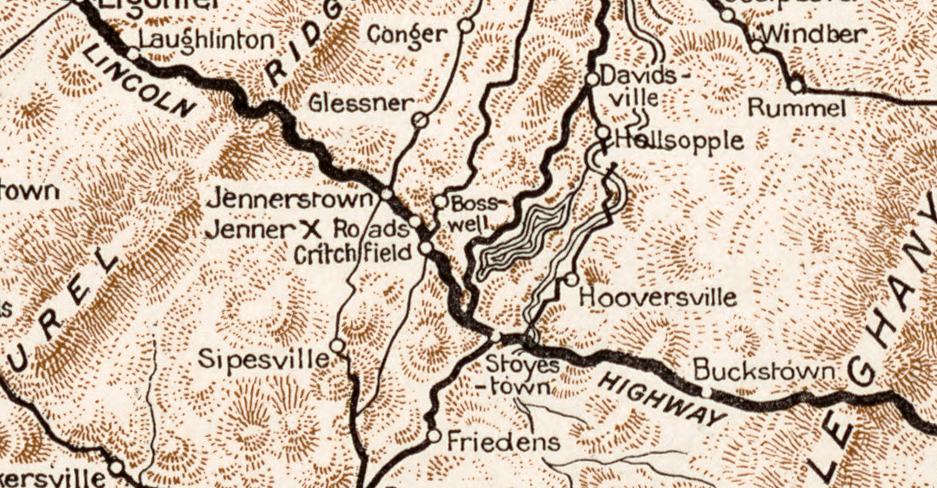
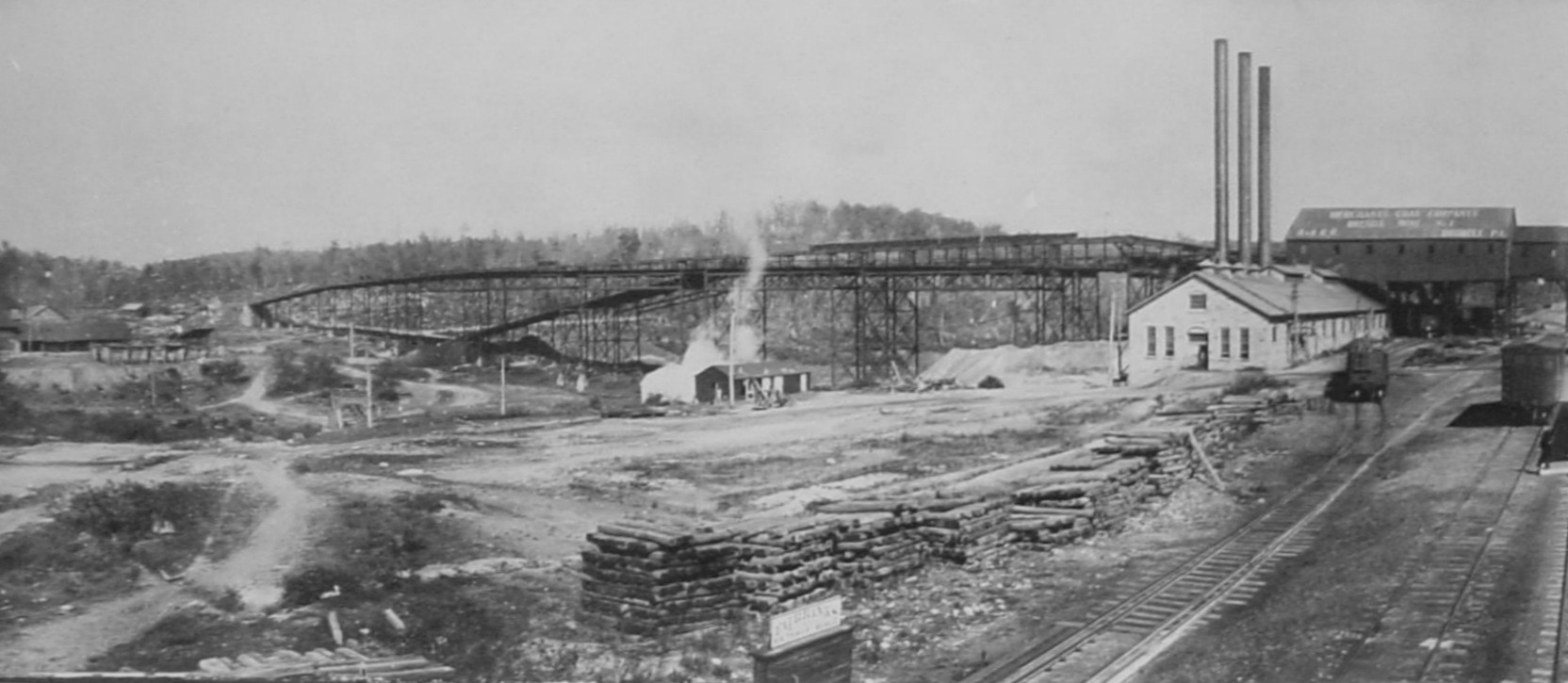
There was no stopping over night for any organizers in thug-ruled Boswell, so our crowd obtained lodgings in the Lincoln Highway town of Stoyestown, seven miles away. Jack Bentley’s spotters stayed up all night in the lobby and followed in another car at 5:30 in the morning, and as we crossed the railroad track into Boswell at 6, Jack himself was waiting for us in another car. A shrill whistle followed and figures sprang up out of the shadow of the railroad station and nearby sheds, but organizers darted past them up the public road towards the entrance of the tipple of the Arcade Smokeless Coal and Coke Co.
We came just in the nick of time for the miners of Boswell to see the whole show. The tipple platform was alive with men waiting for the man trip across the creek to the mine drift and I saw a confused movement among them there a hundred yards away as though they were arguing something. All this was taken in with a glance as we were running up the road and just before the clash started. Organizers Hapgood and Romese, the youngest and swiftest of the U.M.W. of A. forces, were in the lead and the first to be halted. Jack Bentley, waving a big yellow painted billy, seized Hapgood. Somerset county prize fighter named Sadowsky laid hold of Romese. Bentley was swearing and threatening to slug and arrest them and Hapgood and Romese, repeating over and over again that they had a right to move on the public road, were pushing forward.
Suddenly with a snarl Bentley swung back his heavy stick.
“Take notice, Bentley,” I said, stepping in, “that I am a newspaper man and here to report everything that happens.”
As his hand stopped for a moment Chief of Police Stone of the town rushed up, followed by Sheriff Griffith of Somerset county, Organizers, thugs, police and a couple of mine superintendents all gathered together in a group, and a lively discussion started which was suddenly closed dramatically by the party of the third part, the miners on the tipple. A shout came from the tipple and the miners started running down, The Boswell strike was on.
“We saw it was now or never,” explained one of the young miners to me afterwards. A lot of the boys didn’t come to work at all after Brophy’s visit last night and this morning the rest of us were arguing strike on the tipple and when we saw Jack trying his rough stuff someone hollered ‘Let’s go!’ and we went. That fellow Bentley can’t bully us any more.”
In a last effort to checkmate the union Bentley rushed around from hall to hall in the morning after union committees had visited them, threatening the proprietors with the company’s displeasure if they rented their halls. One Hungarian landlord told us that he had spent a long time in jail in 1902 because he rented his hall to strikers and he was afraid. But a bowling alley keeper who depends on miners for his trade furnished a meeting place.
Organization was completed at the meeting that followed, President Brophy returning in time. State constabulary stopped the meeting for a half hour, saying that meetings behind closed doors were not allowed to associations that had not yet obtained charters, but a telephone from Sheriff Griffith gave permission to go on. The doors had been closed to keep out the host of company spotters that infest the town.
The New Majority was the paper of the Federated Farmer-Labor Party, founded in 1918 as the Minnesota Labor Party, and published weekly by the Chicago Federation of Labor beginning in 1919. Mostly edited by Robert Buck, as well as party and labor union activities the paper reported on the vibrant co-operative and workers’ education movements of the time. The Party was did not survive the 1923 attempt by the John Pepper-led Workers (Communist) Party to take over the F.L.P. The F.L.P. attracted many non-Communist leftists in the workers movement and the paper is a rich source on labor activity and union history those years.
Access to full issue: https://hdl.handle.net/2027/mdp.39015014129319
 Revolution's Newsstand