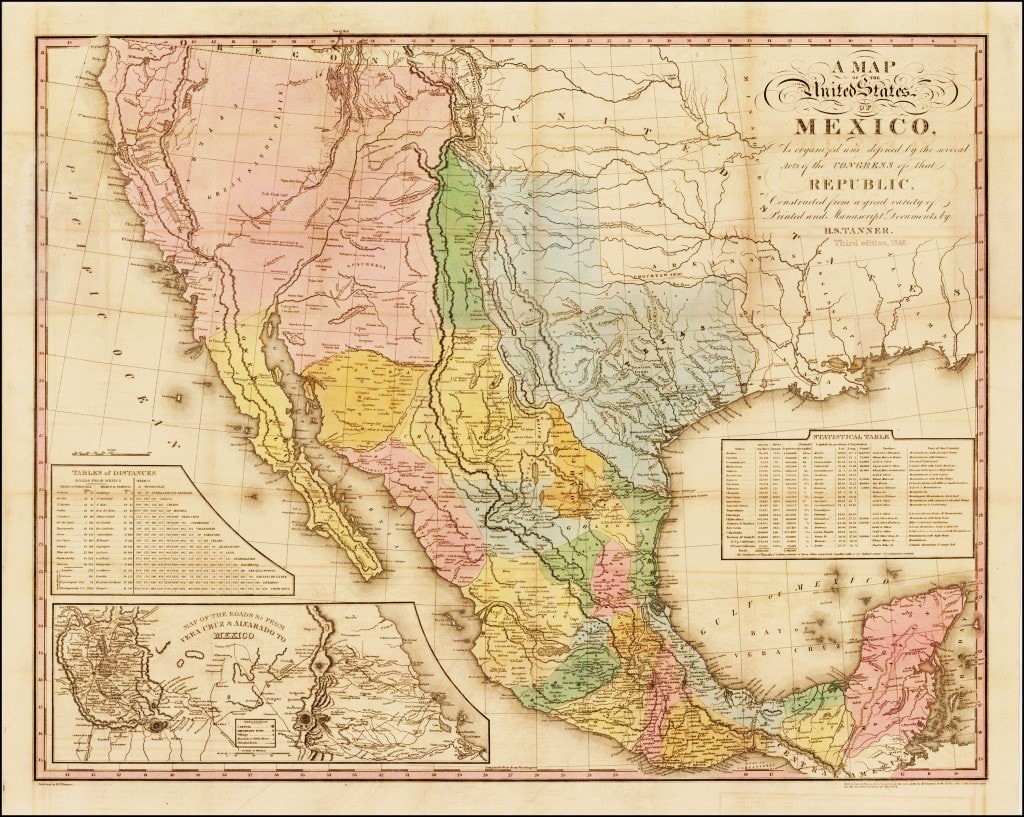
The was resistance in the Communist Party, after the folding of the Language Federations, in organizing on the basis of language or cultural groups. Irving Kreitzberg argues for a change in Party policy, stating that there is an indigenous Mexican community in the southwest predating the U.S. that should be viewed as a national minority and organized as such.
‘For a Decisive Turn In Our Mexican Work and the Creation of a Mexican Department to Concentrate on the South-West’ by Irving Kreitzberg from Western Worker. Vol. 1 No. 13. July 1, 1932.
The Mexican workers in the southwest are highly exploited. No effort is made by the A.F. of L. to organize them. They are discriminated against, deported, and in many instances even segregated.
The Mexican workers are very militant and come in large numbers to our demonstrations and meetings whenever we are thoughtful enough to print Spanish leaflets. In many industries, basic, war and agricultural, they hold strategic positions. Quite a number have recently joined our Party–only to drop out soon after. The turnover of Mexican members is at least 85%, those remaining usually being those with a fair understanding of English.
They are hardly to be blamed. They need our Party, but when they join, can find no place in it. They sit through entire Unit meetings, understanding little or nothing of what is being said or done, and then they stop coming. They are instructed to attend beginners’ classes that are held in English.
Talking over this school situation with a comrade on the Los Angeles Secretariat, I was informed that the Mexican members would have to learn English. Although this is highly desirable, our task is to keep them in the Party until they learn English. It is therefore necessary to ground them deep into our Party, familiarize them with our aims and our work in some language they can understand. How much easier it would be if the school outlines would be translated into Spanish and classes for Mexicans held with a Spanish-speaking instructor. This is not recreating again the old language federations. The Mexican worker will still belong to his Unit–and a short period of membership will easily convince the worker the necessity of learning English.
Must Have Spanish Leaflets
Our lack of clarity does not stop here. Forgetting that the average Mexican cannot understand English, we try to reach them in that language. The last five major leaflets in the Los Angeles Section (including May Day, an accepted tradition among the Mexican masses) had no Spanish translations. Occasionally the Spanish fraction and individual Units issue a few hundred mimeographed leaflets.
Recent struggles in Colorado, California and other parts of the west only point out more vividly how much a Mexican organ is needed. Vida Obrera, printed in New York, does not and cannot fill the need of the Mexican worker in the southwest. Comrade Kirby’s suggestion for a Spanish section in the Western Worker would not solve the problem. We must ask ourselves, “Could the Western Worker in such a form be popularized among the Mexican masses?” The truth is that it cannot. A Spanish language paper is needed in the southwest, even more than any other language paper; for the average foreign worker learns to read English, as do his children–while the Mexican toiler can be expected to cling to his language for generations.
Are the Mexicans a National Minority?
This brings us to the highly are theoretical question: Why will the concentrated in the southwestern Mexican worker cling to the Spanish language? What makes them different from other foreign-born workers?
The average foreign language worker migrating to America understands and feels that he is in a strange land, finds it necessary to acquaint himself with at least a working knowledge of English, and either melts into the population or else lives in small scattered colonies throughout the country. His children seldom speak the language of the home country well and time, distance, etc., wean them away from both the cultural and political influence of the home country.
With the Mexican worker it is different. Millions of this race Millions of this race are concentrated in the southwestern section of the U.S. In many parts of New Mexico and Arizona they form a majority. Despite the present wave of deportations, the Mexican population can be expected to grow, instead of diminishing.
The Mexican population can be divided into three sections: First, the descendants of the original native settlers before the American conquest of this territory. Second, those who come over the border for seasonal or temporary construction work, returning after this work is over, and third, immigrants who have become permanent residents, the latter being in the majority.
As in the case of the Southern Negroes, they are concentrated, and also to a great extent, disfranchised because of birth. Here we find a large section of the population (largely proletarian and agricultural) without any means of political expression. In the Black Belt, the Party raised the question of self-determination. Because the situation is different, this cannot be done in the southwest, but the Party should raise the question of national minority rights for these disfranchised and culturally foreign millions.
Raising the question of national minority rights is in no way a deviation from our Party’s program. Such minority rights were given to various races in the Soviet Union. Dare we neglect this politically disfranchised group of workers in the southwest?
Similar to French Canadians
To the objection that the Mexicans in the United States will beome part of the huge melting-pot and make the question of national minority rights unnecessary, it is necessary to point to the closeness of the border to the southwest, and that the Mexicans are linked to Old Mexico by cultural and language ties, even after many generations In the United States. Even descendants of the original native settlers, after 84 years of American rule, speak Spanish as their main language, and consider themselves, not Americans, but Mexicans. Are then the Mexicans residing in the southwest just another foreign language group, or a national minority? My contention is that this is a situation similar to that of the French Canadians in Canada and the Indians, and they are a national minority and if we are to win the Mexican worker to our Party, we must orientate and develop our tactics o suit this situation.
If we recognize the theory of the Mexicans as a national minority, the first step in the right direction would be the creation of a Mexican Department, similar to the Negro Department, composed of both Spanish and English speaking elements. And for this reason the E question should be raised and decided upon at the coming District 13 Convention.
Western Worker was the publication of the Communist Party in the western United States, focused on the Pacific Coast, from 1933 until 1937. Originally published twice monthly in San Francisco, it grew to a weekly, then a twice-weekly and then merged with the Party’s Daily Worker on the West Coast to form the People’s Daily World which published until 1957. Its issues contain a wealth of information on Communist activity and cultural events in the west of those years.
PDF of full issue: https://www.marxists.org/history/usa/pubs/westernworker/1932/v1n13-jul-01-1932.pdf
 Revolution's Newsstand