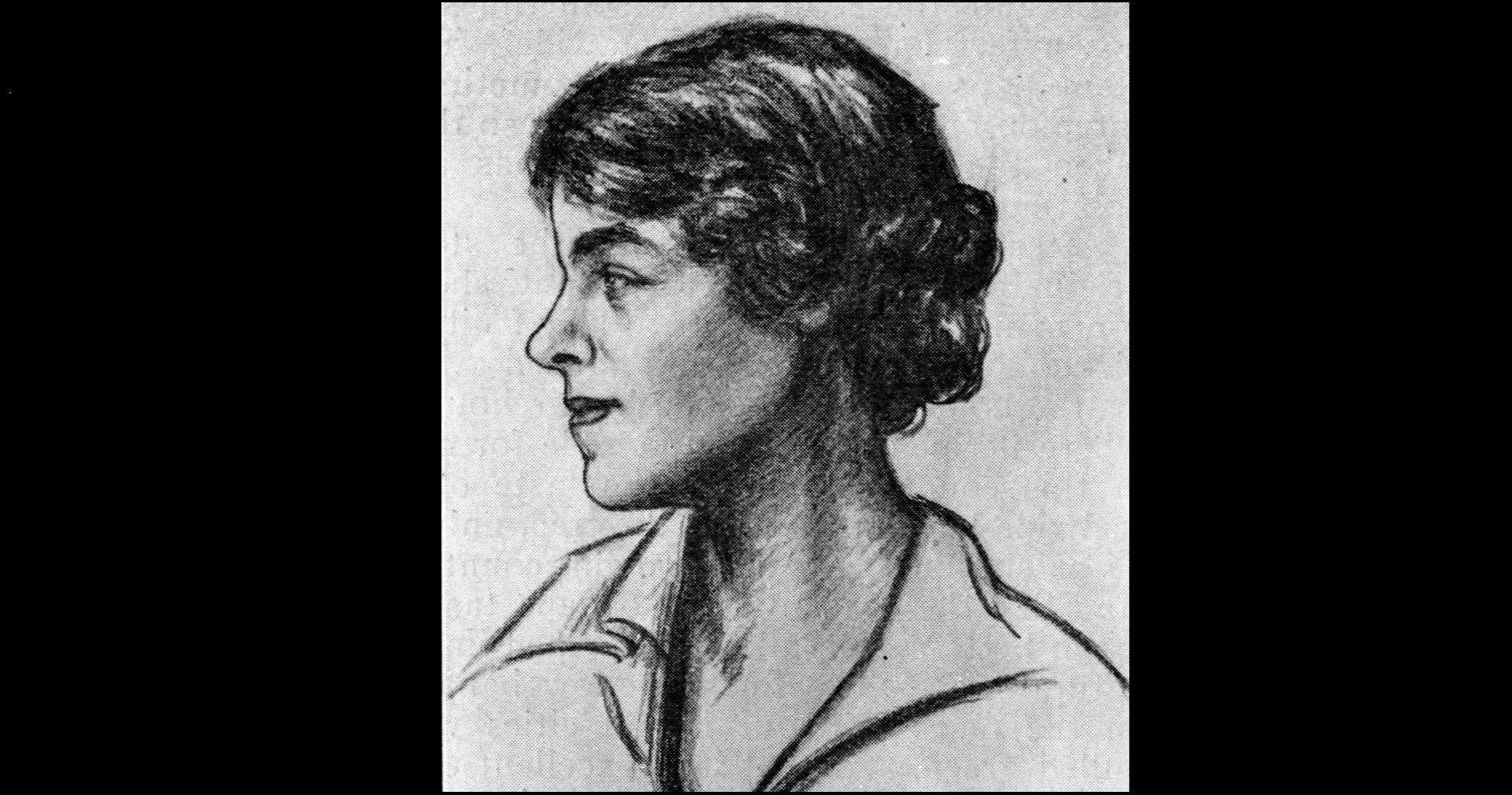
Mary E. Marcy says that the only way for workers to protect themselves from automation is to socialize production.
‘Why You Should Be a Socialist’ by Mary E. Marcy from International Socialist Review. Vol. 15 No. 11. May, 1915.
LOOK around wherever you are and you will see furniture and machinery and buildings and street cars, bridges, ships and trains, stores filled with food and clothing, coal yards and factories. The hands of the workers, the brains and hands of workingmen and women have the most would be the man who worked the longest.
And this is why, if you are a workingman or woman, you should be a socialist. Socialism means that the workers will have the things they produce. The farmers will made them all. They have made the clothes you wear, have produced the food you eat, built the house in which you dwell. These working class hands have produced every commodity that exists in the world today.
And the shippers, the commission merchants, the owners of storehouses, are complaining because the warehouses are filled to overflowing with goods and food they cannot sell (because the workers have no money to buy them). They complain because there are no more storeplaces in which to lock up the great harvests which will soon be pouring into the great shipping centers.
The landlords are bewailing the fact that they have hundreds of thousands of empty flats and houses which they cannot sell or rent, because the workers who have built them have no money to buy or to pay rent.
There are plenty of homes; there is an abundance of food and clothing made by the workers and there are several millions of workers who cannot buy these things because they are without money and without jobs.
Except for a little land, a few cheap clothes and poor personal belongings—all these things which the workers have produced are owned by the non-working, employing or capitalist class.
The whole struggle between the employes of labor and those who work, whether it be for shorter hours or more pay, is really a great battle between the bosses and the workers as to who shall own the things the workers have produced. Every time the workers gain higher wages, they are getting back in money a little bit more of the value of the things they have made.
It is evident that if the workers owned the things they made there would be no idle millionaires. And the man who possessed have the value of their crops, the miners the value of the coal, or gold, or copper they dig. The railroad men will receive full value for their necessary labor in transporting things from one part of the country, or from one nation to another.
The lone switchman or the engineer who tries to force the C. B. & Q. Railroad to increase his wages has about as much chance of success as one lonesome miner striking against the Standard Oil Interests.
You know that you have no chance to beat the boss in an individual fight against him. He has only to discharge you and all the forces of society will rally to support him and to prevent you gaining any advantage.
A good many years ago workingmen learned that they could not fight the employers of labor alone and so they banded together in small trade groups, which groups were able for a time to help their members in securing higher wages, shorter hours and better working conditions. Some of these trade unions still enable their members to maintain higher wages and shorter hours than they would otherwise have.
But the strongest trades unions in the world are only able to gain a very little more of the wealth they produce for a very small percent of the workers. In hundreds of cities other unions, while pretending to maintain the union wage scale, are rebating stipulated sums to their employers.
The United Mine Workers of America have lost nearly a dozen big strikes in the last few years. The railroad boys have steadily lost ground in their fights for better working conditions and more pay. They have not even held their own, but have been forced to accept lower wages. The trade unions have been crushed in the steel mills.
Trade unions, industrial unions, ANY unions are only able to maintain higher wages when the employers of labor NEED the men in the unions, when these employers cannot REPLACE the union men with nonunion workers, or when they find it cheaper to yield than to fight against—the union.
Some business men find it cheaper to grant union demands than to face losses by spoiled jobs, delayed construction, damaged goods, fires or diminished business prestige. The union does everything possible for the small group of which it is composed. The plumbers’ union uses a very long apprentice system to keep young men from becoming plumbers and future competitors for their jobs. Poor boys have to get work promptly ; few working class parents are able to support their sons while they serve a three years apprenticeship.
Other unions charge exorbitant initiation fees to keep men out of their organizations so that their members may make a close corporation of their jobs. The glass blowers in some of the eastern states charge $1,000 initiation fee to foreign glass blowers who join their union.
But most of you workingmen and women do not belong to any trade union—CANNOT belong to a trade union. The trade union was never designed to help the WORKING CLASS. It was designed to help a small skilled portion of the workers. And—in a measure—it has served its purpose in the past.
But the time has come when the glass blowers may draw the doors of their union ever so tightly, the car-builders may use intimidation or violence, and the compositors demand a forty years apprentice system in order to resuscitate the dying trade unions to which they belong. They cannot win. The glass blowers’ union is helpless before the AUTOMATIC glass blowing machine; the compositors were thrown on the industrial junk heap when the modern linotype became commercially practicable ; the experienced, painstaking cabinet-maker and car builder are no longer needed in any way in the manufacture of modern cars. All the work is done by unskilled laborers, who merely put the various pieces together.
In a hundred instances we might point out where a modern method has put a whole trade out of work permanently, and thus put that trade union out of business at the same time. The tendency of today is toward more complicated MACHINES and less skilled men—toward automatic production.
The men and women outside the trade unions have never been helped by these unions. Now the members of the unions themselves are finding their organizations inadequate and helpless.
First man found that alone he was unable to gain any demands against his employer, and now even the select, specialized trade union groups find that they are not broad enough, not big enough, not inclusive enough to help themselves to maintain what they have gained in the past.
The unorganized, unskilled worker needs the strength and the numbers of his skilled and organized brothers, and the skilled trade unionist must organize with the unskilled workers if he is to save himself.
Gradually the time has passed when small groups of laborers can meet the employing class and come off victorious. Capital has grown and centralized and labor must meet it in the class struggle as a united, gigantic opponent—as One Big Union of the Workers of the World.
And this too, is what Socialism means—the great working class war against the private ownership of the great plants of production—for the common ownership of the factories, mines, mills and railroads, the lands and the shops BY THOSE WHO BUILD AND RUN AND USE THEM.
There are some socialists who think that Socialism is only the action of the workers on election day to elect representatives to Congress or to the Legislature. This is only a very small part of the Socialist and Revolutionary working class movement.
The Capitalist class in every nation might really check this kind of NATIONAL Socialist activity by disfranchising the workers who have the vote, or disqualifying the elected official as they did in West Virginia. Socialism is not confined to one particular facie, IT IS THE WAR OF THE WORKING CLASS OF THE WORLD TO ABOLISH THE WAGES SYSTEM, to secure collective ownership and control of all the industries of the world by the working class itself. It means ALL THE PRODUCTS OF THE WORKERS FOR THE WORKERS THEMSELVES!
Just as the lonely farm hand used to strike against his boss, and the trade union groups later struck against their bosses, and now the working men are striking and fighting against their employers in federations of unions in larger and ever larger groups—Socialism will organize the workers of the whole world to take over the factories, mines, railroads, mills and shops to run them FOR the workers.
Socialism is broader than ANY national party or any national union. It means One Big Union of the Workers of the World to abolish the present system of robbery and exploitation from the face of the earth!
We are only GROPING our way toward Socialism. We are only beginning to see that we cannot struggle against poverty, unemployment, robbery and exploitation ALONE, or in small trade unions, or national party groups. But we are learning fast. We are learning that the World has been made to-blossom with plenty through the hands of Labor and that by joining with the members of our class over the whole world we shall reap the fruits of all that we have sown.
The International Socialist Review (ISR) was published monthly in Chicago from 1900 until 1918 by Charles H. Kerr and critically loyal to the Socialist Party of America. It is one of the essential publications in U.S. left history. During the editorship of A.M. Simons it was largely theoretical and moderate. In 1908, Charles H. Kerr took over as editor with strong influence from Mary E Marcy. The magazine became the foremost proponent of the SP’s left wing growing to tens of thousands of subscribers. It remained revolutionary in outlook and anti-militarist during World War One. It liberally used photographs and images, with news, theory, arts and organizing in its pages. It articles, reports and essays are an invaluable record of the U.S. class struggle and the development of Marxism in the decades before the Soviet experience. It was closed down in government repression in 1918.
PDF of full issue: https://www.marxists.org/history/usa/pubs/isr/v15n11-may-1915-ISR-riaz-ocr.pdf
 Revolution's Newsstand