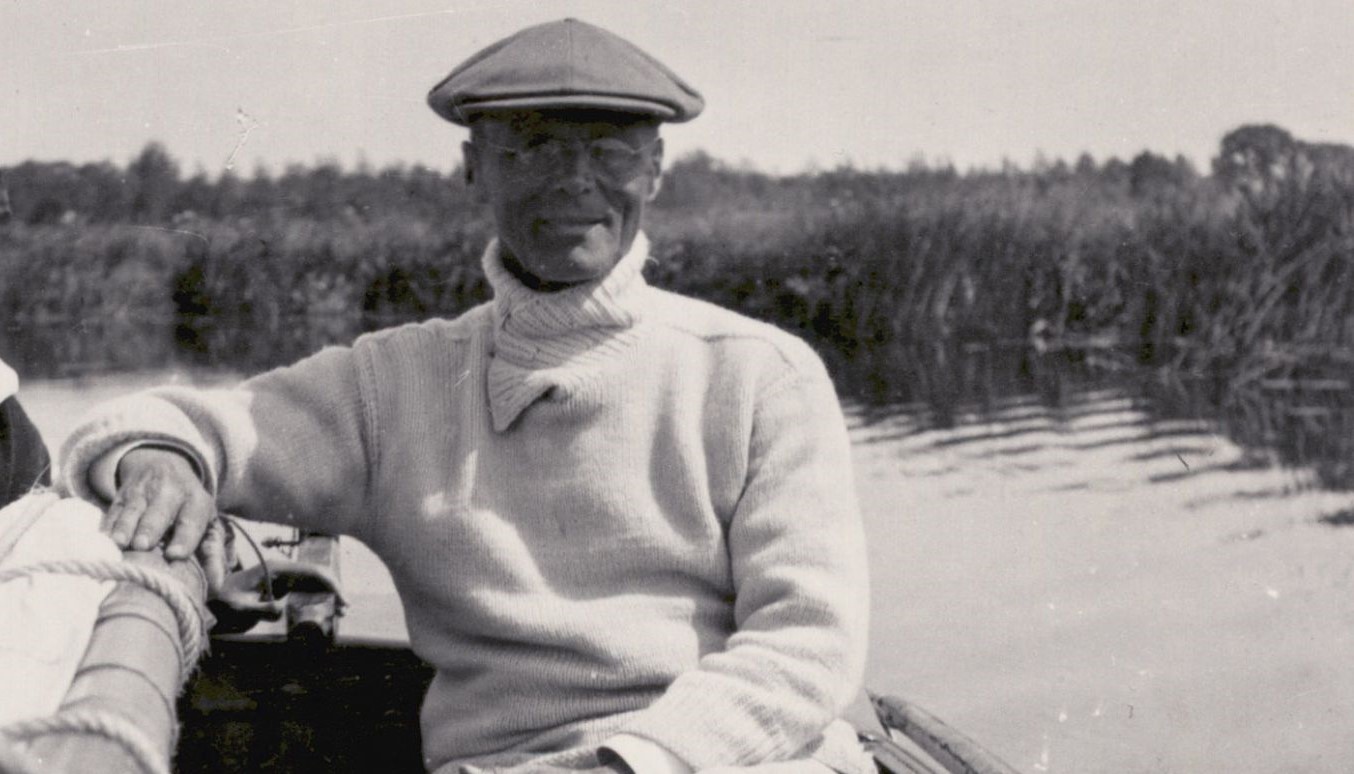
Even with their criticism of Herman Gorter’s ‘ultra-leftism’, the Comintern pays tribute to the enormous revolutionary contributions of Dutch Marxist Herman Gorter on his death at 63.
‘Herman Gorter’ by W. Reesema from International Press Correspondence. Vol. 7 No. 56. October 6, 1927.
On September 15th the Dutch poet and Marxist theorist, Hermann Gorter, died suddenly in Brussels at the age of 63. From the year 1897 Hermann Gorter played an important part in the Dutch Labour movement and, during the world war and the first years of the Russian revolution, he was prominent in the international movement. Together with Anton Pannekoek (Horner) he led that “Dutch-Marxist school”, which in the years 1919 to 1921 opposed Leninist tactics, was defeated at the Second World Congress and organised the Communist Labour Party opposition to the Comintern.
In spite of this, Gorter never became a pronounced and active opponent of the Russian revolution. After the year 1921, when he had published his “Open letter to Lenin”, wherein he formulated his political views for the last time, and when his C.L.P. hopes had been destroyed, he withdrew from political life. The last five years of his life he devoted to a voluminous Socialistic poem, which, however, remained uncompleted.
When in the year 1897 Hermann Gorter entered the Dutch Social-Democratic Labour Party, he was not only a distinguished poet his poem “May”, published in the year 1889, revolutionised Dutch poetry and is one of the most beautiful works in world literature by thoroughly studying the Marxist literature he had prepared himself conscientiously for the approaching fights.
Through his indefatigable propagandist activity, his cogent popularising of the Marxist theory, his keen attacks upon bourgeois opponents he won the greatest respect among the masses of the party and soon took up a leading role.
The monthly review founded in the year 1897 by him, Henriette Roland-Holst and Anton Pannekoek, “De Nieuwe Tijd” (“The New Time”), waged from the very beginning a systematic fight against the opportunism and revisionism so characteristic of the leaders of the S.D.L.P. During the decade 1897 to 1907 there rallied around the paper hundreds of young and active party comrades, a nucleus of workers, who in the year 1907 founded the weekly newspaper “De Tribune” and who are still the backbone of the C.P. of Holland.
The Marxist opposition, whose leader and best speaker was Gorter, was defeated at the Party Congresses from 1901 to 1909 by the opportunists under the leadership of Troelstra. In the year 1909 the Congress of the S.D.L.P. expelled the editors of the “Tribune” from the party. Gorter became one of the founders of the Marxist S.D.P. From 1909 to 1914 he exerted his whole strength in fighting against the reformism, whose treacherous role in the world-war he foresaw.
The war period was the best and most creative portion. of Gorter’s life. With burning indictment he stigmatised the treason of the reformists. He employed all his power as a propagandist in gathering together the proletarian vanguard for the coming world revolution. In the year 1915 he published his brochure “World War, Social Democracy and Opportunism”, which was illegally distributed in Germany and of which Lenin wrote in the year 1916 “The Dutch Marxist Hermann Gorter is thoroughly and absolutely right”.
From the beginning Gorter took the standpoint of the Zimmerwald left wing, and in the years 1915 to 1918 he stood wholly and entirely for Leninist tactics. Through his indefatigable activity he not only succeeded in extending the foundation in Holland for the Communist Party and in providing the German comrades with sound theoretic support, he also created in Indonesia a foundation for the development of a Communist Party.
The Russian revolution was for him the sign of the approaching end of world imperialism. But when the revolution began to triumph a change took place in his views. Gorter had not fully comprehended the Leninist theory of the leading role of the Communist Party. He did not recognise the value and the constant necessity for the alliance between the proletariat and the peasantry during the period of transition.
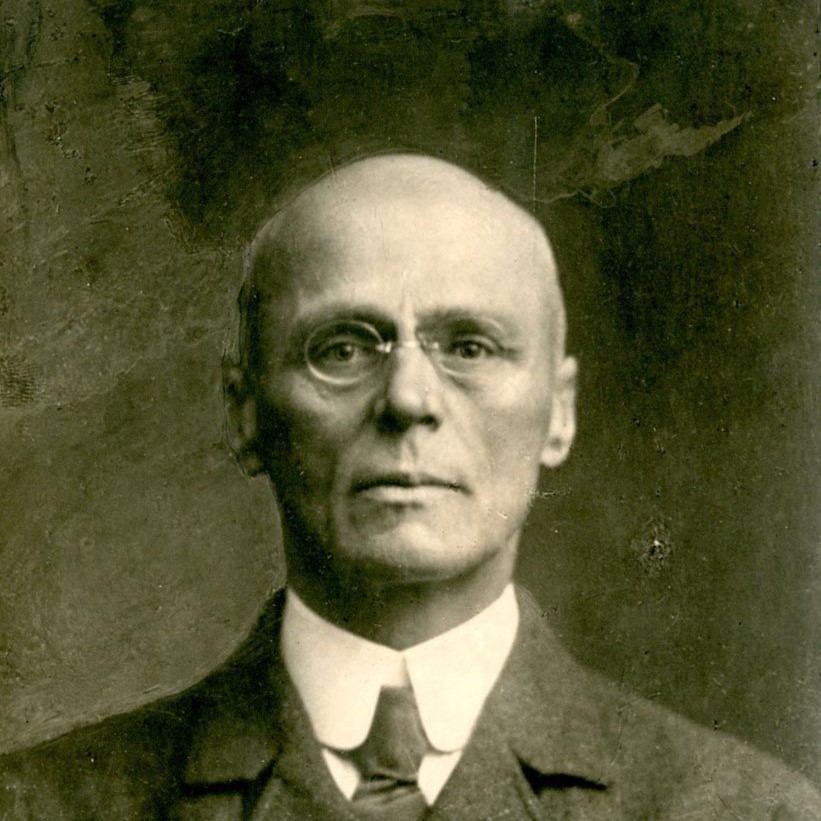
From 1919 onwards Gorter displayed more and more the typical attitude of the Ultra-Left, the danger of which for the further development of the revolution in the West Lenin recognised immediately and countered sharply in his brochure “Radicalism, the infantile sickness of Communism”. In Gorter’s subsequent writings of the years 1920/21, in his “Open Letter to Lenin” and “The Moscow International” we find the germs of all the utterances of the Ultra-Left in Western Europe. From the year 1921 on, Gorter, however, remained silent and no longer carried on the fight against the Russian revolution.
The significance of Hermann Gorter in the development of Communism in Holland, in Flanders and in Indonesia has been very important indeed. His theoretic writings of the years 1910 to 1918, such as “Historical Materialism”, “Class Morals”, “Communism”, his translations of the Communist Manifesto, Kautsky’s “Foundations of Christianity” and of Lenin’s “State and Revolution” constitute a valuable gift to the revolutionaries of Holland, Flanders and Java.
Regarding Hermann Gorter’s merits as an artist and as a proletarian poet, unfortunately only his Dutch comrades are as yet in a position to form a judgment. Of his numerous, powerful and trenchant poems fired. with his hate of Capitalism and his love for the proletariat only “A Little Epic” has been translated into German.
The memory of Herman Gorter, that admirable man, that ardent hater of bourgeois capitalistic society and valiant, honest champion of world revolution could best be honoured by making his poems accessible to the proletariat of the world.
International Press Correspondence, widely known as”Inprecorr” was published by the Executive Committee of the Communist International (ECCI) regularly in German and English, occasionally in many other languages, beginning in 1921 and lasting in English until 1938. Inprecorr’s role was to supply translated articles to the English-speaking press of the International from the Comintern’s different sections, as well as news and statements from the ECCI. Many ‘Daily Worker’ and ‘Communist’ articles originated in Inprecorr, and it also published articles by American comrades for use in other countries. It was published at least weekly, and often thrice weekly.
PDF of full issue: https://www.marxists.org/history/international/comintern/inprecor/1927/v07n56-oct-06-1927-inprecor-op.pdf
 Revolution's Newsstand