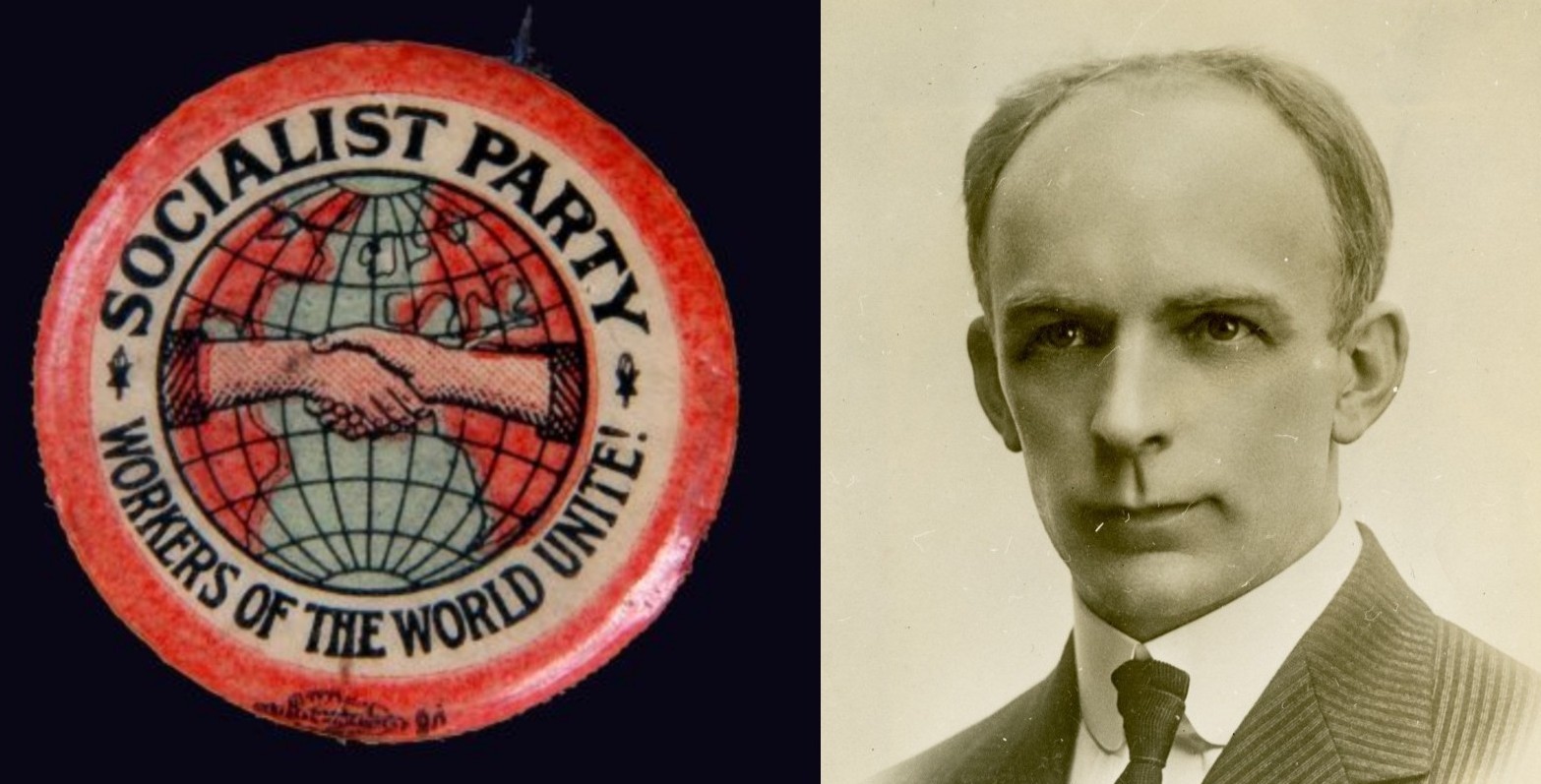
Running for Governor of Ohio in 1912, Socialist Party and future Communist leader Charles E. Ruthenberg faced the two Old Parties and Theodore Roosevelt’s Progressives, making this sharp differentiation with the new party. Ruthenberg got nearly 9% of the vote state-wide that year.
‘Social and Industrial Justice’ by Charles E. Ruthenberg from The Socialist (Columbus). Vol. 2 No. 81. July 6, 1912.
“But if, having this in view, those fervent in the great fight for the rule of the people and for social and industrial justice, which has now become a clear-cut fight for honesty against dishonesty, fraud and theft, desire me to lead the fight, I will do so.”
Thus did Theodore Roosevelt address the delegates at the Chicago Republican convention after it became clear that he was beaten in his attempt to again secure the nomination for the president from the party which had previously elected him.
A third party may or may not be organized. Roosevelt may or may not be the candidate for this third party. This party may or may not adopt the red bandanna with its mottling of dirty gray or yellow as its emblem. These matters are not yet settled. But this is certain: The new party will not stand for social and industrial justice.
There is just one central injustice in our present industrial system. In every city of the land there are shops and great manufacturing establishments. In these establishments there are thousands of men engaged in the production of wealth. From the man who does the dirty work at $1.50 per day to the superintendent in charge they are paid wages for the work which they perform. The wealth which they produce does not belong to them. They receive for their services wages which, on the average, only enable them to buy food, clothing and shelter for themselves and to reproduce the race of workers.
On the other hand, there are men and women, sometimes children, in various parts of the country who own these plants. They may never have seen them. They know nothing about the work of production carried on in these establishments. They may never have done an hour’s productive work in their entire lives. But they have, through the chicanery and robbery of the capitalist system, secured a legal title of ownership of these plants. These legal titles enable them to take in the form of interest and dividends the lion’s share of the product of the worker.
This is the great injustice of the capitalist system. The workers are robbed of what they produce and the wealth taken from them is turned over to an idle, parasitic class. All the other evils of the capitalist system are the result of this primary injustice. Starvation wages, long hours of work, women and children in our factories, unemployment, hunger and starvation are all the logical outcome of our system of exploitation. Unsanitary, health destroying, crippling and maiming factories, in which the workers are employed are the natural result of this system. These things exist because the profit system leads to constant attempts by the owners of industry to increase their profits by taking more from the workers and forcing them into deeper degradation and to labor under worse conditions.
This exploitation of the working class will never be touched by the Republican or Democratic party, nor by any new party which Mr. Roosevelt and his friends may organize. Both old parties and the men who may organize the new party are believers in and upholders of the profit system and the social and industrial injustice existing today cannot be done away with so long as the profit system continues in existence.
Roosevelt’s new party, if it ever comes into existence, will merely be an attempt to turn the workers’ attention from the real point of attack by leading them away from it by cries about “restoring the rule of the people.” The rule of the people–the rule of the workers, who are a majority of the people–can have only one object and that is to abolish the profit system. Any other use of their power cannot bring them social and industrial justice.
The one party which is directing its attack against exploitation and the profit system is the party whose emblem is the red flag–the Socialist Party–not the party of the red bandanna with gray and yellow streaks, and it is through the triumph of this party alone that the workers will secure social and industrial justice.
With dozens of periodicals named ‘The Socialist’ in U.S. history, it can be hard to distinguish. This ‘The Socialist was the party press of the Columbus, Ohio local between 1910-1914. Those years saw the city have an important streetcar strike and Socialist victories in elections. While the Ohio State Party leaned left, Columbus was more in the tradition of Milwaukee and Chicago in embracing a ‘sewer socialism.’
PDF of full issue: https://archive.org/download/socialist191012200soci/socialist191012200soci.pdf
 Revolution's Newsstand