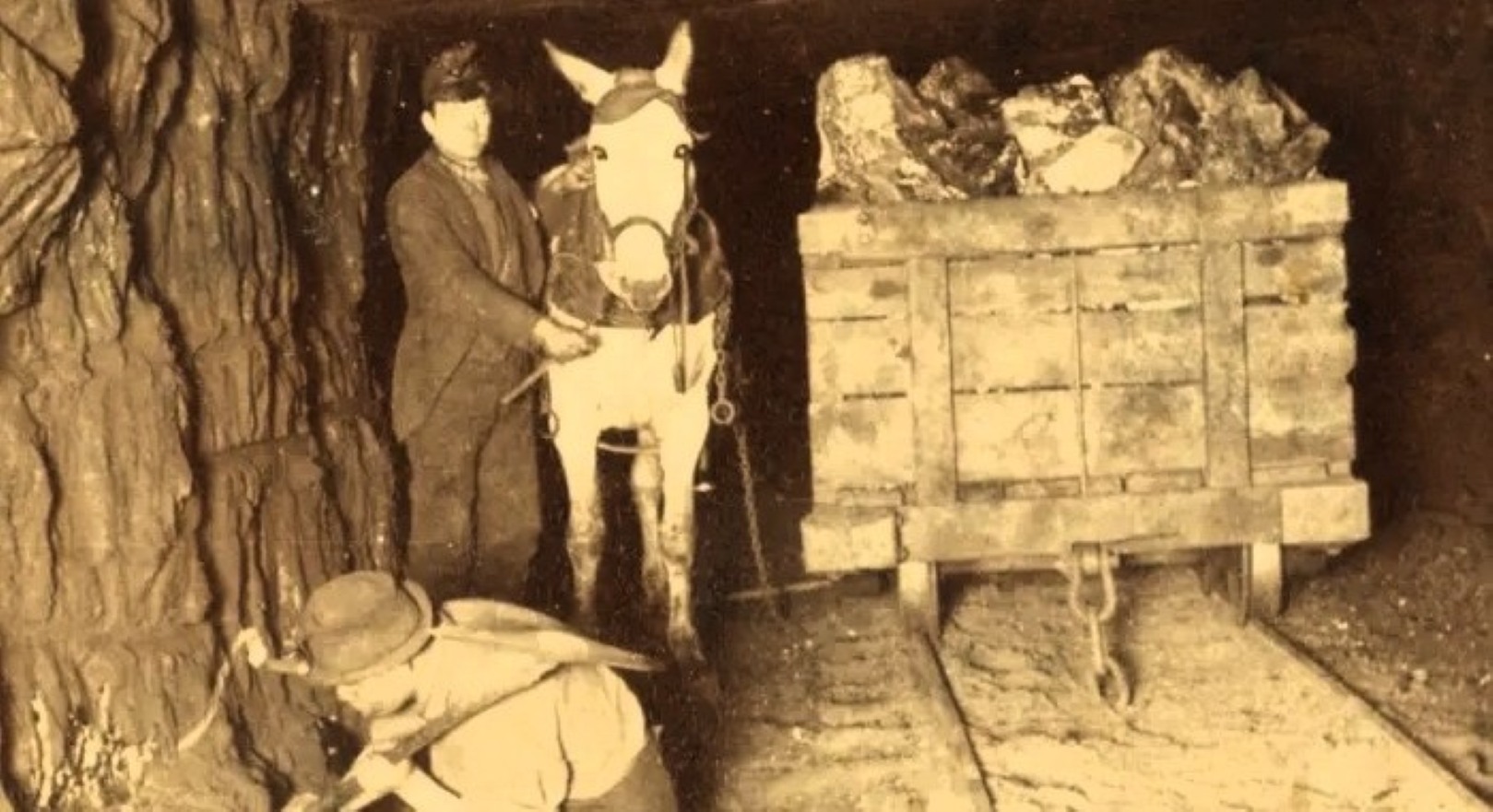
While we often think that ideas concerning ‘anthropocentrism’, animal rights and welfare within the broader left are a response to the later ecological movement of the 1970s. This is false. Many, acting on notions of those alienating, broken natural interconnections; industrial expansion and environmental destruction; a reaction to bourgeois conservation; an ever more confirmed reality of evolution, and empathy of exploited humans with those fellow beast of burden. Left Marxists like Charles H. Kerr, a vegetarian, and Debs below, were only some who made those connections. A major influence at the time was the Kerr published ‘Universal Kinship’ by John Howard Moore, where despite some factual mistakes and scientific shortcomings, made an empirical, social, and biological case for the common origins and fate of all life on Earth. It would be one of many ISR produced-works dealing with evolution, the world of animals, and what we workers seeking emancipation might learn from them. Here, Eugene V. Debs poignantly looks in the eye of a working mule and sees a comrade looking back at him.
‘Man and Mule’ by Eugene V. Debs from The Chicago Socialist. Vol. 6, No. 387. August 4, 1906.
Have you ever looked searchingly into the large, lustrous, knowing eye of a mule while he looked into yours? If so, you cannot fail to have observed a twinkle with an intimation in it that he knows you and has his opinion about you, although he may not be able to express it in language you understand.
The fact is, as I suspect. that the mule knows man better than man knows the mule, and I have often wished I might have the transcript of a mule’s mind, or understand his tongue, that I might know just what the mule thinks of his human master. That the opinion would not be a flattering one I am quite convinced, for the mule has not one single reason to look upon man as his superior. Quite the contrary; there is not a crime known to the catalog that man has not perpetrated upon the mule.
Of all the domestic animals that serve man it is doubtful if there is one, not even excepting the horse, that has been of greater usefulness than the mule, nor is there one that has been more patient and submissive under the harsh treatment inflicted upon him in return for his useful and laborious services.
I have been led to these reflections by the masterful book of Prof. J. Howard Moore on The Universal Kinship, which should be read by every seeker after truth and light; and today, as I saw a brutal human lash a starved and worn-out mule, I said to myself, if that mule were not as far above that man in heart and soul, in sense and conscience, as popular human ignorance supposes him to be below him, he would have but murder in his heart and hooves, and kick his brutal tormenter into kingdom come.
The mule is not only the most serviceable, but he is also the wisest of animals, and the fact that man regards him as dull and stupid is due to man’s ignorance of the mule’s wisdom, and when the average man who is called a mule resents the epithet, he again reveals his stupidity, for if he were but wiser he would know that he had been flattered and not insulted.
That the mule is “mulish,” that is to say, stubborn and slow-going, apparently lazy, is eminently to his credit, and these qualities, properly understood, show the mule to be possessed of the highest virtues which adorn the nature and character of our four-legged comrade.
Who would not be stubborn and lazy who had man for a master? Look at the wage slave, and if there is any difference between him and the mule it is all in the mule’s favor.
The mule serves man in and out of season, for but his provender, and when at last his usefulness is impaired by age he is cast adrift to starve on the highway with but the scars of his master’s lash to show for man’s humanity to the mule.
What must be the mule’s reflections when he stalks blind and halt toward his pathetic doom as the vultures circle lower to end the tragedy of his life?
What must he think of man when at twilight he surveys the field of battle and sees the mingled and mangled flesh and blood of man and mule scattered as far as eye can see?
Would this dumb, patient brute, had he the choice by ballot, vote over and over again to have himself hitched and harnessed by another brute, overworked and underfed, exposed to heat and cold, whipped and lacerated and finally turned adrift to perish from neglect in the winter of old age, or torn to shreds by shrieking shell on field of horror in the name of Christian civilization?
The mule is meek, it must be said, but meekness with the mule is not without its limitation, and when that is reached a kick is registered that may snuff out the human light.
The main trouble with the mule is that he does not kick often enough, and with man that he does not kick at all.
The kick of the mule is nature’s means of defense, and if the mule but used it freely he would soon inspire man’s respect and admiration, whereas his meekness but provokes the malice of his master.
To paraphrase another, the better I know man the fonder I am of mules.
The Chicago Socialist, sometimes daily sometimes weekly, was published from 1902 until 1912 as the paper of the Chicago Socialist Party. The roots of the paper lie with Workers Call, published from 1899 as a Socialist Labor Party publication, becoming a voice of the Springfield Social Democratic Party after splitting with De Leon in July, 1901. It became the Chicago Socialist Party paper with the SDP’s adherence and changed its name to the Chicago Socialist in March, 1902. In 1906 it became a daily and published until 1912 by Local Cook County of the Socialist Party and was edited by A.M. Simons if the International Socialist Review. A cornucopia of historical information on the Chicago workers movements lies within its pages.
PDF of full issue: https://www.marxists.org/history/usa/pubs/workers-call-chicago-socialist/060804-chicagosocialist-v06w387.pdf
 Revolution's Newsstand